
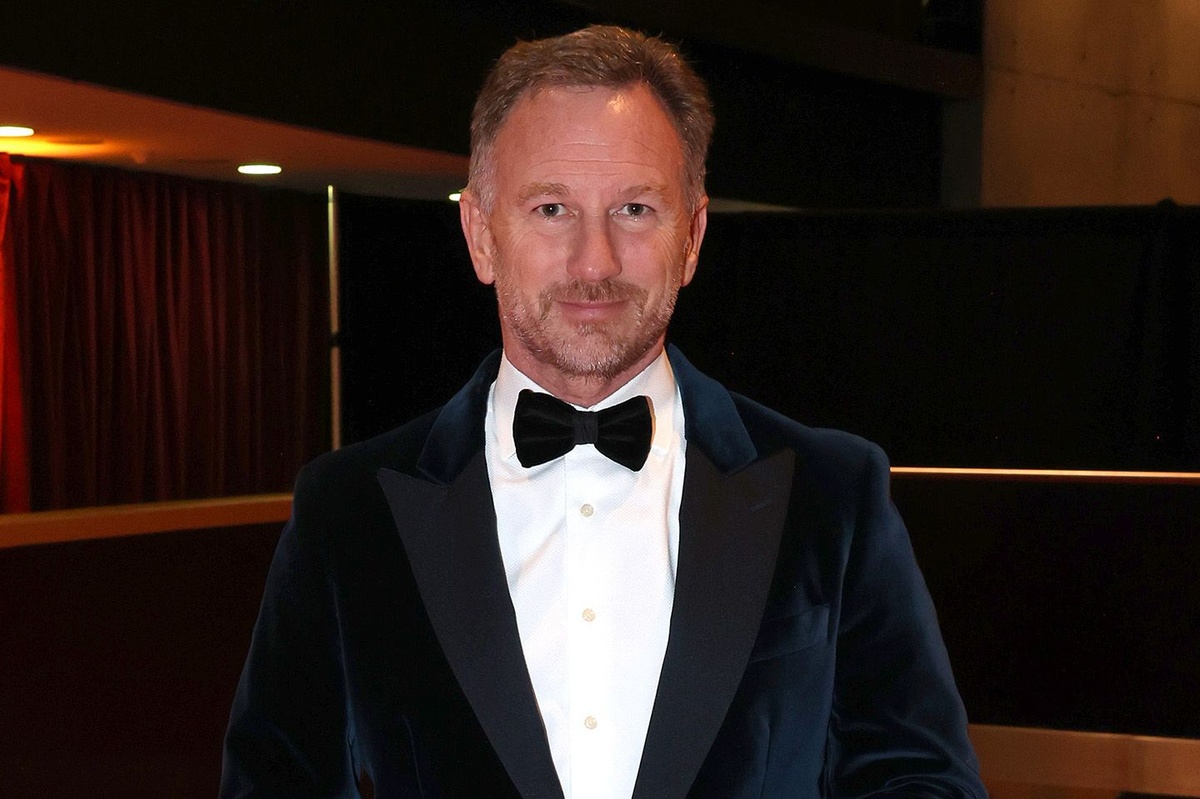
Christian Horner, former Oracle Red Bull Racing Team Principal and CEO, headlined the event in his first U.S. appearance since leaving the F1 team, reflecting on his career and the pressures of leading a title-winning team
Seven-time NASCAR Cup Series champion Jimmie Johnson, co-owner at Legacy Motor Club, featured in conversations on racing’s role in business
Chase Carey, former Chairman and CEO of Formula 1 and Board Director at Fox Corporation and Liberty Media, discussed the growth, innovation and influence of motorsport in the U.S.
Other panelists included Mark Reuss from General Motors, Penske’s Jonathan Gibson and Tim Clark from NASCAR to explore the trends that are shaping their championships
New York, NY — October 21, 2026 — Autosport Business Exchange (ABX) returned to New York City today for its second edition, bringing together senior leaders from across motorsport, business and brands at the Manhattan Motorcars showroom to examine racing’s growth in America.
Building on successful editions in London and Miami, ABX New York took place ahead of the Formula 1 United States Grand Prix in Austin and during the final stretch of the NASCAR season. It focused on the commercial and cultural forces of racing in the United States, with conversations spanning F1, NASCAR, automotive manufacturers, finance, media and consumer brands.
The headline conversation of the afternoon was with former Oracle Red Bull Racing Team Principal and CEO Christian Horner, who took to the stage ahead of the UK launch of his book on October 22. Horner shared his motorsport journey, from his driving days to the top of Formula 1, along with his perspective on leadership, commercial pressures and competitive demands of running a championship-winning F1 team.
Horner revealed that he hadn’t missed a race during his 21-year stint at Red Bull, attending 404 races in succession. Since leaving the sport 15 months ago, he has gained a new perspective on motor racing by attending events in MotoGP, Formula E and also the America’s Cup. He believes Formula 1 could offer fans new insights into the sport.
“Formula 1 can be a bubble and there is nothing more important than the next race, but I went from sitting on the pit wall to suddenly being a viewer. It’s amazing just how much more is available in terms of analysis and strategy and how races are shaping up. I really feel that’s an area that could be exploited to give the viewer an even better experience.
“Formula 1 has got itself into this incredible place, through the Netflix series, with this whole new generation of fans. It’s got to keep evolving and it can’t stagnate or stand still.”
After discussing working with Max Verstappen, the controversial climax to the 2021 season finale in Abu Dhabi and setting up Red Bull Powertrains, Horner was asked what would tempt him to return to Formula 1.
“I loved my time in the sport, I’m a fan of Formula 1, and if that’s my time done in F1, I’m OK with that. I’m proud of what I’ve done and I’m privileged to have worked with who I did,” he said. “But there is still a competitive desire within me and if the right opportunity presented itself, under the right conditions, I would be prepared to go back. I wouldn’t want to go back just to take part, it would be to win.
“There is so much interest in the sport, particularly here in the U.S. So many people want to invest in F1. These franchise values are increasing almost on a monthly basis. So for me, I’m even more focused on something that I could participate in with equity. So we’ll see what plays out.”
Chase Carey, former Chairman and CEO of Formula 1 and Board Director at Fox Corporation and Liberty Media, appeared at ABX New York for a conversation focused on how Liberty Media came to purchase Formula 1, and the changes they initiated to grow the sport. He also reflected on how F1’s commercial approach has evolved since Liberty Media took over in 2017.
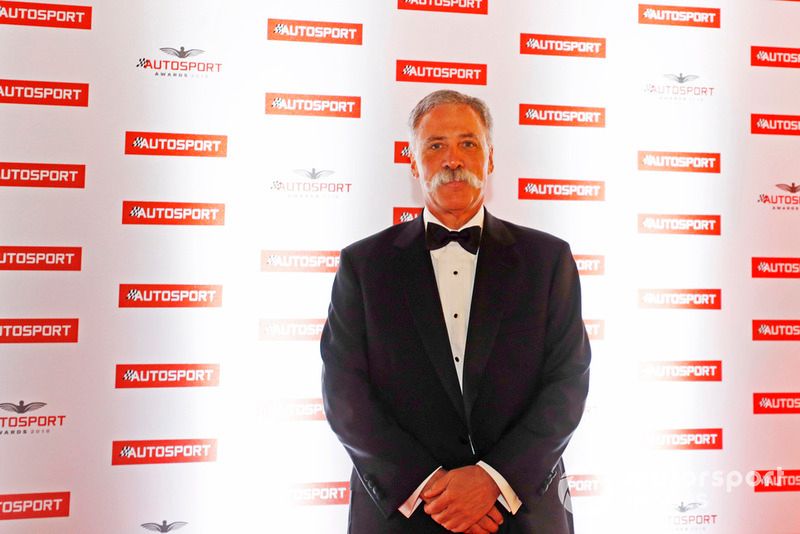
F1 CEO Chase Carey
Photo by: Ashleigh Hartwell / Motorsport Images
“It used to be about selling signs around the track, how many you could put up and how often they were on TV. But since then it’s been more about how you develop partnerships and how they become a global platform for that partner,” said Carey. “Look at what they did with LEGO car races which was extraordinary.
“In any franchise you have to figure out the opportunities, what are the things that make it special and also connect with the fans you are trying to engage. You then need a team in place to execute that. Probably the biggest challenge we had was to change the culture of the sport, to build a win-win proposition where everyone was rowing in the same direction.”
Under Liberty Media’s ownership, Formula 1 reached a new fan base through Netflix’s Drive to Survive series and has expanded on that through new media partnerships. “You have to use the opportunities, the personalities and the digital platforms to develop the right partners. Look at Apple who has brought a new perspective in how you broadcast and connect the fans. The F1 Movie was a great opportunity too — and then it’s about developing those partnerships,” said Carey.
In conversation, seven-time NASCAR Cup Series champion Jimmie Johnson, and co-owner at Legacy Motor Club, spoke about the commercial challenges of running his own business and how his perspective has changed since moving from driving to ownership. He was joined on stage by Jonathan Gibson, EVP Marketing & Business Development, Penske Corporation, and Tim Clark, EVP & Chief Brand Officer at NASCAR to discuss the business of IndyCar and NASCAR.
“NASCAR is a unique property and it doesn’t have a brand awareness problem, but it may have a brand perception problem,” said Clark. “And I think it’s on us to be better storytellers. What our drivers do on Sunday is exceptional, but it makes viewers curious to know what they do on Tuesday or Wednesday and we have to tell that story.”
Jimmie Johnson added: “How do you grab someone’s attention and then convert them? I strongly agree that it’s around storytelling. When you are racing on track, there are layers that need to resonate to an engaged demographic. When I was a driver I was worried about the rules or how to get an advantage, but it’s a different perspective when you’re an owner. You have a different awareness of the economy, the health of the sport, domestically and globally.”
As well as discussing the IndyCar/NASCAR double-header that took place at Phoenix earlier this season, other topics that came up were the expansion of the two domestic series overseas, and the potential to race outside of the U.S.
“IndyCar has had a significant presence throughout South America, and Canada,” added Jonathan Gibson. “On our grid we have drivers that represent 13 countries, and have an international TV package. Over the last four or five years we’ve had certain tracks reach out to us and some serious dialogue of late… so stay tuned.”
From a NASCAR perspective, Clark added: “We have a modest presence outside of North America, but we have work to do to evolve it outside of the U.S. We can build a presence through content, marketing, merchandise, and partnership and our intention is to stage Cup Series races outside of the U.S.”
Further discussions at the Manhattan Motorcars showroom featured Mark Reuss, President of General Motors, who spoke of his pride in Cadillac’s debut in Formula 1 this season. He also looked ahead to the team’s first United States GP in Austin this weekend and Sergio ‘Checo’ Pérez’s home race in Mexico City, which marks Checo’s 300th start in F1.
The event also featured a special panel titled ‘The Business of Fandom: Where Brands, Capital & Racing Converge’ featuring Shiz Suzuki (VP Global Brand Sponsorships & Experiential Marketing, American Express), alongside KK Hall (Global Brand VP, Jim Beam) and Ben Fund (Partner, Carlyle Group).
Werner Brell, CEO of Motorsport Network, said: “ABX New York once again demonstrated its value by bringing together leaders from NASCAR, Formula 1, the automotive industry, finance and global brands to discuss the forces shaping racing in America today.
“This afternoon’s conversations were about where racing goes next in the United States and how fandom, brands and capital are coming together to drive it. This is the open exchange of ideas ABX was created to deliver, and we are grateful to every speaker and guest who helped make our time at the Manhattan Motorcars showroom such a valuable afternoon.”
Panel discussions were moderated by a lineup of leading voices from across sport, media, and business, including Jason Stein (Cars & Culture), Alyssa Meyers (Marketing Brew), Liz Claman (FOX Business) and Lindsay Czarniak (Sportscaster), ensuring a broad and informed debate around the forces shaping the sport’s next chapter.
We want your opinion!
What would you like to see on Motorsport.com?
– The Motorsport.com Team