
Follow us
Add us as a preferred source on Google
Newsletter
Subscribe to our newsletter
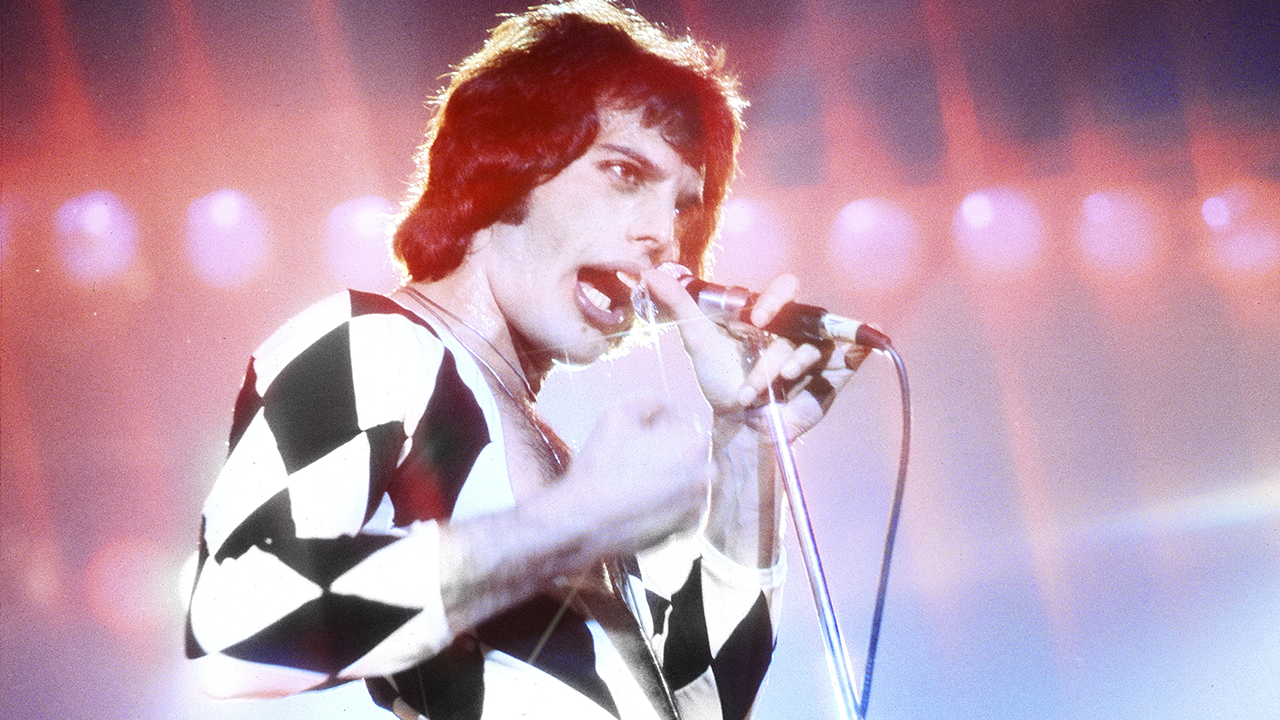
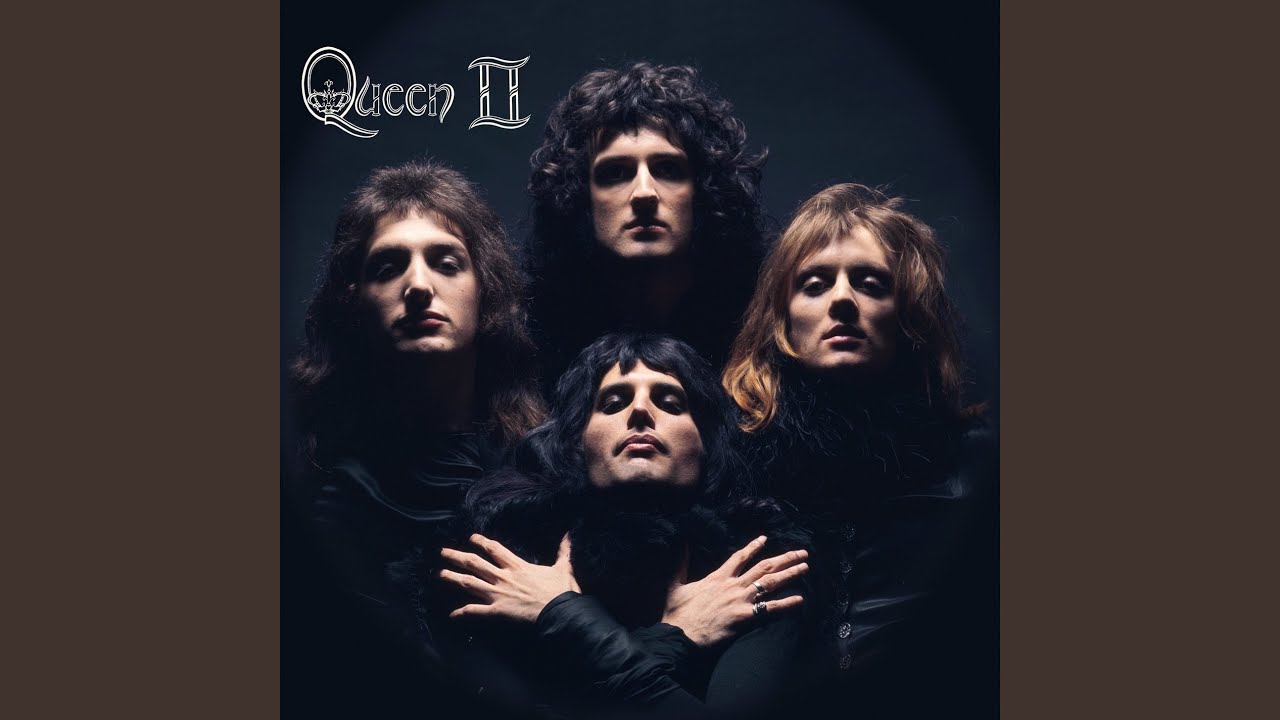
From the very beginning, Queen knew they wanted their second album to be “big”. Both in musical ambition and thematic grandiosity, 1974’s Queen II, as guitarist Brian May noted, enclosed a “whole world”. Though not strictly tied to a concept, it grew from a myriad of influences, from classical literature to chess imagery and Victorian fine art. However, it was frontman Freddie Mercury’s interest in the latter that delivered one of the album’s most outlandish masterpieces, The Fairy Feller’s Master-Stroke.
The track – derived from the 1864 painting of the same name by English painter Richard Dadd – was Queen’s “biggest stereo experiment”, mirroring the complexity of the original artwork as well as the sense of mania that found its way into the mind of its creator. Though masked by an entrenched whimsy, The Fairy Feller’s Master-Stroke conceals a dark history, one involving mental illness, incarceration and murder.
The Fairy Feller’s Master-Stroke conceals a dark history, one involving mental illness, incarceration and murder
Following a brief career in draughtsmanship, Dadd experienced a psychotic breakdown during an expedition through the Middle East in 1842. Undergoing a striking personality change while travelling up the River Nile, he believed himself to be under the direct guidance of the Egyptian god Osiris. Later, upon his journey home through Rome, he became incensed by the desire to kill Pope Gregory XVI, though he abandoned the mission due to the religious leader being “too well guarded”.
Latest Videos From Louder
Dadd’s increasingly violent urges soon turned fatal. At the time, the painter was under his family’s care in Kent, following a diagnosis of unsound mind (by today’s medical standards, his illness would be recognised as schizophrenia) which described an “aberration of the intellect” along with the suggestion of confinement within an asylum.
Uncomfortable with this idea, his father, chemist Robert Dadd, proposed a course of “quiet and retirement” at home. Unfortunately, in the summer of 1843, Dadd – later claiming to have been under the instruction of Osiris – murdered his father by stabbing him and slashing his throat, convinced that the man was possessed by demons.
You may like
The Fairy Feller’s Master-Stroke – YouTube
Upon fleeing to France, Dadd additionally attacked a fellow traveller before being apprehended by French police. After almost a year’s detainment in the Clermont de L’Oise asylum at Fontainebleau, he was then extracted to England, where he was incarcerated in the State Criminal Lunatic Asylum of Bethlem Royal Hospital.
Dadd, who had begun creating fairy-inspired pieces long before his mental illness took hold, was encouraged to continue his work by the hospital’s head of staff, George Henry Haydon, who commissioned The Fairy Feller’s Master-Stroke. From 1855, Dadd worked on the piece until 1864, upon which time it remained – according to him – unfinished.
Meanwhile, Freddie Mercury’s love of art sparked during his formative years at Ealing Art College. In the book A Life In Lyrics, former partner Mary Austin recalls Mercury’s “fascination” with The Fairy Feller’s Master-Stroke. “It began with a story he read in a Sunday supplement. He showed me the clipping and told me we had to go see it, as if it couldn’t wait another day.” Describing the work as small but “so dense”, she continued, “You could stare at it for ages and still miss half of it…it was like a puzzle”.
Measuring just 21 inches tall, it depicts a busy woodland scene centred by the “fairy-feller”, an axe-wielding man positioned to cut through a nut. Around him are winged fairies, Oberon and Titania (king and queen of the fairies in William Shakespeare’s A Midsummer Night’s Dream), peasants, military, a trumpet-playing crane fly, and even Dadd and his father themselves.
Many of the characters, lifted from English folklore and Shakespeare, are given purpose in the painting’s companion poem, Elimination of a Picture & Its Subject-Called the Feller’s Master Stroke, and appear again in The Fairy Feller’s Master-Stroke’s lyrics, which portray each scene: ‘The fairy folk have gathered round the new moon shine / To see the feller crack a nut at night’s noon time’.
What to read next
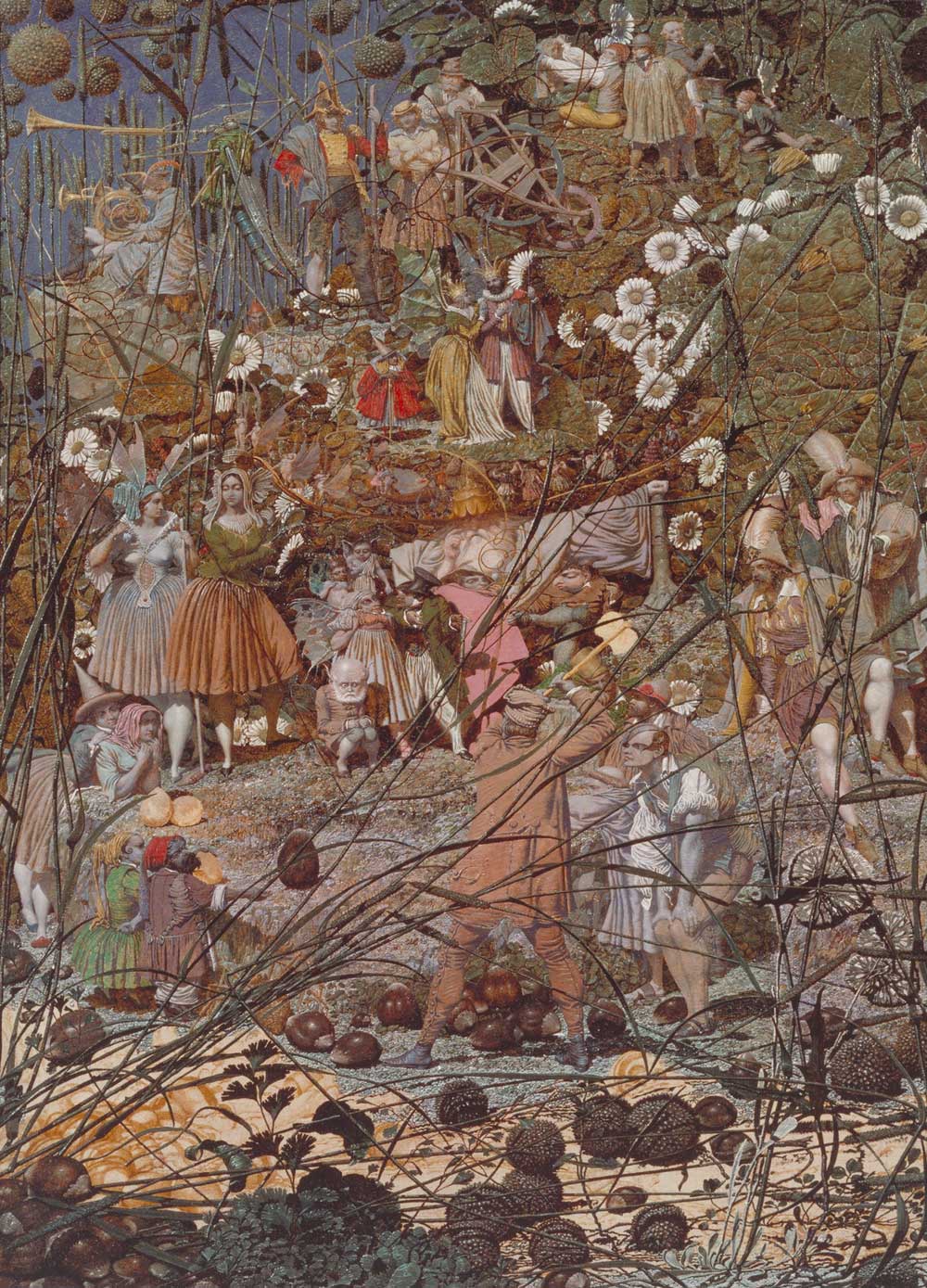
Richard Dadd’s The Fairy Feller’s Master-Stroke, 1855-1864 (Image credit: Richard Dadd/Public Domain)
That song was totally Freddie’s thing. Full of Olde English vocabulary – tatterdemalion, satyrs, pedagogues, ostlers and junketers. Some really astonishing stuff.
Roger Taylor
“That song was totally Freddie’s thing”, said drummer Roger Taylor to Mojo in a 2004 interview. “Full of Olde English vocabulary – tatterdemalion, satyrs, pedagogues, ostlers and junketers. Some really astonishing stuff.”
According to Austin, Freddie was so “transfixed” by Dadd’s creation that he insisted on viewing it on a weekly basis: “We’d go to the Tate, stand in front of the painting, and then go home again.” In a 2014 conversation with Classic Rock, May described his bandmate as “obsessed”. “He used to take us on the bus to Pimlico to see it at the Tate Gallery”, he said. “If you look at [the painting], it’s so complex, with many layers, which is what Freddie was trying to turn into sound”.
On what attracted the singer to the work, Austin believed that he “resonated with the madness. He wasn’t afraid of it”. She explained, “Every visit, we’d find something new. It was folklore, it was fantasy, all these tiny figures layered on top of each other. It showed him how far you could push detail, how intricate you could make something.”
Bustling with energy, The Fairy Feller’s Master-Stroke captures Queen at their most extravagant. Equally as ornate and maximalist as the painting, the track is stuffed full of sound, composed of frantic harpsichord, hopping drums, numerous vocal layers and overdubbed guitar parts.
(Image credit: Chris Walter/WireImage)
We really were consciously trying to break the boundaries of what people thought they could do in the recording studio.
Roger Taylor
“Freddie was really coming into his own”, said Taylor. “With this album he had this crazy plan for this vast number of vocal counterpoints – a six-part harmony there, another six-part harmony overlapping. He didn’t seem remotely bothered by the fact that there were only four of us to sing all these parts.
“It was a massive amount of work. We really were consciously trying to break the boundaries of what people thought they could do in the recording studio.”
Due to its complexity, which, according to May in a 2019 Mojo interview, saw the band push “everything to its limit”, the track “could only have been a studio creation”, and was therefore only performed a few times during the Queen II album tour in 1974. The first live recording of the song appeared as late as 2014, when it was released on Live At The Rainbow ‘74.
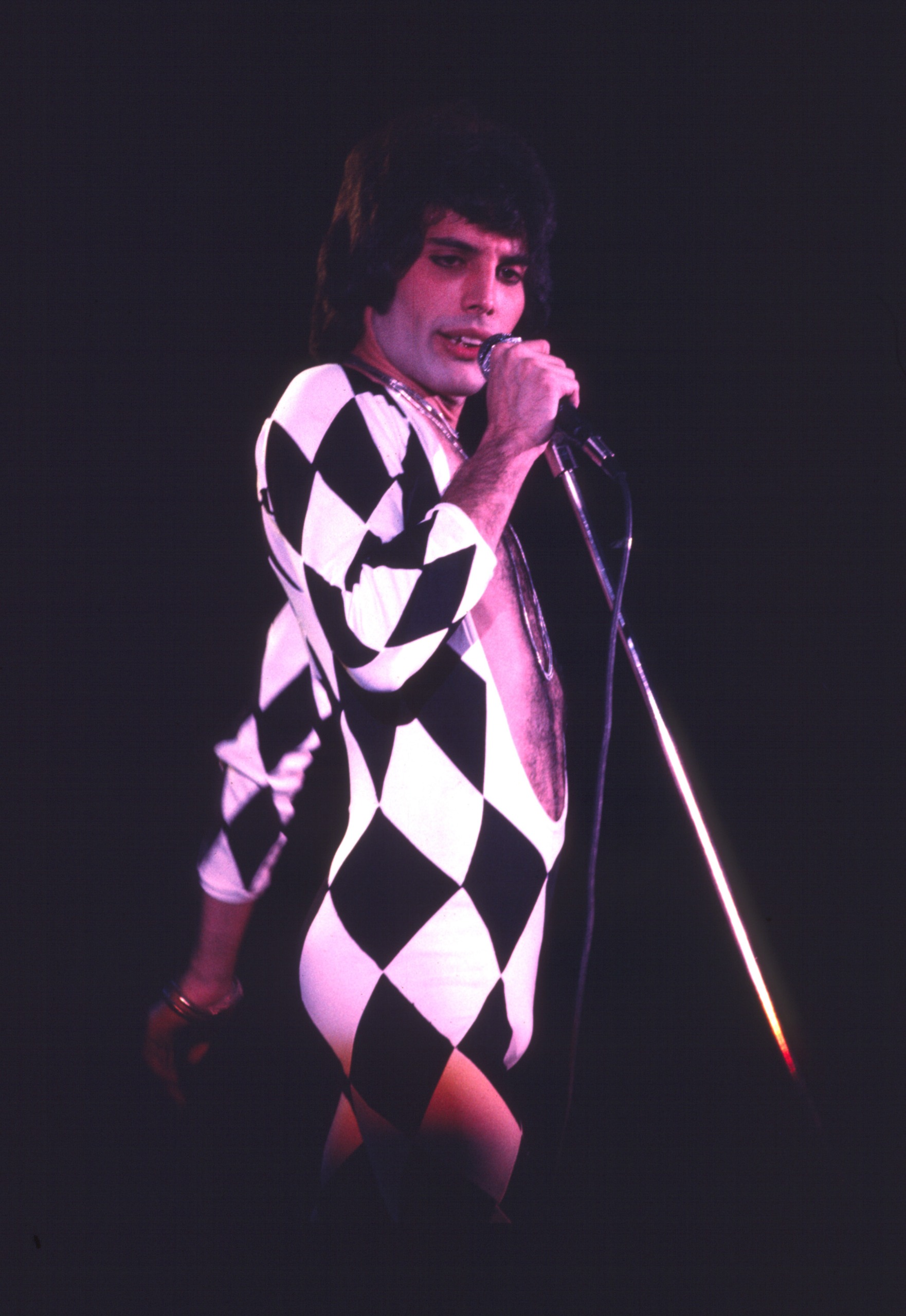
Though The Fairy Feller’s Master-Stroke was rarely performed, Dadd’s creation found another way to the stage – through Freddie’s costumes. As per a 1975 Sotheby’s listing, the frontman approached designer Wendy de Smet with a costume sketch inspired by a character within the artwork, together creating his white ‘Mercury Wing’ catsuit.
At this time of writing, the Royal Academy of Arts is displaying Richard Dadd’s The Fairy Feller’s Master-Stroke in London as part of the first major museum exhibition dedicated to the artist in over 50 years.
However, it’s typically housed at the Tate Britain (formerly known as the Tate Gallery), the place where Freddie Mercury’s enchantment with the artwork originally began, inspiring not only one of Queen’s greatest albums, its formative extravagance a portent to classics such as Bohemian Rhapsody, but numerous other creators, including English comic writer Alan Moore, doom metal pioneers Candlemass and fantasy / science-fiction author Terry Pratchett.
The Fairy Feller’s Master-Stroke undoubtedly holds a complicated, sad legacy, but just like the Queen song born from it, it continues to unveil something new upon every encounter – a masterstroke of obsessive complexity and dedication.
The Richard Dadd: Beyond Bedlam exhibition at the Royal Academy of Arts in London runs until October 25, 2026. Read more about Queen and Freddie Mercury’s last stand in Classic Rock’s latest issue, out now.