
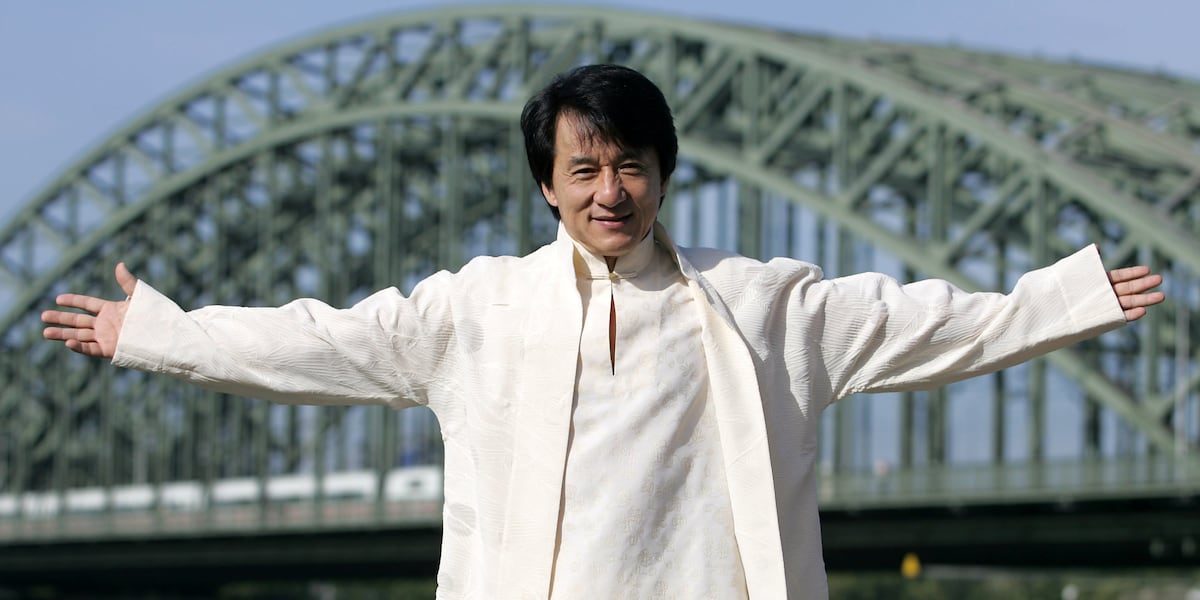
What you are about to read is a Jackie Chan fanboy’s review of a number of films released by Arrow Video in the “Jackie Chan’s Breakout Hits!” 4K collection. Unlike a traditional review I wanted to offer a multi-part narrative that allows discussion of each film while spotlighting what Arrow’s release brings to the table. Please forgive a fan his over-enthusiastic approach. I will divide these articles into sections to allow easy access to reviews if the retrospectives aren’t what you’re after.
How Hollywood (Inadvertently) Made Jackie Chan an Icon
As historians divide history into BC/AD or BCE/CE, so too can the history of martial art films be divided between the time before Bruce Lee and the time after.
Bruce Lee’s sudden death came as his star was on a stratospheric rise. His small filmography broke away from the prevailing wuxia-style and classical settings of the 60’s and early 70’s and brought martial arts into the 20th century. Lee wasn’t about the balletic choreography of Shaw Brothers films. Instead he was about raw power and emotion; violence as a way of taking down oppressors and fighting the system.
When Bruce Lee died in 1973 he left a vacuum. Golden Harvest’s star was finding worldwide audiences, becoming an icon for the oppressed and piquing the interest of a diversity of people in Chinese martial arts.
Quite simply: Hong Kong needed a new star and a new direction.
While studios would attempt to capitalize on Lee’s death (creating an entire genre of Brucesploitation) nothing was sticking and the quality of films coming out of both major HK studios, Shaw and Golden Harvest, were lackluster at best.
Enter Sammo Hung and Jackie Chan. Best friends. Stunt guys at Golden Harvest. Both performed in Bruce Lee movies (Chan has his neck snapped by Lee in Fist of Fury; Hung has a memorable sparring session with Lee in the first moments of Enter the Dragon). Both would work their way up the ladder at Golden Harvest and make their mark.
They did so through a different approach to filmmaking than their contemporaries, directing and starring in kung-fu films emphasizing comedy, acrobatics and stunt work (see Chan’s Drunken Master, the best film of his early career; Hung’s Enter the Fat Dragon is another classic of that era, though he would find greater acclaim in his early career with grounded actioners like The Prodigal Son).
As the 80’s dawned, Chan and Hung would team up on Project A, redefining the scale and danger of stunts in Hong Kong movies (see below for how much these guys were willing to hurt themselves).
(Chan nearly died on the first take but did the stunt two more times after because…well, he’s Jackie freakin’ Chan)
Chan’s rising star was noticed by Hollywood…and they pounced. He would get minor roles in The Cannonball Run films and appear in the middling Battle Creek Brawl. But it was on the hard-boiled cop movie The Protector that the trajectory of Chan’s career would change. The Protector was violent, mean-spirited and made no attempt to channel Chan’s best traits outside his ability to brawl.
So incensed by Hollywood’s style and constrictions, Chan would return to Hong Kong and make Police Story. Suffice it to say while The Protector is a forgotten curiosity, Police Story remains one of the greatest action films ever made. Hollywood had failed to make him a Hollywood star; but inadvertently gave Chan the push to becoming an all-time icon.
Chan would focus on his Hong Kong career for the next decade, making plenty of excellent action films along the way.
In 1995 Chan’s career trajectory would change yet again as up-and-coming director Quentin Tarantino presented the action star with the Lifetime Achievement Award at the MTV Movie Awards. Accompanying the reward was a sizzle reel of all of Chan’s best stunts and fights. American audiences were left asking who the heck this guy was and why the heck they hadn’t seen him before.
At this point, Hollywood was increasingly poaching talent from Hong Kong with John Woo’s success in the west. So with interest in Chan rising and a recently successful Hong Kong movie called Red Foreigners District, Hollywood saw its chance to unleash Jackie Chan on a new audience — recutting, redubbing, and renaming Red Foreigners District to the more memorable Rumble in the Bronx.
Rumble in the Bronx (1996): Welcome to America Jackie
Shot in Vancouver, Rumble in the Bronx portrays the borough as a combination of an 80’s post-apocalypse and a 90’s awful fashion fiesta. This is a Bronx where gangs of punks with terrible hair cuts and blindly-picked-off-the-rack-at-Goodwill outfits ride dirt bikes, stalk grafitti’d alleyways and pick on small business owners in comically evil ways.
Chan plays Ma Keung, a Hong Kong cop coming to New York for his uncle’s wedding. As part of his nuptials, Keung’s uncle is selling off the grocery store he owns, an impressive chimera of architecture that manages to look like a corner shop, the Moulin Rouge and a brothel all in one.
But the aforementioned gang of thugs is shaking down the store and causing trouble for its new owner (played by the late Anita Mui). Keung winds up the target of the gang which is only complicated when he befriends the young, wheelchair-bound brother of the leader’s girlfriend (who also lives next door).
Oh, and if that isn’t enough there’s also a gang of jewel thieves trying to kill everyone because of a diamond deal gone topsy-turvy.
Rumble in the Bronx has a lot going on. Chan’s fish-out-of-water Keung is as lost as anyone can be in this whirlwind of crime and violence and it makes him a sympathetic hero, even if this isn’t his most memorable character. In fact, while Chan’s physical performance is without a doubt the highlight, most of the supporting cast are more memorable. Not for good reasons mind; Danny (the wheelchair-bound brother) is excessively funny for his weird outbursts and there’s a blond thug who steals the show with his hyena laughs and equally strange exclamations.
Rumble in the Bronx gains an identity issue when the diamond-seeking gangsters show up. There’s a lot of cussing and shooting, something that feels at odds with some of the slapstick comedy and more over-the-top characters. In a way it actually plays to the film’s favor in appealing to an American audience; having both the Hong Kong style Chan champions while allowing some of that hard-edged attitude American action films tend to have. But that doesn’t make the tonal whiplash any less jarring, especially in a particularly violent death toward the end.
Regardless of that, Rumble in the Bronx is a good introduction to Chan’s character quirks. As I said, Ma Keung is not a memorable hero but has all the traits Jackie champions in his performances. Unafraid to be foolish, willing to befriend his enemies, not driven by a sense of primal vengeance like many kung-fu heroes but instead a good-natured sense of duty to protect his friends.
You see the latter in how he beats up the biker gang but then invites them to tea after. He’s not driven by rage. He’s driven by a want to make the world a better place. It makes him diametrically opposed to other action heroes like Schwarzenegger or Stallone. Chan’s body count across his films is miniscule compared to his contemporaries. He punishes, but he’s no executioner.
Let’s talk about that action in Rumble in the Bronx. There are a handful of fun set-pieces (a chase through a parking garage, a beat down at a lair-cum-used-appliance-store) but nothing that I would call memorable. Probably the most iconic part is Chan’s joust with a hovercraft at the end, but that’s purely because it’s one of the most over-the-top ridiculous things to happen in an action movie. But again, as an introduction to Chan; this hits the mark.
It also hurts me to say this…but the U.S. cut of the film is better.
Arrow Video’s Jackie Chan’s Breakout Hits! boxset includes both the Eastern and Western versions of the film (in glorious 4K for the first time!). Generally I would encourage watching the original cut, but in this case the U.S. version tosses away a questionable romantic subplot and some pointless plot elements concerning selling the grocery store. Also, the U.S. cut has an infinitely better score, ending with the very of its time Kung Fu by Ash. The Hong Kong version uses ambient, ugly music during fight scenes and ends with a middling Jackie original (yes, he sings his own themes).
For all its faults though, Rumble in the Bronx remains a good introduction to one of the world’s most enigmatic action stars and the wider world of Hong Kong cinema.
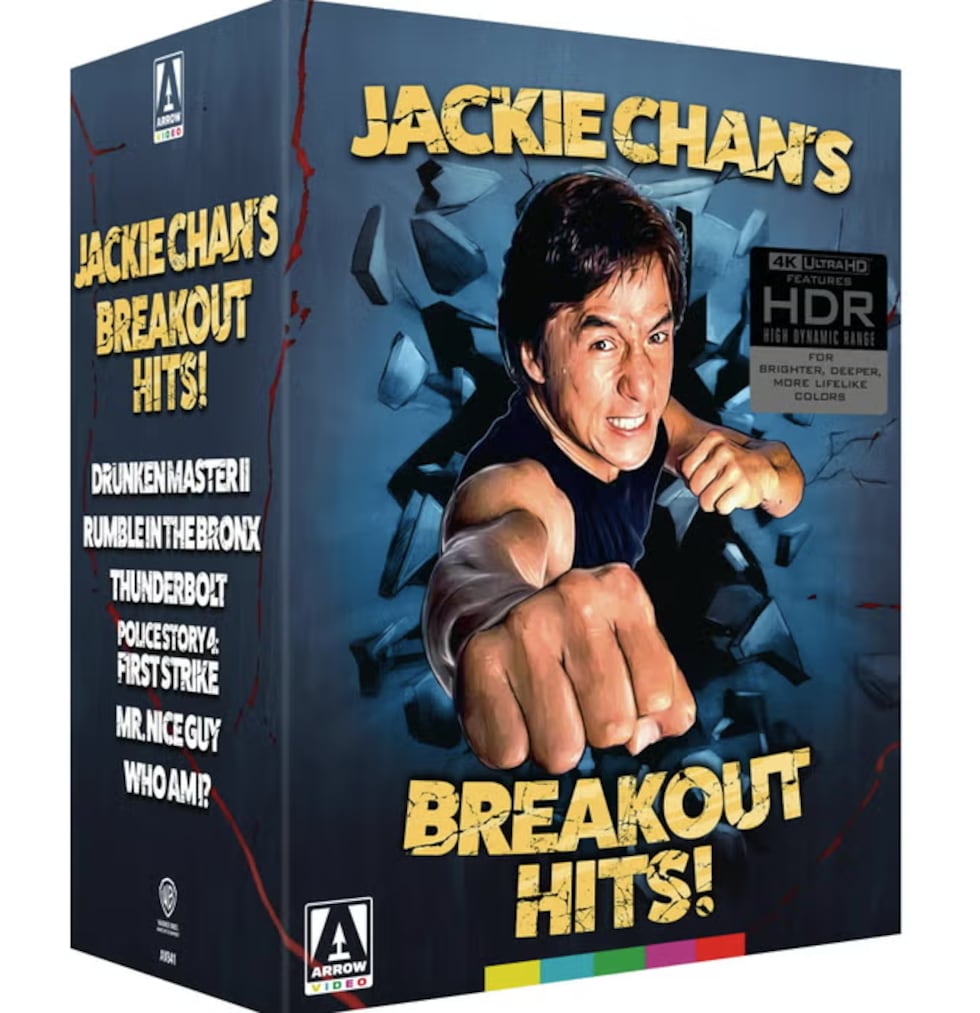 Arrow Video’s release of six classic Jackie Chan films(Arrow Video)
Arrow Video kindly provided a copy of the film. You can check out their Jackie Chan’s Breakout Hits boxset here.
Don’t worry, there’s plenty more action ahead. Next time we’ll light ourselves on fire, practice our performative chef act in the mall and Tokyo drift well before that other movie about Tokyo drifting.
Copyright 2026 13 News. All rights reserved.