
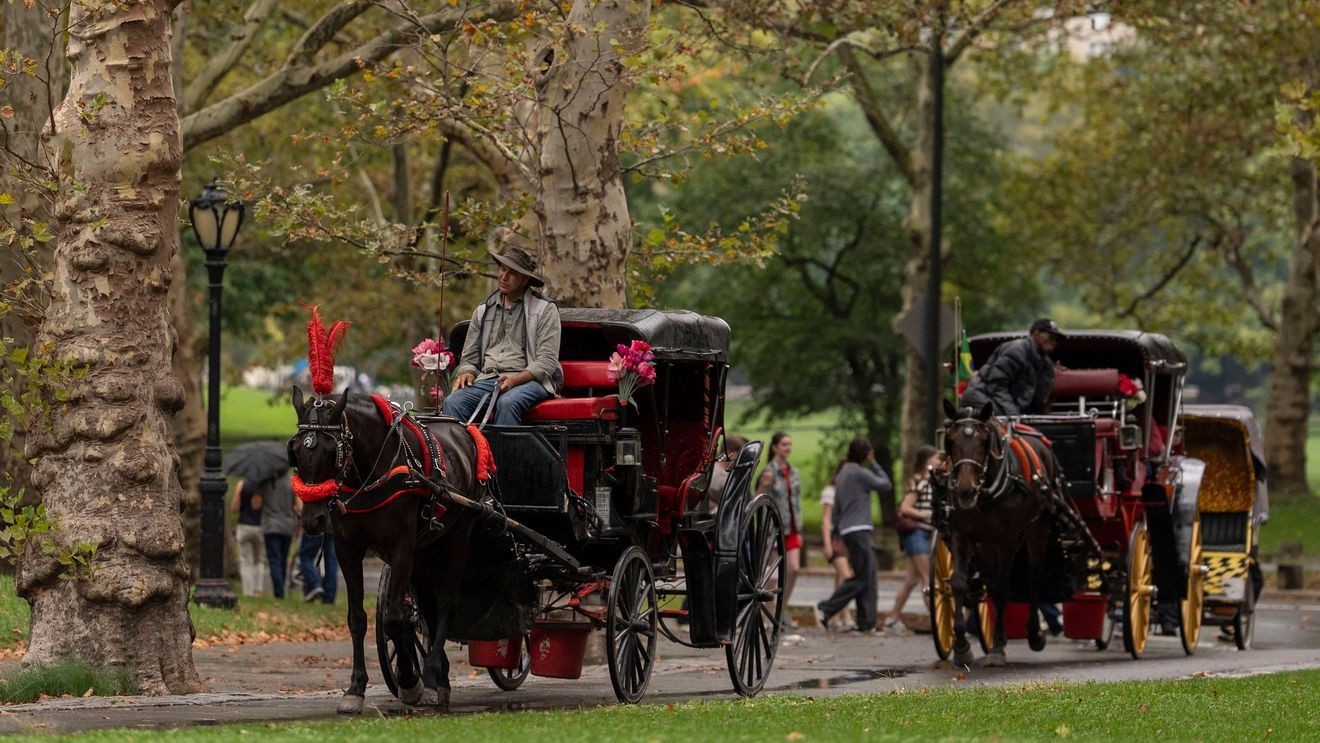
NEW YORK (TNND) — The New York City Council on Thursday approved a ban on horse-drawn carriages, with the rides in Central Park now set to come to an end by June 2028.
Legislation known as Romanch’s Law passed on a 40-7 vote, with two abstentions.
The bill follows the June death of Romanch Mahajan, an 18-year-old tourist who died after jumping from a runaway carriage during a ride in Central Park. His death renewed a long-running debate about the safety of the horses, passengers, and pedestrians.
Animal-welfare advocates applauded the decision, arguing that horses do not belong on city streets. Mayor Zohran Mamdani and Council Speaker Julie Menin backed the legislation.
“Our landmark vote to pass Romanch’s Law is a demonstration of this Council’s commitment to animal welfare, public safety, and worker protection,” Menin said in a statement.”The Council took swift action, hearing hours of testimony from carriage drivers, animal welfare advocates, City officials, and constituents,” she added. “The resulting plan establishes a deadline to phase out the industry while ensuring the development of a comprehensive workforce transition that will protect the livelihoods of the hardworking New Yorkers who depend on it.”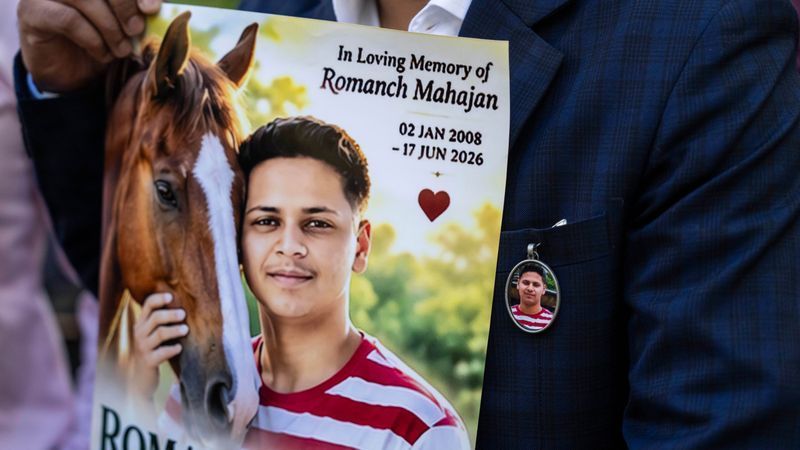
Gaurav Mahajan, uncle of Romanch Mahajan, holds a poster during a press conference ahead of the vote to ban horse carriages in Central Park, Thursday, Oct. 22, 2026, in New York. (AP Photo/Yuki Iwamura)
For carriage drivers, however, the vote brings uncertainty. More than 150 workers could lose their jobs, and their union has said it plans to challenge the ban in court.
Drivers have defended the industry as a heavily regulated, historic attraction that supports immigrant families and draws visitors.
“No one can come up with an appropriate answer because there is none,” said Alexus Lawson, a 28-year-old carriage driver from Queens who grew up with horses and has worked as a riding instructor.
Now, she worries about what would become of 7-year-old Starlight and her other horses.
“Without a job, how can I take care of my horses?” Lawson said.
The measure directs the mayor’s office to create a transition program for affected workers by April 2027. It also requires that the licensed carriage horses be retired or otherwise handled humanely, rather than sold for slaughter.
The ban ends a tradition that has operated in Central Park for more than 150 years.
“When Central Park was created in 1858, NYC had roughly 800,000 residents, and carriages were part of daily life,” according to a post on the Central Park X account. “Now, the Park sees 40M visits a year, and carriages pose a serious safety risk.”
_________________
EDITOR’S NOTE: The Associated Press contributed to this report.