
NYC DOT Tests New Asphalt Mixes With up to 96% Recycled Material to Improve Road Durability and
Reduce Carbon Footprint
Innovative new asphalt mixes made of recycled plastic bottles and steel byproduct could provide
smoother roads and reduce the city’s carbon emissions
NYC DOT is testing the new asphalt mixes on Fordham Road, where the Mamdani administration is
delivering a major project to provide fast bus service to 130,000 daily riders
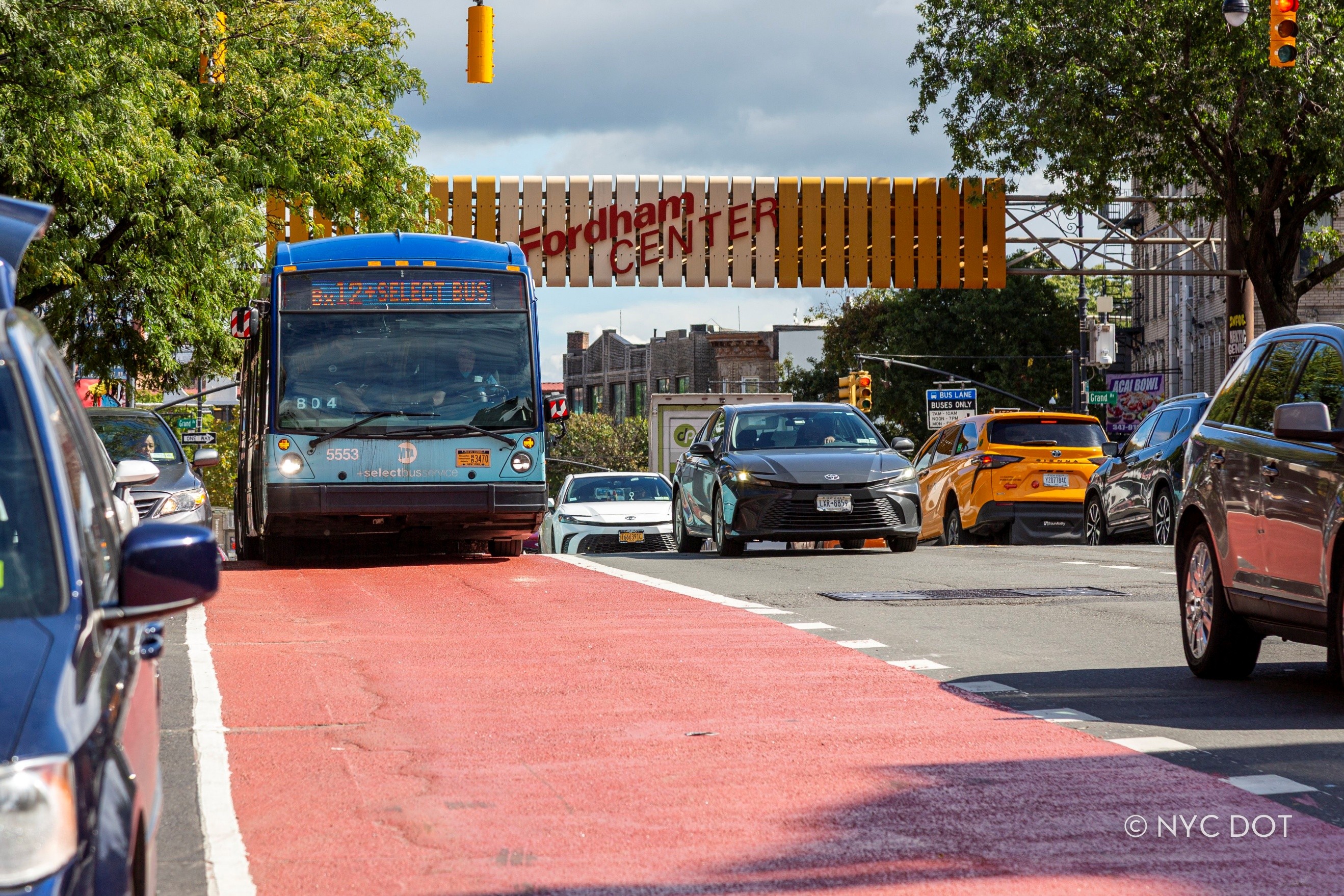
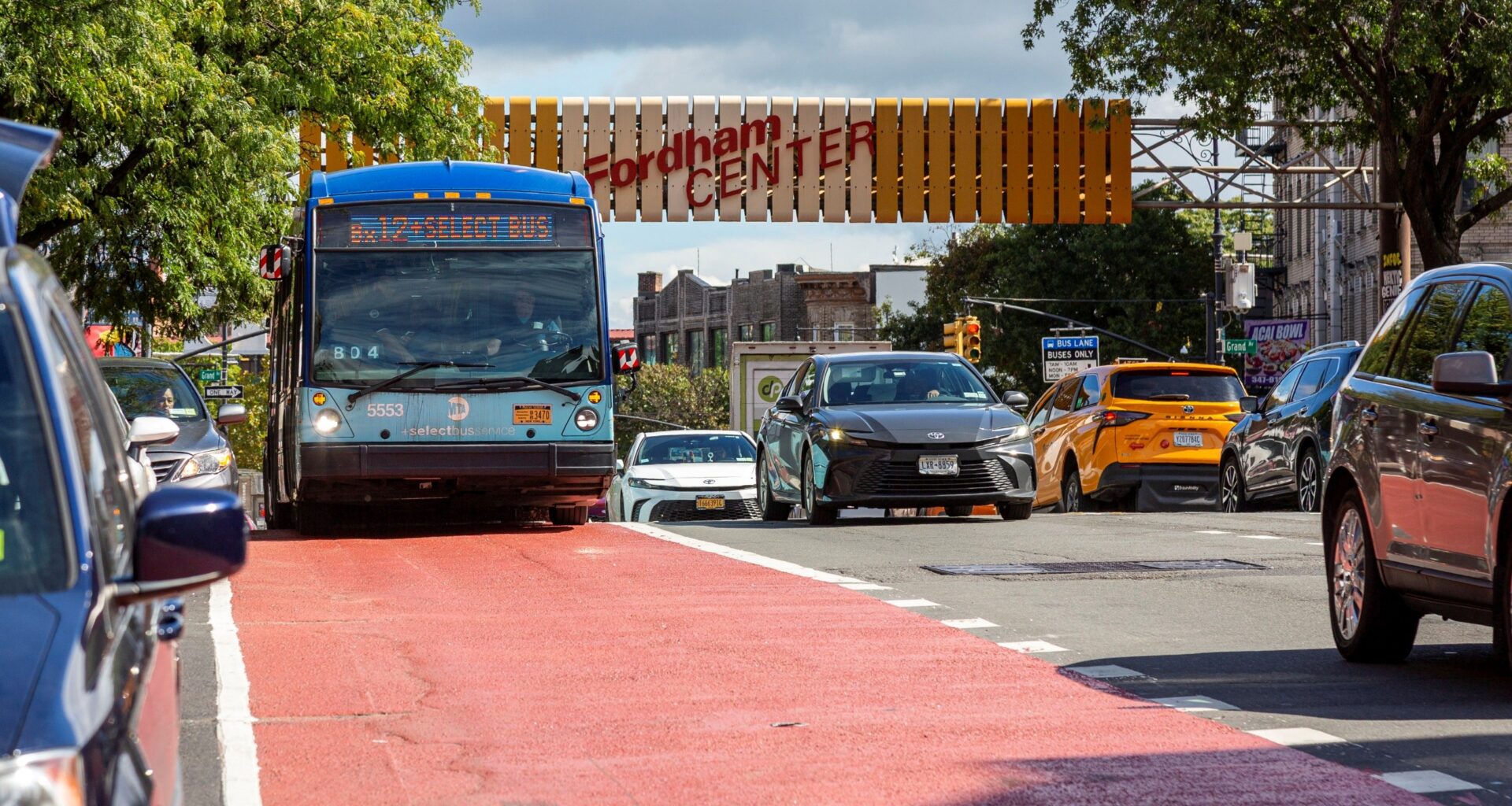
A Bx12 travels along Fordham Road in the Bronx. Credit: NYC DOT
NEW YORK – New York City Department of Transportation (NYC DOT) Commissioner Mike Flynn announced
today the agency is testing two innovative recycled asphalt mixes that could improve roadway durability and reduce
the city’s carbon footprint, with one mix made almost completely from recycled material. One of the asphalt mixes
incorporates recycled plastic, and the other uses byproducts from steel production. The two different mixes are
being tested on Fordham Road in the Bronx, where NYC DOT is redesigning
the corridor to add safety
upgrades and new offset bus lanes that will speed up bus service and reliability for 130,000 daily riders
along the busiest bus corridor in the Bronx.
“As the leading municipal transportation agency in the country, we are always looking to innovate—and that is why we
are testing new asphalt mixes to reduce potholes and our carbon footprint,” said NYC DOT Commissioner Mike
Flynn. “We look forward to testing these products as part of our transformational bus and safety
upgrades on Fordham Road and monitoring how they withstand the tough weather conditions of New York City.”
NYC DOT is using the new asphalt in the eastern section of Fordham Road, from Webster Avenue to Southern Boulevard.
About the New Asphalt Mixes
Steel Slag Asphalt Mix – NYC DOT is testing a steel slag asphalt mix made with 96% recycled material,
including
66% from recycled steel slag aggregate, the byproduct of steelmaking. The inclusion of steel slag in asphalt
could
reduce greenhouse gas emissions and improve roadway durability, including in heavy-traffic corridors, like those
with bus lanes.
Plastic Asphalt – NYC DOT is also testing an asphalt mix that incorporates waste plastic, such as
material derived
from drinking bottles, to modify the asphalt binder as an alternative to virgin polymers. This recycled asphalt
used
in this project alone will reduce greenhouse gas emissions by approximately 56.6 metric tons (124,800 pounds) of
CO₂
equivalent, which equates to the emissions generated by 144,135 miles driven by an average gasoline-powered
passenger vehicle. It also incorporates the equivalent of more than 1.9 million plastic bottles into the
pavement.
NYC DOT is a national leader in the use of recycled asphalt pavement (RAP). NYC DOT’s two in-house asphalt plants
currently produce asphalt with an average of 40% recycled material. By incorporating recycled material into its
asphalt, the city can save money both by shrinking the amount of new asphalt material needed for repaving and
reducing the costs associated with transporting recycled materials to landfills.
Since 2019, NYCDOT has been experimenting with asphalt
mixtures containing up to 50% recycled roadway
materials on a limited scale while monitoring their field performance. And in 2026, NYCDOT developed a 50%
RAP mix in-house for future use on city streets.
The Fordham
Road bus lane project is part of Mayor Mamdani’s Next
Stop: Fast Buses,
Better Service plan to make bus trips faster, more comfortable, and more reliable. The plan will
shorten average commutes by up to six minutes across 175 bus routes, including Fordham Road.
###