
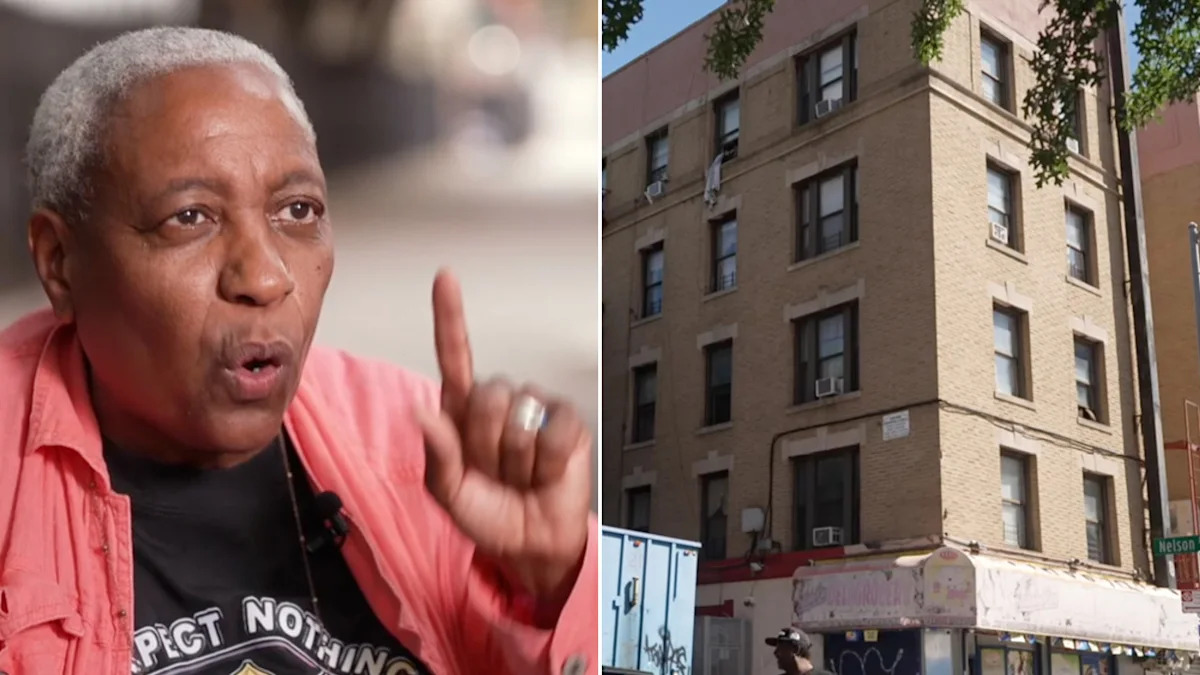
 Courtesy of WABC-TV
In September 2026, New York City agreed to pay $60 million to residents of buildings seized by the city, following a class action lawsuit filed in 2019.
The Big Apple has a program called the third-party transfer (TPT) program, which was introduced in 1996. The stated goal of the program is “to rehabilitate buildings with significant delinquent municipal charges and poor housing conditions, and to ensure that residents remain in place with affordability and rent stabilization protections.”
Must Read
But residents say that the program disproportionately targets Black and Latino communities. Those within the communities say they feel that the program systematically disrupts their ability to create long-term wealth.
How third-party transfers work
Isabel Adon, a resident of a housing co-op in the Bronx, spoke to WABC-TV about the lawsuit and her perspective on her home.
“Overnight, we went from an owner to unknown status and none of us knew what was going on or what was happening,” she told WABC.
At least on paper, the third-party transfer process is supposed to improve things for apartment tenants. For example, if you rent apartments to tenants but haven’t kept up with your property taxes or allowed the property to fall into disrepair, New York City could seize the property and transfer ownership to a nonprofit.
Residents who live in transferred properties continue to live there. That way, the only person whose life and livelihood is disrupted is the bad landlord.
But for the people represented by the class action lawsuit, things haven’t gone quite that smoothly.
McConnell Dorce, the lead plaintiff in the lawsuit, had owned the property he lived in since 1977. He had entered a repayment plan with the City after falling behind on payments for water and sewage, but his property was abruptly seized. To make matters worse, he was not notified about the transfer, and the City continued collecting payments from him.
Housing co-ops like the one Adon lives in are owned by a corporation that sells shares. Those shares allow their owners to live in one of the building’s units.
Co-op owners have said they did not receive notice about the transfer until it had already been completed.
Andrew Stern, a representative from the Department of Housing Preservation and Development, said that the city and counsel for all parties are involved in Round 10 of a previous iteration of TPT under a previous Administration and have settled.
“The Mamdani Administration and the City Council are working together closely to update and strengthen third-party transfer in a way that addresses the concerns outlined in these suits, and that better serves New Yorkers and our goal of creating and preserving safe, stable housing for tenants,” he told Moneywise in an email.
They’re harder to pass down wealth
One of the biggest reasons people want to own their homes is so they can eventually pass them down to their kids.
Third-party transfers disrupt that process in a way that plaintiffs in the lawsuit say disproportionately affects Black and Latino communities.
“This is a systemic way of not allowing people who look like me to have generational wealth,” Adon told WABC-TV. “Not allowing me to have a piece of the American dream.”
Building generational wealth is an important long-term goal for many people, but that’s harder when you could lose your stake in your own home at any time.
For Black Americans, centuries of institutionalized racism and policies designed to limit their ability to generate wealth have made it harder to achieve those goals.
This has resulted in a huge disparity in the wealth held by families across races, with white and Asian households across the U.S. having vastly more wealth — and thus more power to pass wealth down to the next generation — than Black and Latino households.
What To Read Next
Join 250,000+ readers and get Moneywise’s best stories and exclusive interviews first — clear insights curated and delivered weekly. Subscribe now.
This article originally appeared on Moneywise.com under the title: She bought into a Bronx decades ago, then had her ownership stripped away overnight. Now she’s part of a $60M settlement
This article provides information only and should not be construed as advice. It is provided without warranty of any kind.