
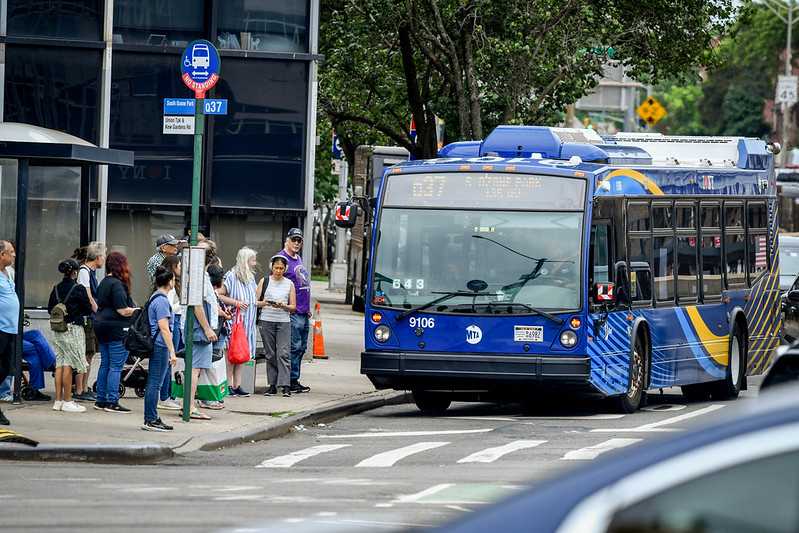
Just over a year after completing an overhaul of Queens’ bus network, MTA officials said on Monday that they found “The World’s Borough’s” buses to be running faster and more reliably than before.
Evan Bialostozky, the MTA’s senior director of network redesigns and special projects for bus service planning, said that since the “Queens Bus Network Redesign,” local buses are moving faster on weekdays by an average of 1.7%. At the same time, he said, their off-peak speeds jumped by nearly 2%.
Bialostozky said the findings came from a comparison in bus performance between the springs of 2025 and 2026 — before and after the redesign took effect. He highlighted the data in a presentation during the Oct. 26 MTA Board committee meetings.
“Many bus routes are faster, many bus routes are more reliable,” Bialostozky said. “Overall, riders are spending less time waiting for the bus and less time on the bus. Riders with the longest trips are benefiting from the new network. Extended routes and adjusted routes are getting people to key destinations faster.”
Furthermore, 24 of the 25 bus routes that saw the greatest speed jumps across the city during the period of the MTA’s analysis were in Queens, according to the agency. Forty-one Queens bus routes experienced speed boosts of 3% during that time as well.
MTA New York City Transit President Demetrius Crichlow, also speaking during Monday’s committee meeting, said the redesign sought to accomplish four key objectives: “faster travel, better connections, more reliable service, and simplified service” for the borough’s roughly 800,000 daily bus riders.
“I’m thrilled to say that the team has delivered on all fronts,” Crichlow said.
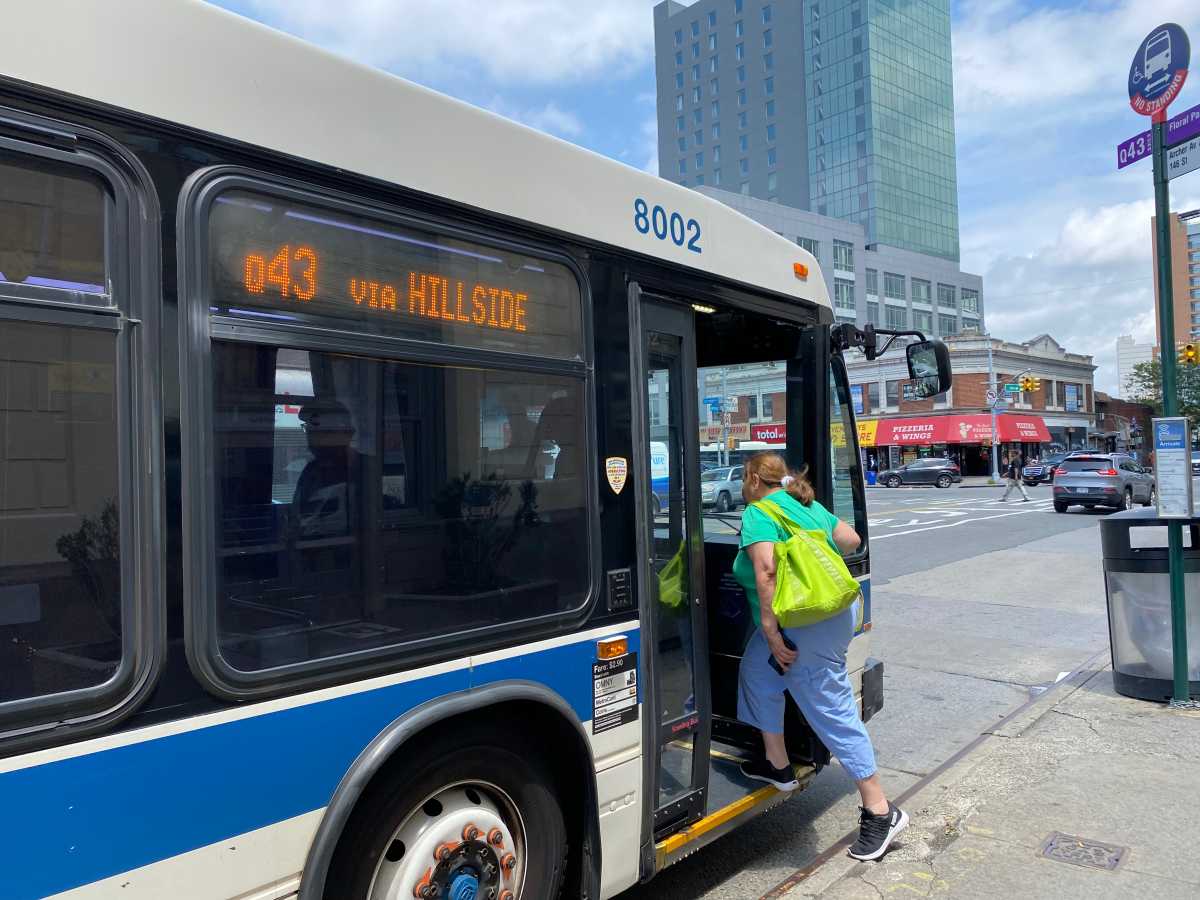 A Q43 bus in Jamaica.Photo by Barbara Russo-Lennon
The MTA launched the redesign in two phases in the summer of 2025, following six years of planning informed by community input. It is part of the agency’s broader effort to change how buses move through each of the five boroughs in order to better reflect changes in demographics and commuting patterns over several decades.
MTA official: ‘Rush routes’ in Queens making difference
The Queens bus network reconfiguration added 17 new routes, converted 25 more to a new type called “rush routes,” changed some portion of 49 others, and increased the spans and frequencies of another 25, according to Bialostozky. Queens now has 124 routes, including 94 local and 30 express — a net increase of 11.
Bialostozky said the changes mean that 124,000 more Queens residents now have access to a bus that arrives every 10 minutes between 6 a.m. and 9 p.m. and 68,000 have 24-hour service.
The shakeup also yielded the addition of rush routes. They are designed to make local stops in outerborough transit deserts and then skip stops on major thoroughfares in order to move riders to subway stations more quickly.
Those routes saw a 4.6% speed increase as well as an 11% boost specifically in rush segments, according to the MTA,
“In the new network, bus riders with the longest journeys are seeing the most benefits,” Bialostozky said. “Rush routes improved travel times for those furthest from the subway, especially in midday, when many former limited routes did not operate.”
Bialostozky added that riders can save up to and over five minutes per trip when traveling from one end of a rush route to the other.
“For instance, the Q36 Rush is saving riders over six minutes between the Little Neck Long Island Rail Road station and Jamaica,” Bialostozky said.
Bialostozky also noted new connections created by the redesign.
Among those, he said, are the new Q51 Limited, which connects South Ozone Park and Cambria Heights along Linden Boulevard, and the Q74 Limited — a route designed to ease travel between the Forest Hills-71 Av subway station, Queens College, and Queensborough Community College. Those routes save riders 18 minutes and six minutes on their trips, respectively.
Bialostozky said the MTA’s analysis also showed that buses in Queens are more reliable since the redesign.
Customer Journey Performance Time (CJTP), the percentage of trips that arrived at their destination within five minutes of their scheduled time, this past May was the highest it had been for Queens buses since the MTA began publishing the metric — excluding the COVID pandemic years of 2020 and 2022. In Queens, 71.2% made it to their destinations within five minutes of scheduled times as of this past spring.
“Customers who understandably planned for how long their bus trip could take are saving precious time from their day as their journey times are more predictable,” Bialostozky said.