
New York state is doing OK financially, budget officials say, as questions swirl around tax hikes for the wealthy, universal child care and free buses in New York City.
After a year of concerning messaging from state leaders over New York’s fiscal reality and the impact of budget cuts stemming from the federal budget bill, according to the state Division of Budget, things are looking better than expected despite a $26.8 billion cumulative budget gap by 2029.
The annual budget Quick Start meeting at the state Capitol is largely a ceremonial affair, but it offers a glimpse into the state’s finances just two months before the governor’s executive budget is released.
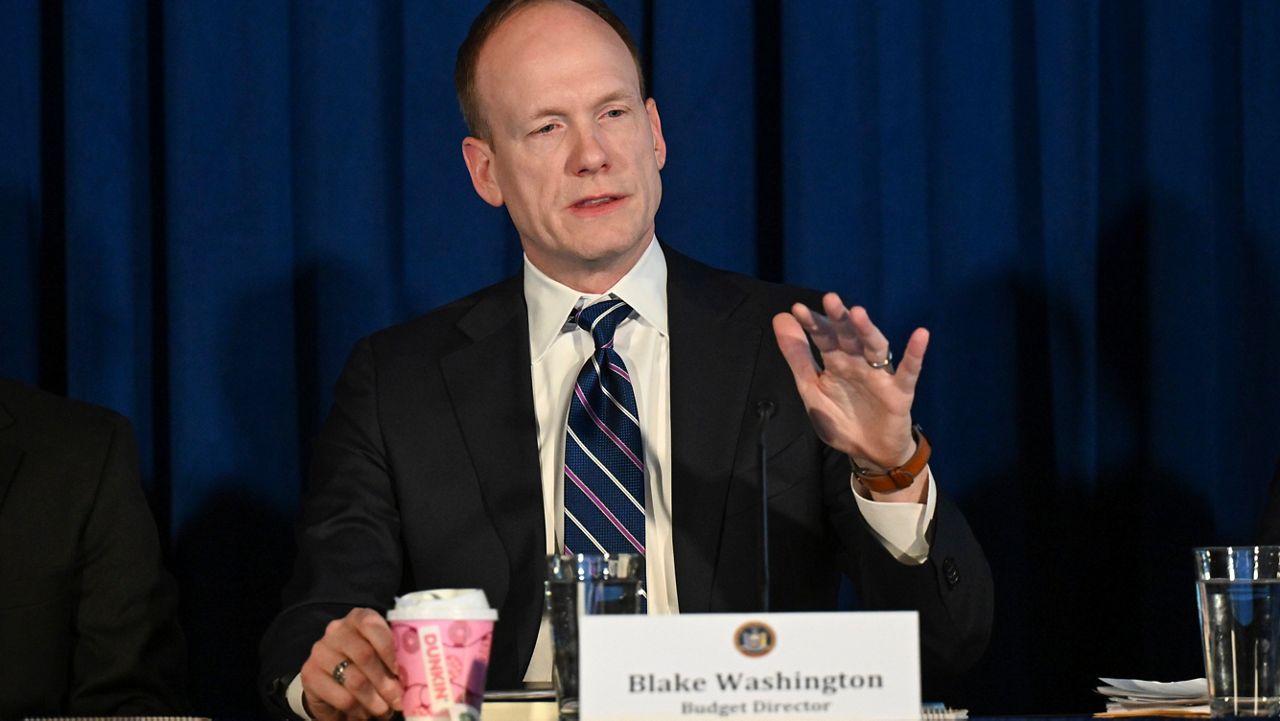
State Budget Director Blake Washington reiterated what was revealed two weeks ago in the state’s mid-year update: that revenues are in better shape than expected thanks to more robust tax receipts from Wall Street, and budget gaps are trending downward and “manageable.”
He also threw cold water on calls from progressives to raise taxes on the state’s highest earners. Clamoring for takes hikes on the wealthy have reached a fever pitch amid New York City Mayor-elect Zohran Mamdani’s victory and his sweeping agenda which would require state buy-in. Gov. Kathy Hochul on multiple recent occasions has been forced to contend with riled up crowds demanding she move off her opposition to such an increase in order to fund the assemblyman’s campaign wish list.
Washington doesn’t see it happening.
“I think taxes are a last resort and at this moment in time, when we’re in a good spot financially and on good fiscal footing, that’s the last thing on my mind,” he said.
With the state in a good enough financial spot for number crunchers to not be overly concerned about impending budget gaps, Washington said that should be an indication that we have not arrived in last resort territory.
“To the extent that we have enough revenue on hand to support the things that New Yorkers care about, that we have resources to make investments that the governor and the Legislature care about — then so be it,” he said.
Tax hikes have also become a campaign issue in the budding showdown between Hochul and Rep. Elise Stefanik as the 2026 gubernatorial race heats up more by the day.
“I believe Kathy Hochul will ultimately bend the knee and raise taxes,” Stefanik said on Fox News this week. “If she punts it for a year like she did with the congestion pricing commuter tax, voters are smart, they know she lies to get elected.”
Hochul in her own appearance on CNN was asked if she stands by her promise of “no new income taxes.”
“Yes,” Hochul said. “I’m the one putting money back in people’s pockets and cutting middle-class taxes and finding ways to support child care. These are areas where I’m aligned with Zohran Mamdani, and we’ll work on this.”
A central part of Mamdani’s campaign has been universal child care.
Hochul in recent days has reiterated a commitment to getting there, but stressed that the cost of doing so in one fell swoop is equal to the entirety of the state’s reserves.
While the expectation among many advocates and lawmakers is that something will be done to move the needle this upcoming year, Washington also pointed to the fiscal reality of going all in on universal all at once. He also reminded New Yorkers that the conversation would be taking place at a state level.
“It’s a big number, it’s roughly $15 billion on a statewide basis, that’s something that cannot be solved overnight, but what can you do in the near term? Those are the discussions that are going on right now,” he said.
When it comes to what to do about the state’s child care assistance program, which is in a state of crisis and has been since earlier this year, Washington called on local governments to better communicate their needs ahead of time as the state works to avoid a repeat of last year’s budget process where the problem emerged so late that funds had to be reallocated to bail the system out. Despite that effort, several counties closed enrollment.
Lawmakers have acknowledged that the state also played a role in creating a situation where enrollment was drastically increased and what was actually required to meet that need was unclear.
Washington said conversations are ongoing as to the path forward.
“It’s a matter of fitting it into the financial plan among all of the other competing interests before us, we talked about Medicaid and school aid specifically,” he said.
It has been floated by some lawmakers and child care advocates that a potential path forward this year could be some sort of targeted pilot program or phase-in, which would help get things off the ground.
As it relates to free buses, Washington said any consideration would have to involve the entire state, which would exceed the $1 billion projection for New York City.