
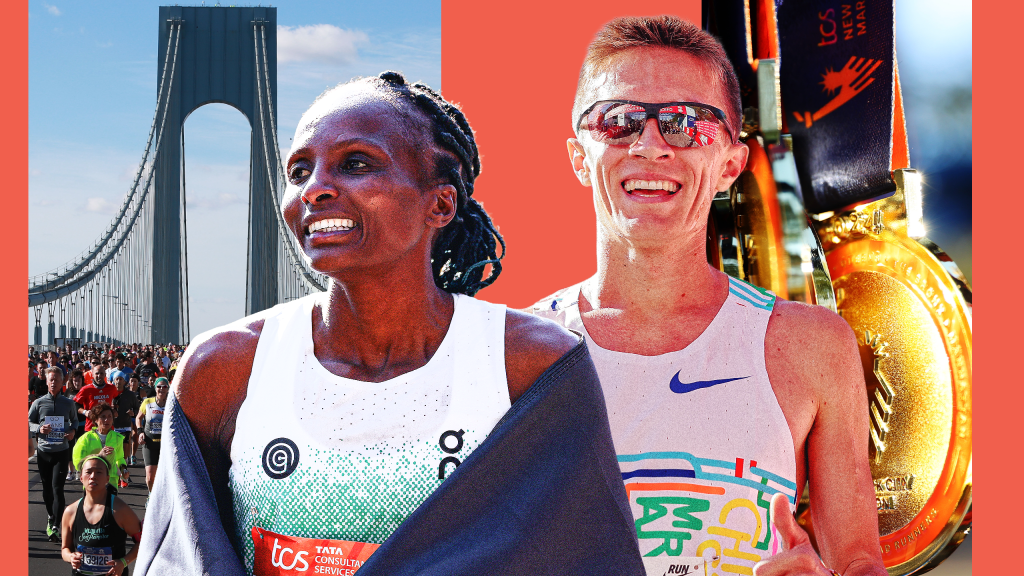
The 2026 New York City Marathon will celebrate 50 years of the race running through all five boroughs, and demand has never been higher. Host New York Road Runners received a record 240,000 applications for this year’s race lottery, a 20% surge from 2025. And just 1% of those applicants were accepted, making it easier to be admitted to Harvard than earn a slot in the drawing to race 26.2 miles through the city.
The flourishing marathon industry has been fueled by a post-pandemic running boom and in part by dramatic advancements in running footwear. Race fees and philanthropic donations are on the rise, and marathons around the world are innovating to capture the surge.
The New York City Marathon boasts roughly 60,000 participants, of whom roughly 2,400 enter via the lottery. Other methods of entry include raising money for charity, slots for corporate sponsors and time qualification. The most reliable form of entry for New York area runners is what NYRR calls its 9+1 program, whereby runners who complete nine other NYRR races and volunteer at one in a given year are allotted guaranteed entry to the following year’s marathon. Demand for 9+1 has gotten so great that, for the first time, the NYRR implemented a drawing for the 2027 program.
But for professional runners competing for world records and top prize money at these races—winners of Sunday’s NYC Marathon will take home $100,000, plus an additional $50,000 if they break the course record—the industry feasting on the demand has some quirky disadvantages.
Conner Mantz is the American record holder in the marathon, whose 2:04:43 personal best puts him in a small cohort of runners contending for the win on Sunday. Still, he said he finds himself competing with everyday hobbyists for endorsements, which is the bedrock of professional runners’ income.
“It is weird to see how much influencers have kind of taken a lot of the sponsorships that probably were, at one time, going to the professional runners,” he said. Though he has contracts with Nike, Maurten gels and Shokz headphones, he feels pressure to constantly post on social media, when the bulk of his job entails running and training.
“I don’t want to be thinking about it constantly, and I know some professionals do think about it constantly,” he said.
Content creators in sports have been on the rise for years. Tennis has come to embrace influencers as a means of expanding the popularity of the sport, and this year’s U.S. Open tournament underscored the impact of content creators on everything from match atmosphere to ticket prices. Pro sports leagues, including the NFL and NBA, have also welcomed content creators to cover their events.
And like all categories of creators, running influencers have had mixed effects on the sport. Matt Choi was banned from the New York City Marathon last year after he completed the race with two unauthorized videographers trailing him on electric bicycles. Other creators, such as podcast host Ali Feller, have built large, wholesome followings by bridging the conversation between everyday runners like herself and elite professionals, earning sponsorships from the likes of New Balance and Vuori along the way.
Bill Rodgers, who won the New York City Marathon four times in the 1970s, said the trendiness of the marathon today is a far cry from his heyday.
“People used to make fun of marathoners. You know, way back [then] they would say, ‘Oh, the jerks are out there in their shorts again,’” Rodgers said. And while today’s elite professionals and everyday runners are competing for sponsorships and lucrative prize purses, Rodgers won his marathons while he worked full-time as a teacher.
He thinks the mass appeal of marathoning today is because “it’s like the Olympics for everyone else.”
The surge in marathon participation has transformed major races around the world. Rob Simmelkjaer, NYRR chief executive, said on Sportico Sports Business Presented by Endava this week that philanthropic donations are about to overtake as the nonprofit’s second-largest source of revenue, after race fees.
Other major marathons are experimenting to accommodate demand. For example, next year’s London Marathon is planning to host the race over two consecutive days in April, allowing organizers to double the field of participants to 100,000 runners. They will also split the professional fields, with elite men competing Saturday and elite women competing Sunday. Organizers said they decided which gender would race on which day by a game of rock, paper, scissors.
Professional runners are skeptical about the experiment, aimed at welcoming a larger field of runners and putting a brighter spotlight on each field of elite racers.
“I don’t know if it’s a good idea that they do it like this,” Yemaneberhan Crippa, a 2:05 marathoner from Italy, said. “It’s not the same [experience] because what if Saturday the weather is rainy, and the day after is different?”
Asked how races could better accommodate the surge in participation interest, World Championships bronze medalist Julia Paternain of Uruguay said, “That’s a tough question. … Really, you need more space, but you can’t just invent space.”