
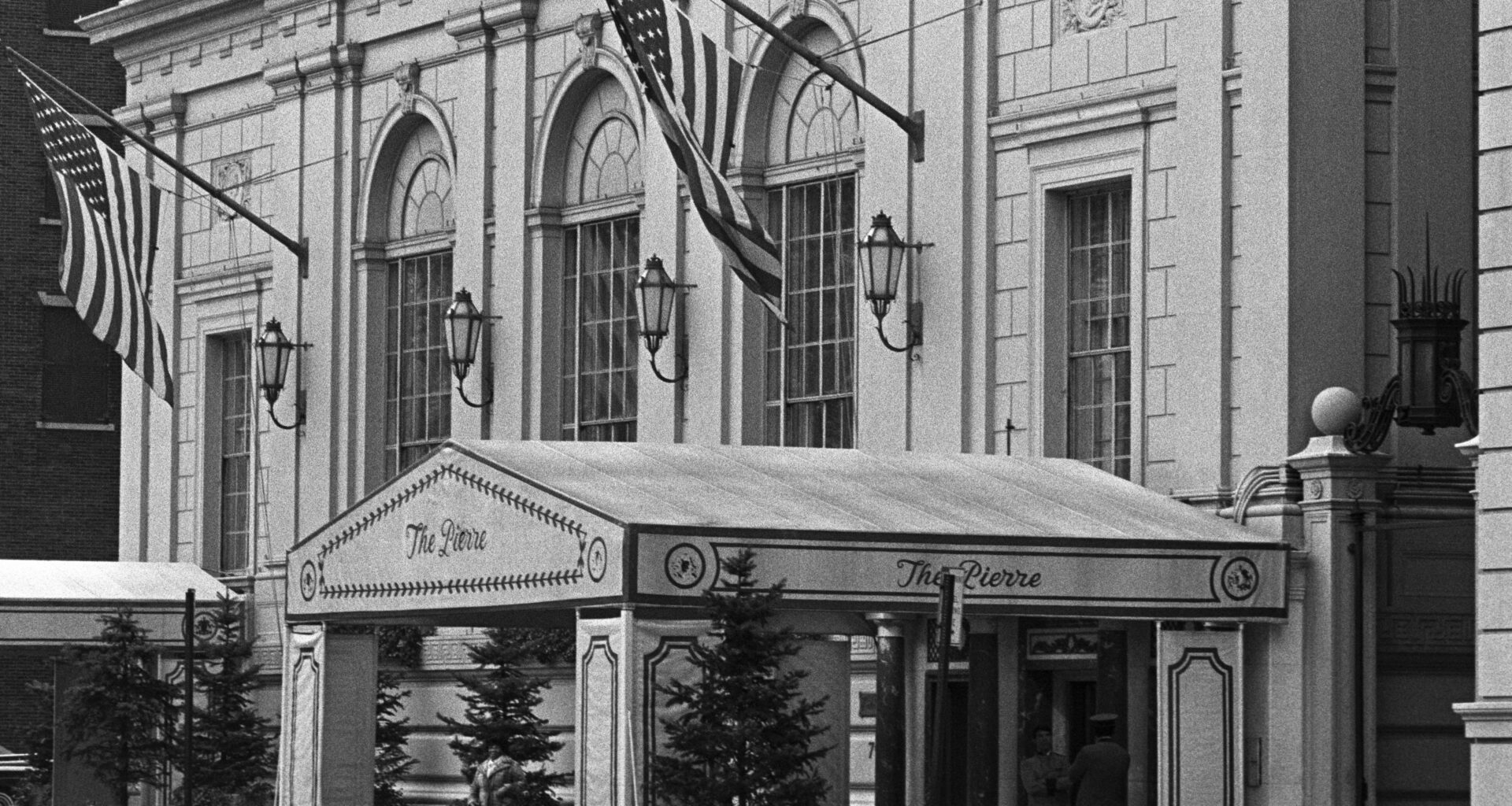
When The Pierre Hotel opened its doors in 1930, it instantly became a playground for Manhattan’s elite. Over the past 95 years, this iconic hotel has witnessed everything from the repeal of Prohibition to jewel heists and Hollywood scandals, all while maintaining its reputation as one of New York’s most glamorous destinations. From its $15 million debut to hosting Hollywood royalty and surviving the Great Depression, The Pierre has remained a beacon of glamour in the heart of New York City since 1930.
A Complete History of The Pierre Hotel
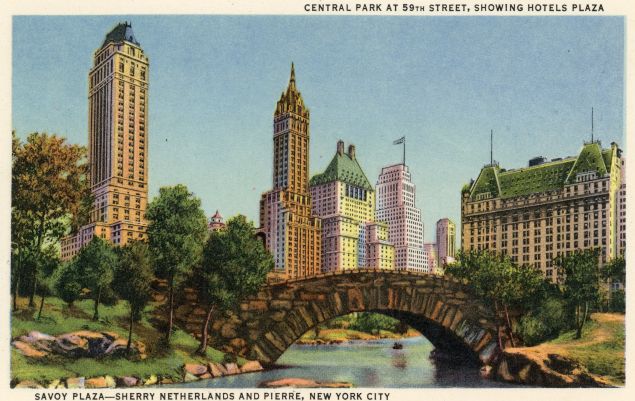 Image by Nextrecord Archives / G
The Early Days: A Playground for Manhattan’s Elite
When The Pierre Hotel opened on October 1, 1930, casting its 714-room shadow over Central Park, it instantly became the playground for Manhattan’s elite. Merely four months later, E.B. White’s Ballad of the Hotel Pierre was published in the New Yorker, describing it as home to “The little band that nothing daunts/this year’s most popular debutantes.” This was true. Prospective debutantes had started booking the ballroom for their November entrances in June, months before the luxury hotel opened.
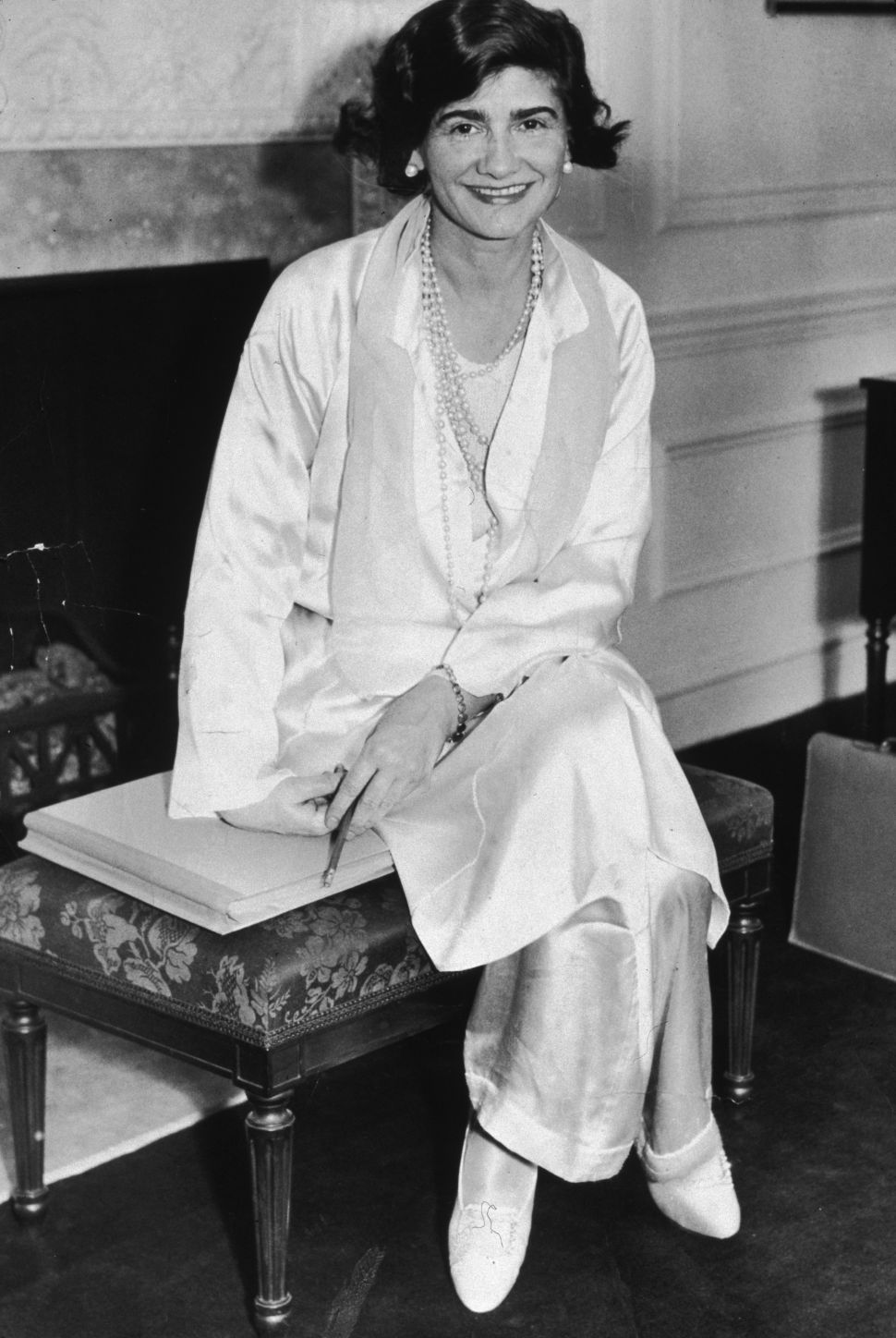
Gabrielle ‘Coco’ Chanel posing in her suite at The Pierre during her first visit to New York City, on March 10, 1931.
Getty Images
Within a year, the film and stage star Ina Claire was sinking into a club chair at the hotel as she discussed with journalists whether she would be divorcing John Gilbert. (She claimed she would not. She would.) In 1932, Coco Chanel called The Pierre home during her first visit to New York. And that same year, the famed “Tobacco King” Arthur Mower refused to leave his Pierre bed for his stepdaughter’s early morning wedding .
Little wonder no one wanted to leave. Every inch of the 41-story hotel offered an almost otherworldly spectacle. The 60-by-100-foot ballroom where those debutantes waltzed was paneled in mirrors flanked by rose marble columns imported from French quarries. The chandeliers above sparkled with traces of ruby crystals from the room that would become known for the “swankest presentation balls” given for the city’s “spoiled darlings.” Attendees might make their way to the Grill Room, which was decorated to resemble an “undersea garden.” Wall panels and ceiling murals replicated ocean foliage, and the carpet was woven with images of seashells and sea urchins. In the upstairs dining room, paneled in hand-carved French walnut, interspersed with gold brocade hangings, Auguste Escoffier, the father of French cooking, prepared the hotel’s first meal.
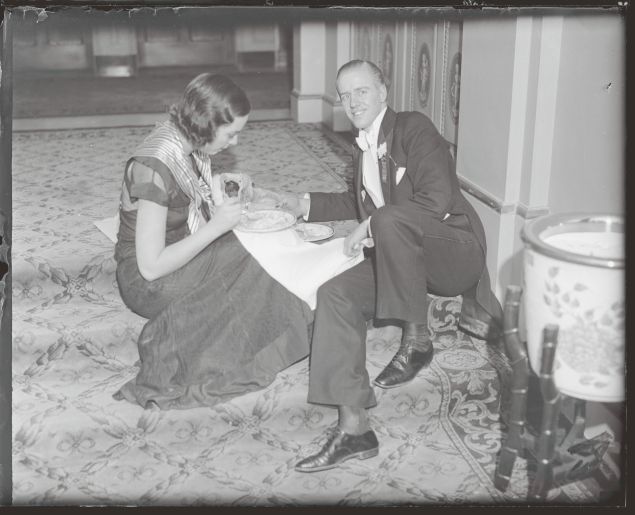 Bettmann Archive Miss Elizabeth R. G. Duval, a prominent member of New York society, and Sidney Wood, a well-known tennis star, sit on the steps inside The Pierre in 1933.
From Waiter to Hotelier: The Story of Charles Pierre
But The Pierre didn’t begin in those gilded rooms. It began in a kitchen, with a Corsican waiter named Charles Pierre Casalasco, who learned the trade from his father. When Louis Sherry dined at the Savoy Hotel in London in 1903, the American restaurateur noted a young waiter watching him with eager attention. Casalasco was “awed by this former waiter who had become proprietor of a smart dining room in New York.” Sherry was so impressed with the waiter’s desire to learn more about the hospitality business that, when he returned to New York, he made Casalasco his assistant. There, the waiter quickly dropped his surname in favor of being known simply as Charles Pierre. At that time, it was almost a forgone conclusion that New York’s debutantes were introduced at Sherry’s ballroom. Charles Pierre, tasked with organizing these splendid events, became “the favorite of the younger set, married matrons and the dowagers.”
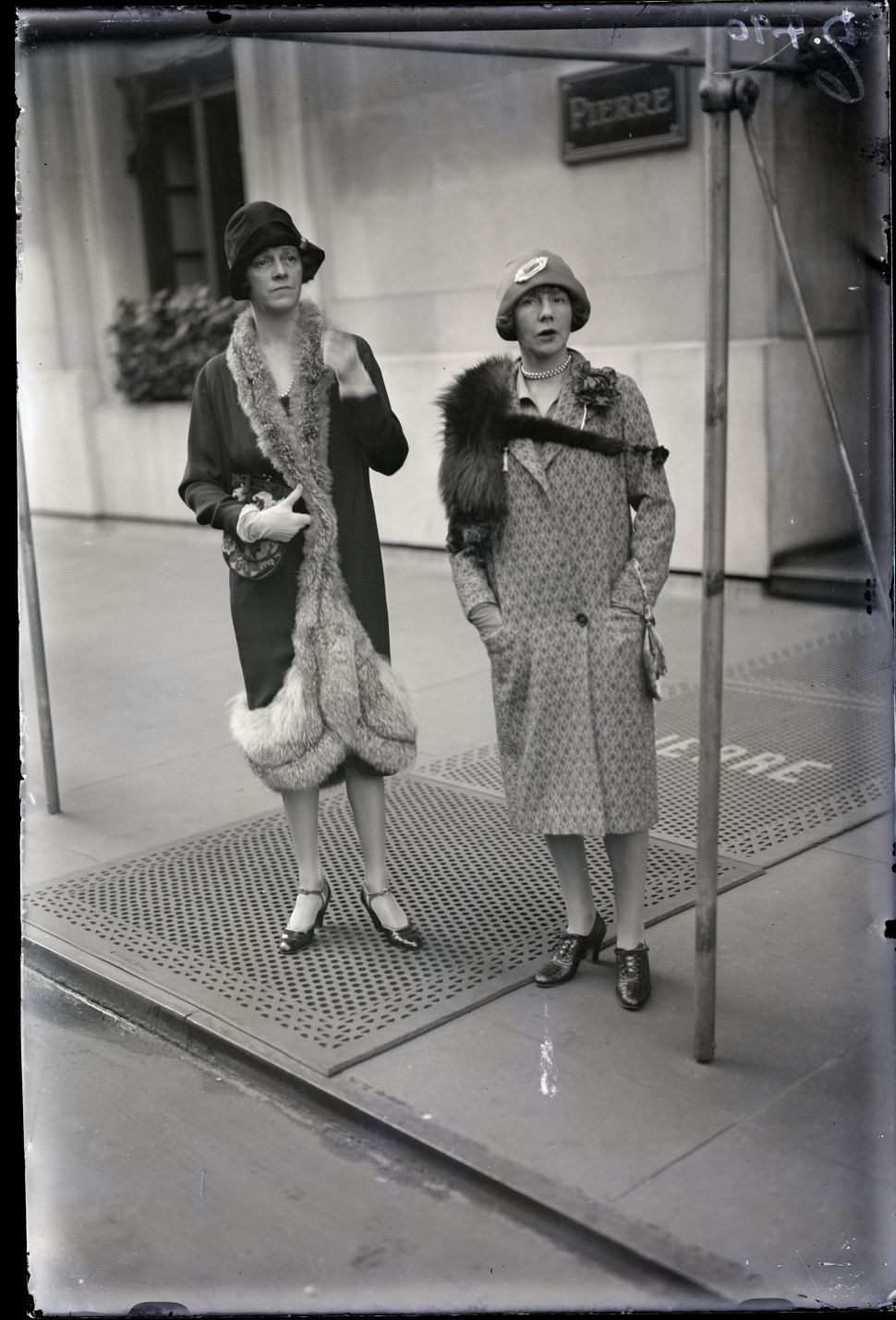
Smart set, Mrs. Robert Goddard and Mrs. Roland Hazzard, in front of The Pierre.
Bettmann Archive
When Charles Pierre opened his own Park Avenue restaurant in 1920, his devoted group followed him. In 1930, their social set husbands, like Walter Chrysler, Edward Hutton, and C.K.G. Billings, helped finance his dream, The Pierre Hotel, which reputedly cost a staggering $15 million to build. In retrospect, too much may have been spent on those underwater-themed murals. By 1932, during the Great Depression, a petition of bankruptcy was filed—but Charles Pierre was kept on as managing director to run the hotel.
Disciplined and knowledgeable with a European flair, Charles Pierre ran the hotel with aplomb.
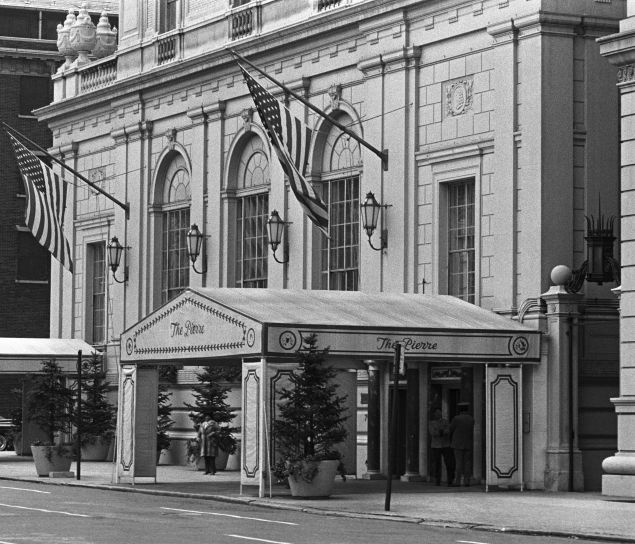 Penske Media via Getty Images
The Return of the ‘High-Class Hotel’
When the repeal of Prohibition came in 1933, he rejoiced. No hotel man was more excited by the prospect of liquor coming back on the menu again. He declared that Prohibition had destroyed American appreciation for wine—and really any liquor that did not come from a bathtub. Now, a “new generation will have to learn all over again how to drink.” He intended to outfit The Pierre with a wonderful cellar to teach them. He planned gala celebrations. People could now gather for cocktails at his newly opened supper club, the Corinthian Room. He promised, “The next few years will see the rejuvenation of the high-class hotel.”
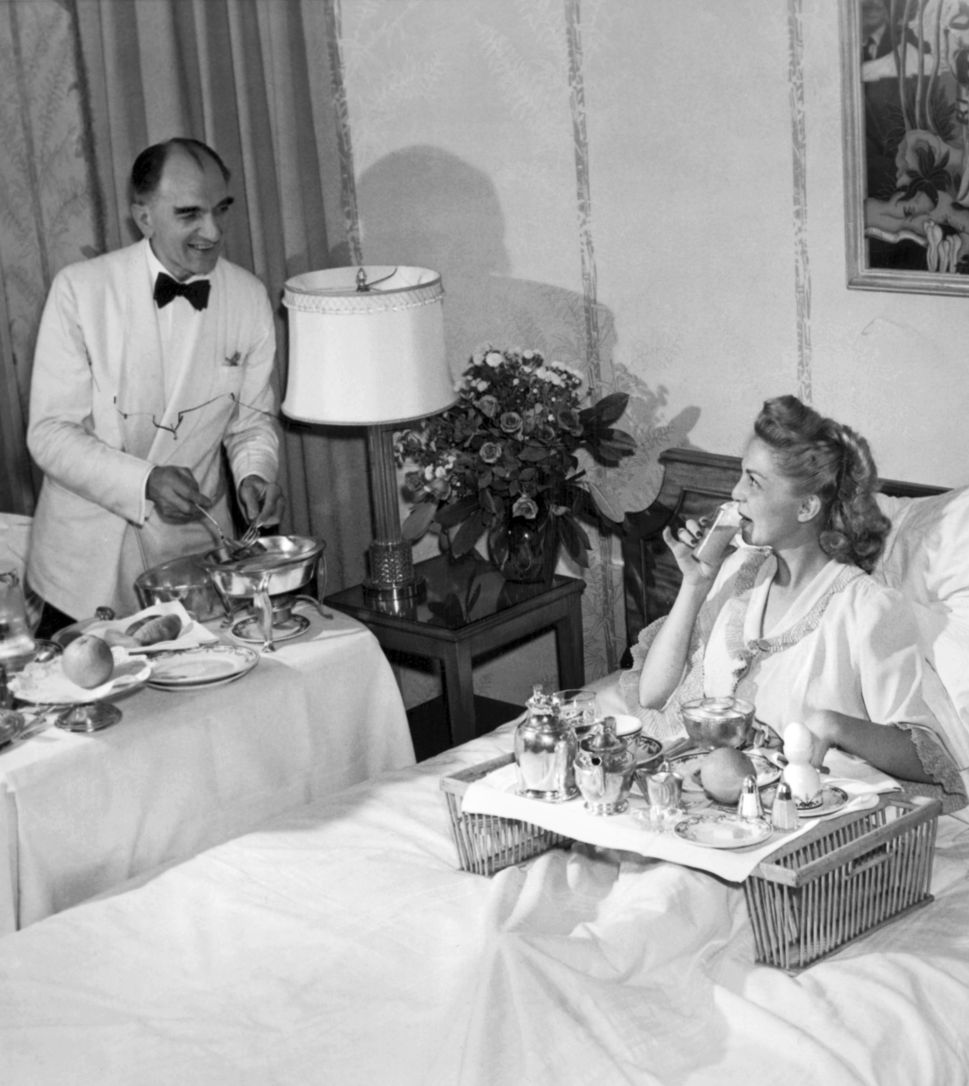
A young woman enjoys the luxuries of room service at The Pierre in 1943.
Getty Images
He was correct. But sadly, Charles Pierre would never see the heights to which his hotel would climb. He passed away in 1934 at the age of 55 from appendicitis. He was too weak from an abdominal infection to be saved by medicine flown in from Florida in what was described as a “13-hour airplane race against death.”
But his legacy lived on in The Pierre Hotel.
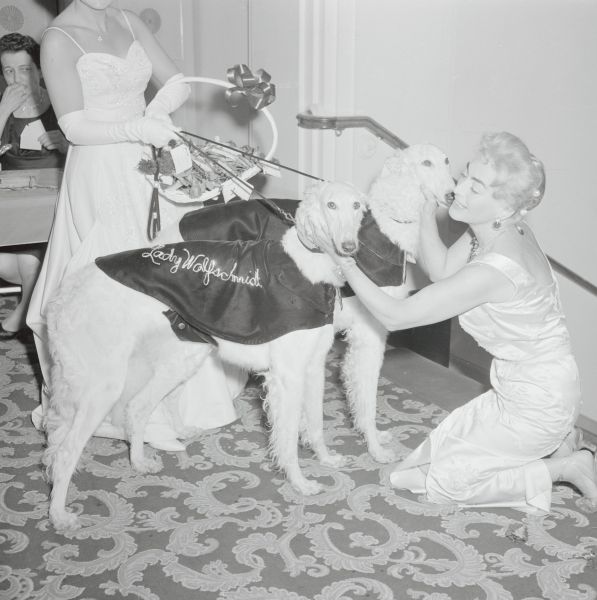 Bettmann Archive Joan Crawford at The Pierre on January 22, 1959.
Celebrities like Joan Crawford and Claudette Colbert would flock there, as well as younger disciples. By 1938, following her father’s death, the 13-year-old heiress Lucetta Cotton Thomas was spending $1,416 a month (approximately $32,000 today) to live at the hotel. Eloise at The Plaza had nothing on her. By that time, the hotel belonged to oilman John Paul Getty, who quipped that it was his “only above-ground asset.”
In 1944, the hotel—and the room prices—were the subject of scandal. It was found that munitions manufacturer Murray Garsson had housed and paid the hotel bills for key personnel in the army’s Chemical Warfare Service in what was known as “Operation Pierre.” In 1942, the decorator Samuel Marx had redone the hotel’s dining room in red, white and blue, and commissioned murals of early American life for the Grill Room, so it was certainly a patriotic wartime pick. However, officers knew that, when traveling to New York City, they had a $6 daily stipend. As even young Lucetta Cotton Thomas could have told them, rooms at the Pierre cost somewhat more. Garsson may have received $78 million in government contracts, but was imprisoned for bribery in 1949. Still, no one at the trials said that they did not like staying at The Pierre.
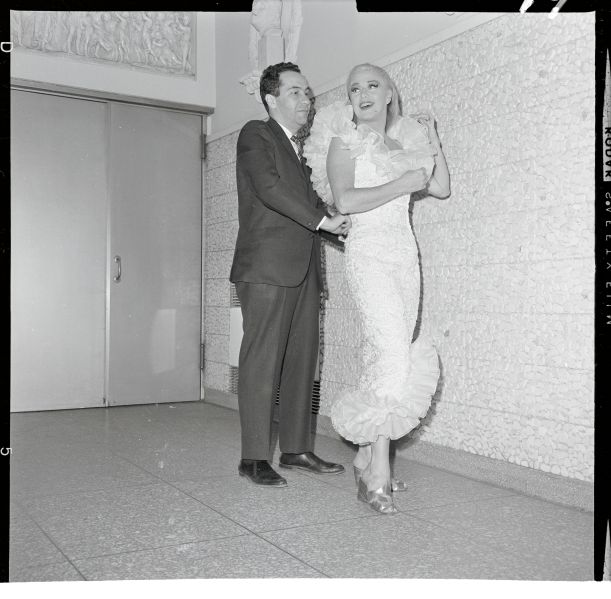 Bettmann Archive Ginger Rogers gets her Daiquiri-toned French lace dress fitted by its designer, Richard Meril, in preparation for the “Prestige Award from France” fashion show at The Pierre Pierre.
1950s Glamour and The Birdcage Bar
By the 1950s, the hotel had reached new heights of glamour. Chief among the novelties was The Birdcage, a plexiglass bar suspended above the rotunda. It was splashily advertised as “a rendezvous for cocktails.” Charles Pierre, who once prophesied that people would flock to his hotel for drinks, would have been pleased.
In the coming years, the hotel would not only be home to the city’s toniest citizens, but Hollywood royalty. Joan Blondell noted that, when her dog “gave birth to seven puppies, the manager of the Pierre hotel assisted the vet in delivery.” Audrey Hepburn stayed there throughout the filming of that quintessential New York movie, Breakfast at Tiffany’s. During those years, she was feted at the hotel with a gala hosted by Countess Alexandra Tolstoy. The meeting would inspire one of her future roles in War and Peace.
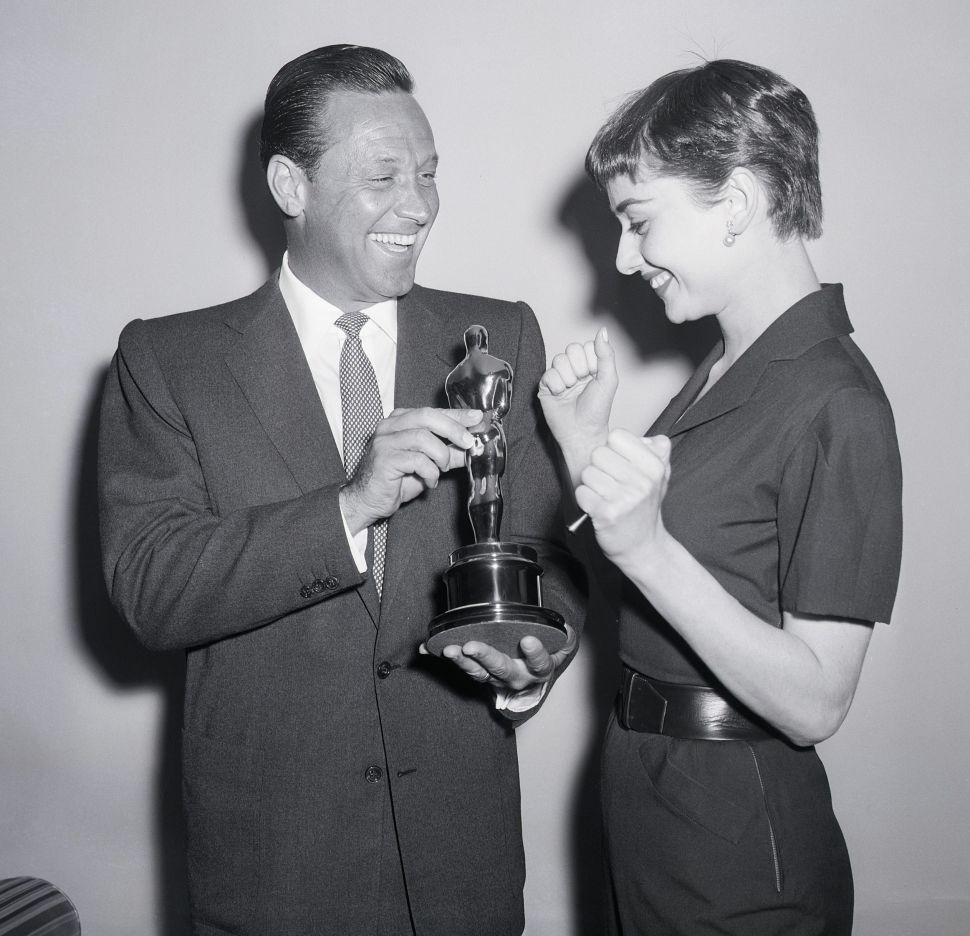
Audrey Hepburn, who won Hollywood’s Academy Award for her performance in the film “Roman Holiday,” is ecstatic after finally receiving her Oscar at a special ceremony in at The Pierre. Sharing her enthusiasm is fellow winner William Holden
Bettmann Archive via Getty Images
The fact that in 1958 the hotel became a co-op, where guests could buy apartments, only added to its appeal. Especially as those apartment owners included Aristotle Onassis and Elizabeth Taylor, the thought of visiting New York from Middle America may have been exciting on its own. The thought of running into Elizabeth Taylor in the lobby of the hotel you were staying at was almost overwhelming.
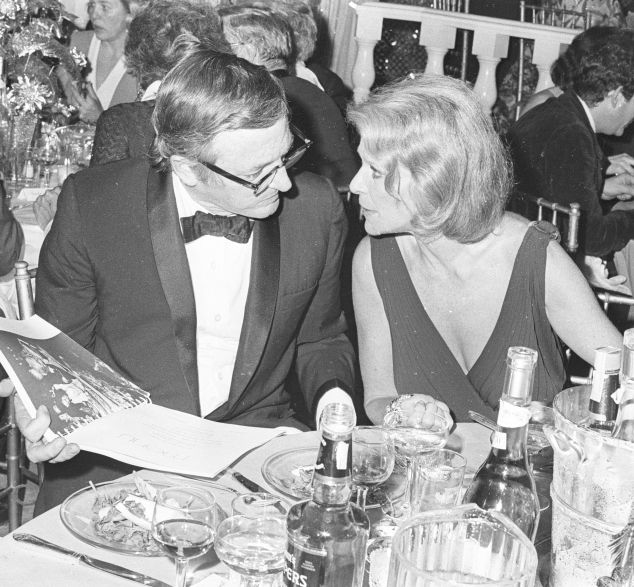 Penske Media via Getty Images Bill Buckley and Nan Kempner at an annual gala held at The Pierre.
Jewel Heists and Fashion Royalty
By 1967, the hotel underwent a transformation also fit for royalty. The new owner, Peter Dowling, commissioned Edward Melcarth to paint the rotunda’s iconic trompe l’oeil mural. Inspired by 17th-century palaces, Melcarth claimed that he wanted to “make people feel very special and important when they walk into this room. The figures are heroic in scale because I want to rehumanize man as an individual. We’re not digits on a computer card.” The people in the mural, accordingly, were not confined to the past. The painting features columns and Greek gods in recline, alongside “a hippie boy and mini-skirted girl” meant to depict a modern Adam and Eve. Rather to her surprise, Melcarth’s mural also boasted a depiction of former First Lady Jacqueline Kennedy Onassis. (Kennedy asked to be removed from the picture. Melcarth accommodated by partially disguising her, but a discerning visitor can still spot her image.)
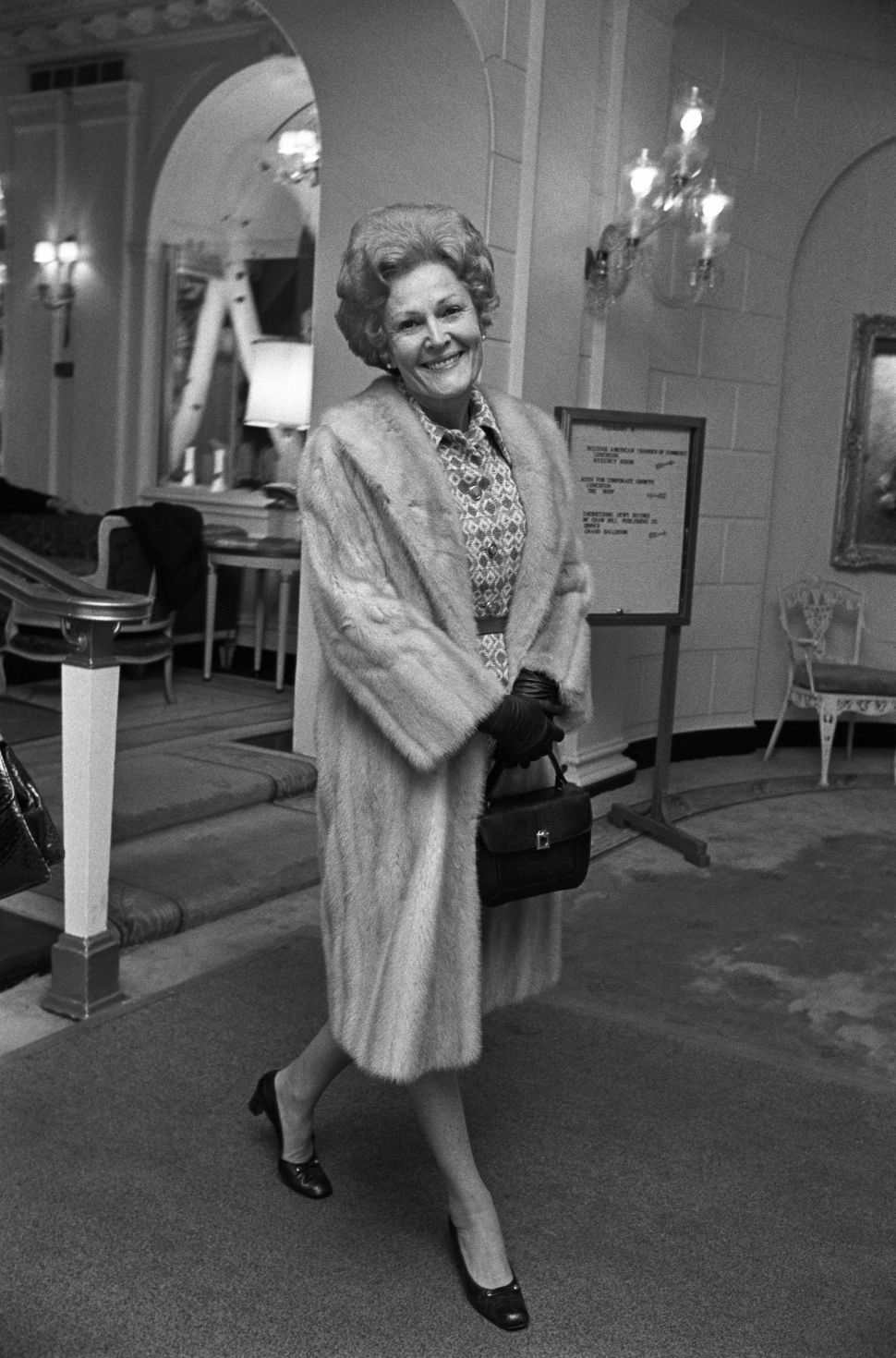
Pat Nixon leaving The Pierre to go shopping.
Penske Media via Getty Images
Visitors would get a less agreeable thrill when burglars broke into the hotel on January 2, 1972. On that day, four reportedly well-dressed gunmen pulled up to the hotel in a limousine. They handcuffed a variety of employees and guests. After, they proceeded to clean out 47 safe deposit boxes containing approximately $3 million in jewels, before departing, again, in a limousine. The men were arrested within a week, and the jewels recovered, though police recalled it as being one of “the biggest and slickest hotel robberies ever.”
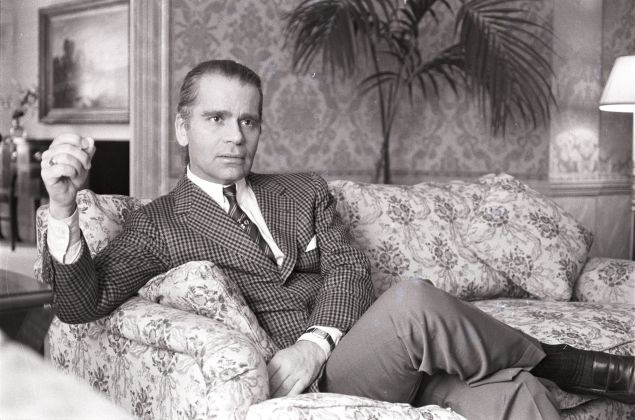 Penske Media via Getty Images Karl Lagerfeld at The Pierre in the 1970s.
The flurry of reportage around the jewel theft only increased the hotel’s allure to the fashionable set. In 1970, the designer Karl Lagerfeld, a habitué of the hotel, would say, “I discovered New York from The Pierre . . . Distances in the city were measured only by how far they were from The Pierre.” He did not have to go far to see his friends. Givency, Yves Saint Laurent and Valentino were all regulars—Valentino even bought St. Laurent’s Pierre apartment in 2007.
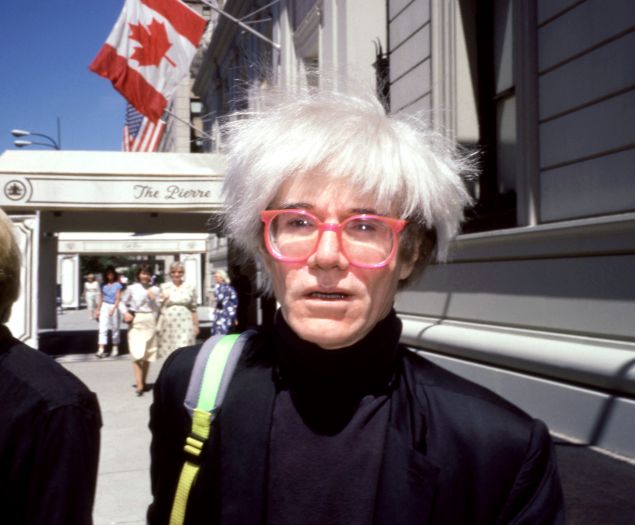 Getty Images Andy Warhol outside of The Pierre in 1985.
Pat Nixon, not to be outdone by Jackie, had designers bring their creations to her while staying in a suite at the hotel. In 1975, Betty Ford went to see the first Chanel Fashion show in the country, held, predictably, at the hotel Coco herself had loved. By 1976, Jackie Kennedy was on the premises once more, this time with Valentino for his show benefiting the Special Olympics. Television Dynasty star Joan Collins showcased her hats at the hotel in 1985, with Andy Warhol in attendance. The hats were lovely, but did prompt a reporter to wonder, “When, besides for lunch at the Pierre, would someone wear a large straw hat?” This seemed as much an inducement for many to lunch at The Pierre as it was for them to do away with hats.
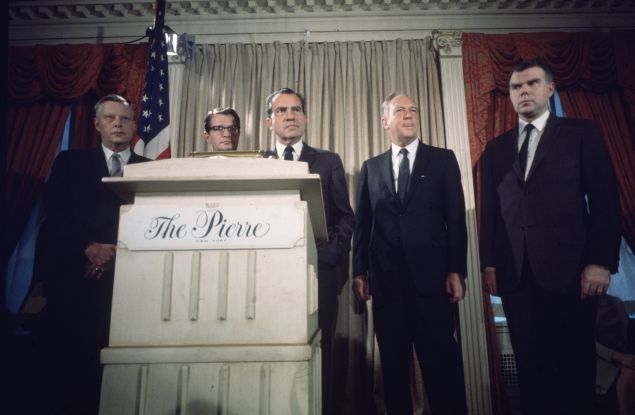 Getty Images Richard Nixon at The Pierre in January 1969.
The Pierre on the Silver Screen
By the 1990s, the hotel again found itself connected to Hollywood, although this time in front of the scenes. Al Pacino twirled in The Pierre ballroom for the famed tango scene in 1995’s Scent of a Woman. The penthouse served as the Anthony Hopkins character’s home in 1998’s Meet Joe Black. And, following the $100 million renovation The Pierre underwent in 2013, it was featured in the heist movie Ocean’s 8. Considering its legacy, there could certainly be no more fitting hotel for a film about a group of well-dressed female jewel thieves.
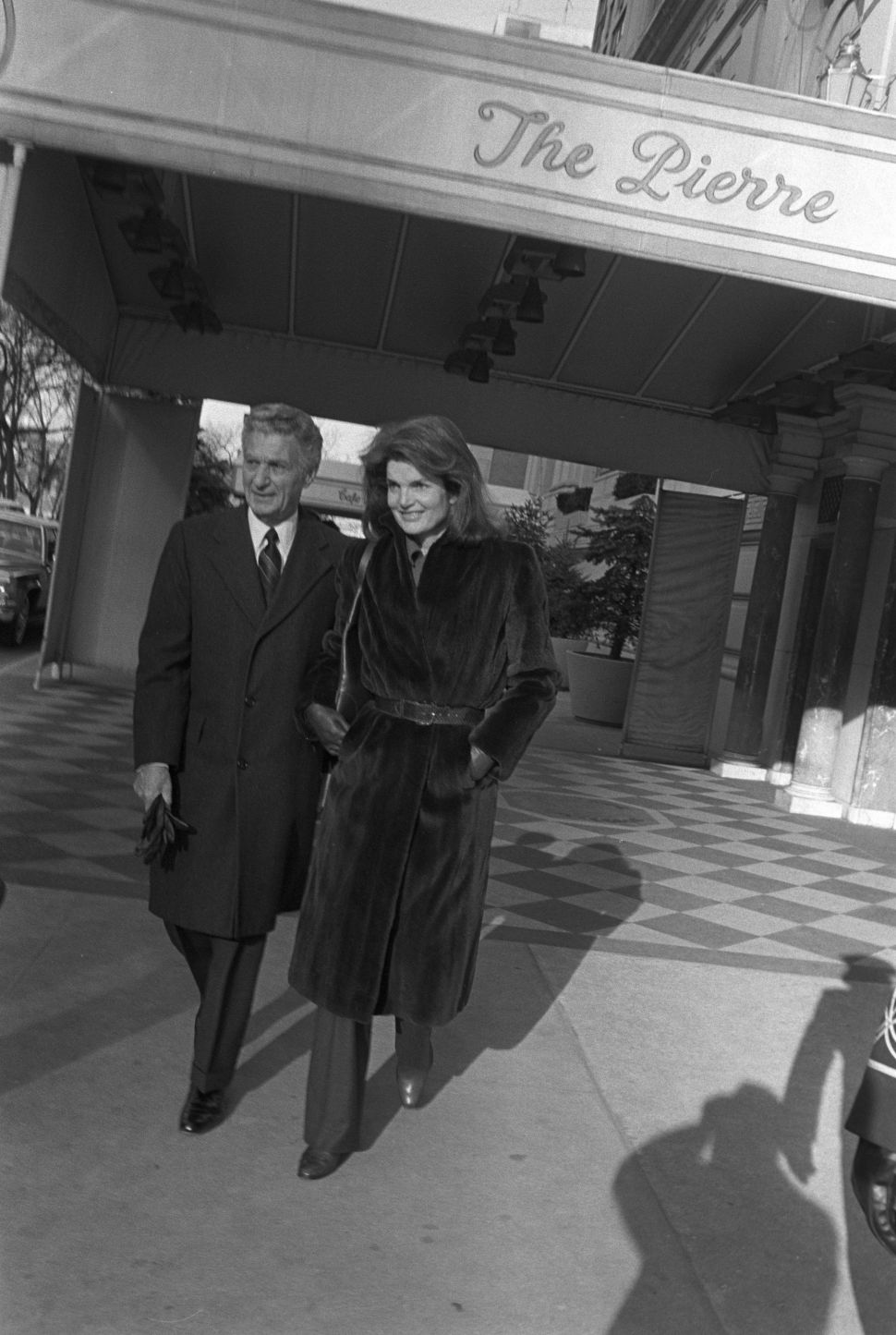
Jacqueline Kennedy with American diplomat/businessman Sol Linowitz outside of The Pierre.
Penske Media via Getty Images
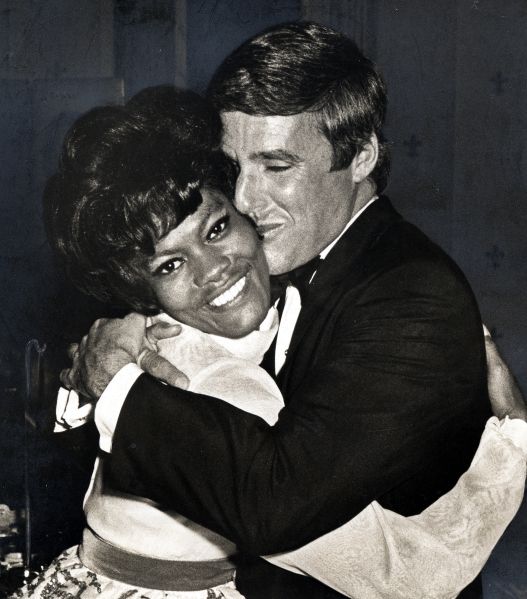 Ron Galella Collection via Getty Dionne Warwick and Burt Bacharach at The Pierre.
Today, the hotel is celebrating 95 years, an admirable accomplishment in a city where new establishments seem to pop up nightly. Perhaps part of its success has to do with the respect its owners have shown towards its storied legacy. Right now, the restaurant offers a tribute to Auguste Escoffier, and the mural, lovingly repainted in 2016, ensures that the rotunda is considered one of the most romantic rooms in New York. The details and owners may have changed, but The Pierre remains as glamorous and beloved as it was by those long-ago debutantes and Charles Pierre Casalasco himself.
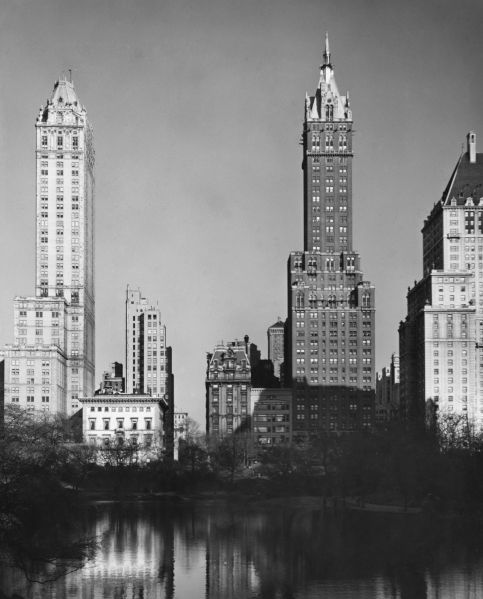 Getty Images A view from Central Park of the Pierre (left) and Sherry Netherland hotels on Fifth Avenue, Manhattan, New York City. Both buildings were designed by Schultze and Weaver.