
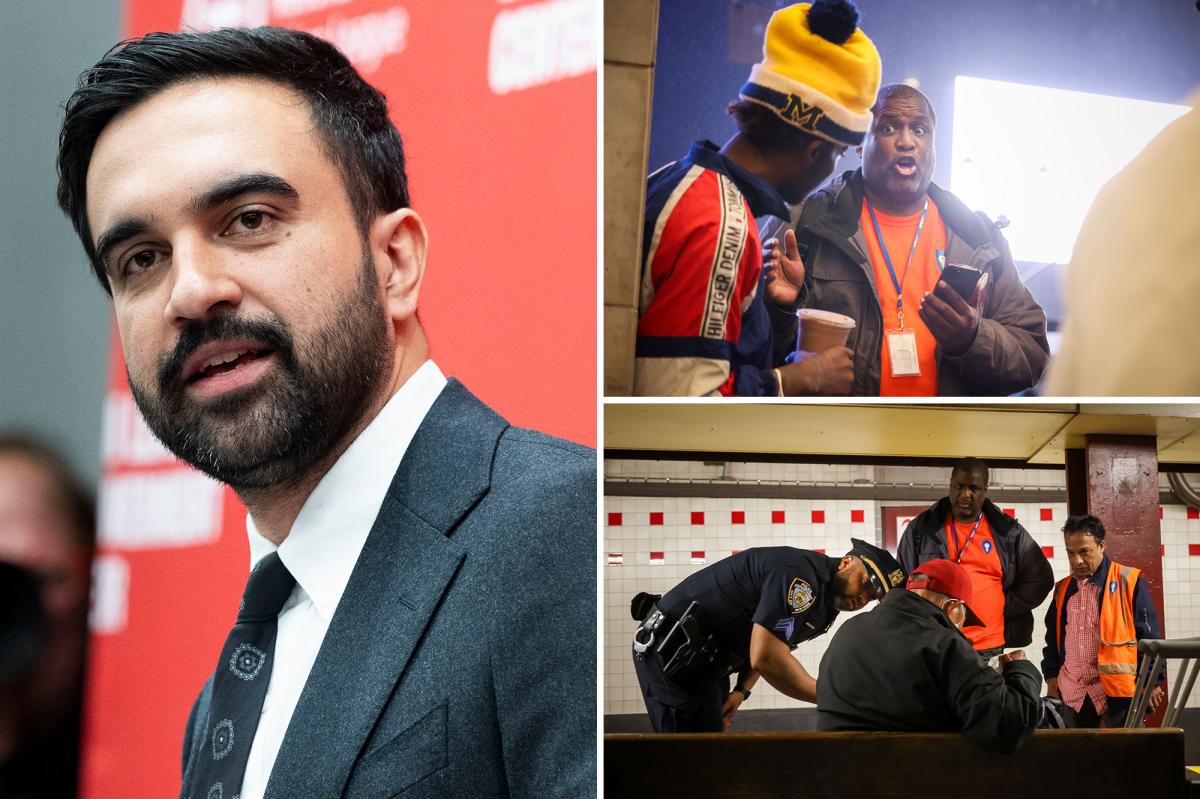
Mayor-elect Zohram Mamdani wants to deploy social workers instead of police officers to respond to 911 calls — but the controversial plan has already been operating in the Big Apple and is failing.
The early results of a program dubbed B-HEARD spells trouble for Mamdani’s proposed $1.1 billion Department of Community Safety (DCS), a signature imitative that his newly announced chief of staff and left-hand woman Elle Bisgaard-Church helped craft.
B-HEARD launched in 2021 as a pilot program and only operates in some city neighborhoods, but a bleak audit conducted in May by the city comptroller found it was limping — with a whopping 60% of calls deemed ineligible while more than 35% of eligible calls from mental health professionals never got a response.
B-HEARD was implemented in 2021 and currently has 18 active teams. Michael Nagle
“Calls were considered potentially dangerous, were ineligible because a mental health professional was already at the scene, or were unable to be triaged because FDNY EMS did not take the call or all necessary information could not be collected about the person in distress,” the comptroller’s office wrote in a news release at the time.
Between fiscal years 2022 and 2024, the program received a total of 96,291 calls — 24,071 of those received a response from a “B-HEARD Team” which consists of two FDNY officers and EMTS, and one social worker.
The proud socialist mayor-elect is looking to drastically scale up the program — which currently consists of 18 active teams — through a 150% increase in funding that would place one response squad in each Big Apple neighborhood, and up to three teams in areas with higher need.
Mamdani’s plan would absorb B-HEARD into the DCS, which his campaign website touts as an agency meant to “fill the gaps of our programs and services” on his campaign website.
“Its mission will be to prevent violence before it happens by taking a public health approach to safety,” the document reads.
Mamdani plans to set up a Department of Community Safety to oversee all aspects of the mental health crisis in NYC. Michael Brochstein/ZUMA Press Wire / SplashNews.com
Right now, B-HEARD operates in The Bronx, Upper Manhattan, central Brooklyn and a northwest section of Queens. DCS would likely require a massive increase in staffing and resources to scale citywide, experts said.
The pricey project would utilize $605 million by absorbing existing programs like B-HEARD, and seek to raise a whopping $455 million in new funding.
Mamdani’s DCS plan has alienated law enforcement, with critics saying it could not only put potential callers in harm’s way but endanger the responders.
The project is seeking $455 million in funding in order to absorb the current B-Heard program Michael Nagle
Experts interviewed by The Post echoed said B-HEARD’s questionable effectiveness was a bad sign for a potential DCS.
Start your day with all you need to know
Morning Report delivers the latest news, videos, photos and more.
Thanks for signing up!
“The devil is in the details, and here the detail is implementation. The fact that the program is not reaching people does not tell me it’s unsuccessful; that is a matter of resources,” said Richard Aborn, president of the Citizens Crime Commission of New York City.
“But there are fundamental questions,” he said, noting the harrowing idea of when it’s appropriate to send mental health professionals to 911 calls instead of law enforcement.
Bill Cunningham, who once served under Mayor Bloomberg said the program needs “stronger management.” The Washington Post via Getty Images
Political strategist Hank Sheinkopf scoffed at the idea of a new department entirely.
“Exactly what New York doesn’t need: another government agency with an unmanageable bureaucracy. Domestic dispute calls can get violent,” Sheinkopf emphasized.
That’s the time when you need a social worker? He must be kidding,” said the politico.
Political veteran Bill Cunningham, who once served under Mayor Michael Bloomberg, emphasized the program’s need for “stronger management.”
“I think it might be wiser, and probably easier to take this report and fix the issues,” Cunningham said.
“The bottom line should be how to deliver the needed services. If the corrections are not made, then everything else is cosmetic,” he said.