
MARSHALL, Ill. (WTHI) – If you take a stroll through downtown Marshall, it is almost impossible to miss the presence of the “Gypsy Queen.”
From vibrant brick murals painted on downtown storefronts to Gypsy Queen Coffee and library displays featuring painted wagons, the town embraces her likeness.
But beneath the coffee cups and art lies a haunting piece of Clark County history, complete with a body kept on ice, a frantic race against a tornado, and a hundred-year-old blessing that locals still swear protects the town from deadly storms.
A Traveling Family Finds a Welcoming Home
Long before the Gypsy Queen was commemorated on brick walls, she was part of the Cooper family, traveling Romani traders who made seasonal circuits through Illinois in the late 19th and early 20th centuries, trading horses and selling wares.
During an era when traveling Romani families were frequently met with hostility and suspicion, Marshall offered an uncommon response.
“They just were very welcome to our community, which was not always the case,” said Jamie Poorman, head librarian and genealogist at the Marshall Public Library.
That bond was sealed in grief in 1894 when a young Cooper daughter, Louise Cooper, died during a visit. The family purchased an entire section of the local cemetery. For more than seven decades, until 1968, Cooper family members traveled from all corners of the country back to Marshall to lay their loved ones to rest.
Outrunning the Storm: A Funeral on Ice
The centerpiece of Marshall’s folklore belongs to Marilla Jones, daughter of Matt and Miranda Cooper. Born in 1878 near Memphis, Tennessee, Marilla married into the Jones family and was widowed at around 19 years old, raising her young son, Sam “Sackie” Jones.
Elected as a leader and revered elder within her community, Marilla’s reign was cut short when she died suddenly on March 24, 1913, in Rector, Arkansas, at just 35 years old.
What followed sounds straight out of a gothic mystery.
As her father, Matt Cooper, brought her body north by train to Clark County, a violent storm system chased them across the country. Because family members were journeying from across the United States to pay their respects, the funeral could not take place until early June.
“There was nowhere in Marshall that could store her body,” Poorman said. “So her body was actually taken to Paris and kept somewhere on ice until they could have her funeral.”
When Rev. W.J. Drew led the funeral service at Marshall’s Congregational Church in June 1913, hundreds of spectators flooded the town from neighboring communities, expecting an exotic spectacle. Instead, reports from the Marshall Herald noted onlookers witnessed a traditional, solemn service attended by Marilla’s large, grieving family.
The Secret Grave to Foil Robbers
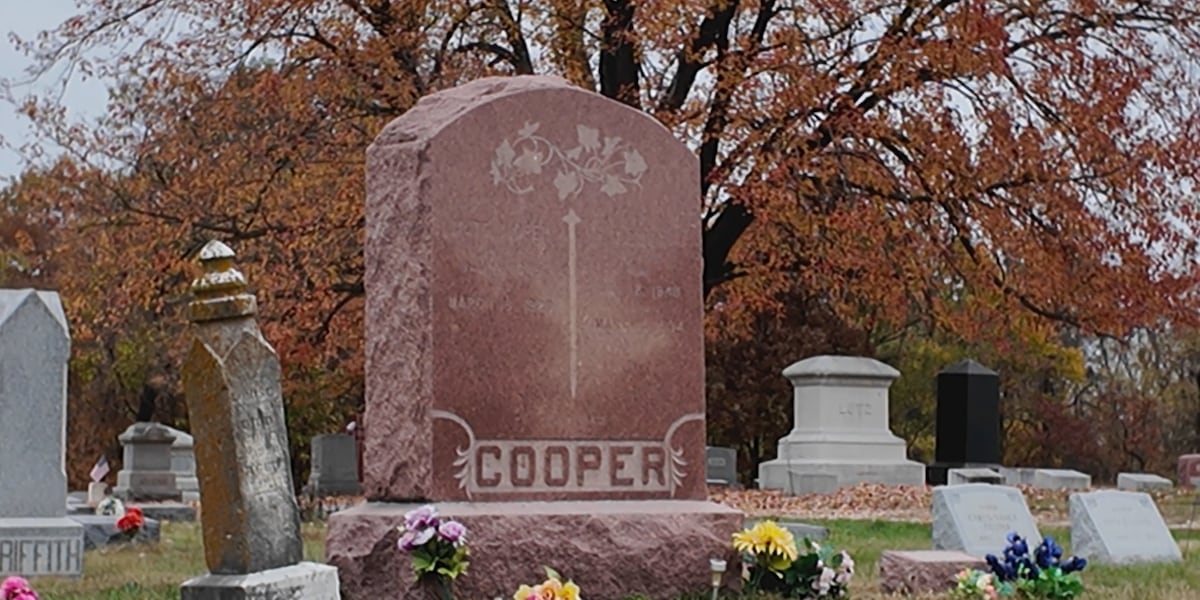
Today, visitors to the Marshall Cemetery can easily spot a towering, rounded red granite headstone inscribed “COOPER,” marking the final resting place of Marilla’s parents, Matt and Miranda.
Yet Marilla’s own name is nowhere on the stone or any surrounding ones.
“Queen Marilla is actually buried in front of them in an unmarked grave,” Poorman explained. “The story I’ve been told that I can’t verify is that they didn’t place a stone because they were afraid of grave robbing.”
Local lore suggests the family feared someone might dig up the young queen’s grave looking for buried jewelry or family riches. Beside her unmarked resting place lie her siblings.
The Supernatural Shield: Truth Behind the Blessing
The most persistent legend tied to Queen Marilla is the supernatural shield she supposedly cast over the town: a vow that Marshall would never be destroyed by a tornado. Some local variations even claim an arrow-shaped rock hidden in the surrounding countryside splits incoming storm cells.
Poorman traced the roots of the weather legend to a close call in 1917, when a massive multi-day tornado outbreak tore from Nebraska to Indiana.
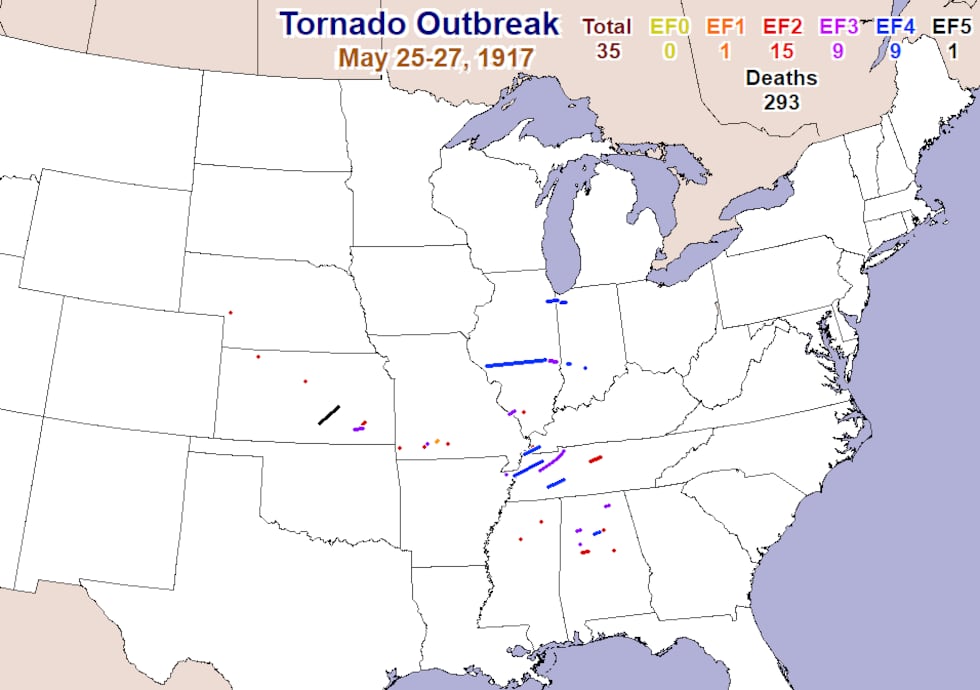 Map of the Mattoon-Charleston Tornado Disaster of May 26, 1917.(The National Weather Service)
“They were camped near the cemetery and there was a tornado, a tree fell on the tent of the family and there were people inside, but no one was injured,” Poorman said. “And the town of Livingston just outside Marshall was completely destroyed, but I really think that’s where the legend started. Whether it was a family member or a community member who said, ‘Wow, you know, someone’s looking out for us.’”
Even when storms have struck, such as a 1940s tornado that peeled the roof off Marshall High School, it occurred on a weekend with an empty building and zero casualties.
Whether the storm protection is meteorology, pure luck, or a guardian spirit, the town’s chief historian remains a believer.
“I think there’s a lot of value in these local legends and lore, and there’s usually a nugget of truth in them somewhere,” Poorman said. “I believe in the Gypsy Queen.”
Editor’s Note on Terminology: The term “gypsy” is widely recognized today as an outdated and often derogatory term for the Romani people. Historical references, archival records, and community landmarks in Marshall use the title “Gypsy Queen,” which local historians note was used respectfully by the family and townspeople of the era.
Copyright 2026 WTHI. All rights reserved.