
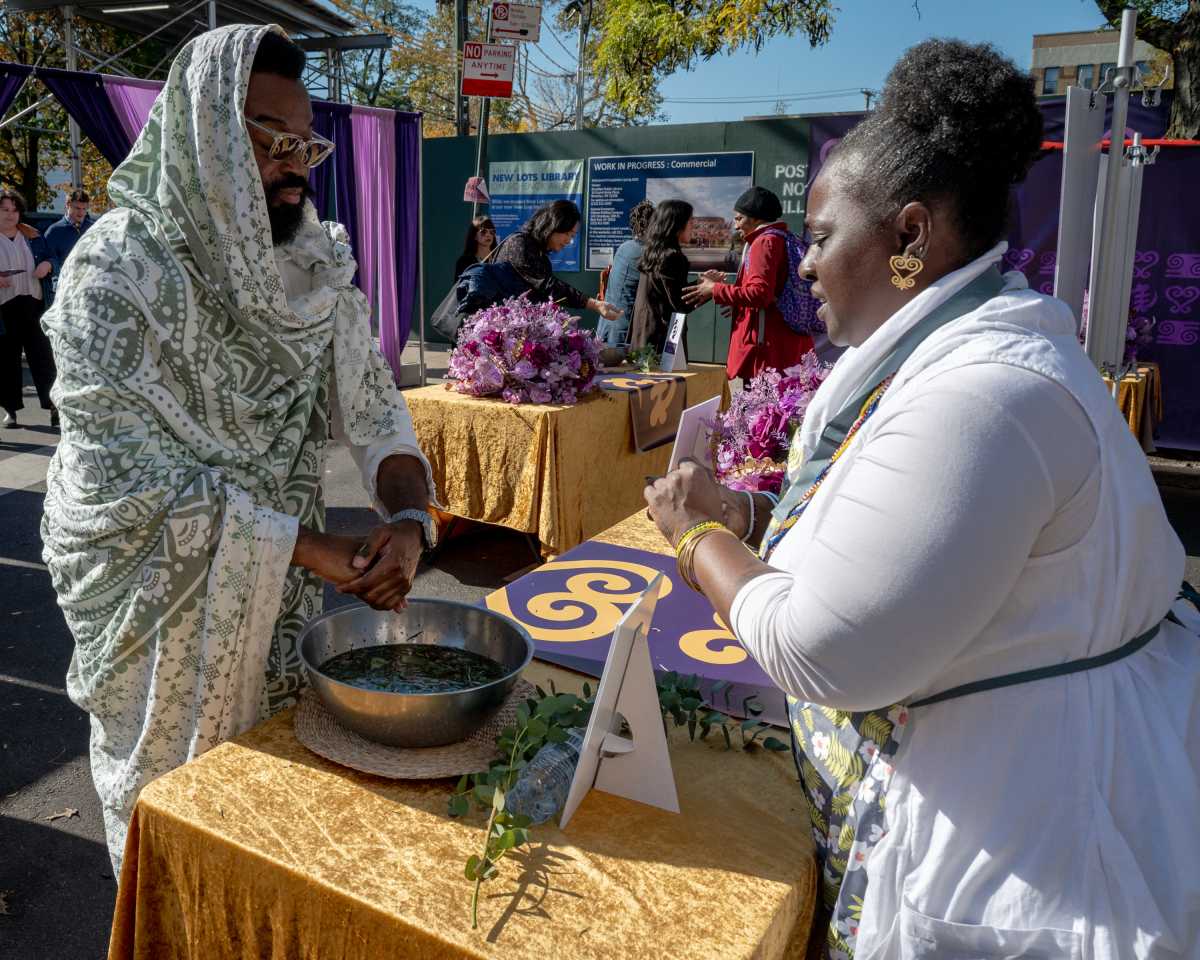
Instead of a traditional groundbreaking ceremony with shovels, hard hats and safety vests, the Brooklyn Public Library (BPL), Gilbane Building and the East New York African Burial Ground Collective hosted a special ground acknowledgment ceremony on Oct. 29 to honor and remember the free and enslaved Africans buried in the East New York African Burial Ground.
Bounded by New Lots Avenue, Livonia Avenue, Barbey Street and Schenck Avenue, the burial ground is the site of BPL’s new library at 655 New Lots Ave. in East New York. Slated for completion by 2028, the new library will replace the now-demolished branch, which was built in 1955, and mark the culmination of a journey that began in 2010 to honor the lives of Africans interred at the segregated burial site.
According to historical records, free and enslaved African Americans were buried in a section at the northern end of the cemetery, near Livonia Avenue.
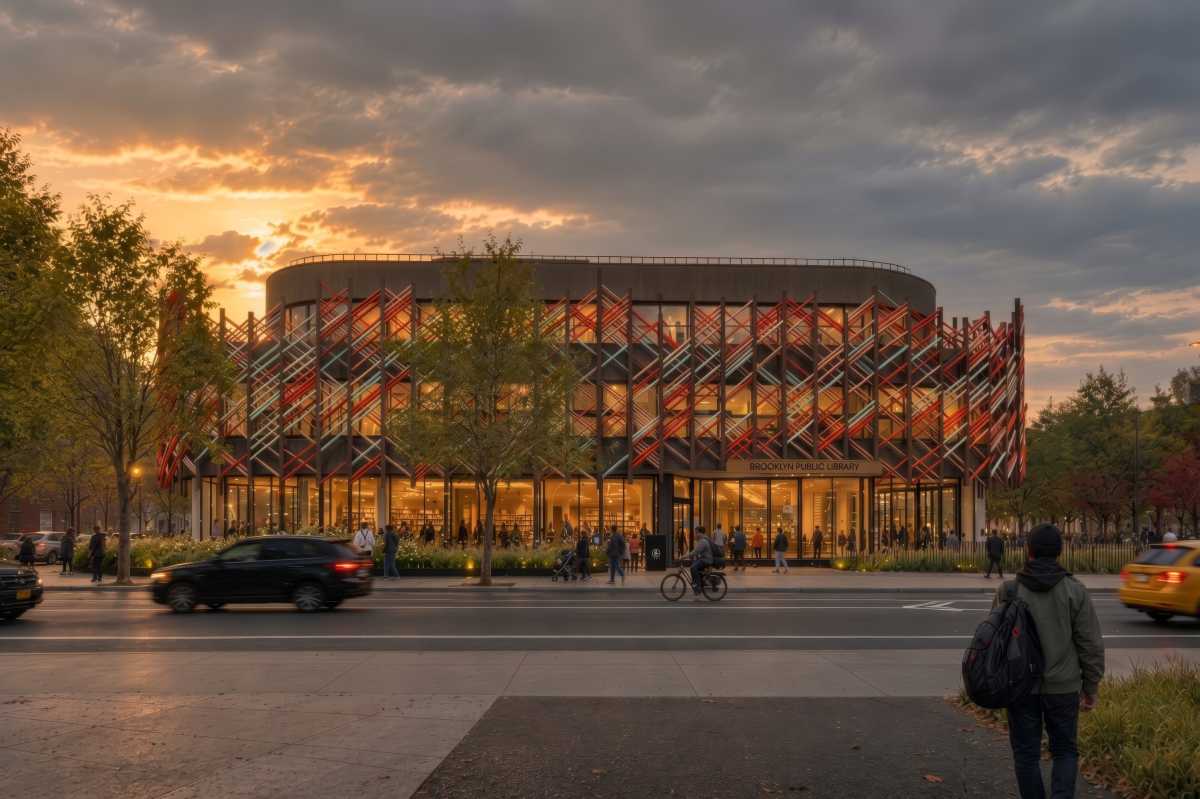 The new library, slated for completion by 2028, marks the culmination of a journey that began in 2010 to honor the lives and legacies of the Africans interred at the once-unacknowledged burial site.Rendering courtesy of Brooklyn Public Library
African and African American people have been part of East New York and New York City since the earliest colonial period, when Dutch farming families exploited and abused the labor of enslaved Africans in the area. The former burial ground, which served enslaved Africans and Dutch settlers, dates to around 1680.
When the Dutch established a new cemetery beside the New Lots Reformed Church in the 1840s, they moved only the remains of their descendants to the new resting place, abandoning the graves of the many enslaved Africans. The original cemetery fell into neglect, and its history was largely forgotten, along with the lives of the enslaved Africans buried there. That changed in 2010, when community leaders discovered the burial ground while researching historical documents.
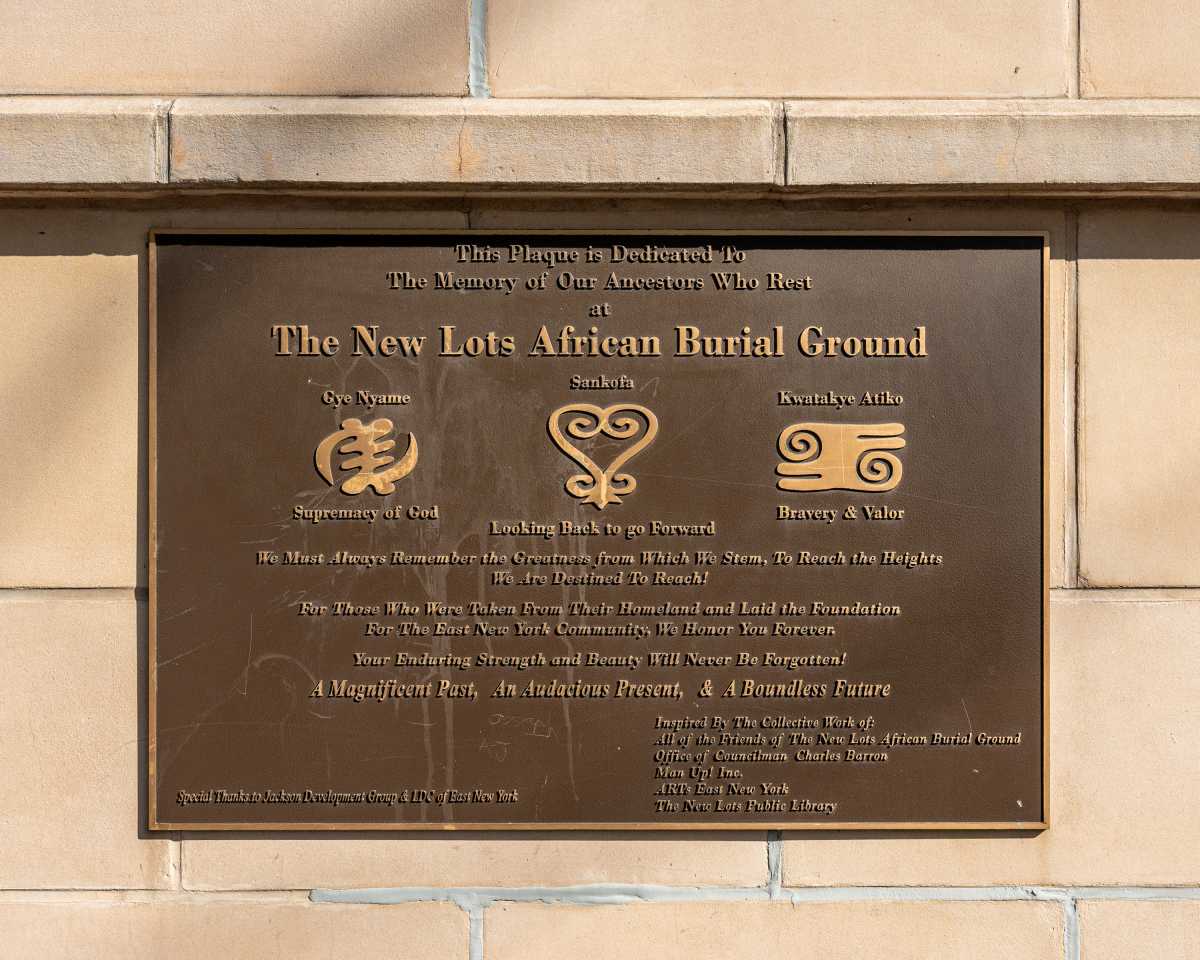 The New Lots Library project is moving forward while keeping the past firmly in view, with a special ceremony recognizing the history of the East New York African Burial Ground.Photo by Gabriele Holtermann
Under the leadership of then-Council Member Charles Barron and with support from community organizations such as the East New York Burial Ground Collective, the block’s four corners were renamed “African Burial Square” in 2013.
In 2019, human remains discovered during archaeological surveys in 2016 were reinterred at a ceremony. That same year, the playground on the same parcel, along Livonia Avenue between Barbey Street and Schenck Avenue, was renamed Sankofa Park. It had previously been called Schenck Park, after a Dutch slave owner. Sankofa is an Akan proverb meaning “looking back to go forward.”
At Thursday’s ground blessing, guests participated in a series of shared acts of remembrance, reflection and stewardship. These included a handwashing ritual before entering the space, representing purification and spiritual connection; placing floral and native plant offerings at the ancestral altar; and signing ceremonial blocks made from the mass timber that will be used to construct the library. The activities affirmed the community’s commitment to preserving history for future generations.
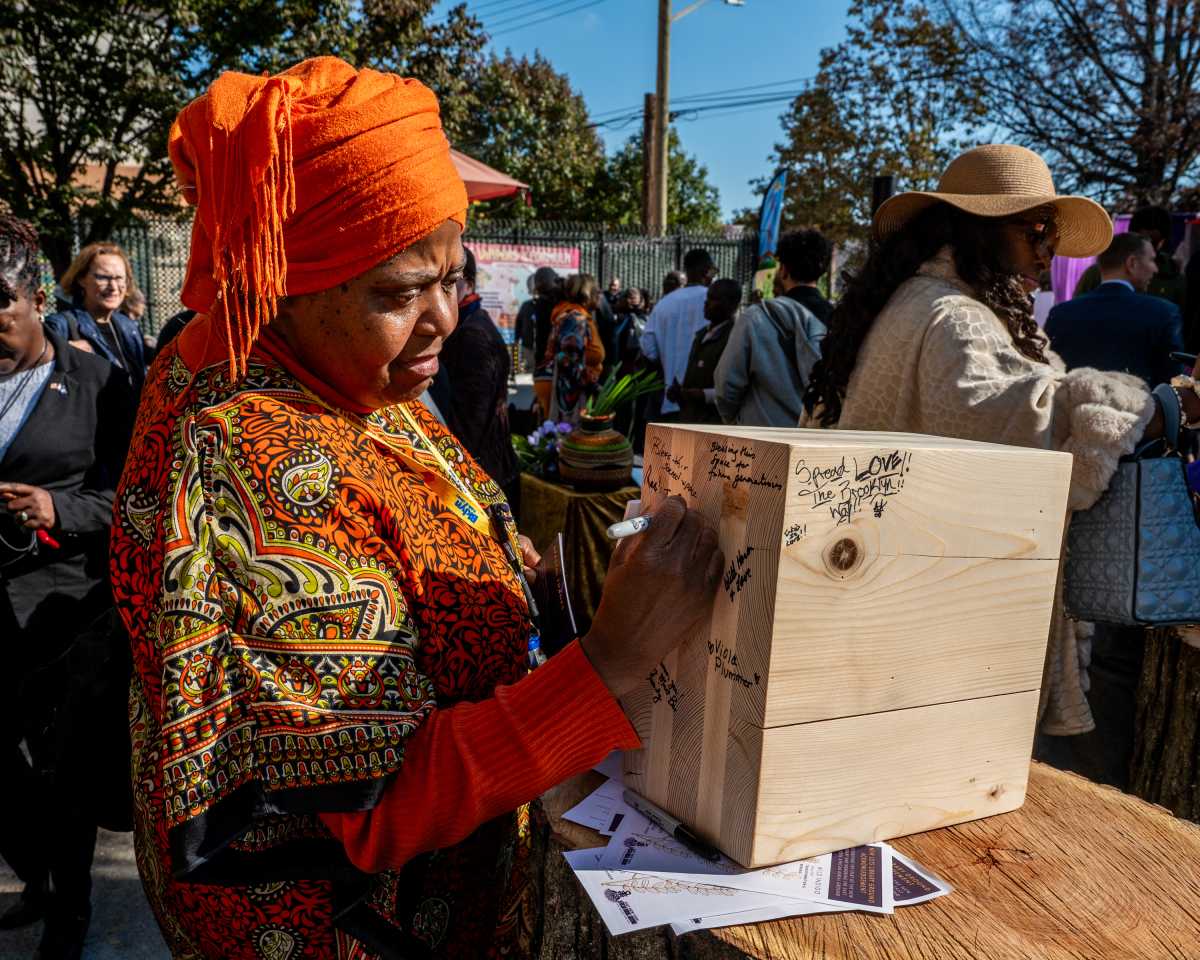 Thursday’s ground blessing invited guests to sign ceremonial blocks, made from the mass timber that will be used to build the library.Photo by Gabriele Holtermann
The ceremony also included an opening ritual with sound bowls and sacred drumming, the pouring of water and prayers to acknowledge and honor the ancestors, a rendition of the Black national anthem, “Lift Every Voice and Sing,” performed by solo artist and singer Mr. Reed, and performances by Victory Dance Company Drumline and Creative Outlet Dance Theater.
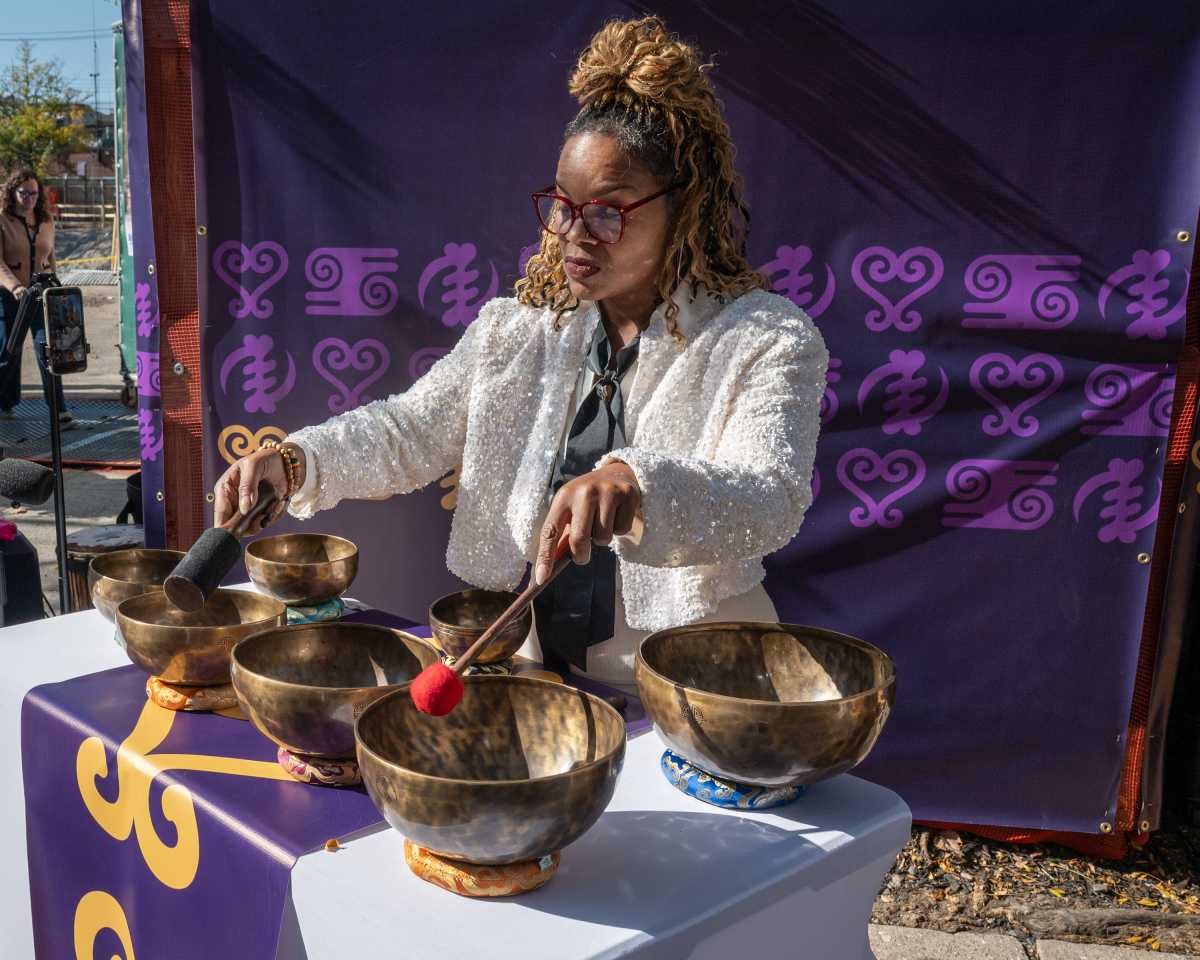 Sound bowls helped open the Oct. 29 ground acknowledgment ceremony, setting a reflective and spiritual tone for the gathering honoring the ancestors buried at the East New York African Burial Ground.Photo by Gabriele Holtermann
Attendees included Linda Johnson, BPL’s president and CEO; state Sen. Roxanne J. Persaud; Assembly Member Nikki Lucas; Council Member Chris Banks; Brooklyn Borough President Antonio Reynoso; former City Council member and state Assembly Member Inez Barron and former Council Member Barron; and representatives of the East New York Burial Ground Collective and Gilbane Building.
Johnson was visibly moved as she addressed the community, noting that the new branch’s design reflects community input and celebrates East New York’s vibrant culture and promising future.
“This day is a long time coming,” she said. “It includes local art and adds space for cultural programming, community gathering, and collective learning and remembrance. The design also prominently incorporates the history of this community and this site as a once-unacknowledged African burial ground. So many community leaders worked to make sure that history was recognized, and I’m proud, really proud, to be with you here today to simultaneously honor the past and celebrate the rising of the future of New Lots Library.”
BPL also received additional funding for the development. Reynoso and Banks each presented $2 million checks, while Persaud announced an additional $500,000 in state funding, on top of the $4.5 million the state had already allocated. The project is projected to cost more than $40 million.
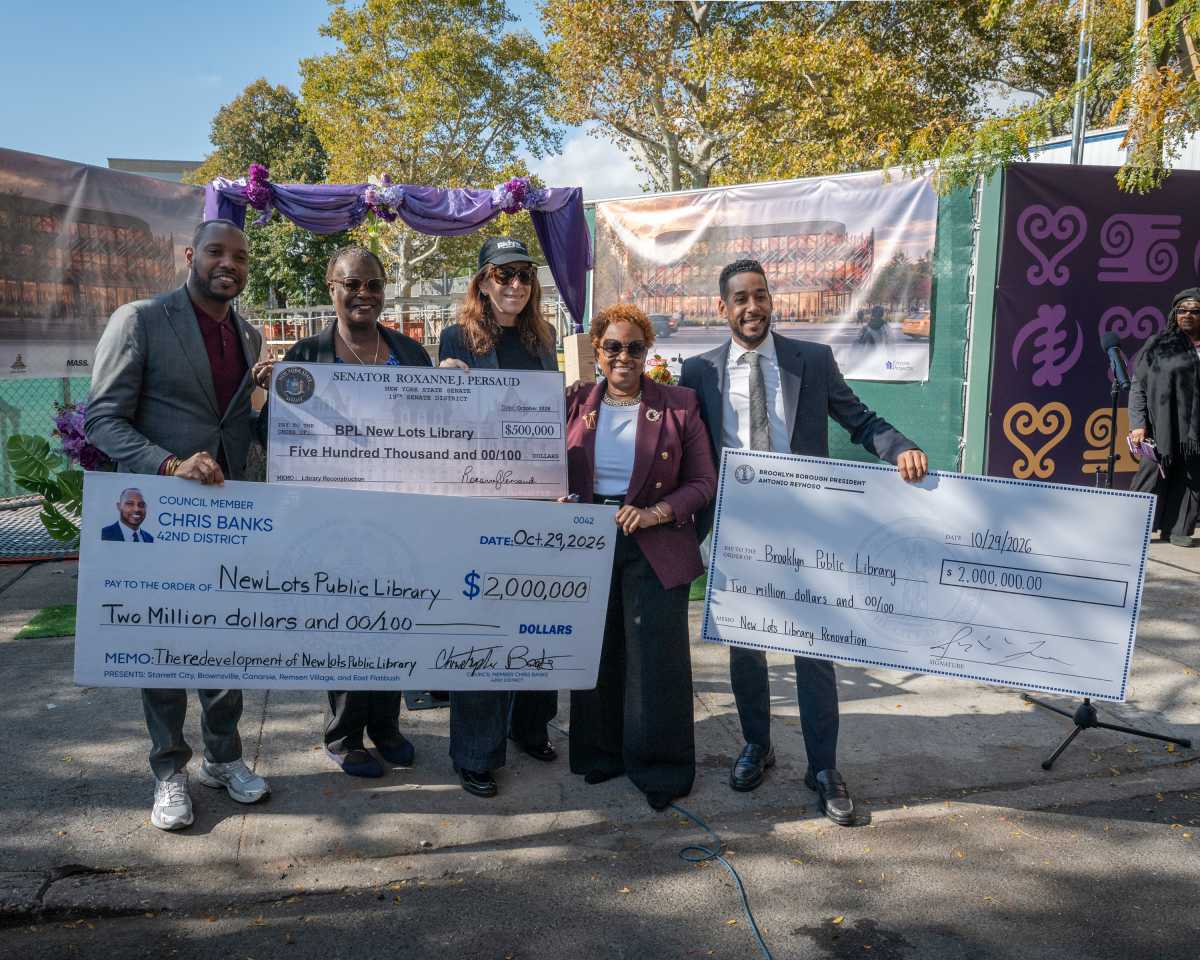 Brooklyn Borough President Antonio Reynoso, Council Member Chris Banks and state Sen. Roxanne J. Persaud announced additional funding for the new $40 million-plus New Lots Library, including $2 million contributions from Reynoso and Banks and an additional $500,000 from Persaud.Photo by Gabriele Holtermann
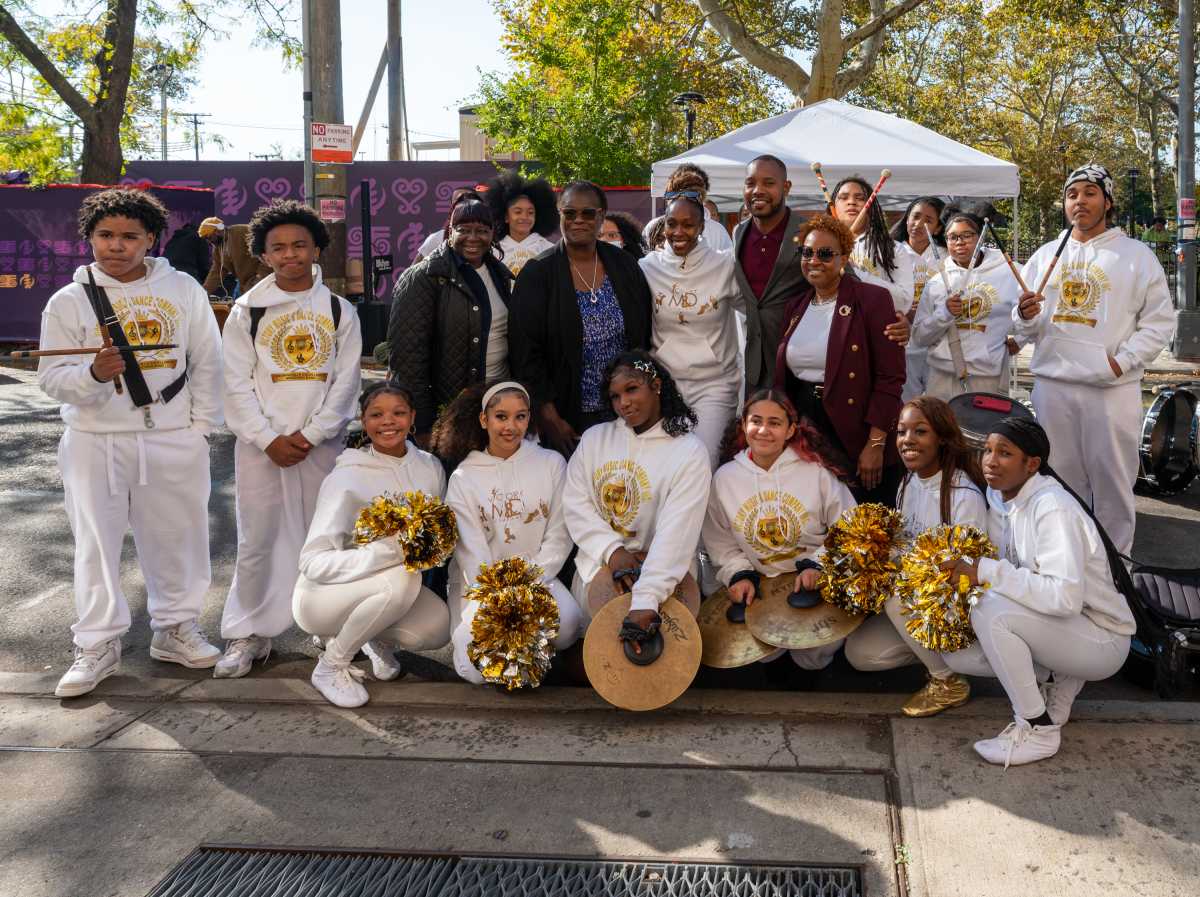 Community members, elected officials and project leaders gathered in East New York on Oct. 29 for a ground acknowledgment ceremony honoring the free and enslaved Africans buried at the historic African Burial Ground, the future site of the New Lots Library.Photo by Gabriele Holtermann
Reynoso recalled visiting the site with Barron about six years ago and learning about the African burial ground and the community’s vision for the property. Barron told Reynoso that the community would not allow anyone to desecrate the space. Now, as Brooklyn borough president, Reynoso said he had “a little bit of change in his pocket,” announcing his office’s $2 million grant and thanking Johnson for her commitment to the project.
“I remember the Brooklyn Public Library calling me and saying, ‘Hey, we have this library,’ and I was like, ‘Oh, that’s the one Charles Barron took me to.’ Charles asked for like a million or something, but Charles is not as committed as I am, so now what you have here is $2 million,” Reynoso said. “So I want to give this to the Brooklyn Public Library. I want to give this to East New York; this is your money. Congratulations! Very well done. In the words of Christopher Wallace, the notorious B.I.G., ‘Spread love, it’s the Brooklyn way.’ I hope you guys are feeling the love today.”
Banks, whose district includes East New York, said the new library represents a community honoring its past while continuing to invest in its future. He noted that the site carries the stories and legacies of people whose names may never be known but whose presence remains part of the community.
“I hope everyone who walks through the doors of this library once it gets built understands that it stands on more than concrete and steel; it stands on history, sacrifice, and the hopes of those who wanted something better for the people who came after them,” Banks said.
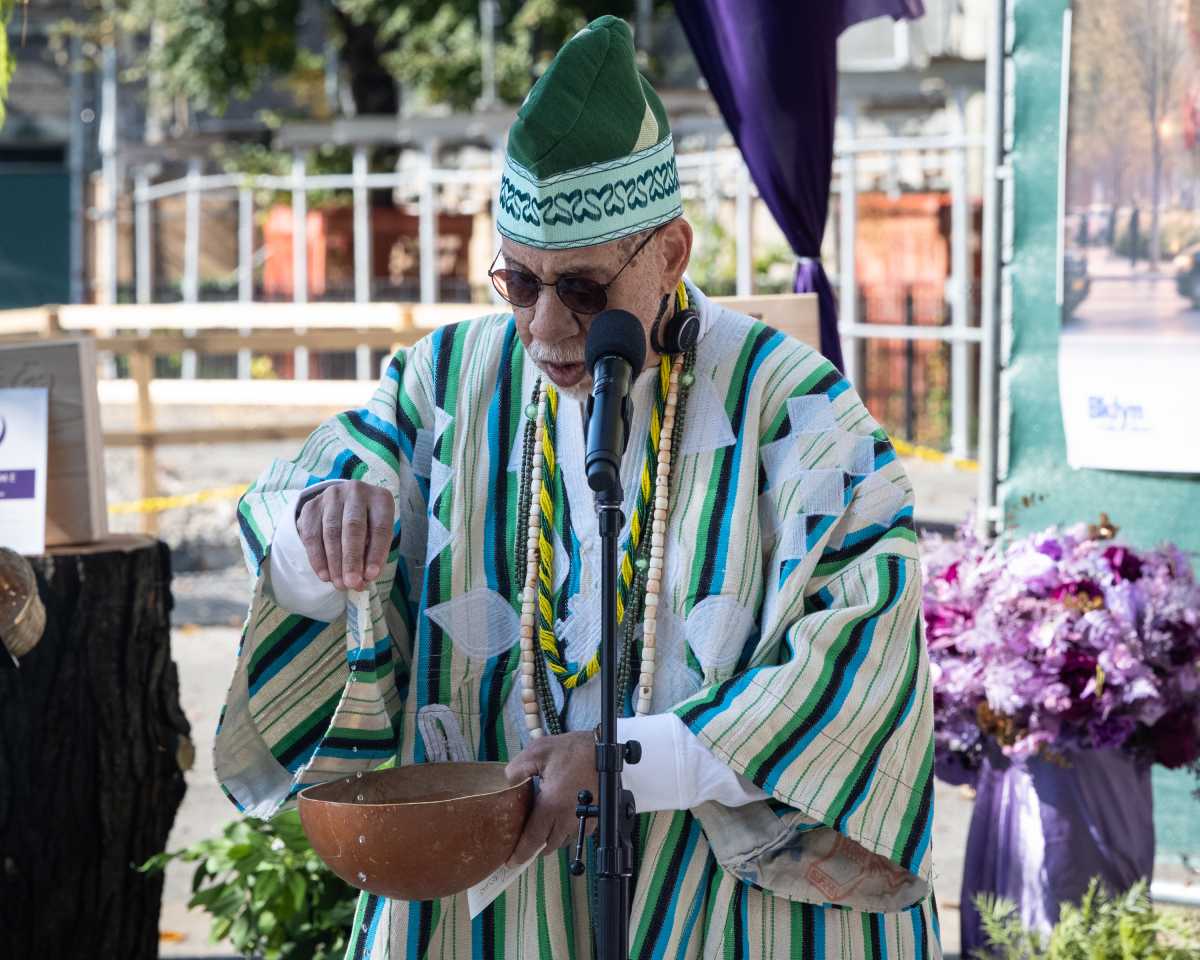 The ceremony also included an opening ritual with the pouring of water and prayers to acknowledge and honor the ancestors.
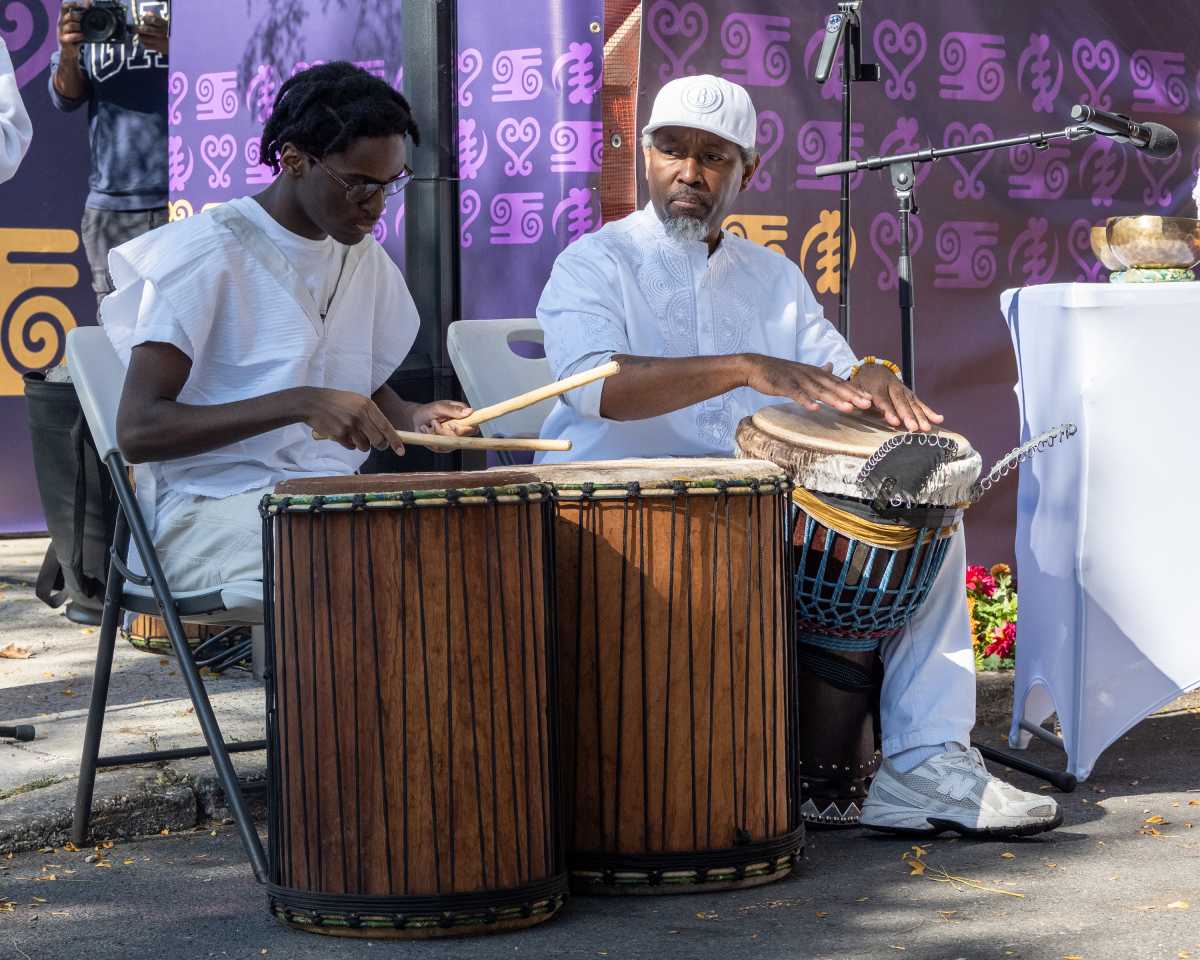 Sacred drumming was among the ceremonial tributes offered during the gathering, which recognized the history of East New York’s African Burial Ground.Photo by Gabriele Holtermann
Persaud pushed back against the negative perception some people have of East New York.
“Everywhere I go, I talk about, ‘Have you seen the renderings for the New Lots Library?’ And then when I show people, they do not believe that this is a library that will be housed right here in East New York, because there are still people who think that good things do not come to East New York,” Persaud said. “Today we are showing people that great things, not just good things, great things come to East New York.”
A central feature of the 25,000-square-foot building will be the palaver, a place of collective gathering in many African communities for dialogue and truth-telling, often under a tree. The palaver will be visible throughout the branch’s reading and collection rooms and meeting spaces, encouraging community building, learning and reconciliation.
A sculptural exterior veil references the uncovering of the site’s history while opening the ground floor to the neighborhood. Barron pointed out that the building’s exterior design resembles an African woven basket.
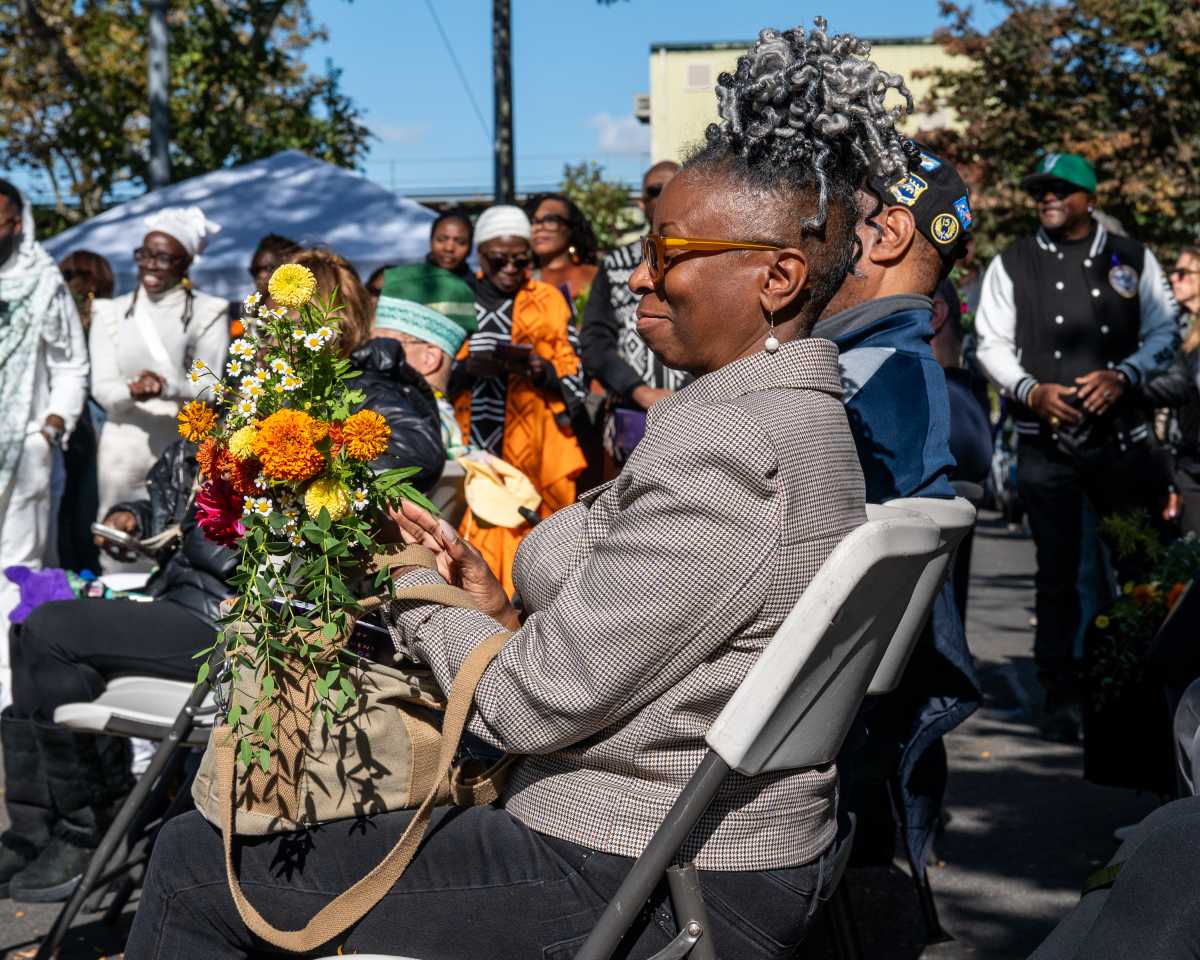 East New York community members gathered to honor generations of Africans whose stories are intertwined with the neighborhood’s history as plans move forward for a new Brooklyn Public Library branch.Photo by Gabriele Holtermann
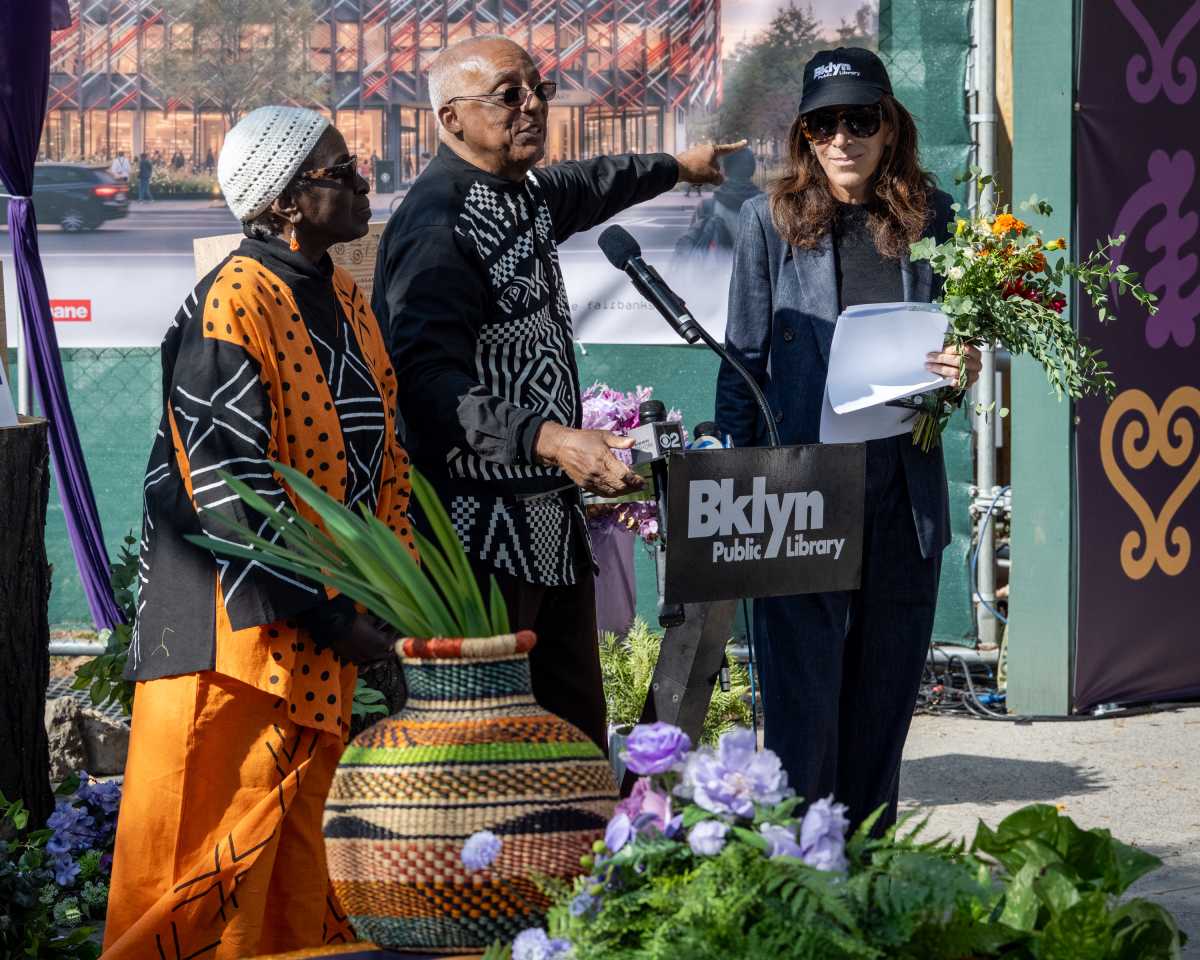 Former Council Member Charles Barron reflected on the importance of African identity and cultural history during the ceremony, emphasizing the role of culture in the community’s liberation.Photo by Gabriele Holtermann
“Culture is a weapon. It’s a weapon for our liberation,” he stressed, noting that African American culture encompasses not only figures such as Martin Luther King Jr., Malcolm X and Harriet Tubman, but also Garrett Augustus Morgan Sr., who invented the traffic light, and Henry Seely, inventor of the first electrically heated iron.
“We are not the N word. We are not colored. We are not even Black. We are an African people. Dr. John Henry Clark told us that when the ships picked us up from Africa, we were all Africans. When they dropped you off in Jamaica, you became a Jamaican,” Barron went on. “When they dropped you off in America, you became an African American. So you took on the identities of where the slave ships dropped you off. Well, we’re reclaiming our African identity.”
Constructed by Gilbane Building, the New Lots Library is part of the largest wave of library redevelopment since the Carnegie era and is designed to serve as a hub for arts and culture, with a music room and exhibition spaces.
Additional features include separate spaces for children, teens and adults across four floors; expanded public space; a dedicated area for the New Lots Adult Learning Center, which offers high school equivalency preparation, literacy classes and citizenship preparation; outdoor spaces for programs, reading and reflection; and flexible meeting spaces.