
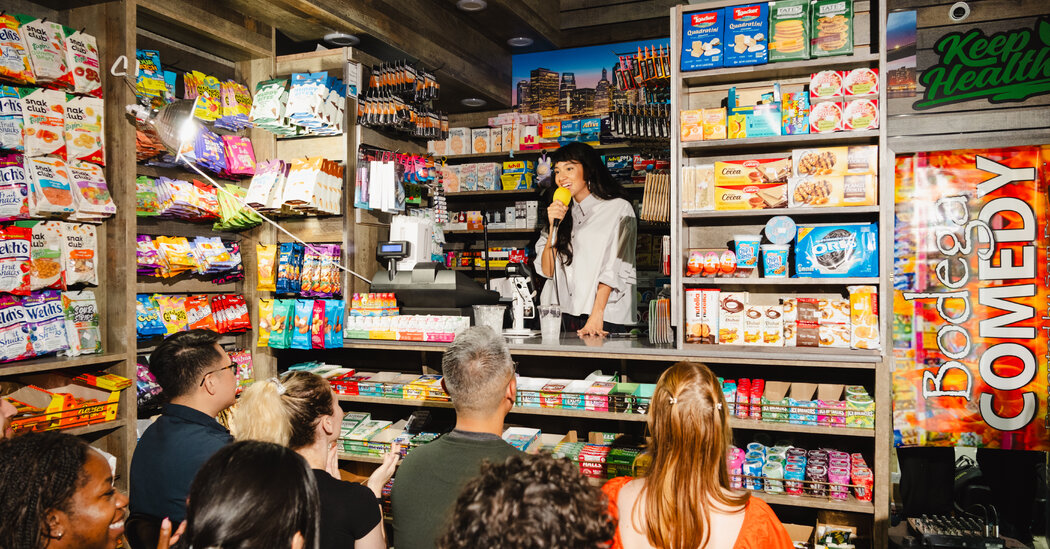
It’s 2 a.m. in New York City. The streets are mostly empty, and the shops are mostly closed. But you’re awake, outside and desperately hungry. There’s only one place you want to go.
The familiar yellow awning of your favorite bodega beckons. You step under it, then into the glare of fluorescent lights. All you have to do is nod at the man behind the counter: He knows you want to order a chopped cheese. As you grab a lottery ticket and a pack of gum while you wait, an orange cat peeks out from between boxes of Froot Loops. She’s awake, too.
Bodegas, those small corner stores dotting blocks throughout the five boroughs, have been an essential part of city life for decades. The term, popularized by Puerto Ricans, loosely translates from Spanish to “warehouse.” They’re perhaps the ultimate symbol of a city constantly evolving and on the move.
“We’re a traveling city — people need things on the go and quick,” said Kel Murphy, 41, who grew up working in his father’s bodega in St. Albans, Queens. “Run in, run out. You don’t have to walk through a maze of aisles.”
Bodegas are beloved characters of the city, inextricable parts of the cultural zeitgeist. This year, the rapper Cardi B, who is from the Bronx, released a song called “Bodega Baddie.” New Yorkers have hosted raves, comedy shows and political events in the stores. And they’ve served as spaces for generations of immigrants to find community, work and a taste of home.
Thank you for your patience while we verify access. If you are in Reader mode please exit and log into your Times account, or subscribe for all of The Times.
Thank you for your patience while we verify access.
Already a subscriber? Log in.
Want all of The Times? Subscribe.