
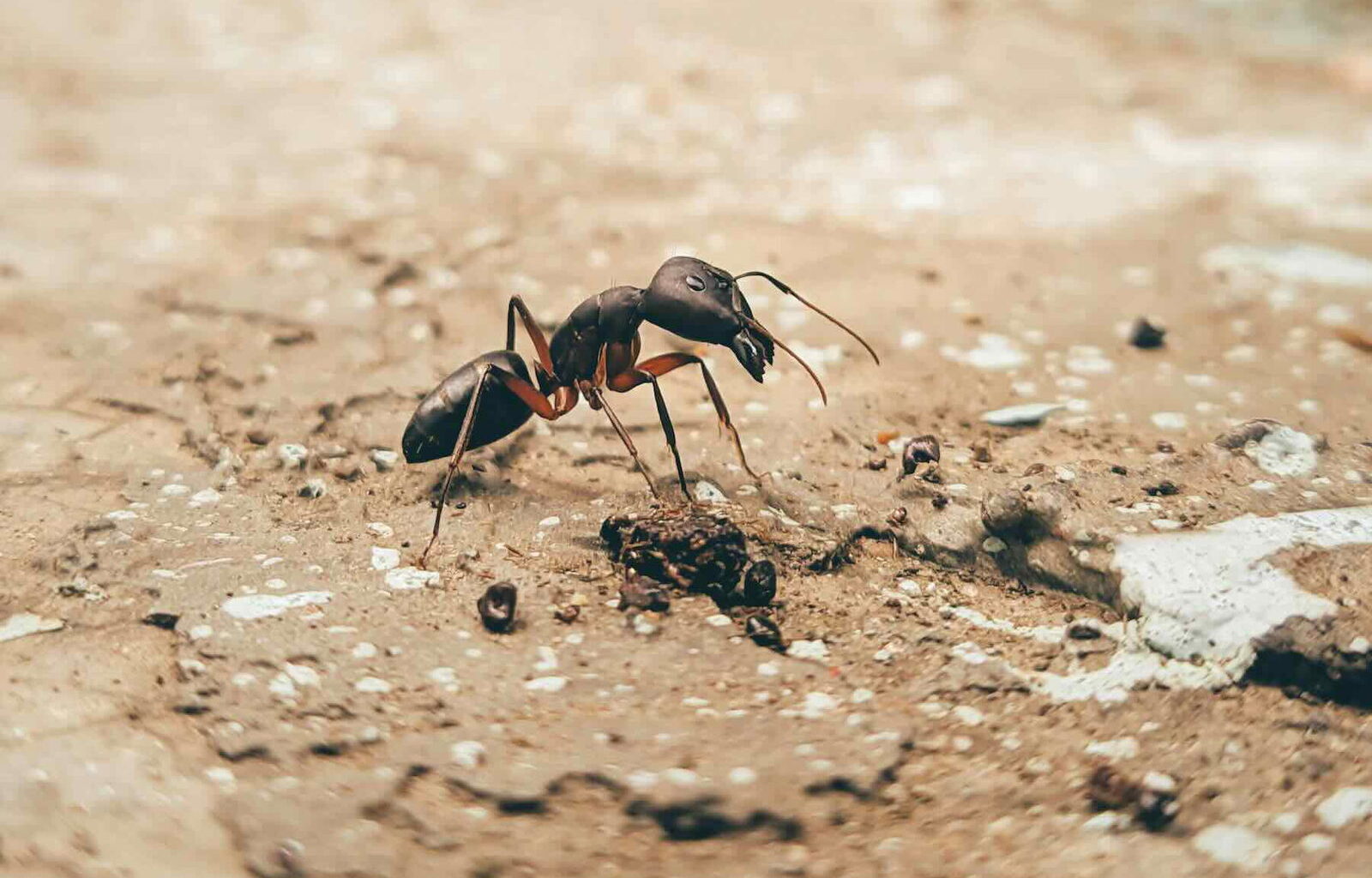
Japanese researchers have documented the use of a “chemical weapon” in nature: parasitic ant queens that chemically trick worker ants into murdering their own mother.
Published in Current Biology, the study, along with its accompanying video, reveals a previously unknown strategy in the competitive world of social insects.
Scientists Taku Shimada, Yuji Tanaka, and Keizo Takasuka observed this behavior while studying two species of temporary social parasites: Lasius orientalis and L. umbratus. These invading queens infiltrate the colonies of related species, eliminate the resident queen, and then take over the entire colony.
Then, in an almost Shakespearean twist, they convince the orphaned workers to raise the parasite’s offspring as their own. However, what makes this finding remarkable is that the parasitic ant queens employ a kind of covert chemical weapon to achieve this.
“Ants live in the world of odors,” explained lead author Keizo Takasuka in a press statement. “Before infiltrating the nest, the parasitic queen stealthily acquires the colony’s odor on her body from workers walking outside so that she is not recognized as the enemy.”
She then enters a host colony and approaches the resident queen, spraying jets of abdominal fluid directly onto her body. This fluid appears to be formic acid, a defensive compound that many ant species naturally produce. The spray has the effect of chemically “tagging” the host queen, fundamentally altering how her own workers perceive her.
Within moments of the spraying, host workers who would normally defend their queen begin attacking her. The workers bite and tear at their mother, sometimes severing her waist, until she dies.
Meanwhile, the parasitic ant queen quickly retreats.
“She knows the odor of formic acid is very dangerous, because if host workers perceive the odor, they would immediately attack her as well,” Takasuka says.
Later, when she returns to the scene of the murder, she is accepted by the workers, who then care for her as if she were their original queen.
This represents the first documented case where a third party manipulates offspring into killing their mother when neither the mother nor her daughters benefit from the act. The workers lose their queen, and with her, their ability to reproduce. Yet the chemical manipulation overrides their natural protective instincts.
Matricide is exceptionally rare in nature. When it does occur, it typically falls into two categories: mothers who sacrifice themselves to feed their young, or adult offspring who kill their mother to gain reproductive opportunities. This newly discovered form is distinct in that it serves only the parasite.
The researchers believe that formic acid serves as a reprogramming agent, altering the recognition systems that normally enable workers to distinguish between nestmates and intruders. By applying this chemical, the parasitic queen essentially rewrites the social rules of the colony.
It’s a sort of natural evolutionary brainwashing.

Interestingly, L. orientalis and L. umbratus belong to distantly related groups within the Lasius genus, suggesting this strategy evolved independently at least twice. That being said, other ant species do engage in parasitic behavior to invade nests.
The team found evidence that similar manipulations may occur in other ant subfamilies that lack formic acid. Species like Monomorium santschii and Tetramorium atratulum appear to achieve comparable results using different chemical secretions, possibly from specialized glands. This suggests that chemically-induced matricide may be more widespread among parasitic ants than scientists previously suspected.
For their experiments, the researchers collected parasitic queens and reared host colonies, then documented introduction trials using video recordings. The footage showed that the parasitic queens immediately retreat after spraying, and that the host queen’s death occurs gradually as workers escalate their attacks. The researchers point out that it isn’t the chemical toxin that kills the queen, but her children who end up delivering the fatal blows.
The researchers anticipate that future studies will uncover similar manipulations wherever parasites can chemically tag colony members. They also predict an evolutionary arms race, with host species developing countermeasures against these chemical tricks. Moreover, the study has implications beyond ant biology. From an evolutionary perspective, the behavior exemplifies what scientists refer to as an “extended phenotype.”
In simple terms, it’s where genes in one organism control the behavior of another. The parasitic queens essentially hijack decision-making systems that evolved to maintain colony cooperation, turning altruistic community-survival behaviors into weapons.
Video featured in this article courtesy of Shimada T, Tanaka Y, Takasuka K, Current Biology (2025).