
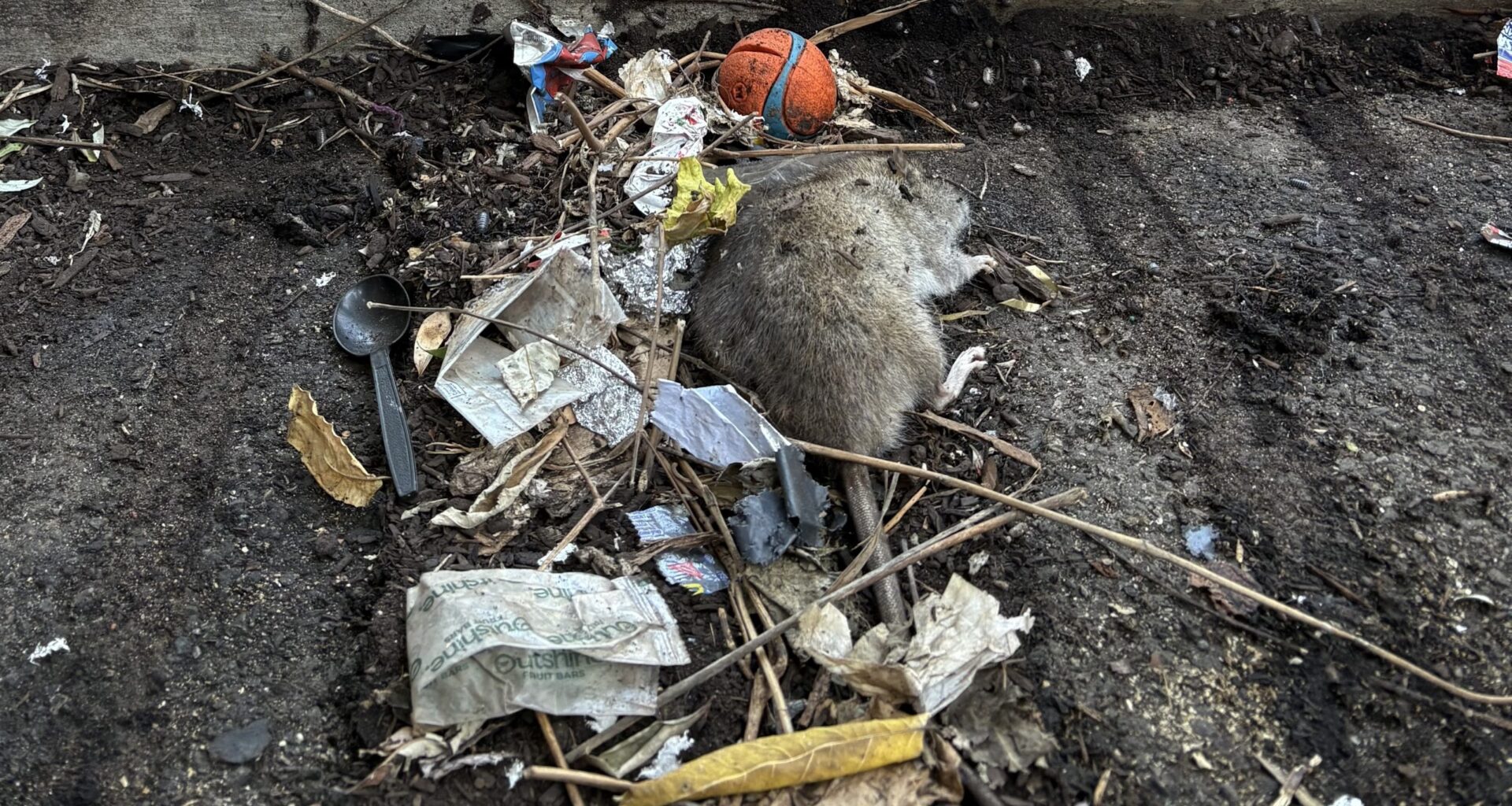
A three-week rat extermination “blitz” in Hell’s Kitchen Park by the NYC Department of Parks and Recreation has proved successful, according to a senior official.
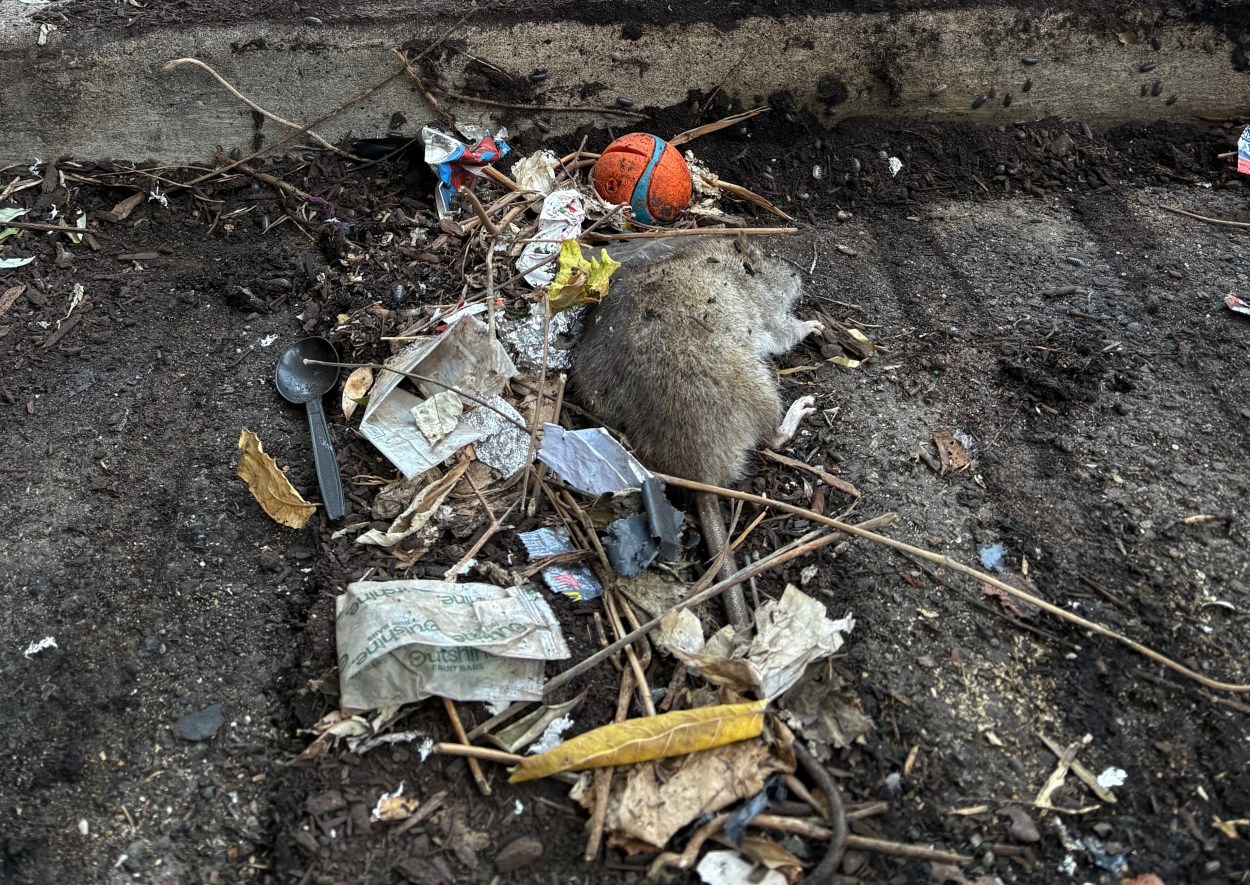 A dead rat underneath a pallet of compost near the volunteer gardener’s shed in Hell’s Kitchen Park. Photo: Catie Savage
The operation, which involves pumping rat burrows with CO2 gas, was launched at the request of community members after volunteer gardeners reported increased sightings of rats and burrows in the park’s garden beds.
Before the blitz, volunteer gardeners and neighbors had been sounding the alarm for months, describing a rapidly worsening infestation and a lack of consistent action from the city. Gardeners documented active burrows, hand-drew maps, and tried everything from gravel and mint-soaked rags to dry ice to hold the rodents at bay — efforts they said were no match for the scale of the problem.
Many blamed chronic bird-feeding, food scraps tossed into beds and deteriorating trash cans for fueling what one resident called a “rat buffet” in the park, with the rodents spilling over into nearby buildings. A push for a structured weekly-then-monthly extermination plan led directly to the October walkthrough and the subsequent blitz.
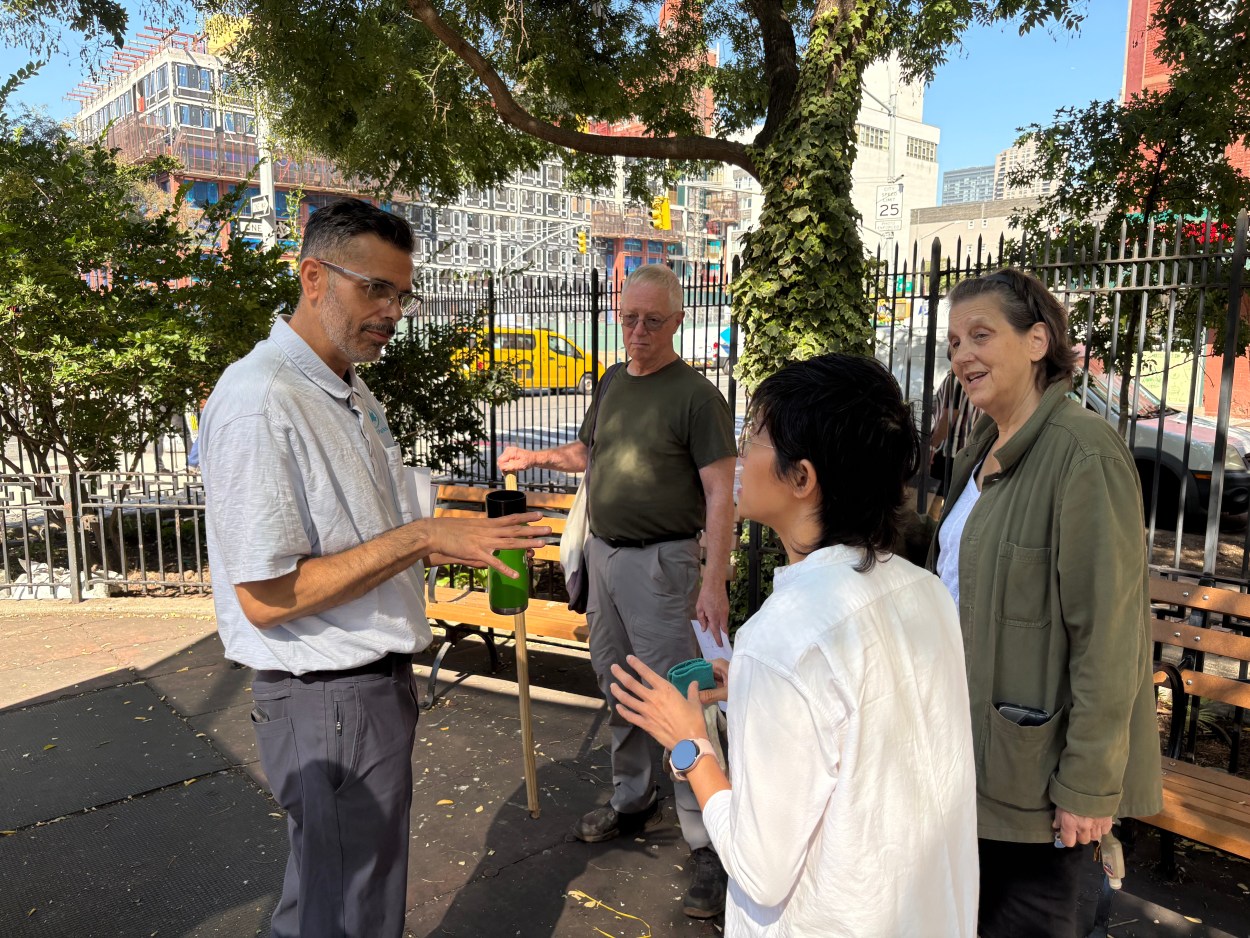 Danny Hernandez from the Parks Department talks with volunteer gardeners Jim Harker, Yuen Le and Suzette Meshulam during the walkthrough. Photo: Catie Savage
In October with the Parks Department and local officials, Danny Hernandez, who manages the citywide street tree rat mitigation initiative, examined the active rat burrows in the garden beds and talked with the gardeners about strategies for managing the rat population.
After initial uncertainty around manpower, Parks was able to schedule three weekly rounds of gassing that has resulted in many dead rats strewn across the park, said Paul Evans, who manages all of the city-operated parks in Manhattan Community Board 4 (MCB4).
“It’s been very, very effective,” he told MCB4’s Waterfront, Parks and Environment Committee at a November 13 meeting.
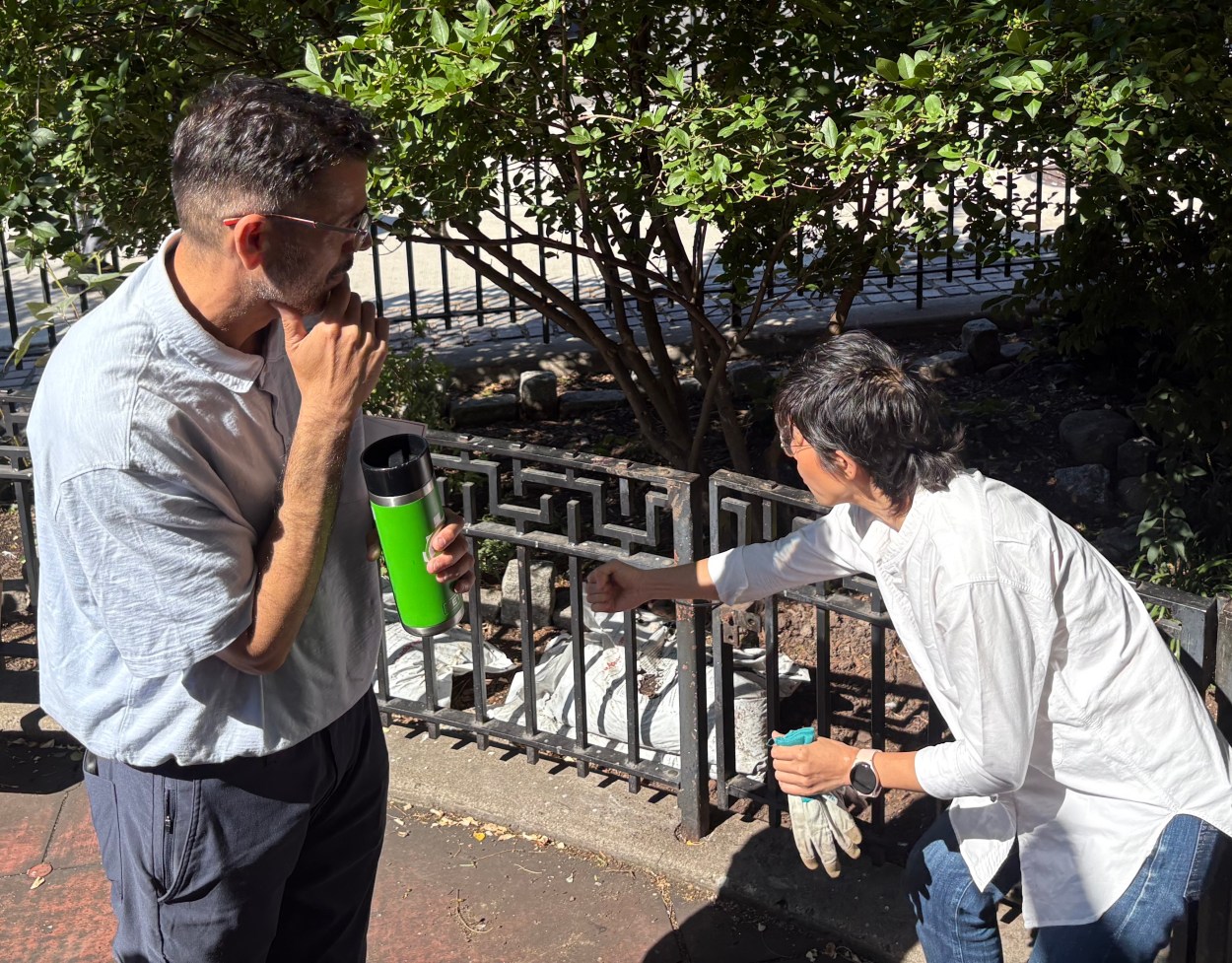 Yuen Le points out rat burrows to Danny Hernandez from the Parks Department. Photo: Catie Savage
Following the blitz, the Parks Department plans to honor community requests to continue monthly CO2 injections into the burrows that dot the park. But he expects challenges in executing this.
“The real problem overall, really, is personnel; having enough people to go back and do [the gassing],” he said. “But if we have enough machines in the borough, it would be good to have our own person to focus a little bit of time there.”
Gardeners in the park had resorted to creative methods of chasing off or killing their unwanted neighbors, from filling burrows with gravel to stuffing them with mint oil-soaked rags and dry ice.
These efforts were largely in vain, said volunteer gardener Jim Harker. However, the rat population in the park has “dramatically reduced” since the extermination blitz began, he added.
“We’re very, very grateful for the prompt response from Parks management, and in particular, the really terrific work from the exterminating team,” he said. “We hope that with the help of our team of volunteer gardeners and ongoing regular visits by the exterminator, the rat problem in Hell’s Kitchen Park is now well under control.”