
Dead Letter
Sikkema Malloy Jenkins
October 18–December 13, 2025
New York
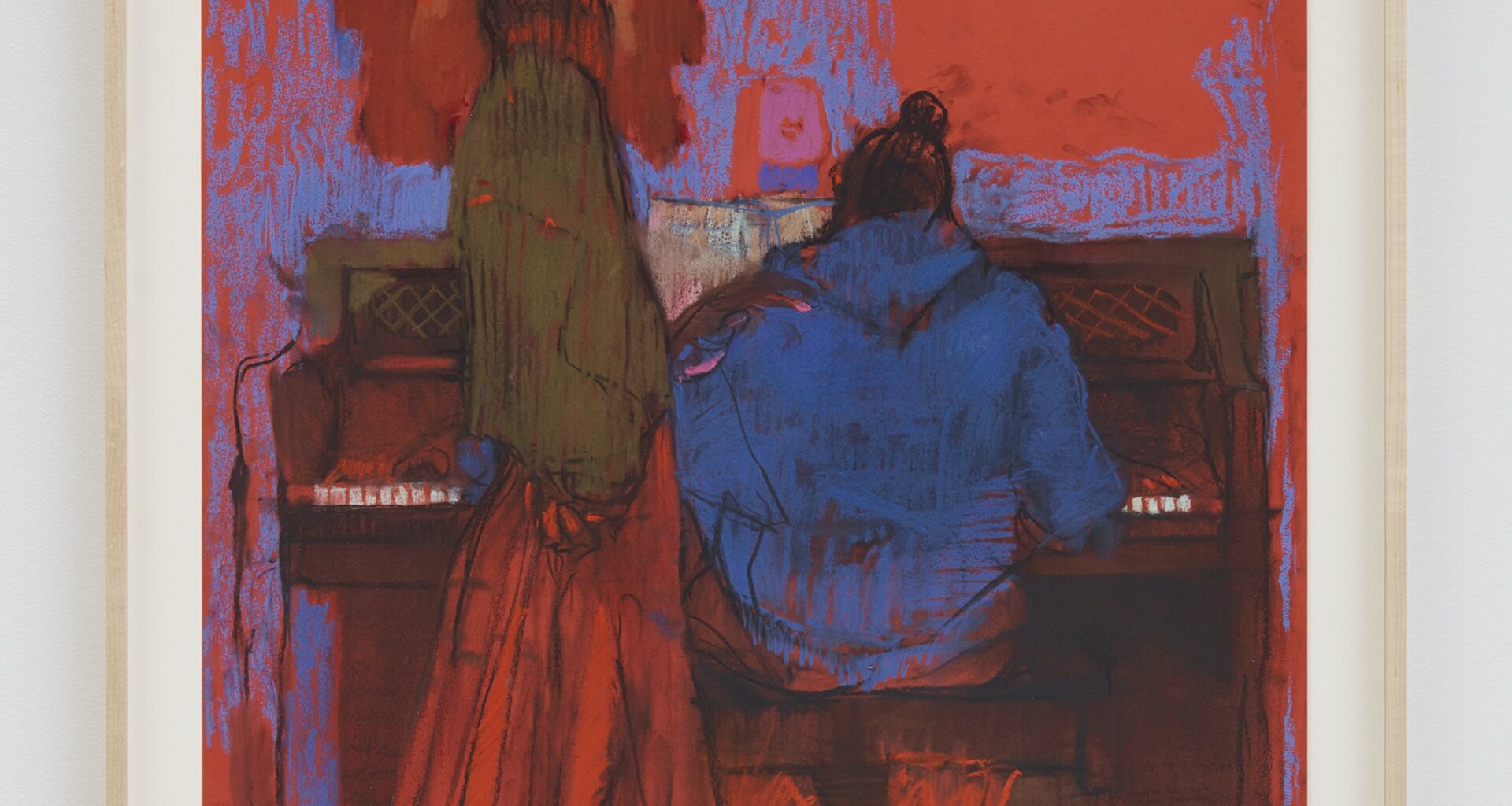
Jennifer Packer’s exhibition Dead Letter unfolds as both a collection of works and an act of communication across loss. Packer’s partner, the poet April Freely, passed away four years ago, and the current show, created in the wake of this loss, gathers paintings that move between presence and disappearance, between figuration and abstraction. Packer’s figures arrive and dissolve within deeply saturated fields of color. These expansive hues serve as both environments for meditation and objects of contemplation. In and of themselves, these spaces hold the viewer within an intense depth of feeling.
The familiar warmth of Packer’s palette, with its reds, pinks, oranges, and yellows, permeates the exhibition. These fields of warm hues are quickly complicated by layers of cool colors, contour lines, and interruptions that redirect the gaze. Packer paints representation as a verb; she is painting towards an image, showing us all the stops, starts, and avenues of awareness that occur along the way. Arrival at an endpoint is never an inevitability.
In Warp, Weft (2025), Packer constructs a scene from a deep blue ground overlaid with loosely applied red. Two figures, a piano, and portraits emerge and retreat in this layered field. The interplay between background and foreground—between what is seen and what obscures—creates a vertiginous sense of pictorial instability. The unseen portraits behind the central figures become spectral presences, echoes of the foregrounded silhouettes. In the thrum of chromatic vibration, I am reminded that art is ritual, and with this, we are offered a space to heal. Here, color overwhelms color and gesture consumes form. Two perfectly rendered feet touch the ground; they are subtly posed, defining the body’s relationship to this earthly plane. Meanwhile, the figure drifts upward and away into flattened space. Here, Packer places attention on the particular point of connection with the ground, making her specificity felt rather than read. In doing so, she avoids simplistic conceptions of identity.
This tension between definition and expansiveness is a central concern of Dead Letter. Strict and circumscribing lines risk visualizing overdetermined attitudes towards the limits of personhood; Packer’s refusal to fix clear boundaries allows her to destabilize the canvas instead. Her method becomes a way of speaking with absence, acknowledging the instability of how bodies are held—and how death and omission remain an ever-present part of representation.
In her book In the Wake: On Blackness and Being, Christina Sharpe describes the problem of containment: