
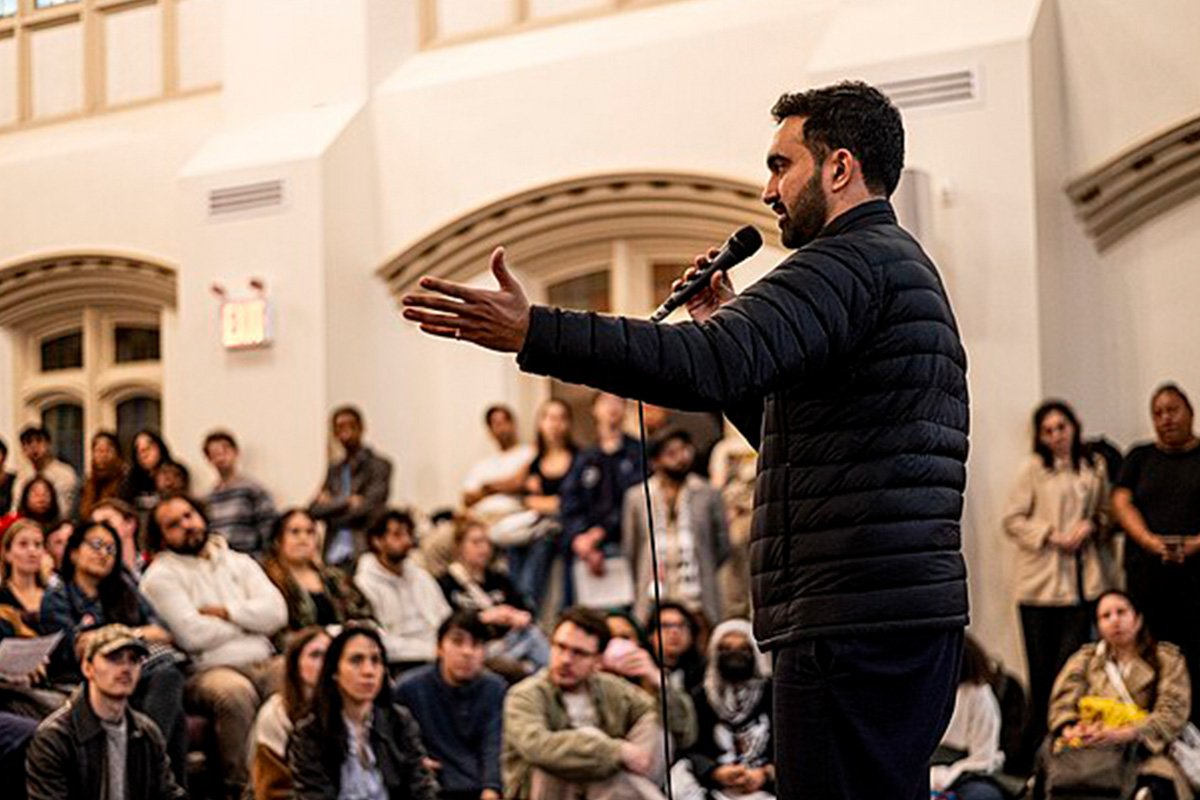
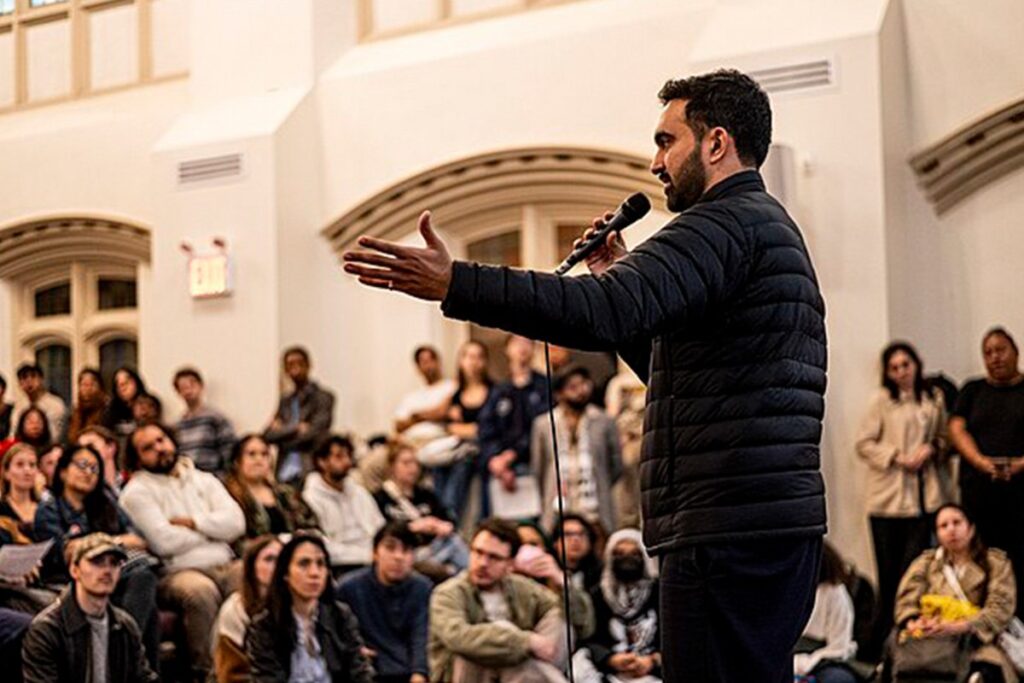
 Image Credit: Bingjiefu He on Wikimedia Commons
On November 4, 2025, newly elected New York City Mayor Zohran Mamdani stood before a roaring crowd and led them through his campaign’s three core promises: “Freeze the Rent,” “Fast and Free Buses,” “Free Universal Childcare!”
Affordability defined his campaign. Yet in a city increasingly battered by hurricanes, flooding, and heat waves, some wondered why climate change barely featured.
Sheila Foster, a professor at Columbia University’s Climate School who serves as a member of the New York City Panel on Climate Change and the city’s Environmental Justice Advisory Board, has a different view on Mamdani’s campaign.
“These initiatives may not have been branded as ‘climate policy’ during the campaign, but they represent tangible steps toward decarbonization and adaptation,” Foster said in an interview with NPQ.
As Mamdani told The Nation in April 2025, “Climate and quality of life are not two separate concerns. They are, in fact, one and the same.”
“[Mamdani’s] initiatives may not have been branded as ‘climate policy’ during the campaign, but they represent tangible steps toward decarbonization and adaptation.”
Lisa Sachs, director of Columbia University’s Center on Sustainable Investment, agrees. As she told NPQ, “Mamdani clearly grasps that decarbonizing our city and preparing for heat, flooding, and other extremes isn’t a separate policy area; it’s central to ensuring that New York remains livable for everyone.”
Reliable public transport, resilient buildings, and accessible green space, she added, make cities more affordable and climate-friendly.
“He connected climate goals to kitchen-table concerns—housing, transit, and cost of living,” Foster said. “In this sense, his election may mark a turning point in how New York frames climate action—not as a separate agenda but as a core component of building a livable, affordable city.”
On Mamdani’s campaign site, only one climate policy was explicitly listed: Green Schools for a Healthier NY. It would renovate 500 public schools—about a quarter of the city’s total—with solar panels, efficient HVAC systems, and green courtyards, converting 50 into “resilience hubs” for heat or flood emergencies.
The same logic drives his plan for fast and free buses. Mamdani said in February 2025 that the goal is to increase ridership and reduce emissions. While there is little evidence that people who drive would switch to public transit, having access to reliable transit would be a start, since those who already ride buses or walk tend to use transit more frequently when it’s fast and free.
Sign up for our free newsletters
Subscribe to NPQ’s newsletters to have our top stories delivered directly to your inbox.
By signing up, you agree to our privacy policy and terms of use, and to receive messages from NPQ and our partners.
A Record of Climate Advocacy
Before his run for mayor, Mamdani represented Astoria, Queens, in the New York State Assembly, where he fought for taxi driver debt relief and public power during the height of the pandemic. He then helped pass the Build Public Renewables Act in 2023, “a groundbreaking law empowering NYS to speed up the clean energy transition and lower your bills with publicly-owned power,” Mamdani wrote on X.
Mamdani’s win signals a potential shift in how cities link climate policy with affordability.
He also protested a proposed NRG gas plant in Astoria—which the state’s Department of Environmental Conservation later rejected—and opposed efforts to weaken Local Law 97, which mandates that large buildings cut emissions by 2050.
The same law will apply to Mamdani’s plan to build 200,000 new housing units over the next decade, a crucial part of reducing the city’s emissions.
Despite this record, Mamdani didn’t mention climate in his victory speech.
Still, his stance is clear—and Mamdani’s win signals a potential shift in how cities link climate policy with affordability.
“Climate change is often viewed as a long-term problem, whereas affordability and safety are more urgent,” Foster said. “It’s true that surveys show people want more government action on climate. But they vote on issues they feel every day, like housing costs, transit, and energy bills.”
Whether Mamdani can deliver remains to be seen. But by tying the fight against climate change to everyday survival, the mayor-elect has reframed urban climate politics around the people who feel its impacts first.
We have reached out to Mamdani’s campaign for comment on the positioning of climate policies in his campaign agenda. The story will be updated if and when we receive a response.