
Surprise! Zohran Mamdani is not the first socialist mayor in American history. He follows a well-established pattern among the Democratic Socialists of America, running as a Democrat while being a member of the DSA. It might surprise some to learn that the DSA is not a political party, but rather “the largest socialist organization in the United States, with more than 80,000 members and chapters in all states, emphasizing ‘working-class power and organizing’” as the keys to influence.
American socialists abandoned party politics by the 1970s, forming alliances with comparable groups such as Working Families, Greens, Democrats and independents. The DSA promotes a platform of “fair choices.” People who think that there have been any American domestic or global successes or policies that hint at the historical progress of the United States will almost certainly not be accepted in the DSA. For example, members of the Alliance for Cuba Engagement and Respect would be welcomed.
When genuine party socialists such as Eugene Debs, Norman Thomas, Michael Harrington and many lesser-known figures were active and successful, between 1900 and 1940, more than 1,000 socialist officials were elected, including 146 city mayors.
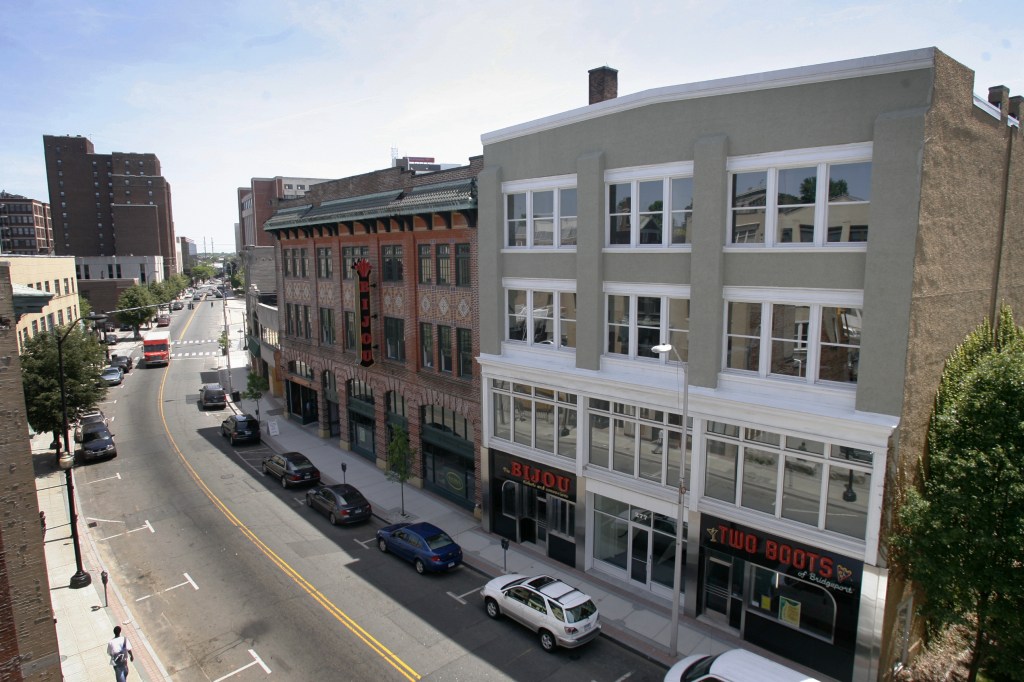
Jasper McLevy of Bridgeport, Conn., was arguably the most significant. Serving as mayor from 1933 to 1957 across 12 terms, McLevy had one of the longest tenures for a chief executive of a major industrial city. During his time, Bridgeport’s population grew from 147,000 to 159,000 (and 25 percent during World War II).
McLevy was elected on an anti-corruption platform and was applauded in his corrupt industrial city. His brand of socialism, originating in Milwaukee, had been dubbed “sewer socialism” because his priorities were cleaning up corruption in New England’s corruption capital by implementing a civil service system and dismantling the patronage that had plagued the city for decades. He renovated the sewer system, including modern treatment plants, halved the city’s debt, cleared slums, and built public housing for workers. He also expanded public parks in the “Park City.”
This socialist understood that in a town of modest homes and factories, low taxes were a must. Not only did McLevy make sure that Bridgeport profited from New Deal largess, but he cut expenses with a vengeance.
He reduced costs in every way, from the small — selling the city limo and sending its driver back to the police department — to the large — centralizing purchasing, purchasing city coal directly from the mine, and renegotiating more favorable city contracts.
While McLevy was a pacifist during World War I, he welcomed the massive expansion of the military industry in Bridgeport during World War II. While he allegedly turned against labor after the war, he effectively oversaw numerous labor actions during the conflict.
Some of this feat was due to his early successful organizing experience, including the Central Labor Union of Bridgeport and the Building Trades Council. He was also International President of the Slate and Tile Roofers Union, American Federation of Labor, and held several other high-ranking trade union posts.
In short, this self-educated roofer, who never advanced beyond the eighth grade and became a socialist after reading the science-fiction book “Looking Backward,” became a remarkably successful mayor. McLevy famously said, “I finally became convinced that socialism was the only hope of the people.” He was a relentless campaigner, enduring 20 lost elections from age 22 before winning the mayoral seat in 1933.
Before Zohran Mamdani assumes the mayoral seat and works to “immediately freeze the rents for all stabilized tenants,” a policy that some experts warn would have negative consequences for the market and future housing development, he would be wise to examine Jasper McLevy’s pragmatic approach. McLevy’s “sewer socialism” succeeded not through grand ideological gestures but by tackling fundamental, tangible urban problems like corruption and infrastructure.
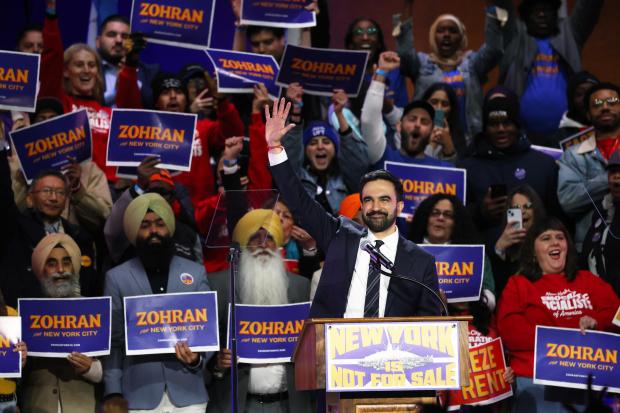 New York City mayoral candidate Zohran Mamdani waves to the crowd during a rally, Sunday, Oct. 26, 2025, in New York. (AP Photo/Heather Khalifa)
Mamdani, who campaigned on an ambitious platform of rent freezes and city-run grocery stores funded by taxing the wealthy, faces the challenge of translating grand promises into practical governance that ensures the city’s essential functions, its modern “sewers,” are in good working order.
William T. Alpert is an emeritus associate professor of economics at the University of Connecticut. He wrote this for InsideSources.com.