
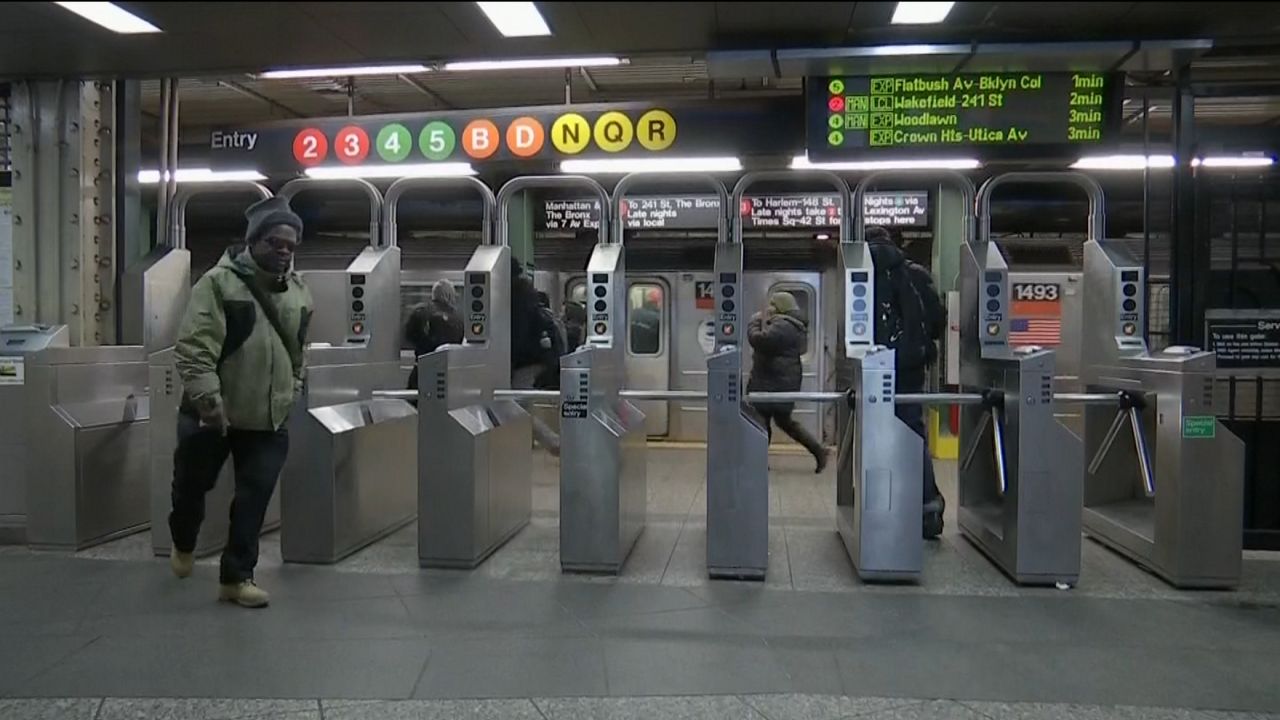
A jury found the city’s transit agency liable for neglecting public safety for decades, leading to thousands of people getting hit by trains.
The jury determined that the MTA had failed to install safety barriers or other protective devices.
What You Need To Know
In August 2016, a 21-year-old woman fell onto the tracks at the Atlantic Avenue/Barclays Center station and was run over by a train, severing her left arm and left leg
Earlier this year, Gov. Kathy Hochul announced the MTA installed protective platform edge barriers at more than 50 subway stations and is on track to install barriers at more than 100 stations by the end of the year
The MTA has claimed it was not negligent, noting no other subway system in North America had such safety devices at the time and there were no requirements to have them
“In the world of transportation, there are very few things that are almost 100% effective, and platform screen doors and these barriers are almost 100% effective,” David Roth, one of the plaintiff’s lawyers, said.
The lawsuit stems from an incident at the Atlantic Avenue/Barclays Center station in August 2016.
Lawyers say their client, a 21-year-old architecture student from Brazil, fainted on a hot summer day, fell onto the tracks and was run over by a train, severing her left arm and left leg.
“The common denominator and root cause is open access to the track. Get rid of open access to the track, [and] you get rid of the problem. It doesn’t happen. At [John F. Kennedy International Airport], for example, since 2003, the AirTrain [has worked]. No deaths, no injuries, it doesn’t happen,” Robert Genis, another lawyer, said.
Earlier this year, Gov. Kathy Hochul announced the MTA installed protective platform edge barriers at more than 50 subway stations and is on track to install barriers at more than 100 stations by the end of the year. But lawyers say these measures don’t go far enough.
“They went with the less-effective option of the platform gates, these metal barriers that are not nearly as effective as platform screen doors which had been proven around the world to be 100% effective,” attorney Elliot Shields, another member of the plaintiff’s legal team, said.
But the MTA has claimed it was not negligent, noting no other subway system in North America had such safety devices at the time and there were no requirements to have them.
The agency also claimed governmental and qualified immunity, which protects the government and its officials from lawsuits.
The MTA will file a motion to set aside or reduce the verdict, meaning the victim could receive a much smaller sum.
NY1 reached out to the MTA directly for comment but hasn’t heard back yet.