
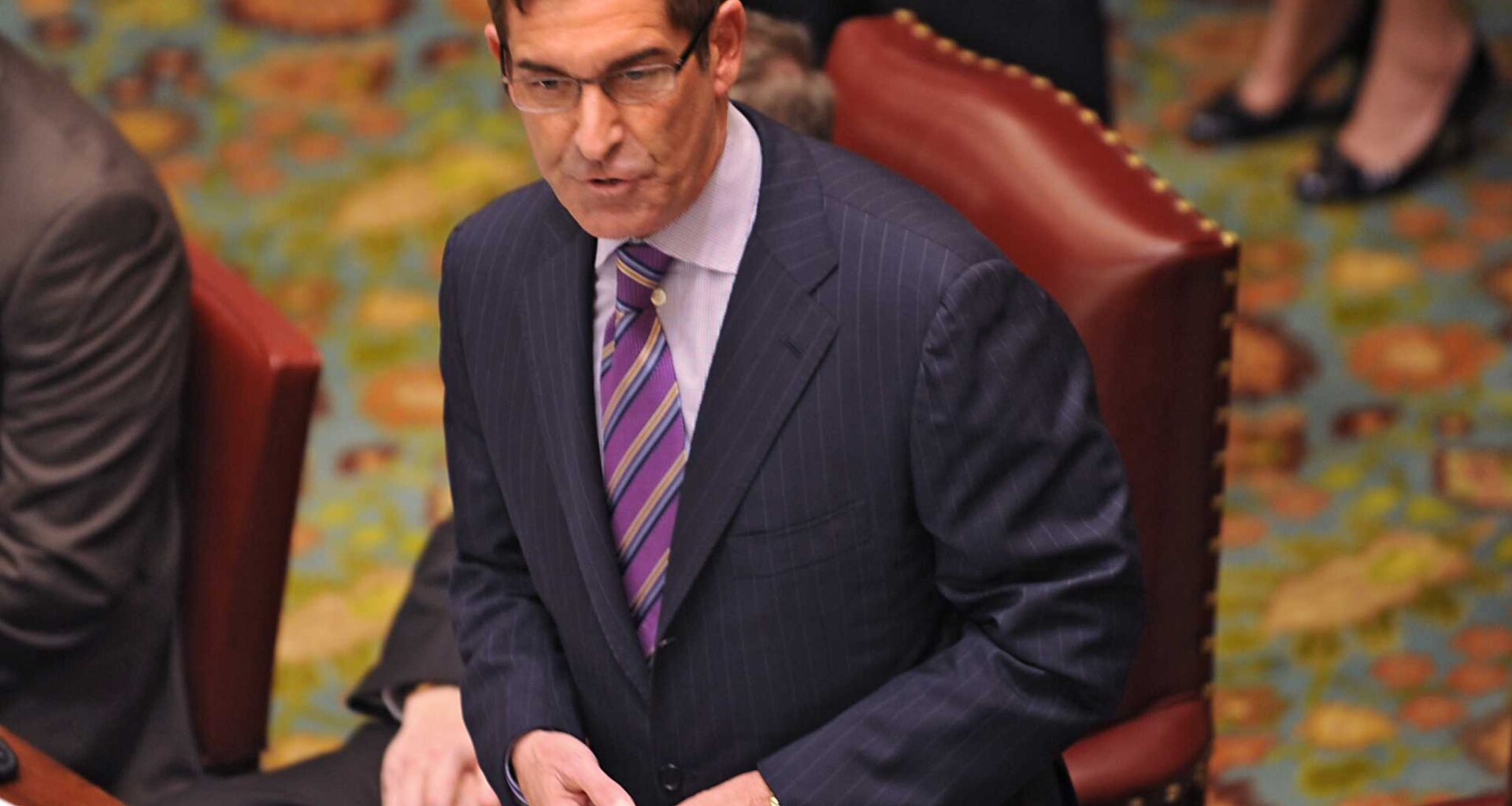
Former state Sen. Jeff Klein was accused of forcibly kissing a member of his staff outside a bar in Albany in 2015.
Lori Van Buren
Klein was leader of the Independent Democratic Conference, a group of Democrats that decided to caucus with Republicans to bolster that party’s majority in the state Senate.
Erica Vladimer said that Klein kissed her without her consent outside a bar on Lark Street in Albany.
Phoebe Sheehan/Times Union
The 11-member state Commission on Ethics and Lobbying in Government has four vacancies. Despite that, six votes were still need to approve a finding that affirmed Vladimer’s account. That failed by one vote.
Lori Van Buren/Times Union
ALBANY — Despite a majority of its current members voting to find that a former top lawmaker in the state Senate forcibly kissed a staffer in 2015, the state’s ethics agency said Friday he will not face any repercussions.

That’s not because the evidence exonerated former Sen. Jeff Klein, who lost his seat in 2018. It’s because nearly half of the commission’s appointed seats are currently vacant.
Article continues below this ad
Klein was accused of forcibly kissing Erica Vladimer when he was leader of the Independent Democratic Conference, a breakaway group of Senate Democrats who caucused with the Republican majority for several years.
Vladimer said in 2018 that Klein had three years earlier kissed her without her consent outside of a bar on Lark Street in Albany. Klein denied the allegation, and called on the state Joint Commission on Public Ethics, at the time the state’s ethics watchdog, to investigate the allegation.
But after losing his seat, Klein sued JCOPE in an attempt to scuttle its investigation; that legal battle ground on until 2023, when a judge allowed the probe to continue under the state’s new ethics panel, the state Commission on Ethics and Lobbying in Government.
That commission has 11 members when it’s at full capacity. Four of those appointments are currently vacant, leaving only seven sitting members.
Article continues below this ad
But when the commission votes on something, state law requires a majority of what its membership would be if each appointment was filled — six votes — for approval, regardless of the number of vacancies.
Five of the commission’s current members voted that there was sufficient evidence to find that Klein forcibly kissed Vladimer. Two voted against that finding — a minority of current members, but enough to reject the finding.
“A determination should’ve left me feeling vindicated and affirmed,” Vladimer said Friday. “Instead, I am livid and disconsolate.”
Richard Portale, an attorney for Klein, praised the ethics panel “for taking decisive action in dismissing these baseless allegations. This outcome affirms that the accusations against Sen. Klein were without merit. … After fighting for nearly a decade to restore his reputation, Sen. Klein is grateful that the truth has finally prevailed.”
Article continues below this ad
Klein’s camp provided a copy of the 36-page report from Joseph E. Neuhaus, the hearing officer who handled the inquiry for the commission. “The evidence in this case is quite balanced,” he wrote in conclusion. “In an alleged sexual assault with no witnesses and little physical evidence, I (and the Commission) must rely on inferences and plausibility. … But in my view it would not be responsible to rely on the burden of proof to decide this case if the evidence tips one way. Acknowledging it is a close call, I have, for the reasons stated above, reached the conclusion that the alleged kiss did not occur and that the Commission’s charges therefore lack a substantial basis.”
“The matter is now closed,” Sanford Berland, executive director of the commission, said in a statement that accompanied the public release of its two-page letter to Klein.
Read the commission’s letter to Klein:
“The process played out as prescribed by law and the commission’s regulations,” Berland said. “The agency investigated and presented the facts, and the commission acted based on the record as the process requires.”
Article continues below this ad
Of the four vacancies that currently exist on the commission, two of those appointments are supposed to come from Gov. Kathy Hochul. One of them is vacant because a member previously appointed by Hochul died over the summer.
Hochul appointed Linda Scott in September to fill the vacant position. But her appointment wasn’t approved until this week by the panel of law school deans that is responsible, under law, for screening the qualifications of each prospective member before they join the commission.
“Our administration has zero tolerance for sexual harassment of any kind,” said Matthew Janiszewski, a spokesman for Hochul. “It’s clear that a majority of the commissioners reviewing the case found there was sufficient evidence to support this allegation.”
The other two vacancies are appointments from Senate Minority Leader Robert G. Ortt and Assembly Minority Leader Will Barclay, both Republicans.
Article continues below this ad
Barclay’s appointee, Gary Lavine, was rejected by the panel of law school deans. Lavine is now fighting that decision in court.
After going public with her allegation, Vladimer founded Harassment Free NY, a group of former employees of the state Legislature who’ve shared stories of similar experiences and advocated for changes in state law.
The group’s work has led to several reforms approved in recent years by the Legislature. None of them would have changed the outcome in this case.
“The commission’s position is essentially that after taking up taxpayers’ time and money, subjecting me to hours of invasive questioning and emotional hardship, they are toothless to proceed,” Vladimer said. “This is doubly unacceptable and utterly pathetic.”
Article continues below this ad
The commission made a second finding that Vladimer said was equally frustrating: that Klein’s alleged kiss wouldn’t have violated ethics laws for public officials.
That’s because, despite meeting the definition of sexual harassment in the state’s human rights laws, that kind of conduct isn’t explicitly prohibited in the statute governing conduct by state elected officials. It’s a loophole for public officials that Vladimer and good government groups have called on lawmakers to close.
“The same public officials who voted for the human rights law, which applies to everyone else, have carved out their own exemption from accountability for their professional conduct,” Vladimer said.
Article continues below this ad
The commission instead had to vote on whether Klein’s alleged conduct violated the public’s trust. Five of the commission’s members voted that it would not have met that standard for sanctions.
“This decision should not be read as an approval of the way in which you handled the complaint,” the commission said in its letter to Klein. “The record shows that you failed to comply with New York State Senate Harassment Policy requiring the reporting of this incident to designated independent Senate staff. However, this issue was not part of the allegations against you.”