
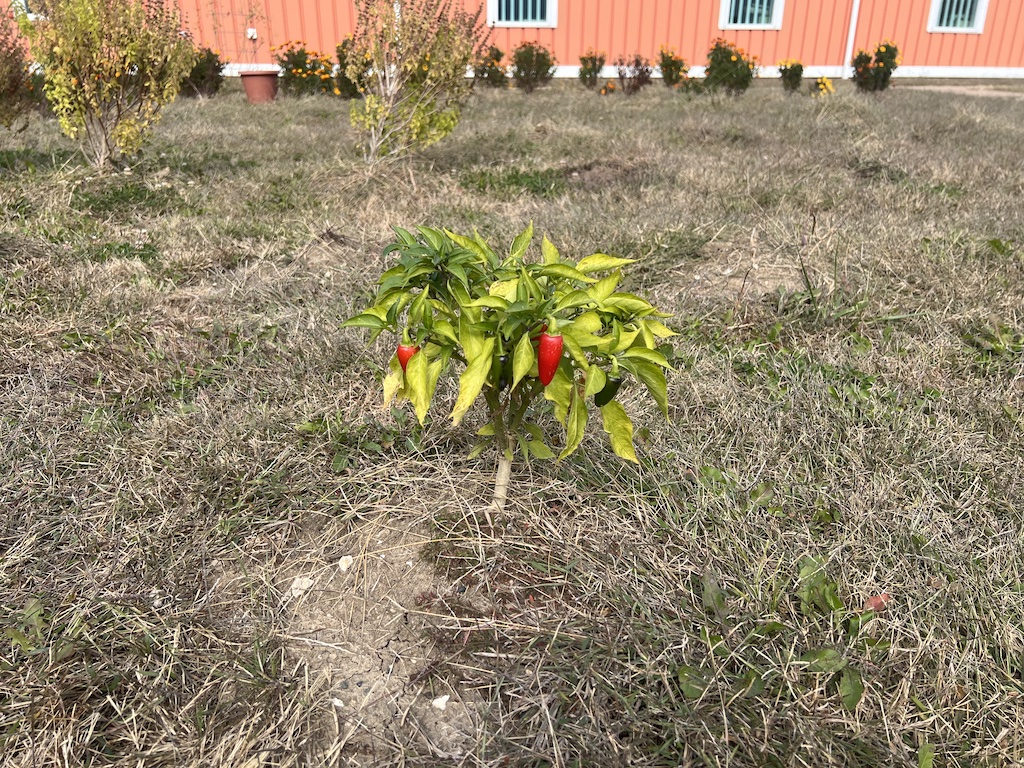
A small red pepper plant is ready to harvest in a garden tended by incarcerated women at the Women’s Eastern Reception, Diagnostic and Correctional Center in Vandalia, Mo. An oversight report in New York recommends that the state expand prison horticulture programs so incarcerated people can grow their own food. (Photo by Amanda Watford/Stateline)
Incarcerated people in New York state prisons face significant challenges in accessing healthy and affordable food, according to a new report from the Correctional Association of New York, or CANY, an independent oversight organization designated by state law.
This problem is not unique to New York: Researchers and advocacy groups have long documented that prison and jail meals nationwide are often insufficient in quantity, lacking in nutrients and of poor quality. Some correctional facilities also have outsourced their food operations to private companies.
The Correctional Association of New York found that meals served in prison mess halls across the state are often nutritionally imbalanced, with too few fruits, vegetables, proteins and whole grains, alongside high levels of refined grains and sodium. If consumed entirely, the meals provide too many calories for most incarcerated women and some men based on the U.S. Department of Agriculture’s guidelines, according to the report.
During monitoring visits in 2023 and 2024, the correctional group interviewed more than 500 incarcerated people in general population housing units. About two-thirds of respondents said commissary shelves were inadequately stocked.
At Bedford Hills Correctional Facility, prices for commissary items such as cereal and pasta rose an average of 45% between March 2020 and December 2024, while wages for incarcerated people declined when adjusted for inflation, according to the report.
Nearly half of those interviewed also reported delays in receiving packages containing food, with some items spoiling before reaching them.
The organization made several recommendations for the state’s Department of Corrections and Community Supervision, including increasing transparency around meal nutrition, moving to a single commissary vendor to stabilize supply and prices and standardizing package delivery processes, particularly for perishable items.
It also recommended allowing incarcerated people to grow and consume fruits and vegetables by expanding horticulture programs and partnerships with Harvest Now, a group that works with state prisons to grow produce and donate it to local food kitchens and pantries.
Some states, including Maine and Missouri, have implemented programs that let incarcerated people cultivate gardens or small farms and incorporate the produce into their meals.
Stateline reporter Amanda Watford can be reached at ahernandez@stateline.org.