
New York City’s outdoor dining landscape is back in flux again, with the City Council seeking to make some serious alterations to regulations rolled out by the city’s Department of Transportation last year.
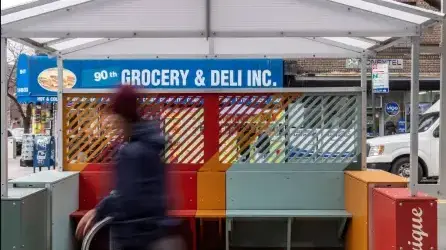
The most prominent bill, Int 1421-2025, is co-sponsored by Upper East Side Council Member Julie Menin and Brooklyn Council Member Lincoln Restler. It would allow restaurants to operate roadway dining sheds year-round instead of seasonally, allow grocery stores to apply for sidewalk sheds, and allow all businesses to expand the footprint of sidewalk sheds.
Currently, roadway sheds must be disassembled and put away between Nov. 29 to April 1. Sidewalk sheds are allowed to operate year-round.
Another bill would streamline the shed application process, while a third would limit the “pedestrian clear path” that applicants must maintain.
The DOT’s formalized “Dining Out NYC” program, which replaced the patchwork of “temporary” rules that sprung up during the pandemic, has already been under sustained fire from the Council since the spring.
Lawmakers took issue with the fact that there were only 4,000 “Dining Out” shed applications submitted by April 1, down from a total of 12,000 during outdoor dining’s 2020 peak. Most applicants only received “conditional” approval to operate, as well, while they completed the bureaucratic process.
As for why such a drop-off occurred, some businesses and lawmakers called the new rules expensive and onerous, as well as cited the high cost of taking down roadway sheds for the winter.
The new bills were the subject of a hearing on Nov. 24, where various city officials—including DOT Commissioner Ydanis Rodriguez—were questioned.
Restler kicked things off by outlining his take on the strictly-seasonal roadway “Dining Out” program: “Instead of New Yorkers enjoying a bite outside, we will have thousands of parked cars, SUVS, and trucks lining our streets…who knows how many restaurants will be able to come back in April after the costly disassembly and storage fees.”
Council Member Menin was also pointed about what she saw as the current program’s failings, bringing up new data revealing that only 400 (out of 4,000) shed applications have been fully approved by the DOT. “So, basically, only 10 percent have been fully approved,” she said, adding that her understanding was that local businesses want “the certainty of a full approval.”
”I guess that my overarching concern is that the program is seasonal…you’re asking these business to outlay a tremendous amount of money, and asking them to store furniture the other six months of the year, which many restaurants don’t have the space to do,” Menin added.
In prepared remarks, Commissioner Rodriguez defended the new rules, saying that they “addressed the quality of life concerns that have been raised about the temporary program.” This was a clear reference to some local advocates who happen to be opposed to outdoor dining, pointing out that they can attract rats and such if improperly maintained.
The DOT, Rodriguez continued, had removed “200 illegal enclosures” since instituting the new permanent program; he notes that they have also demanded that owners use higher-quality building materials, clean the sheds weekly, and replace sand-filled barriers with water-filled ones—to keep away the aforementioned rats.
Since Restler’s bill cannot formally pass until 2026, it’s guaranteed that roadway sheds will still start coming down for the winter in mere days.