
When ChatGPT launched in 2022, few expected that a simple text box would trigger a global debate about artificial intelligence. Today, AI is no longer a novelty; it’s a force reshaping how we learn, create, and work. At Brooklyn College, we’re committed to meeting this moment with thoughtfulness and integrity—equipping our students and faculty with the knowledge, tools, and ethical foundation they need to navigate and lead an AI-driven world.
Designing the Future Together
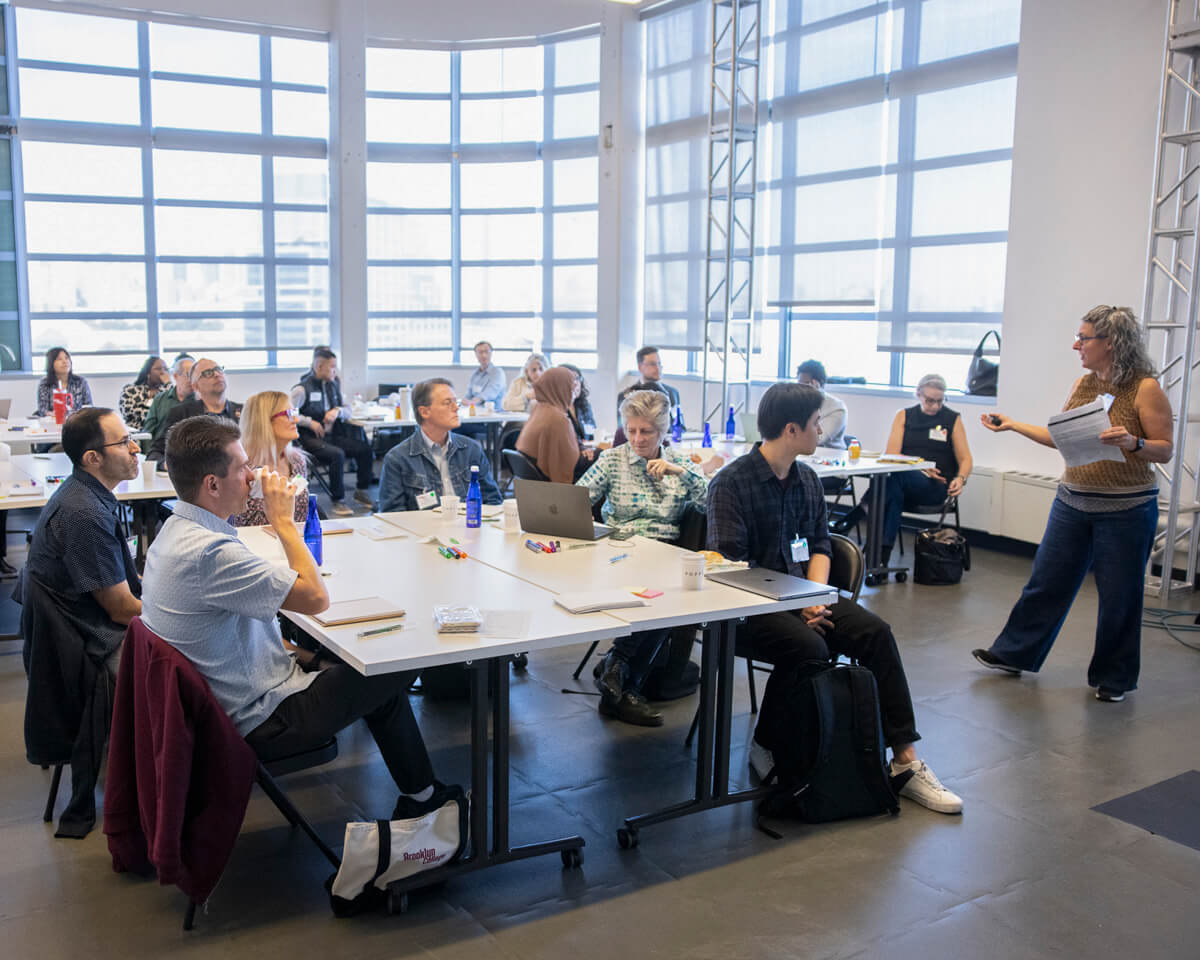
This fall, Brooklyn College convened 32 students, staff, faculty members, alumni, and industry partners for a one-day visioning workshop focused on career readiness in the age of AI. The workshop, structured as a charrette, invited participants to co-design a framework for how Brooklyn College should respond to the rapid evolution of this technology.
A charrette is more than a meeting—it’s a creative, inclusive process that brings diverse voices together to tackle complex problems. Led by the National Charrette Institute, the session marked a critical first step in understanding the scope of AI’s impact and the need for sustained, cross-sector collaboration.
Provost and Senior Vice President for Academic Affairs April Bedford explains, “Our goal is to ensure AI serves as a meaningful complement, and not a substitute, for human scholarship and instruction. Faculty are developing course materials that include clear guidelines on the responsible use of generative AI tools, along with expectations for transparency and disclosure. This empowers students and faculty to engage ethically and thoughtfully with emerging technologies while preserving the integrity of academic work.”

Participants in the charette discuss AI.
What We Learned
The conversations revealed urgency about AI’s role in education and society. Participants noted that even middle school students now understand concepts like “humanizers”—tools that make AI-generated text sound more natural. They agreed that critical thinking is more essential than ever and that Brooklyn College must help students become creators, not just consumers, of technology.
Career readiness emerged as a priority, with calls for strategies that span departments and embed AI literacy into core learning. The emphasis shifted from product to process: understanding how to think, not just what to produce. Participants warned against complacency—AI is not infallible, and without understanding how it works, educators and students risk misusing it.
Grounded in Empathy
Faculty stressed that AI integration must be rooted in human values.
Norman Eng, a doctoral lecturer in childhood, bilingual, and special education, put it this way: “With AI, we probably won’t go wrong if we focus on the experiences, motivations, and feelings of our students—especially those marginalized by this technology.” Quoting Jurassic Park’s Dr. Ian Malcolm, he added, “‘Your scientists were so preoccupied with whether or not they could, they didn’t stop to think if they should.’ It’s no different with AI. We want our students to question and reflect on the ‘should.’”
Eng advocates embedding digital literacy and AI ethics into every course: “AI has shifted education toward process and performance. Instead of grading lesson plans, we analyze and improve AI-generated ones. Students develop meta-learning skills—learning how to learn—so they can adapt and thrive. Ultimately, it’s not AI itself, but how students use it, that will define their success.”
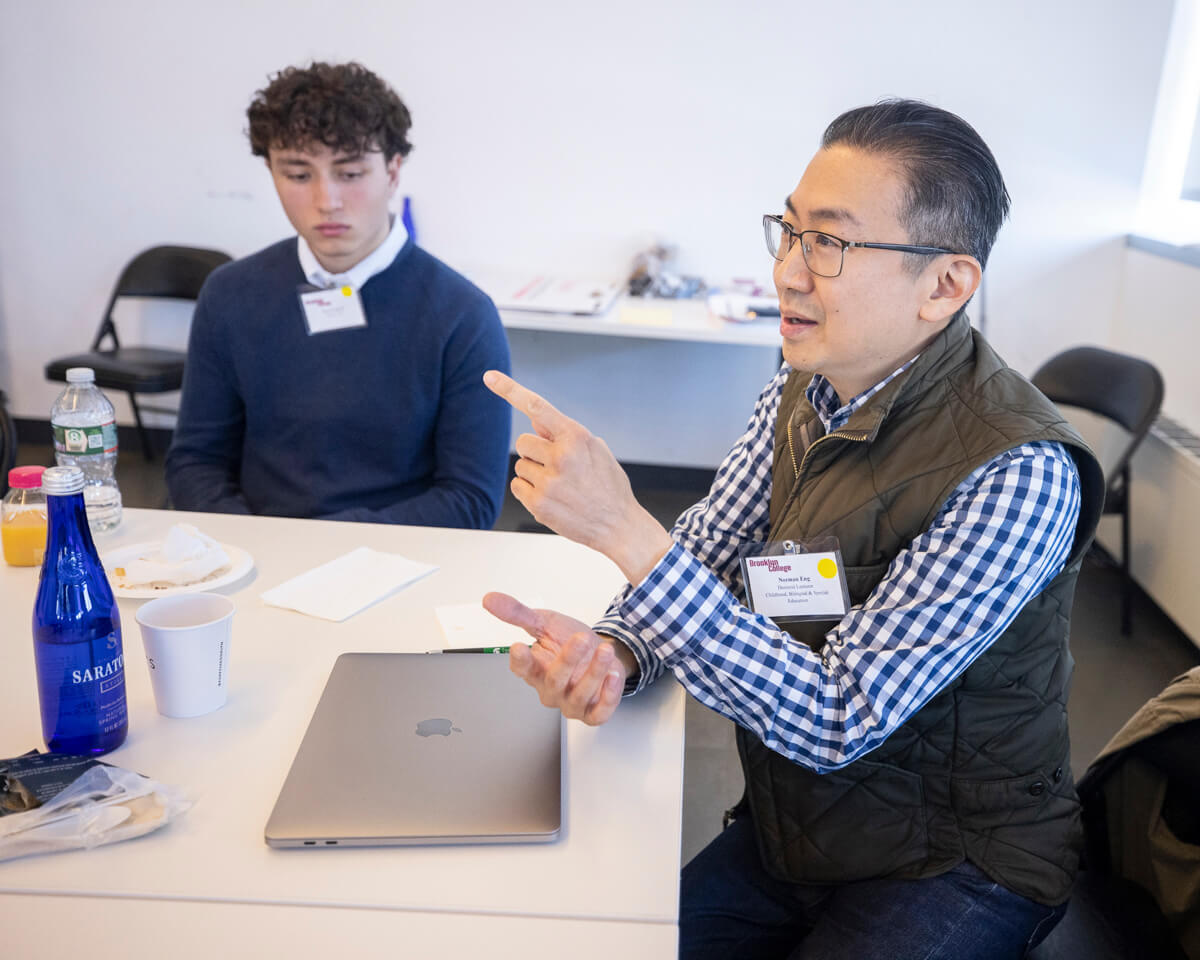
Norman Eng
Practical Leadership
Mariya Gluzman, an instructional designer at the Brooklyn College Library & Academic IT Department and champion of AI literacy, leads practicums for staff and faculty to explore AI tools for course design and assessment.
“The reality is that AI is already part of the academic landscape and students are using it, often without proper guidance. Many industries are rapidly adopting generative AI. Given who we serve as a public university and our mission, it’s crucial we help our students succeed in today’s job market. They need to be just as prepared as applicants from brand-name colleges who’ve had every opportunity to work with cutting-edge technology,” said Gluzman.
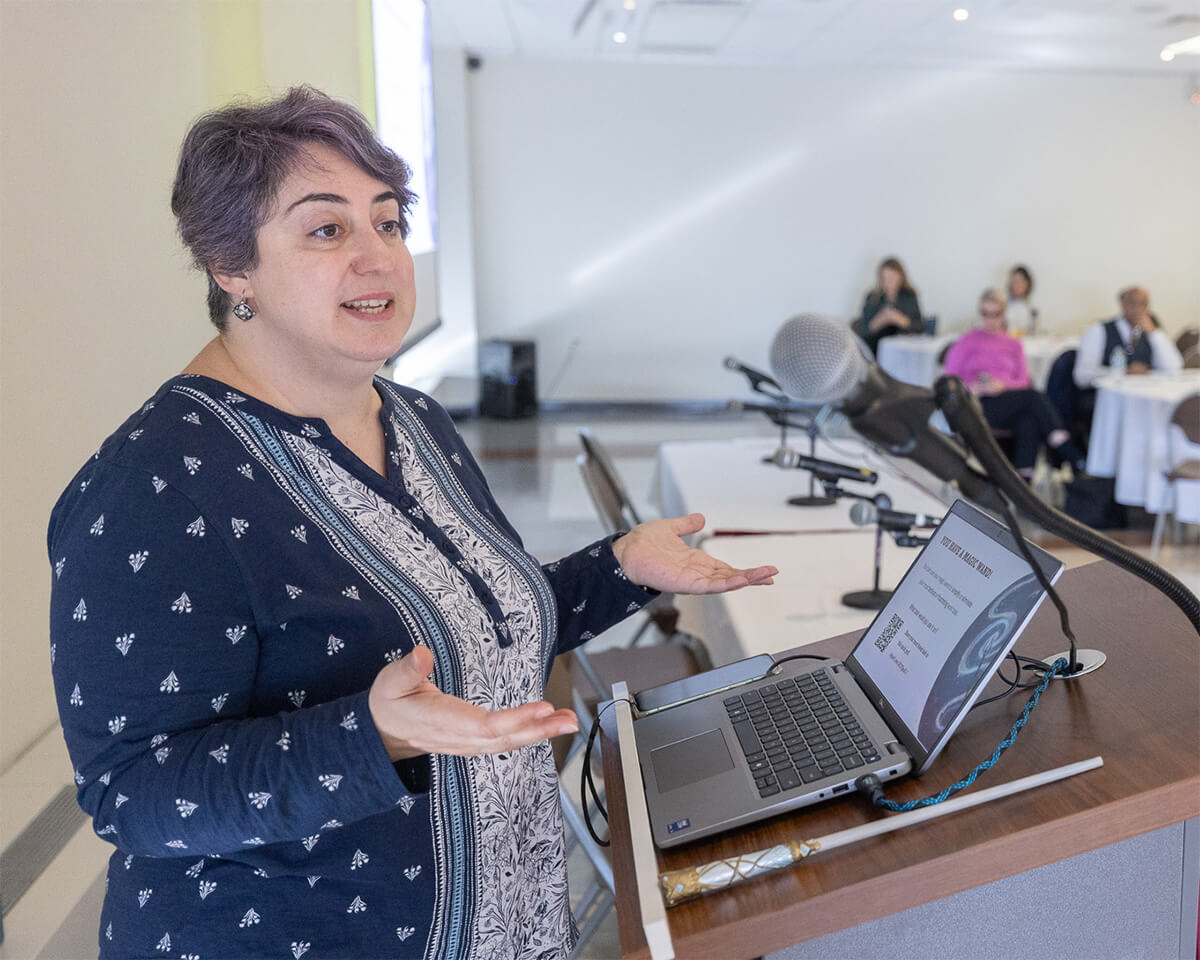
Mariya Gluzman leading a workshop on AI for staff and faculty.
Training Creators, Not Consumers
For students, AI offers opportunities to build practical skills.
Anna Belenko, a computer science major, recently attended a hackathon at Columbia University, where her team built an AI agent prototype in 24 hours—winning $2,000 in company credits and earning the “Best AI Agent Use” award.
As president of the Computer Science Club, she’s now organizing a Brooklyn College hackathon for the spring semester. “We need to use AI tools to empower students—and give them the freedom to become creators of AI, not just consumers,” Belenko said. “As a computer science student, it’s essential to be AI literate, especially in a field that’s evolving so quickly.”
Looking Ahead
As AI continues to redefine education and work, Brooklyn College is not only preparing students to navigate the AI era, but to shape it. Success will belong to those who can adapt, reflect, and lead with both technical skills and human insight.