
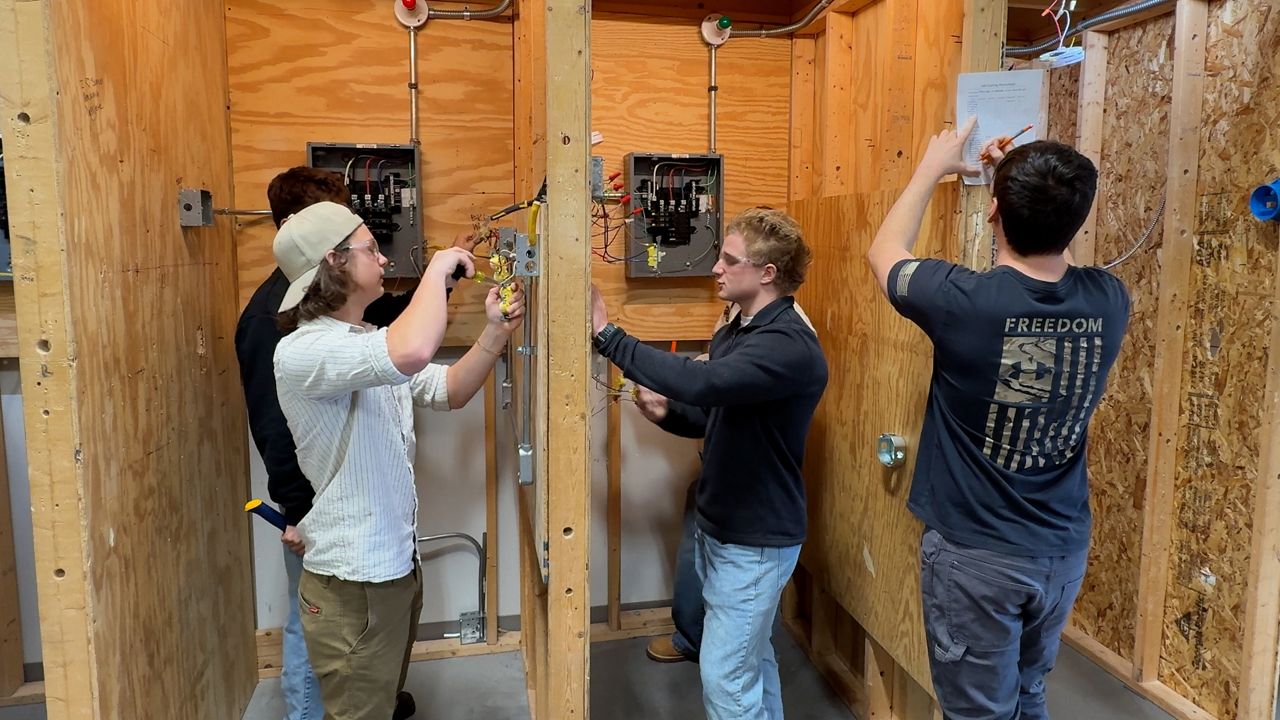
With demand for skilled trade workers expected to rise in the coming years, a new generation of students is finding its place in the electrical field. At Capital Region BOCES, high school seniors say the work offers stability, purpose and a path that can’t easily be replaced by technology.
“I started looking into BOCES and I saw electrical was a program, and I thought that it sparked my interest right away,” said senior Will LaRosa.
Career and technical programs across New York now offer similar training, giving students hands-on experience before they even graduate.
For classmate Elijah Pietrocols, the trade is personal. His father has worked in the industry for more than three decades.
“The things I learned with him were kind of small… outlets, lights, fans, kitchen appliances,” he said. Now approaching graduation, he is weighing whether to attend college or join the family’s residential electrical business.
Students say they are aware of artificial intelligence reshaping white-collar work, but they see electrical trades as more protected.
“A lot of the older electricians are retiring, and this is something that’s more needed,” said senior Ayden Helwig.
“It’s a safe spot to go into rather than where AI can take over a bunch of computer jobs,” Pietrocols added that no algorithm can crawl through an attic or wire a panel, at least not anytime soon.
Recent federal labor data projects steady growth in skilled trades over the next decade, with electrical work among the occupations expected to expand faster than average. New York is also investing heavily in workforce development; the New York State Energy Research and Development Authority has committed more than $180 million to training programs tied to the clean energy transition.
Student Alexander Huber-Sifka plans to ride that wave.
“What’s next for me is going into a private company at first and then potentially going into HVCC and then trying to get into the union to be a lineman,” he said.
From the classroom lab to future job sites, these students say the work is about more than a paycheck.
“How do you plan on running and building your infrastructures and keeping the economy of America going if you don’t have trades members who are willing to learn it?” LaRosa said.
For now, they’re learning to bend conduit, wire circuits, and read plans, skills they believe will keep the lights on for both New York and their own careers.