
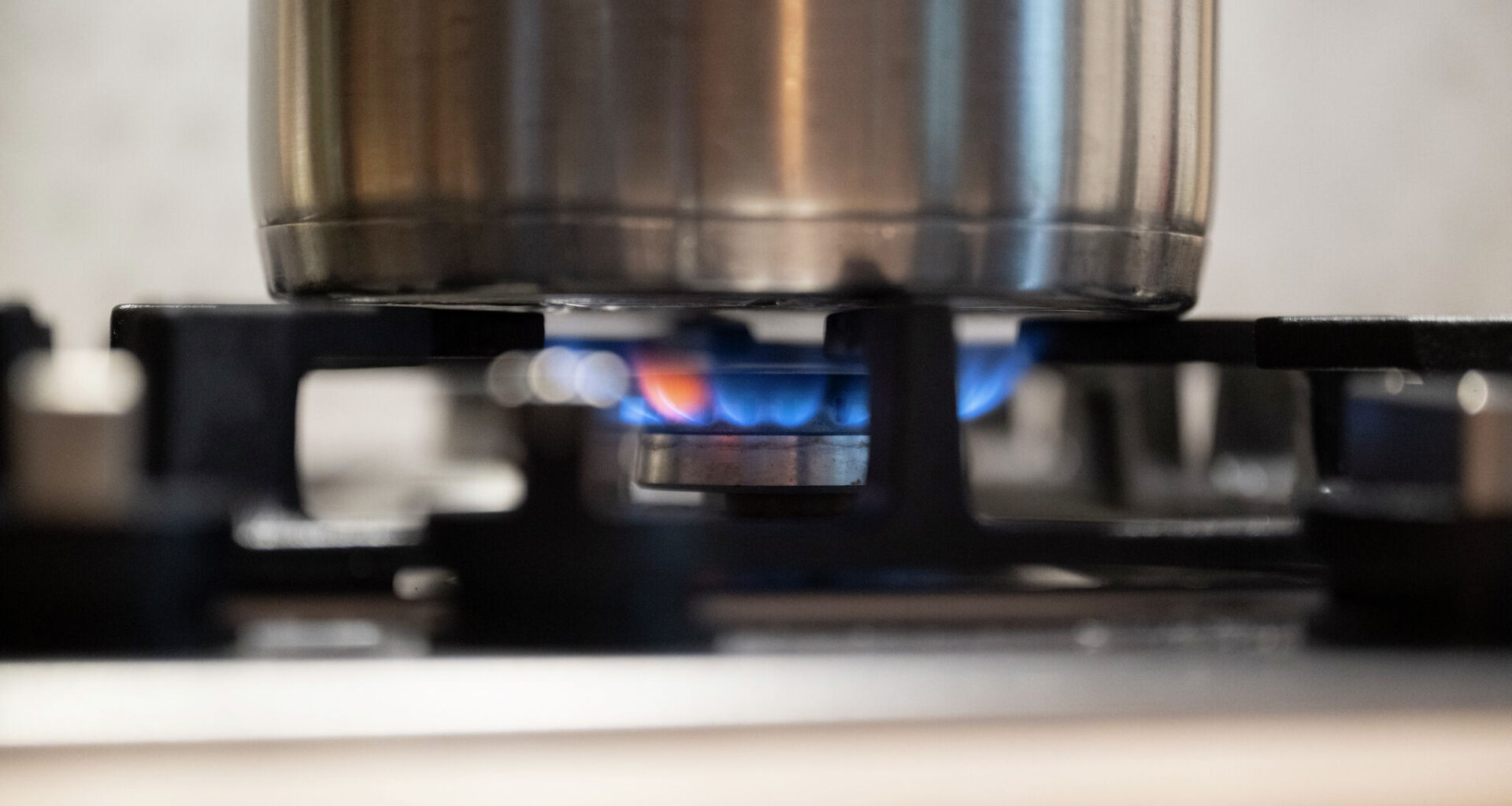
New York officials on Wednesday agreed to delay implementation of a law requiring most new buildings be all-electric beginning Jan. 1. The delay is related to a lawsuit filed by building and natural gas stakeholders challenging the constitutionality of the law. (Photo by Marijan Murat/picture alliance via Getty Images)
picture alliance/dpa/picture alliance via Getty I
ALBANY — New York has agreed to delay implementation of the All-Electric Buildings Act, which was scheduled to go into effect in January and would prohibit natural gas and heating oil equipment in many new construction projects, including residences.

Attorneys for the state agreed in a stipulation filed in the U.S. District Court in Albany Wednesday to suspend regulations for the law’s implementation until an appellate court makes its decision in the case.
Article continues below this ad
The appellate court, the Second Circuit U.S. Court of Appeals, has not yet added the case to its calendar but has allowed the groups that brought the lawsuit to expedite the appeal. Filings are due by late December.
The law was scheduled to take effect in January for new buildings that are seven stories or shorter. The same requirement would take effect for all other new buildings in 2029, with limited exceptions.
The lawsuit was filed two years ago by a series of trade groups and labor unions, including the New York State Builders Association, National Association of Home Builders, New York Propane Gas Association and at least four labor unions that represent workers in the construction industry.
They contend the state law is preempted by the federal Energy Policy and Conservation Act and is therefore unenforceable.
Article continues below this ad
“The nation’s energy policy cannot be dictated by state and local governments; such a patchwork approach would be the antithesis of a national energy policy,” they said in the lawsuit filed in 2023.
“Further, millions of New Yorkers use natural gas, propane, and oil for home heating, cooking, and hot water, particularly in the coldest winter months, and the decision to outright prohibit the use of all fuel gas — even propane — in new buildings is at odds with citizens’ and businesses’ need for reliable, resilient, and affordable energy,” the civil complaint added.
“This argument has no merit,” U.S. District Judge Glenn Suddaby wrote in a July decision in which he decided that the Energy Policy and Conservation Act “does not preempt the prohibition on fossil-fuel equipment and systems in new buildings mandated by (New York).”
The building and fossil-fuel industry plaintiffs are appealing Suddaby’s ruling.
Article continues below this ad
The groups contend that the law would also exacerbate New York’s continuing housing crisis by making new construction less feasible and attractive for developers.
The costs of upgrading the grid to take on all-electric development are “extremely expensive,” said Michael Fazio, executive director of the New York State Builders Association. “Promoting housing growth and New York state’s environmental goals can coexist.”
“The governor remains committed to the all-electric-buildings law and believes this action will help the state defend it, as well as reduce regulatory uncertainty for developers during this period of litigation,” said Ken Lovett, a spokesman for Gov. Kathy Hochul.
Electrification advocates accused Hochul’s administration of using the litigation to indirectly impose a delay in the electric-building mandate without it being a decision of the governor. Although the administration had largely won its case at the district court level, the plaintiffs were seeking an injunction staying the January deadline pending the outcome of their appeal.
Article continues below this ad
Walter T. Mosley, New York’s secretary of state, filed a stipulation Wednesday agreeing to suspend the effective date of the electrification mandates “to avoid further litigation … (and) uncertainty during the appellate process.”
“It’s a way for the governor to delay the (electric building mandate) without taking responsibility for delaying it,” said Michael Hernandez, New York policy director at Rewiring America.
Other opponents of the fossil fuel industry agreed.
“Agreeing to a delay the administration previously opposed, while getting nothing for New Yorkers in return, is nothing short of a handout to wealthy corporate polluters while families are left suffering from higher and higher energy bills,” said Liz Moran, New York policy advocate for Earthjustice.
Article continues below this ad
The law has been a central part of New York’s strategy under the 2019 Climate Act to comply with its self-imposed mandate to reduce emissions from fossil fuels over the next two and a half decades.
The state’s energy officials have identified buildings as the top contributor to those emissions because of the wide reliance on natural gas for home heating and cooking. The intention of the law was to phase out those methods.
The regulations to implement it were adopted in October. Since then, its opponents, which include a coalition of Democrats from upstate New York, have called for its delay.
“We have to address the present crisis in front of us before adding a new one,” said Assemblyman William Conrad III, a Buffalo-area Democrat leading the effort to slow down the mandate.
Article continues below this ad
Conrad and others are concerned that the state’s power grid isn’t capable of handling increased electrification. The grid is designed to handle summer peaks when people run air conditioners. Electrifying home heating will shift peak demand to winter, something electric system operators need to adapt to.
“I’m going to look at this (electrification mandates) with a very realistic approach and do what I can because my No. 1 focus is affordability right now because New Yorkers are suffering too much,” Hochul said in October.
Senate Minority Leader Robert G. Ortt said Hochul should call a special session to repeal the law if she “has serious concerns with the all-electric mandate, as she has expressed in public.”
Assemblywoman Emily Gallagher, a Brooklyn Democrat, said all-electric buildings are affordable and critical to meeting the state’s “urgent climate goals.”
Article continues below this ad
“The governor is doing President Trump’s bidding and selling out New Yorkers’ futures to oil and gas executives,” she claimed.
A state analysis of the program found it would raise the cost of construction but lead to lower energy bills for residents in the long run.
“We must respect the judicial process as it plays out, and I will continue to monitor these proceedings and seek greater agency guidance before the Legislature reconvenes in January,” said state Sen. Jeremy Cooney, a Rochester Democrat.
Article continues below this ad