
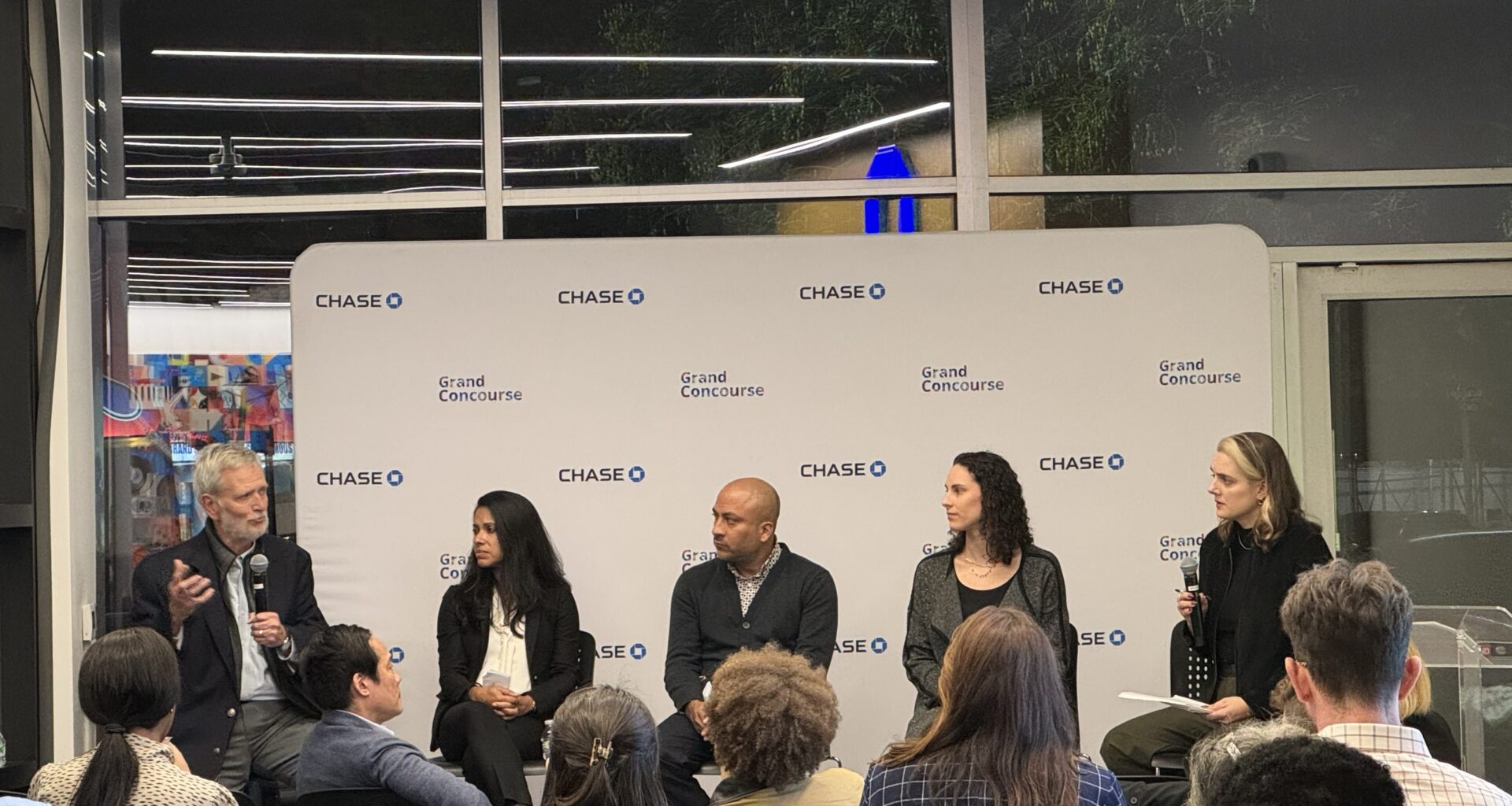
In the midst of one of the city’s most rent-burdened neighborhoods, experts on housing and its development gathered to discuss the state of New York’s affordability crisis — and what, if anything, is being done to ease the strain.
Renters, property managers, housing professionals, tenant advocates and more came together at the Chase Bank on East Fordham Road in The Bronx where the free panel and question-and-answer session took place with journalists at THE CITY, housing finance experts and Bronx neighborhood housing advocates. JPMorganChase is a corporate sponsor of THE CITY’s reporting.
The event was well-placed, smack dab in the middle of a district where, according to recent census data, more than 58% of households spend more than a third of their income on rent.
The frustrations of those many tenants came through in the talk, which included discussion of the possibility of a rent freeze and how it would work, where and how land use rules are changing to allow more housing development and why so few “affordable” apartments in the city’s housing lottery are actually affordable to Bronxites.
Jim Buckley, the longtime leader of the Bronx-based University Neighborhood Housing Program, said he has lots of people at his organization’s resource center who want to apply for places to live through Housing Connect — the city’s apartment lottery system — but even the lowest income categories have rents set above what they can afford.
“It causes a lot of problems,” he said. “People are just pissed because they’re applying for these apartments that they think they should be eligible for, you know — ‘extremely low income.’ They say, how much more extreme can I be?”
The average income of the people UNHB works with is between $20,000 and $24,000 a year. But the rents for the extremely low income category for affordable apartments is set for people making $34,000 and up.
“It takes a lot to be able to deal with the cynicism,” he added.
Two of the panelists, Sharmi Sobhan and Marco Villegas, both work on the financing and lending side of the affordable housing pipeline, and spoke to the challenges of making the money work when it comes to developing new apartments for lower income people.
“If I want to serve a deeply low income population who can only pay $200 per month, say, in rent, but my expenses — on average, I think I see roughly $12,000 per unit a year — it’s math. It doesn’t work,” said Sobhan, who leads affordable housing lending for the bank’s community development team.
“So, what does that mean? It means the city has to put in a lot of subsidy to get the numbers to work,” she said.
Senior reporter Samantha Maldonado of THE CITY, who covers housing and the environment, joined the panel and managing editor Rachel Holliday Smith, who oversees service and explanatory reporting, moderated the discussion. After the panel, they and the other experts answered questions from the attendees in an off-the-record discussion.
The event was a continuation of the newsroom’s mission to demystify life in New York City, seen in its How to New York section. Those stories include guides on how to snoop through property records like a reporter, finding your rent history, coping with eviction and navigating Housing Court and many more articles that empower and inform city dwellers of all types.
“ I think our work soars best when we take our investigations and our accountability reporting, and we combine it, with plain language explainers, about how to understand things in New York and what to do about it,” said Richard Kim, editor in chief of THE CITY, at the start of Wednesday’s event.
Related