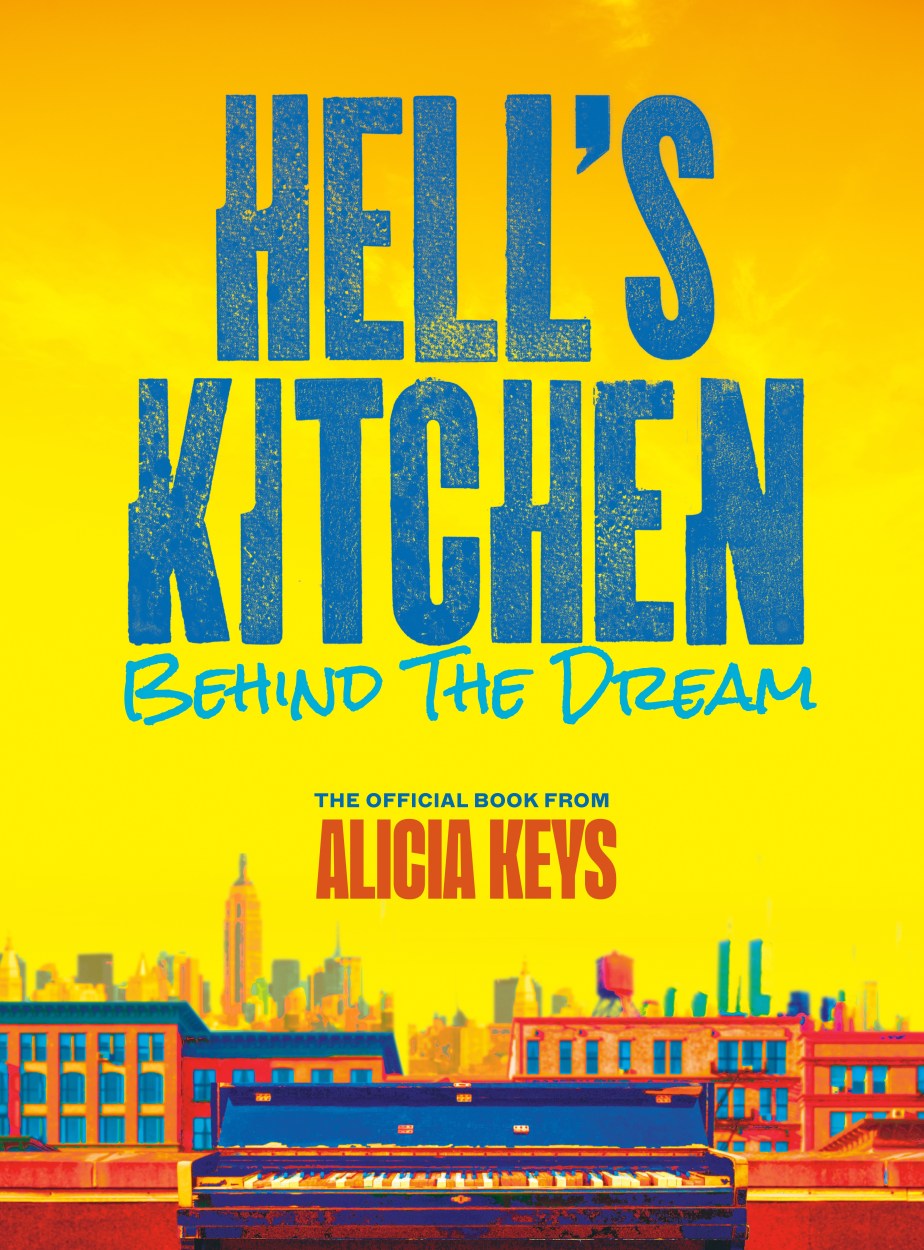
From Manhattan Plaza to the bright lights of Broadway… In Hell’s Kitchen, Alicia Keys has written a love story to New York City – and in particular, the neighborhood where she grew up.
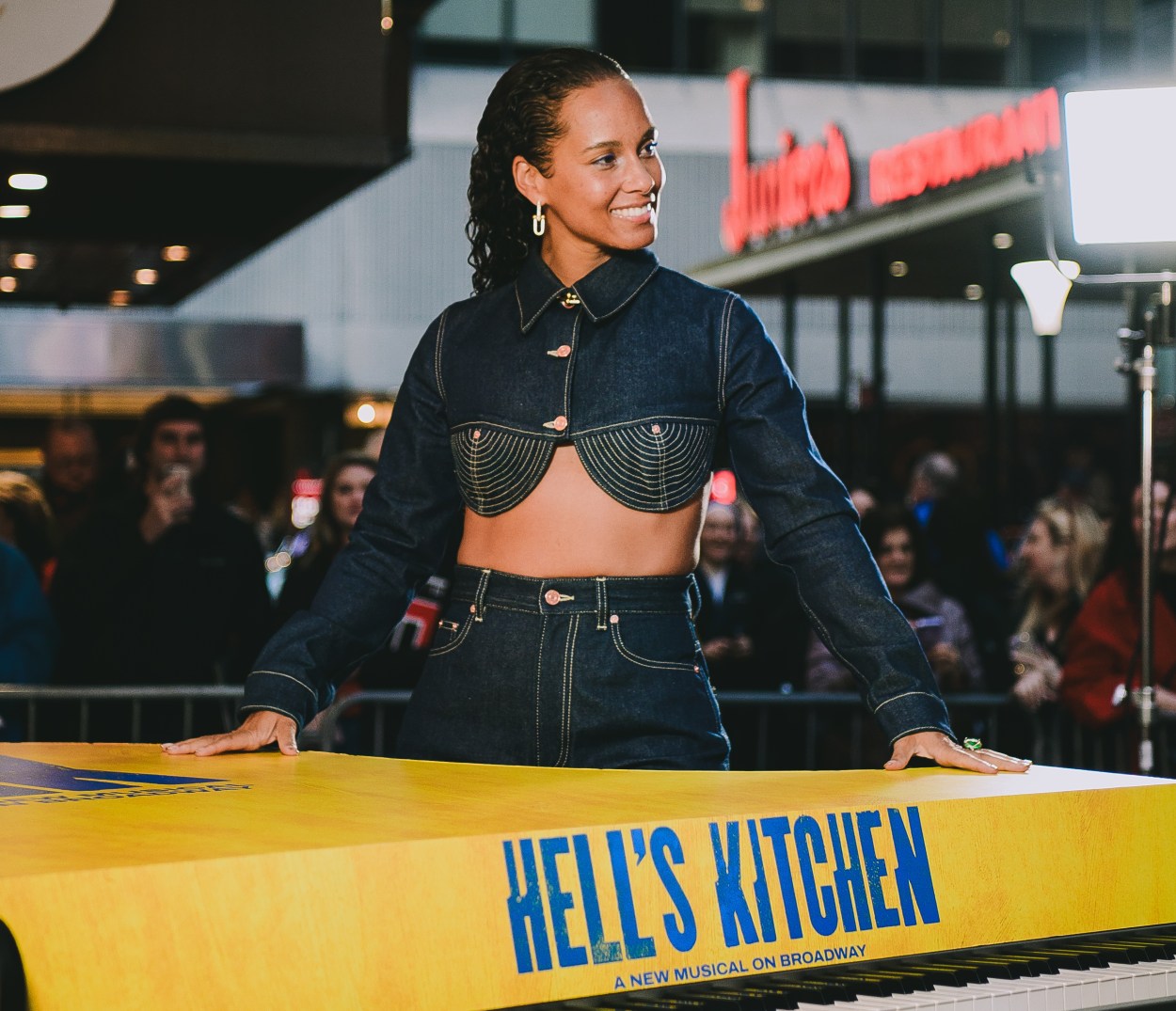 Alicia Keys at the opening night for Hell’s Kitchen on Broadway. Photo: Michaelah Reynolds
It’s all there in Hell’s Kitchen Behind the Dream, written by Alicia Keys and Lise Funderburg and out now. The book goes behind the scenes to explore the evolution of a hit musical – but it is at its most illuminating when the spotlight shines on Keys’ early days in Manhattan Plaza, and the people who helped to shape the young girl destined to become a music superstar.
Alicia’s early home was the keystone to all that was to follow, and is truly the star of the Broadway musical: “One day, it landed on me that Manhattan Plaza, where I grew up, was the richest soil for this kind of story,” she recalls. “Thinking about Manhattan Plaza and my experience there brought me to what a unique neighborhood Hell’s Kitchen is, which brought me to all the different people that I knew there. I was also thinking about what success is or feels like or should be. It took me a long time to have a healthy relationship with success.”
And she was determined that the show would not be the archetypal rags to riches story, revealing, “From day one, I was very clear that you would see [Ali] the main character only in the 17th year of her life. It would not go beyond that… I wanted to focus on the very everyday yet special experience of this girl with this unheard story — that was the spark that started the dream.”
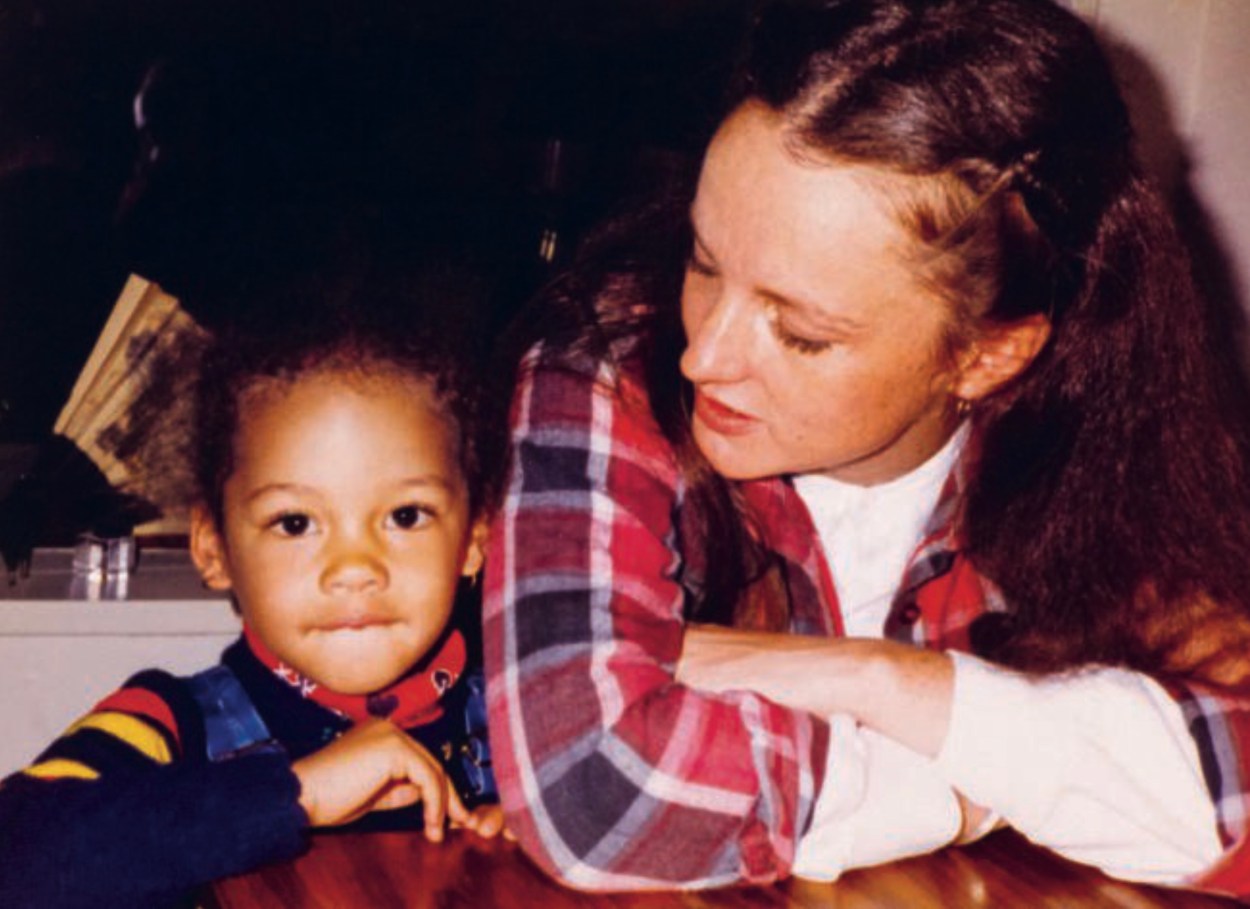
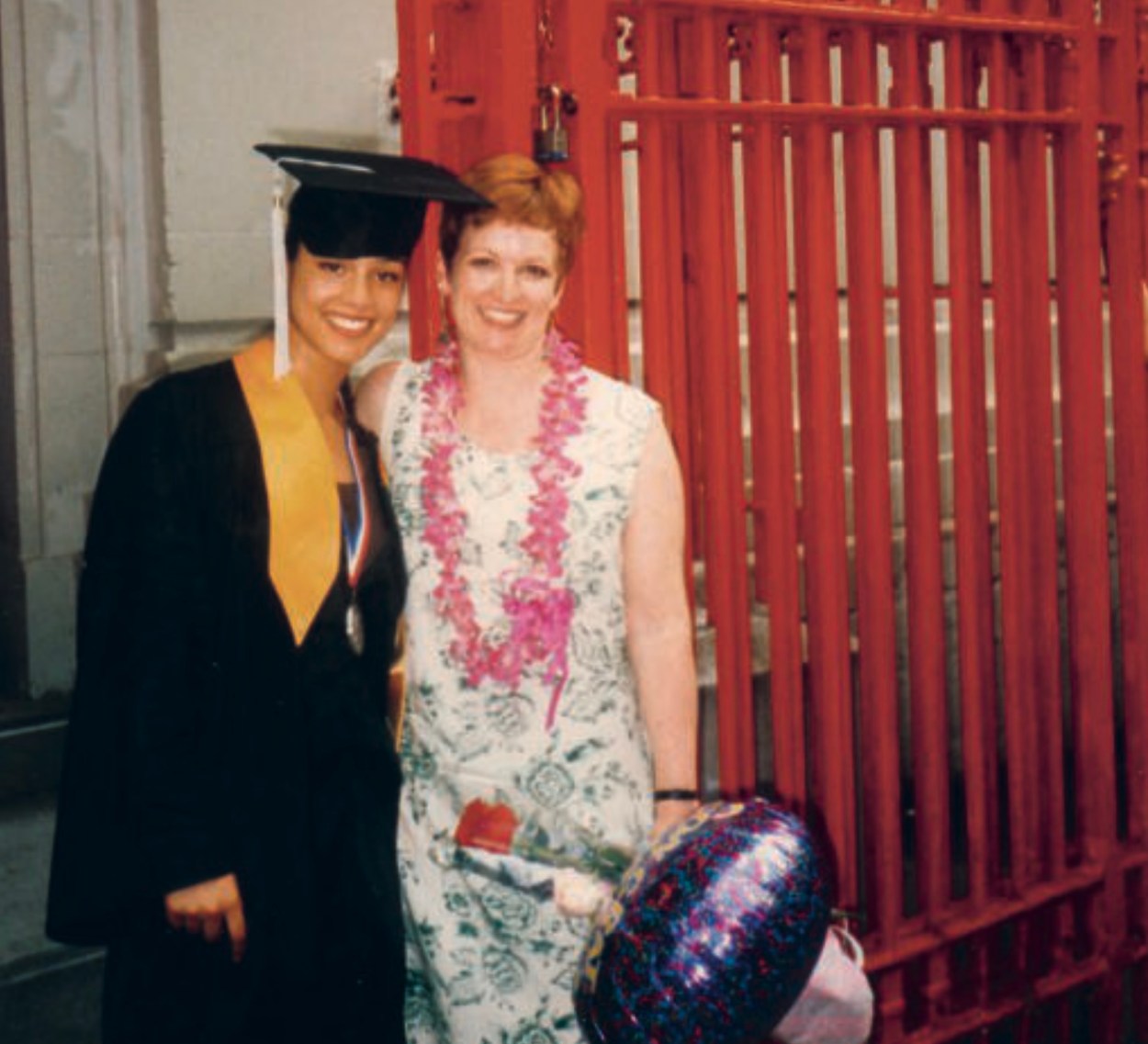
Alicia Keys and her mother Terria Joseph in early childhood and at her 1998 graduation. Photos courtesy of Alicia Keys
Her mother Terria Joseph, shares her memories of moving to Manhattan Plaza: “I had to work really hard to get in there. I did all the paperwork, and thought, ‘Oh, I’m next but they must have lost my application’. But in 1978, a year after it opened, they finally gave me the last studio on the top floor of the 10th Avenue building.”
Terria eventually moved to a one-bedroom apartment in the complex, where Alicia started to develop her love of music — although things got off to a rocky start, her mother recalls. “She began piano at seven years old, but at one point, she wanted to stop lessons. I said, ‘Well, I’m paid up until a couple of months from now, so not until you work out that payment plan.’ Of course, she’d forgotten about it by the time that came. I talked about it with her piano teacher, Margaret Pine, a really nice person who lived in the building and taught her everything in the beginning. Margaret said, ‘Please don’t let her stop. She has a talent and a musicality.’ So I figured it was worth a try to keep her in that. I was trying to find out what her muse was, and I thought, that’s the best I can do. I didn’t know what else to do besides give her all the chances I could, keep her close to home, and keep her busy.”
Alongside Margaret Pine, Aziza Miller, Alicia’s high school music teacher was a huge influence too, with the singer saying: “I remember the first time I walked into the room and saw Miss Aziza. It was breathtaking. I felt like, Whoa. That’s me… When Ali meets Miss Liza Jane [the character based on Aziza in Hell’s Kitchen], it’s like when I met Miss Aziza, but it’s also what I felt when I first saw Nina Simone perform. That stopped me in my tracks.”
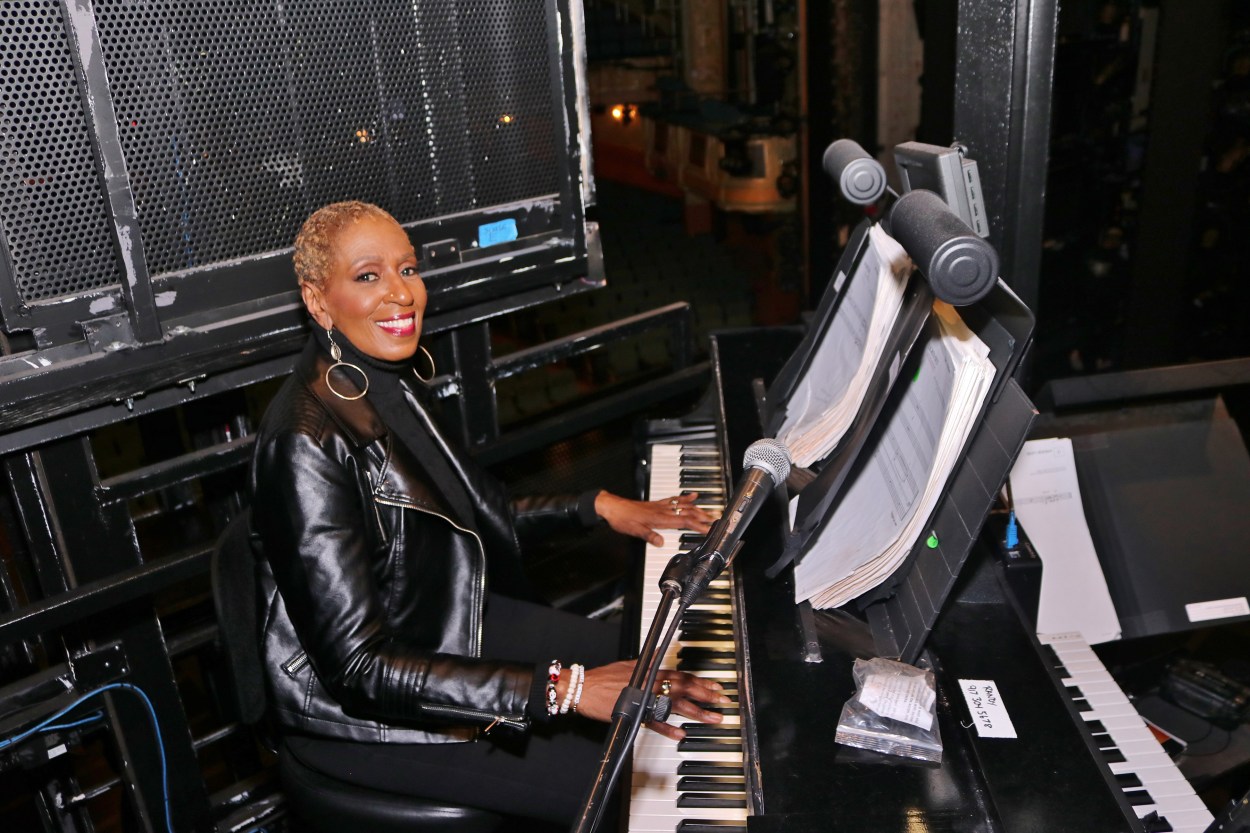
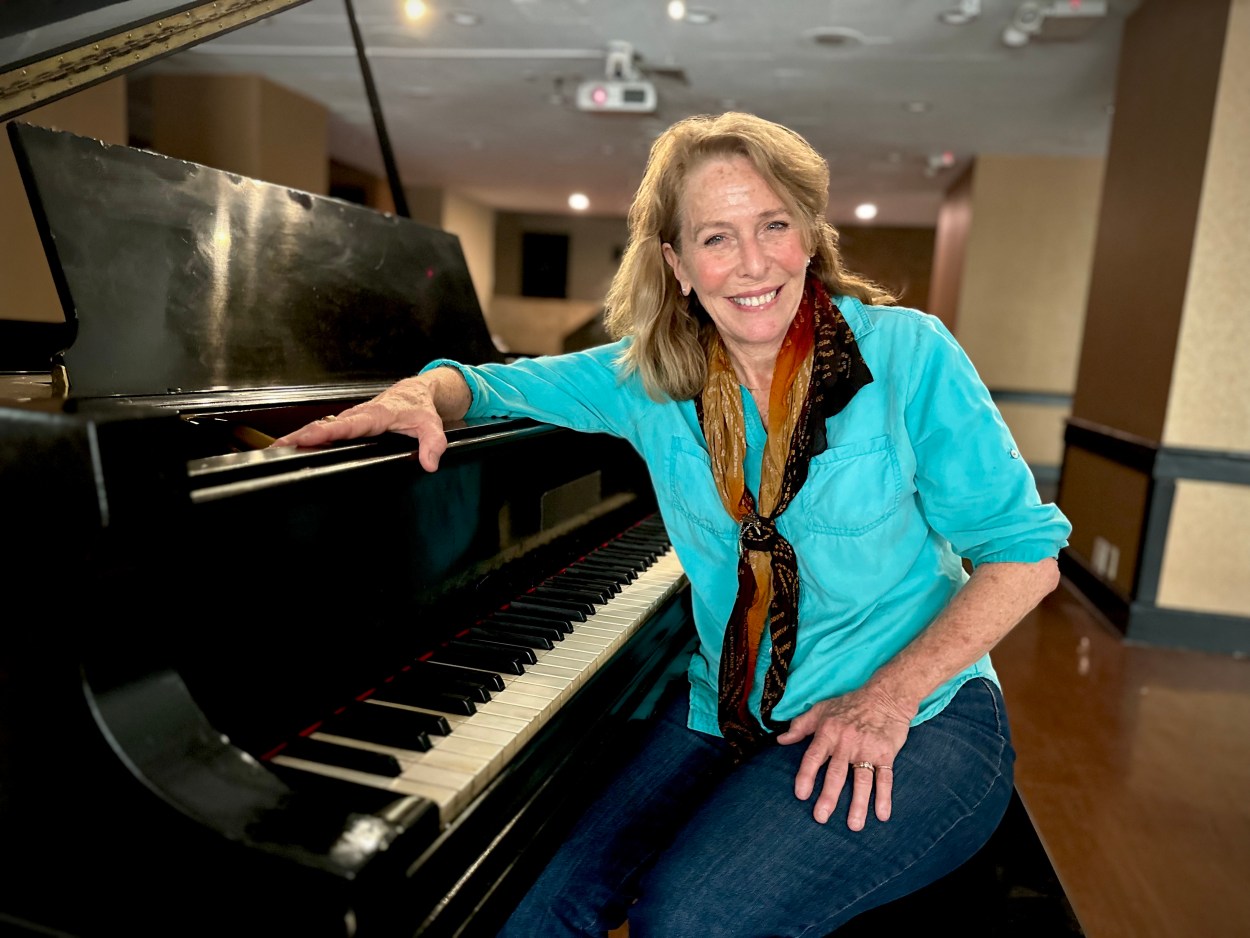
Alicia’s piano teachers Aziza Miller (left) and Margaret Pine. Photos: Alonzo Boldin/Zo Photography and Phil O’Brien
Aziza Miller tells a similar story. “I heard Alicia sing at a school concert when she was probably 13. She had a solo, and I said, ‘Oh, wow.’ It was more than someone with a good voice. I saw her soul,” she recalls.
“I recognized the passion in her, because it was the same thing that I had. I felt blessed to have a student like her, because then it was not a job. It was fun. And when she started writing on her own, she opened up. I had a friend who had a recording studio, and after school I would take Alicia and another student there and record them. I still have those recordings on cassette.”
When Alicia was growing up, theater was a way for her and her mother to connect. “It created some of my core memories,” she says, “including standing on the TKTS line where we would get half-price tickets to see Broadway shows. Her world and her artistry really poured a lot into me as a young creative person. I discovered all these different ways of expression.”
When casting began for the show, the Hell’s Kitchen neighborhood had a big part to play, says Kate Murray, casting director. “Alicia told us that, always and in every way, this should not be a cast of just one thing. It should feel like Manhattan Plaza. It should feel multi-generational. It should feel like New York.”
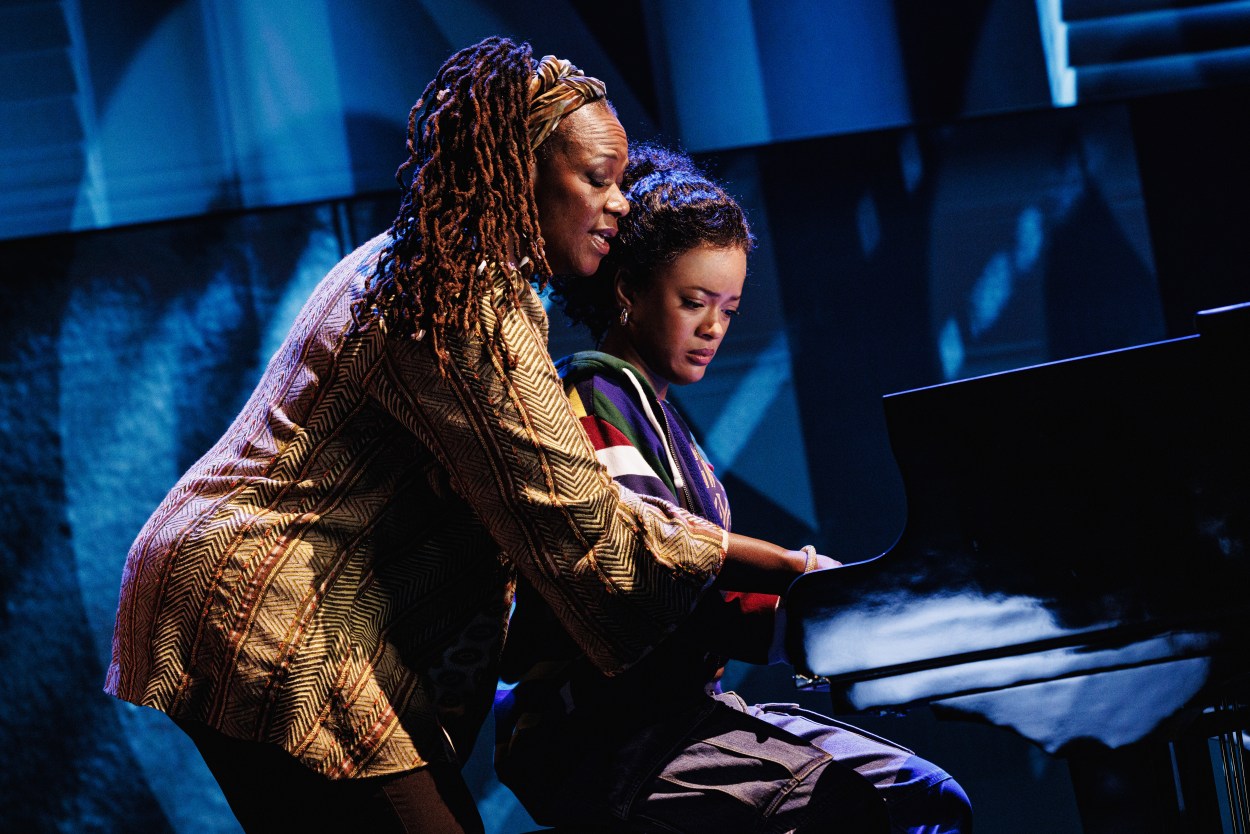 Kecia Lewis plays piano teacher Miss Liza Jane alongside Ali, played by Maleah Joi Moon. Photo: Marc J Franklin.
Kecia Lewis, who plays Miss Liza Jane in the show, knows her character’s world first-hand. As a teen, she commuted from Queens into Hell’s Kitchen to attend the High School of Performing Arts on W46th Street. Her best friend at school grew up in the same building where Alicia would later live, and Kecia was in and out of it all the time, occasionally sneaking into the Ellington Room, a community space where she and her friends would bang on the piano. “I am a dyed-in-the-wool New Yorker, and I believe this show is a love letter to New York and all the eccentrics in it. It’s an homage and it’s truthful,” she says.
And for Alicia Keys, there was no way that the show would be complete without the inclusion of her most iconic hit, Empire State of Mind, performed so close to her beloved Manhattan Plaza: “It’s the song people are waiting for, and especially once the show moved to Broadway, to be at the Shubert in that city on that street and in that neighborhood — literally in the Hell’s Kitchen neighborhood — watching Hell’s Kitchen and hearing Empire, there’s just nothing like it. So that was a no-brainer.”