
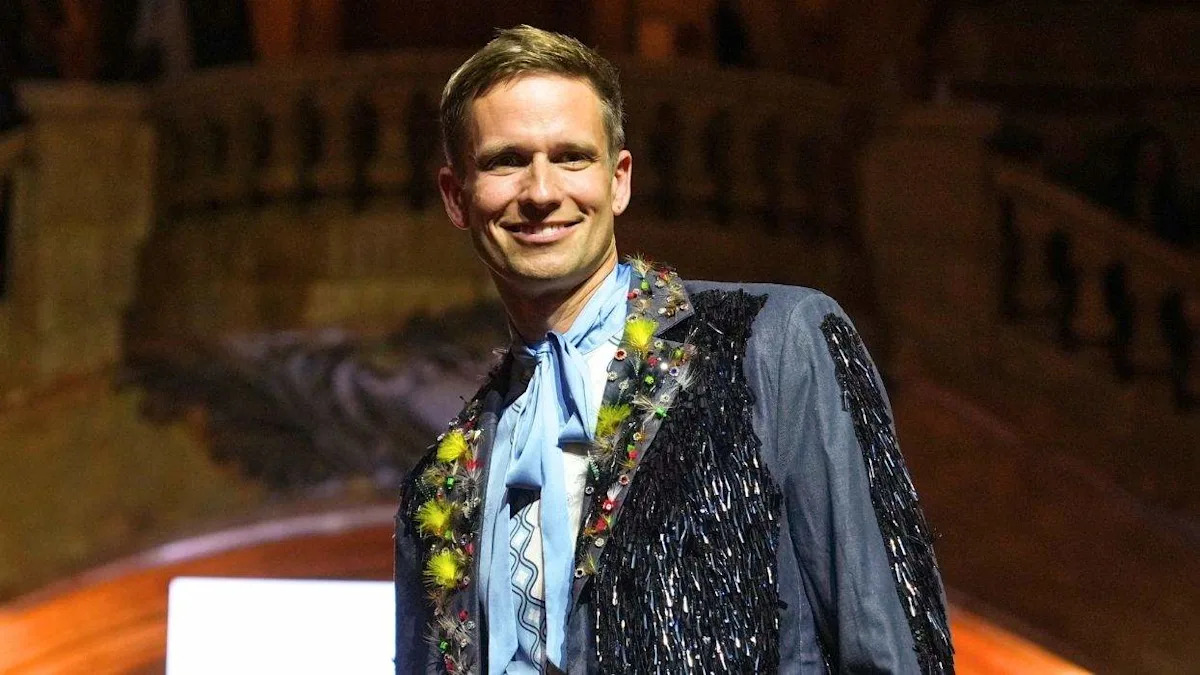
When New York City Council member Erik Bottcher announced his run to replace longtime Democratic U.S. Rep. Jerry Nadler, he cast the race as bigger than a changing of hands in Manhattan’s 12th Congressional District. He cast it as a test of the country’s democratic character.
Keep up with the latest in LGBTQ+ news and politics. Sign up for The Advocate’s email newsletter.
“We’re at a fork in the road,” Bottcher, 46, said in an interview with The Advocate. “We are either going to reject hatred and bigotry and discrimination, or our country will succumb to it, and we’ll roll back our hard-won civil rights and protections.”
The moment is personal and political. It’s also intensely local and unmistakably national.
The newly open seat is one of the most competitive Manhattan primaries in years, a race that suddenly features multiple contenders, including political newcomers and recognizable names. One of those names is Jack Schlossberg, President John F. Kennedy’s grandson.
For Bottcher, who was re-elected to the City Council in early November with roughly 90 percent of the vote, the race is a generational inflection point.
“People are hungry for new leaders who can bring a new level of energy to the fight,” he said. “We have many great leaders in Washington who’ve been serving for decades and decades, but it’s time for new leaders to join them who can bring more power to the fight.”
The district, which runs through the west side of Manhattan and includes Chelsea, Hell’s Kitchen, Midtown, and parts of Greenwich Village, mirrors the very communities that shaped him.
Much of Bottcher’s political identity began in adolescence. At 15, he was hospitalized for a month after multiple suicide attempts. “That treatment is the reason I’m alive today and the reason I’m a New York City Council member,” he said. But he noted that such care is “out of reach for the vast majority of Americans.”
His personal history motivates one of his top federal priorities: a national reckoning with the country’s mental health system.
“You don’t have to walk far in New York City to see how badly our government has failed on the issue of mental health,” he said.
When discussing the rollback of Option 3, the LGBTQ+-specific pathway within the 988 suicide hotline, he spoke with the urgency of someone who believes the consequences are not theoretical. “By eliminating Option 3, the Trump administration is basically telling queer kids that they don’t care if they live or die,” he said.
Mental health is one of three issues Bottcher listed as core to his campaign. The others: stopping what he called “the Trump agenda,” and confronting the country’s housing shortage.
Bottcher described the housing shortage as a structural national failure, not just a New York story. “Every corner of the country is being affected by a housing crisis,” he said, arguing that the federal government must incentivize states and cities to reform restrictive zoning codes to generate more homes. “This will bring down housing costs nationwide.”
Related: Congress needs Erik Bottcher
The policy aligns with his résumé: in the Council, he has participated in land-use actions and affordable housing expansions across Manhattan’s West Side. It is also, he says, the issue most frequently raised by voters.
Bottcher’s rivals vary in background, political experience, and public visibility. While some contenders enter with recognizable surnames or statewide networks, Bottcher says he’s running on durability.
“There are folks in this race who are bringing real celebrity,” he said. “But what’s even more powerful is years and years of working on the ground for our community.”
Related: Gay NYC Council Member Responds to Anti-LGBTQ+ Vandalism Against Him
Outside New York, Bottcher sees signals that the political environment is shifting. He referenced Virginia’s recent blue wave and the surprising crossover rhetoric from Republicans like Marjorie Taylor Greene, who has publicly stepped back from the MAGA movement and recently announced her resignation from Congress.
“There’s incredible energy to get our country back on track,” Bottcher said. “I think that is coming from many sides of the political spectrum. People are beginning to realize what’s happening in our country.”
His candidacy, he argues, is positioned to harness that cross-pressure — the interplay of anti-extremism sentiment, generational change, and the hunger for new leadership in a district that has long been a Democratic anchor.
Bottcher’s core message is that voters should examine a candidate’s history, not the gloss of their launch video.
“If you want to know what someone’s going to do in office, look at what they’ve done. Look at their track record, look at their history in the community that they’re seeking to represent,” he said.
“I moved to New York with a couple of bags and a few bucks in my pocket,” he said. “I know what the promise of New York is for someone who’s fleeing discrimination.”
This article originally appeared on Advocate: Gay NYC councilman running for Congress says America is at a crossroads
RELATED