
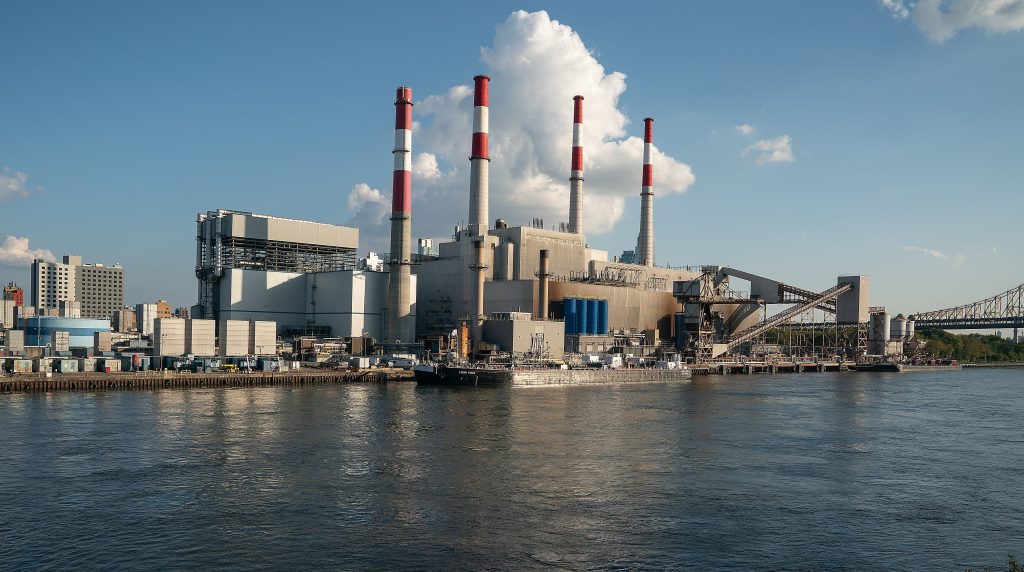
A city run by power brokers, considered the global epicenter of economic power, and home to diverse communities who keep our region powerful, may be running out of power.
It’s beyond ironic. For the city that never sleeps and demands nearly 60 billion kilowatt hours every year — the highest in the U.S. — the latest report on the state of the region’s electrical grid should give everyone pause as to whether the power we need will be there in the not-so-distant future.
An assessment by the New York Independent System Operator (NYISO), the entity that runs our state-wide grid, reports power reliability is teetering on the edge as demand for power is dramatically increasing while our resources and infrastructure are constrained. Specifically, the existing transmission lines that move electricity to the metro region are limited and inadequate to meet our power-hungry needs.
The potential consequences for New York City and Long Island are real and urgent. Puerto Rico went dark twice this year. Spain and Portugal lost their electrical grid this year. How close are we to going dim — or worse — dark? The answer is found within the details of the NYSIO’s recently released report — and it is a matter of months or a few years.
New York City could face power outage risks as early as next summer, and Long Island is not far behind, with reliability issues beginning in 2027. The report warns “that the New York State electric system faces an era of profound reliability challenges…” and that “the needs may be addressed with additional generation, demand-side solutions, and/or transmission solutions.”
There is also a direct economic impact on energy consumers when transmission systems are ignored. One industry analysis reveals that every $1 billion investment in large-scale transmission systems that is delayed will cost consumers approximately $150 million to $370 million for each year that project remains a paper study.
The report suggests that these losses are caused by postponed reliability improvements that are going to be eventually needed but at a higher costs. This coupled with reduced access to lower-cost generation outside of the immediate region being served by the local grid also adds to the consumer’s burden. What they have documented is the cost of delay, inaction, and indifference to a world where power demand is increasing exponentially.
With the design, approval, community outreach, construction, and energizing these systems easily a decade long progress, one cannot assume that today’s reliability findings have any relevancy to the energy needs of the future.
The good news is that a response to this challenge is already underway with Propel NY Energy, a multi-value build out of 90 miles of new underground and submarine transmission lines through parts of Westchester, the Bronx, Queens, and Long Island that is currently in permitting and gearing up for construction in 2026. This project will boost reliability, resiliency, and redundancy of the power grid once it is operational in 2030.
To put this in everyday terms, think of our current electrical transmission system as the Long Island Expressway where the Clearview funnels all that Throgs Neck Bridge truck traffic onto the LIE at rush hour. Now double the volume of traffic on the same roads. You aren’t going anywhere.
That’s the issue — our energy highways are aging, limited, and congested, and we need new lanes to move the energy to where it’s needed, when it’s needed. With a solution on the horizon, we need to carpe diem and ensure Propel NY Energy’s completion does not falter with “inherent risks commonly observed among large infrastructure projects.” We need to understand what’s at stake and coalesce around responsible, timely and long-lasting investments that address our power predicament.
Adding to the urgency of upgrades, when the electricity can’t reach our neighborhoods because of the constraints on our transmission system, it can be redirected to areas that do have robust transmission grids — that is where new economic growth and job creation will occur.
New York is a power center in every sense of the word. Unless we run out of power. It would impact every facet of our region — from Wall Street to Queens Blvd. to Long Island hospitals, our schools, and mom and pop shops across the region. The latest NYSIO report tells us what we need to know and what we need to do. Power to the people of New York.
Grech is president & CEO of the Queens Chamber of Commerce.