
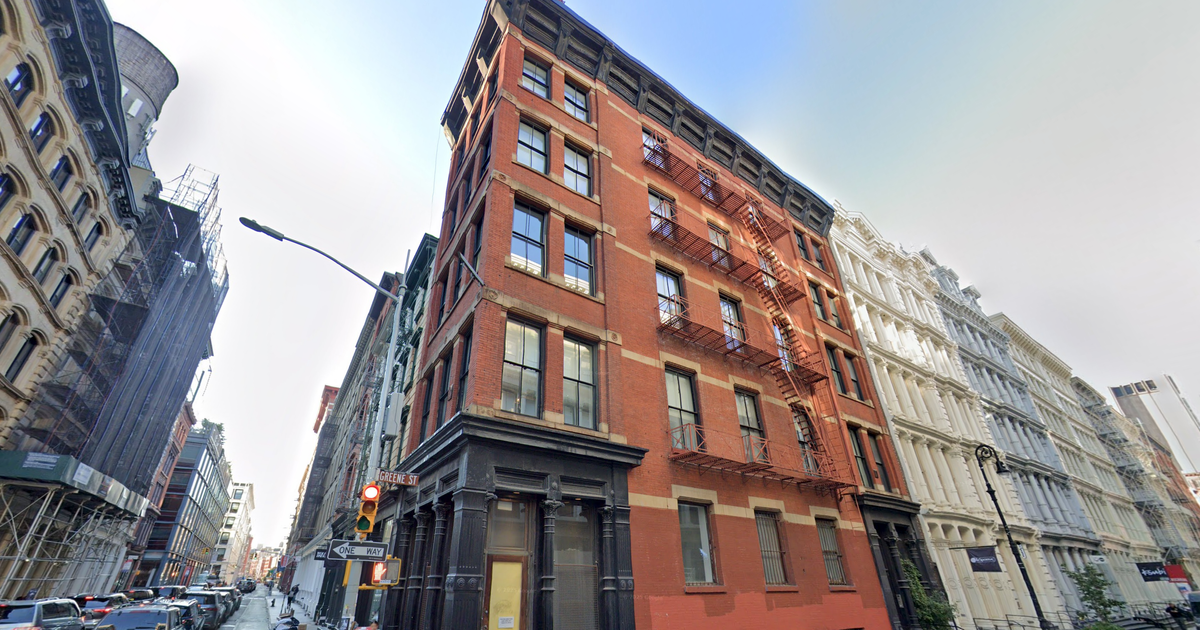
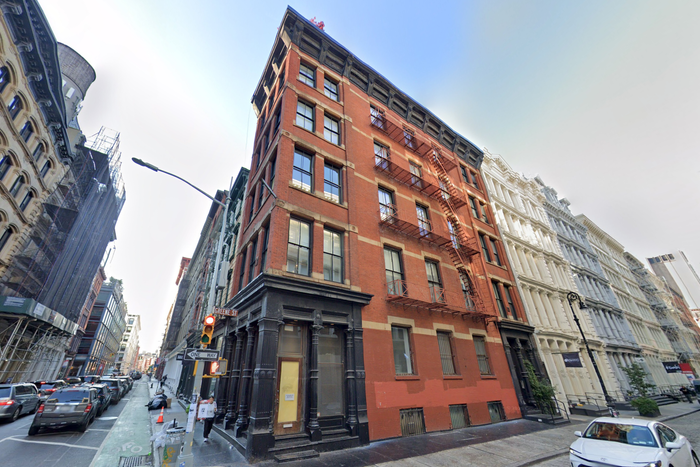
Alexander Riguardi moved into 36 Greene Street in December 2020, leasing the entire third floor of the five-story brick building on the corner of Grand Street for $7,250. The place was nice. There’s a private elevator, floor-to-ceiling windows throughout, and a well-renovated kitchen. It’s also on one of Soho’s quieter intersections while still being close to everything. And nicest of all, it may net him about $4 million.
As the Real Deal reports, Riguardi, a commercial-real-estate broker at JLL whose father is the company’s New York chairman and president, stands a pretty good chance of getting a big buyout thanks to some dumb luck and inept landlording. The story of how a real-estate nepo baby whose achievements to date include a short-lived app to get drunk Hamptonites home came to be the beneficiary of New York’s Loft Law is a funny one.
Riguardi seems to be one of the few tenants who has rented from the building’s owners, architects Antonio Morello and Donato Savoie and artist Ted Victoria. The three bought the place in 1977 for $75,000 and mostly lived in it themselves over the decades. When Riguardi applied for the apartment in 2020, he was just 24 years old, and the owners let him sign the lease only with his father as a guarantor.
This would turn out to be a bad decision. When the owners tried to terminate the lease for the third floor, ostensibly so they could sell the building tenantless for an estimated $15 million, Riguardi went to the New York City Loft Board for protected status. And while it’s true that the law, which was enacted in 1982 as a way to keep artists in their drafty Soho lofts as they were converted into legal living spaces, usually evokes the image of eccentric painters and experimental musicians, it also very much applies to commercial-real-estate brokers with fortuitous timing. The law has helped generations of New York’s broke-ish creative class stay put in rapidly gentrifying neighborhoods over the decades. It has also, at times, aided the odd rich person, such as Emily Ratajkowski’s ex-husband or Alexander Riguardi, who stands to have his rent reduced to less than $600 a month (plus more than $400,000 in rent he has already paid returned to him).
Yet all of this could have been avoided had the owners of 36 Greene been more vigilant about the fine print. Taking on a tenant wouldn’t have been a great idea if they even had an inkling they’d like to sell. But they don’t seem to have been very on top of that kind of paperwork in general. The landlords failed to get a residential certificate of occupancy over the decades they owned the building. According to the Real Deal, they were even fined in 2007 for being out of compliance with the Multiple Dwelling Law and again failed to legalize the building after that. They’re challenging Riguardi’s application, but as the Real Deal notes, “the Loft Board is not likely to be persuaded.”
Riguardi, meanwhile, bought a house in East Hampton for $1.65 million shortly after signing his lease at 36 Greene. It has a heated saltwater pool and a three-car garage. If by some chance his landlords succeed in evicting him, he could always regroup there. But if he’s granted protected status, as seems likely, he can add a nice extension.
Sign Up for the Curbed Newsletter
A daily mix of stories about cities, city life, and our always evolving neighborhoods and skylines.
Vox Media, LLC Terms and Privacy Notice
Related