
 By Rob Garber for the Bloomingdale Neighborhood History Group
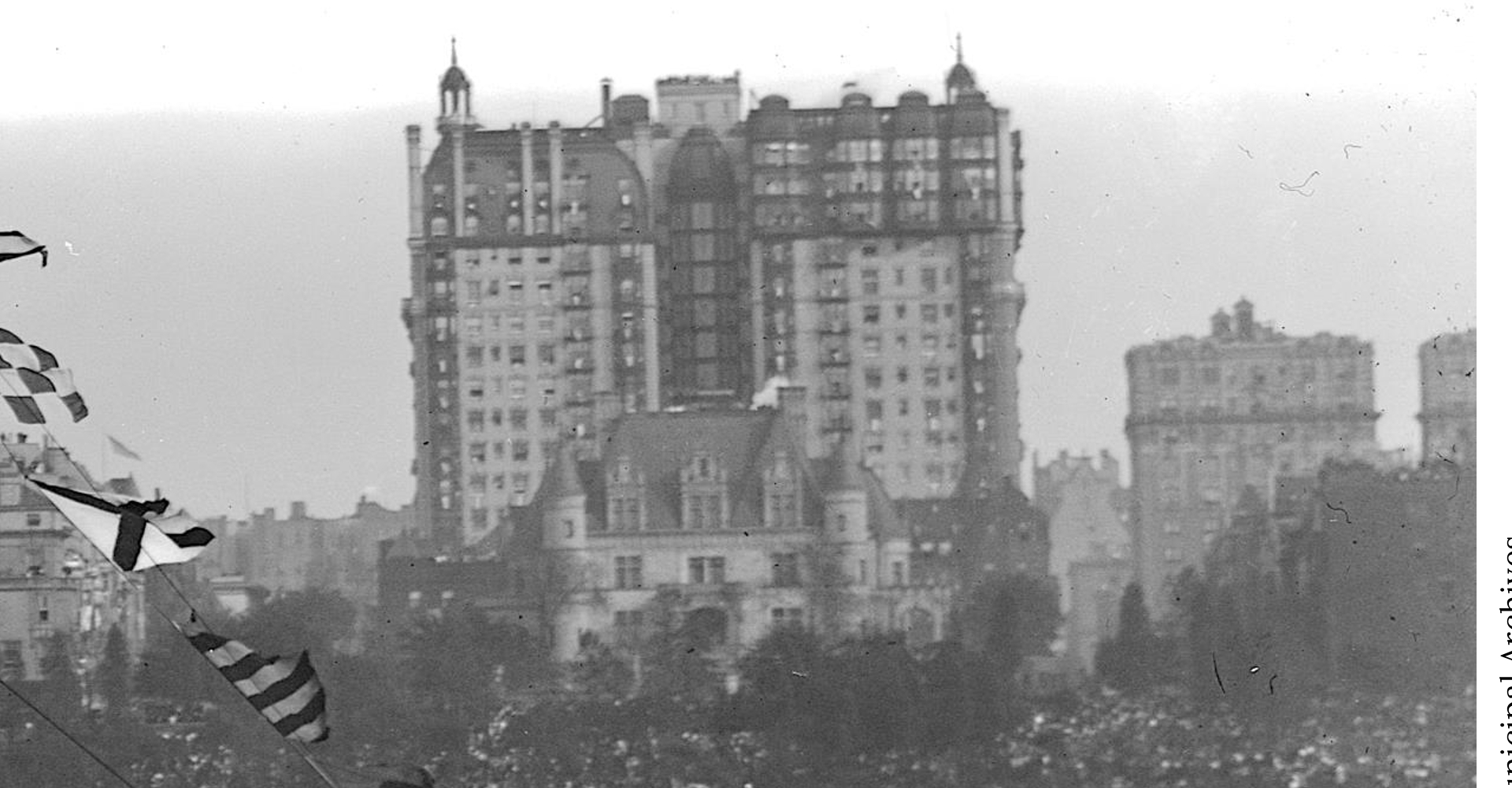
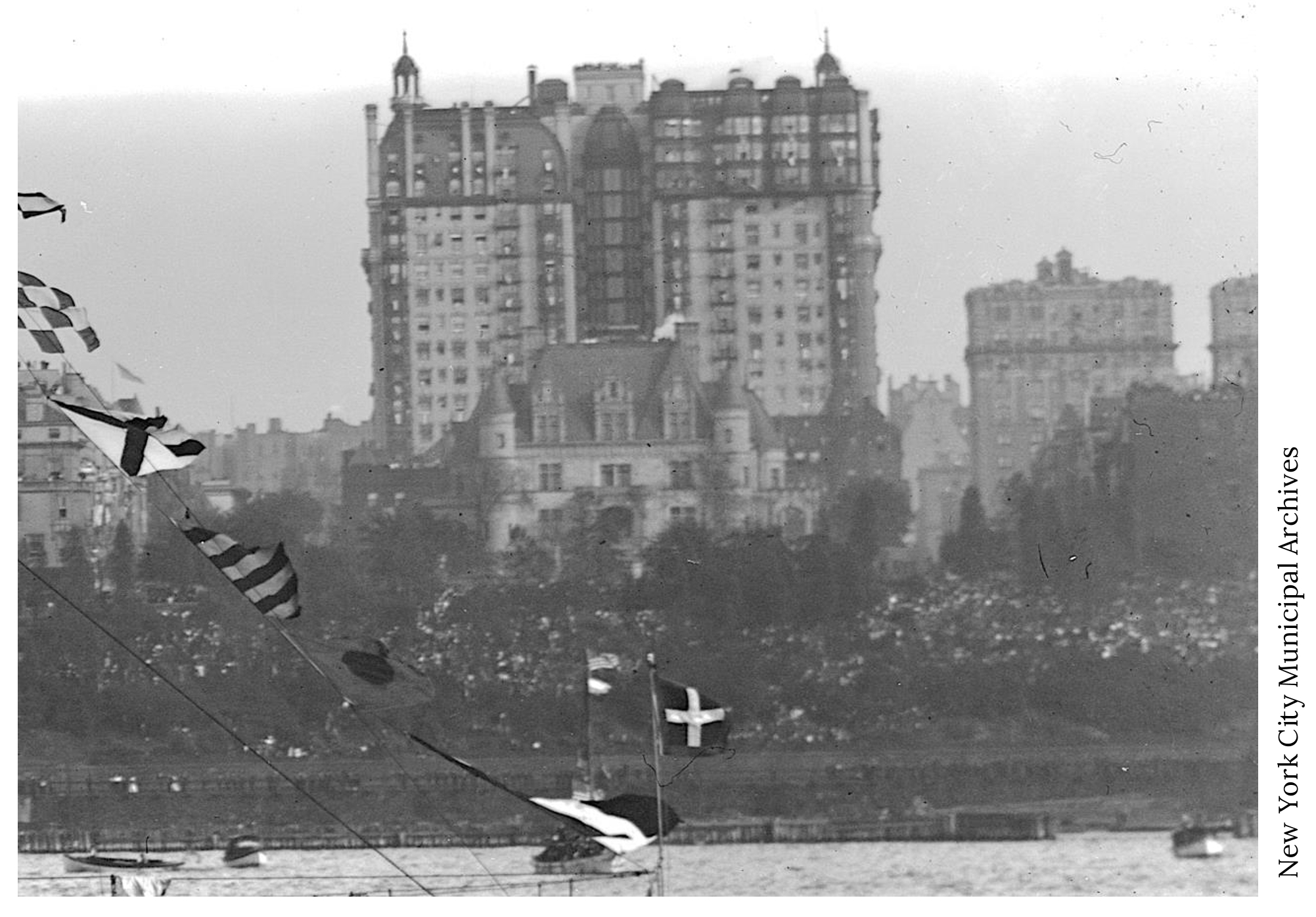
Welcome to another installment in the Rag’s Historical Photo Challenge. The image above was taken somewhere on the Upper West Side, sometime in the past. Can you figure out where, when, and what it shows? Look closely; this week’s challenge photo, like the others in the series, includes clues that will help you identify the scene, if you’re a dedicated UWS history sleuth. And even if you don’t recognize the picture—not to worry! Come back in two weeks and I’ll decode it, show you the clues that help identify it, and—best of all—tell you a story the image unlocks, because this column isn’t just a test of your neighborhood knowledge; it’s also a rolling celebration of the people, buildings and events that wove the tapestry of the Upper West Side.
Ready? If you think you know where and when the photo was taken and what it shows, post your answer as a comment on this column.
Solution to Historical Photo Challenge #14
Subject: Manhattanville, including Prentis Hall aka The Milk Building
Location: West 125th Street, looking east towards Broadway
Year: October 6, 1929
Image Source: New York City Municipal Archives
Clues: The large light-colored building in the center-left of our mystery photo still stands, but there were other clues. In the background, the open trusswork of the elevated subway station at 125th Street looks nearly identical today to its appearance a century ago. The triangle in the upper left corner isn’t an artifact of the photograph—it indicates that the photographer was standing under the viaduct that takes Riverside Drive over the Manhattanville valley, and caught a bit of the supporting arch—it’s a scene you can duplicate today. Finally, the prominent Sheffield Farms Sealect sign was a hint that we’re in Manhattanville, which once processed 60% of New York City’s milk supply.
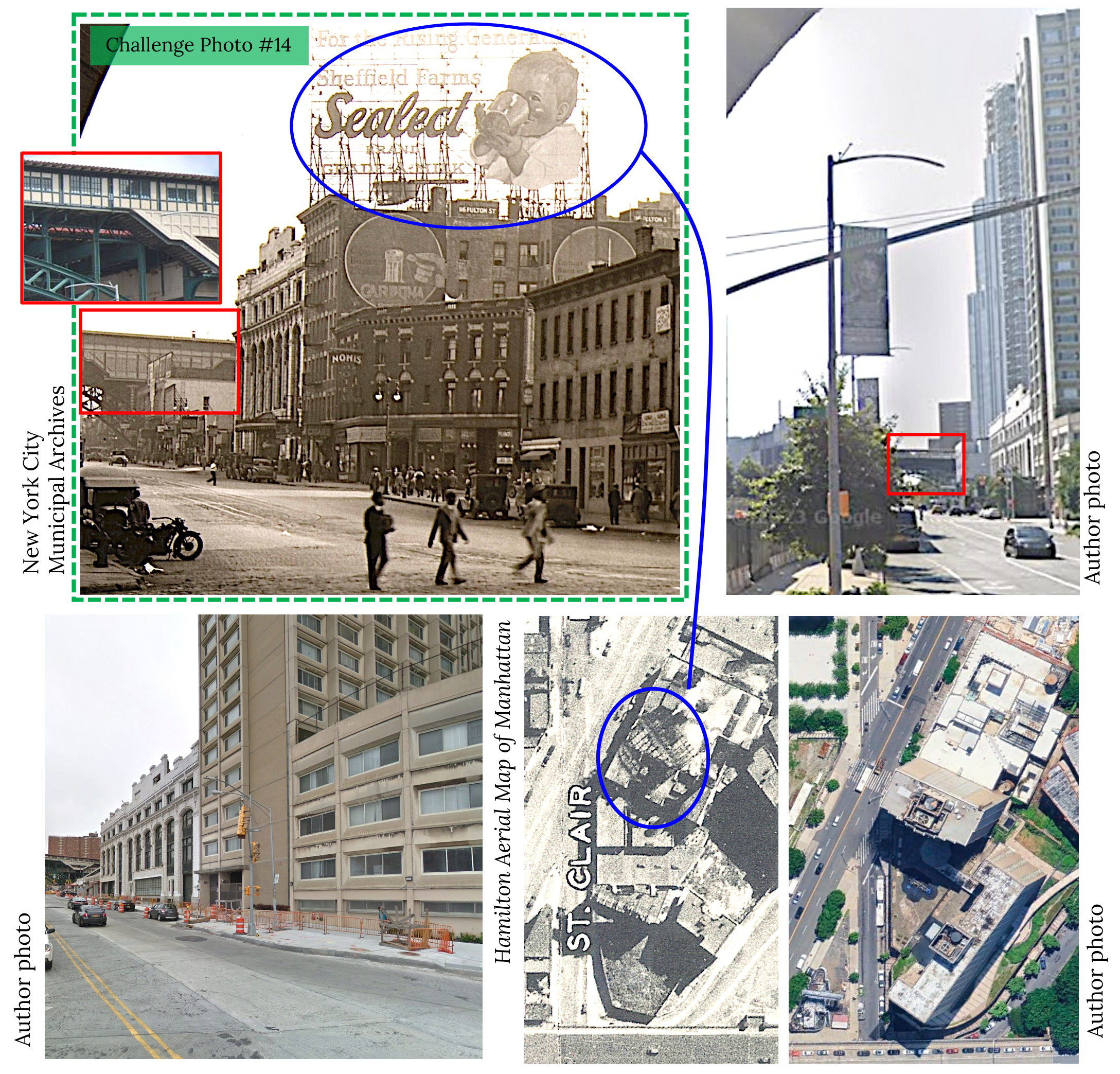
The rest of the story: No one would place Prentis Hall (“Isn’t that a textbook publisher?”) on their list of favorite Columbia University landmarks, but for my money there’s not a more interesting building on or near the campus—and it’s one that you don’t need an ID card to gaze at! Prentis Hall’s sparkling white terracotta facade, still mostly intact despite time and neglect, hints at its origin as a model of cleanliness. At the turn of the 20th century, drinking cow’s milk could be hazardous due to the introduction of disease-causing bacteria during unsanitary handling of raw milk. To promote the image of clean, healthy milk, the Sheffield Dairy built 632 West 125th Street in 1909-1911, just as pasteurization was becoming widespread. The building sparkled inside and out with gleaming tile, and large windows in front allowed families to see milk being processed. When milk distribution models changed, Manhattanville’s role in dairy declined, and Columbia bought the building in 1949. A second extraordinary chapter in its history began a year later, when Columbia established the nation’s only Nuclear Regulatory Commission-qualified facility for testing fuel assemblies. These are the metal rods that encase nuclear fuel in the hearts of nuclear reactors. The rods tested on 125th Street weren’t loaded with uranium—it was the job of the Heat Transfer Research Facility for half a century to subject them to the kinds of extraordinary conditions of temperature and pressure that they would experience in a nuclear core. The lab tested these materials under hellish (600°F) environments to look for defects and to establish the parameters under which reactors could be safely operated. The facility used one-of-a-kind equipment which may or may not still be in Prentis Hall. It was a profitable enterprise for Columbia until the university decided that such a laboratory wasn’t aligned with the institution’s mission and shut it down in the early 2000s. The building’s future is not known—not publicly, at least.
 Left: 1940 New York City tax photo of the Sheffield Farms dairy facility. Note the unusually large ground-level large windows. Top right: Milk cans on the railroad siding at 130th Street
 Examples of the electrical equipment used in testing of nuclear fuel rods. When a test was underway, the facility drew more electricity than any single building in Manhattan other than the World Trade Center towers!
Shoutout to readers: Challenge No. 14 posed no challenge for Rag history maestros. Several readers knew the role of Sheffield Farms and Manhattanville in New York City’s pasteurization story, as well as the transition of the building to Prentis Hall. ecm knew the connection to nuclear testing; elmn linked to some of the P.R.-driven historical work that Columbia commissioned during the Manhattanville eminent-domain controversy of a decade ago. Thanks to Jay B for studying car models closely and nailing the date. Hat tip to Carmella Ombrella for suggesting I include the original challenge photo with the solution. I usually do–it was in #14’s solution, for example—but I’ll try to call attention to it so it’s more apparent.
…and that’s the story behind the mystery image. Now scroll back to the top of the column and take on your next challenge, Sherlockians! If you’ve missed any pictures in this series, here is the complete collection.
About the author: Rob Garber has lived on the Upper West Side since the late 20th century and is a member of the Bloomingdale Neighborhood History Group. To learn more, visit their website at upperwestsidehistory.org. All photos in Upper West Side Historical Photo Challenge are used by permission.
Subscribe to West Side Rag’s FREE email newsletter here. And you can Support the Rag here.