

Housing preservation groups could be first in line to buy troubled apartment buildings when they go up for sale under a City Council bill updated Monday to address pushback.
“This version of the bill gives an opportunity to prove the case that we can give qualified purchasers a slight window to make a real, market-based bid,” said Councilmember Sandy Nurse (D-Brooklyn), the lead sponsor of the Community Opportunity to Purchase Act. “We’re giving landlords an opportunity to sell their buildings at market rate to a responsible, vetted, trustworthy organization that can take care of those buildings, invest in those buildings and ultimately keep tenants here in New York City.”
Tenant advocates, community land trusts and Mayor-elect Zohran Mamdani have argued that COPA could help preserve affordable housing, provide a measure of stability for tenants and prevent speculation. But landlord and real estate industry groups have opposed the legislation, saying that even with amendments it is still too broad and would slow down the market.
The new changes alter the range of buildings that would have to be offered for preservation group purchase, expand the types of buyers and truncate the transaction timeline.
Arielle Hersh, director of policy at the Urban Homesteading Assistance Board, said the model has already been proven to work by tenant-run Housing Development Fund Corporation, or HDFC, cooperatives around the city.
“We’re confident the amended legislation will help preservation buyers like UHAB work with tenants to stabilize their homes through democratic ownership models like HDFC co-ops, as we piloted in The Bronx,” said Hersh.
The first version of COPA would have required all buildings with three or more apartments for sale to be offered first to nonprofit groups only, raising an uproar in the real estate industry. Now the bill applies to buildings with at least four units, and they must also have significant physical or financial problems, or have affordable housing program requirements about to expire, such as tax credits. The bill also applies to vacant lots zoned for residential use, but exempts owner-occupied buildings with up to six units from being subject to the program.
Another change in the bill is that now for-profit buyers can participate by teaming up with nonprofit groups, so long as they get on HPD’s qualified preservation buyers list.
Here’s how it would work: Housing preservation groups could make an offer before the property goes to market, once the owner notifies the city of the intent to sell. The interested purchaser would have up to 90 days to make an offer — about half of what the original bill specified — and the owner can accept or decline that offer. If declined, the property would go to the open market. Preservation groups that submit an initial bid can match any other offers the owner gets.
Preservation groups need thethe time to put together financing, up against up against other buyersbuyers that cancan move faster, Nurse said.
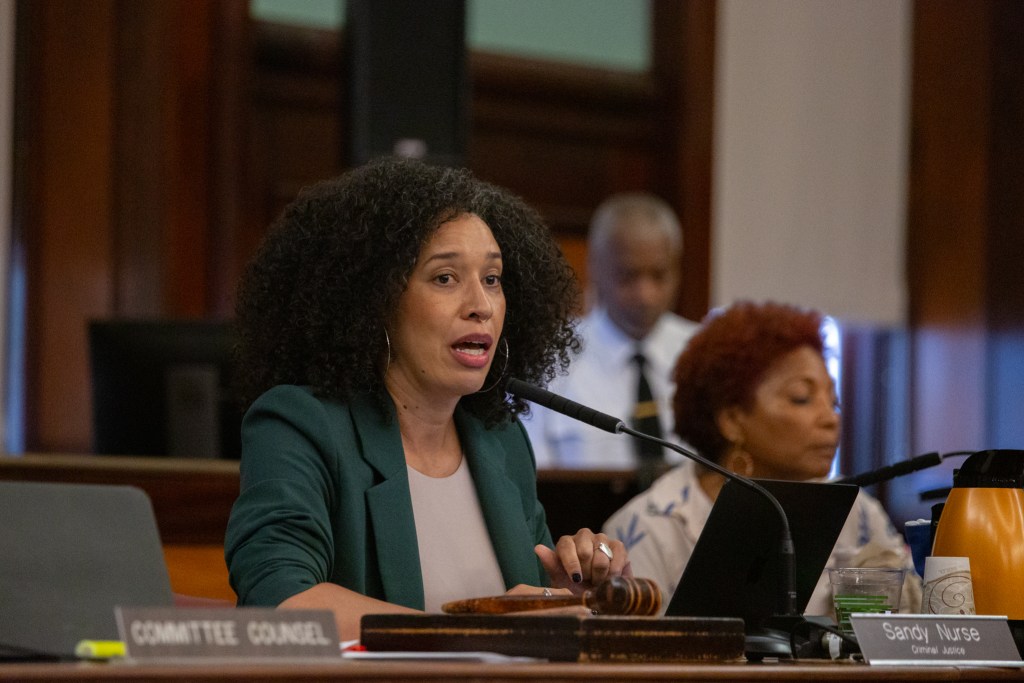 Councilmember Sandy Nurse (D-Brooklyn) chairs a City Hall hearing on the Department of Probation, July 28, 2025. Credit: Ben Fractenberg/THE CITY
“The reason why this is important is because venture firms, multinational companies, LLCs with owners we don’t know — they all have cash, they all have quick access to capital,” she said. “When a building goes for sale, they can move really quickly to make an offer and they can close on a deal.”
Some real estate groups have maintained the timeline for the transaction is still too long, and landlords have railed against what they describe as government overreach.
Humberto Lopes, head of real estate firm H.L. Dynasty and an owner of properties in Brooklyn and Staten Island, said he is against COPA on principle.
“Once you let a law like this be passed, that’s the beginning of dictatorship. This is how communism starts. This is how Cuba starts. You’re being told what to do. Don’t tell me what to do,” he said. “If I got a headache, I don’t need the government to tell me to get a Tylenol.”
Real estate attorney Erica Buckley, who has worked on plans to give tenants the opportunities to purchase their units, raised concerns with the bill about due process and constitutionality. Buckley, a partner with law firm Nixon Peabody, said it would be better for the city to create a new voluntary opportunity to purchase program for affordable homeownership.
“There are many owners looking to sell their properties to tenants, but to date, there hasn’t been any framework to facilitate these transactions,” she said. “I think a well-structured, well-funded voluntary program is the way to facilitate transfer of property to tenants, not a forced bill that will likely be successfully challenged.”
Will Spisak, senior policy strategist at the New Economy Project, which has been pushing for COPA, said tenant organizers can prepare residents of buildings to take action if and when their landlord wants to sell.
“What we can do is organize these buildings so that when the landlord decides to sell, the tenants understand what’s going on,” he said. “They understand the timelines. They’re working with a nonprofit or for-profit qualified buyer that can put in an offer and do all the due diligence.”
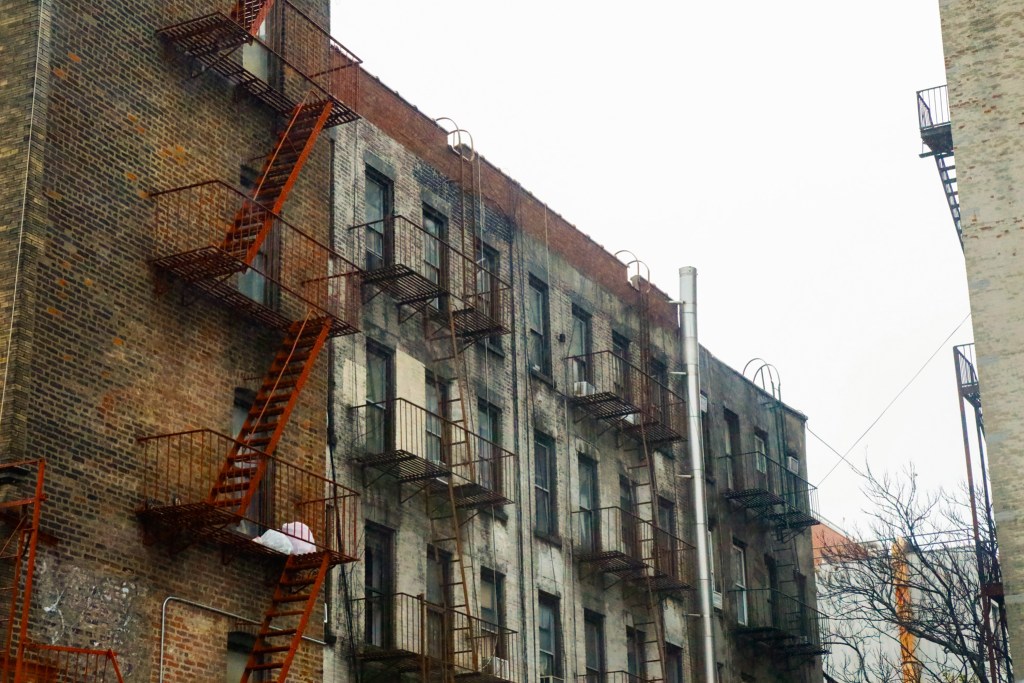 Affordable housing groups could get a boost in purchasing distressed residential buildings up for sale under a new Council bill, Dec. 2, 2025. Credit: Alex Krales/THE CITY
For the current legislation to advance, the Council must vote on it by its Dec. 18 meeting, the last of the year. As part of his campaign platform, Mamdani promised to work with the City Council to pass COPA. If the current Council passes the bill, Mamdani would have a headstart.
In a statement, Monica Klein, a spokesperson for the Mamdani transition team, called COPA a “powerful tool” to “stabilize New York City’s distressed housing and increase the supply of affordable housing.”
“The mayor-elect hopes the City Council passes a version of this legislation that provides real opportunities to bring buildings in the hands of responsible owners and gives renters a pathway out of deteriorating housing conditions and rising rents,” she said.
The path to COPA — which would come into effect a year after its passage — could be complicated: If the Council passes the bill and Mayor Eric Adams vetoes it, the next Council would have to override the veto.
Related