
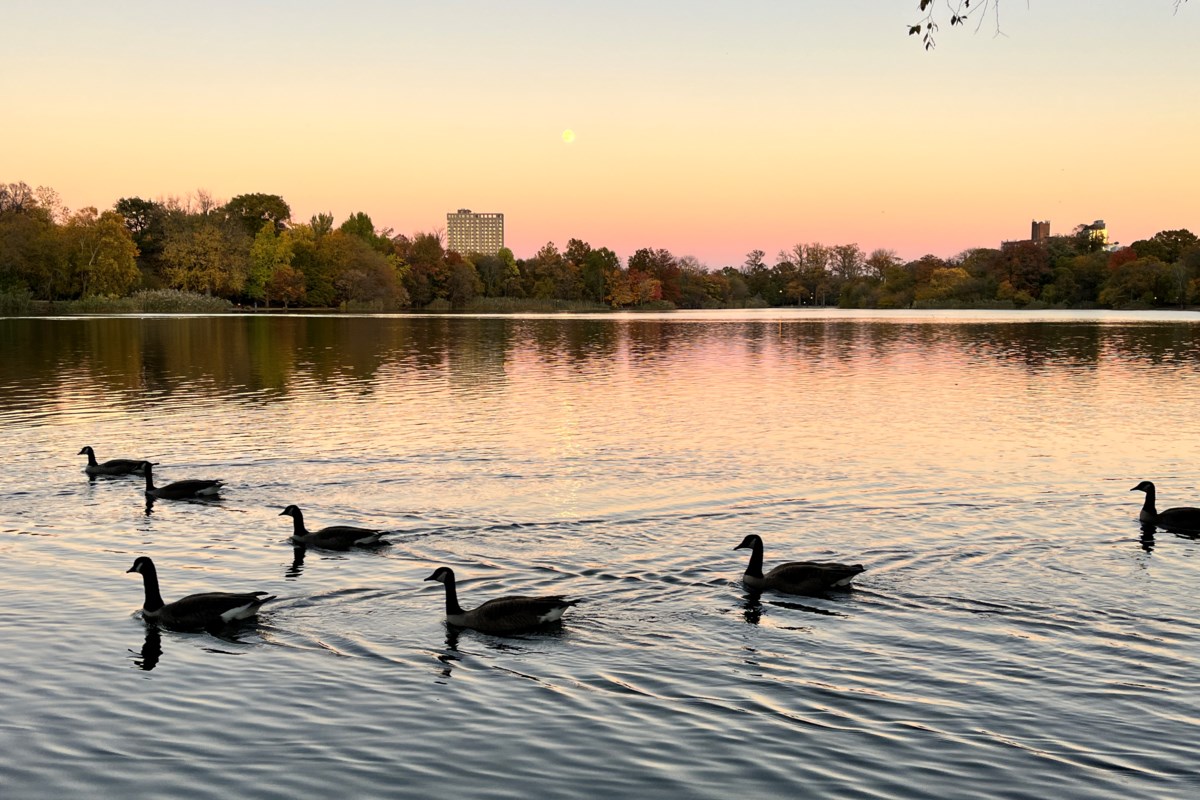
The city will invest $68 million to create a Bluebelt system in Prospect Park, which uses nature-based solutions to manage intense rainfall and flash floods.
Prospect Park and the neighborhoods surrounding the green oasis will undergo a $68 million flood prevention project that includes the installation of Brooklyn’s first Bluebelt, a system of natural drainage corridors, including streams, ponds, and wetlands that stores and filters stormwater.
New York City Mayor Eric Adams, city Department of Environmental Protection Commissioner Rohit T. Aggarwala, city Department of Parks & Recreation Commissioner Iris Rodriguez-Rosa, and the Prospect Park Alliance on Wednesday announced the plan to protect Brooklyn from flash flooding caused by climate change.
The Bluebelt will use nature-based solutions — enhancing the park’s lake and wetlands — to manage intense rainfall. With up to $50 million allocated from DEP for the Bluebelt, this investment complements PPA’s ongoing $20 million lakeshore restoration plan. These actions will help protect Prospect Park, the Prospect Park Zoo, and surrounding neighborhoods against extreme weather events, officials said.
“We’re harnessing the power of nature-based solutions to strengthen the park’s lake and wetlands, and better manage intense rainfall,” Adams said in a statement.
The project comes after a year-long study by DEP of flooding in the surrounding Brooklyn communities and how stormwater moves through Prospect Park during heavy rain. The study found that during intense storms, rainwater often rushes over the ground instead of flowing into the park’s 60-acre lake, leading to flash flooding. The 150-year-old lake also has limited capacity, which can cause it to overflow and strain the sewer system.

The city will work on improving the drainage of the lake in Prospect Park to stop flash floods. . Photo: Supplied/DEP
To address this, several upgrades to the lake will occur, including:
Lowering Lake Levels Faster: Upgrading the lake’s drainage infrastructure to lower water levels in less than 36 hours, instead of three weeks — giving the park more capacity to handle large storms.
Using Rain Gardens and a New Pond to Capture West Drive Floodwaters: A new pond and a continuous stretch of planted rain gardens along West Drive will slow and filter rainwater and ultimately drain to the lake after a storm, instead of flooding homes and streets to the south.
Reducing Flooding on Flatbush Avenue and Helping Protect the Zoo with a Restored Pond: A new pond north of the zoo, in the location of a historic pond that was later filled in, will collect rainwater off of Flatbush Avenue and help protect the zoo from future flash flooding events like the one that forced it to close after the record-breaking storm in September 2023.
The DEP first pioneered the Bluebelt system in Staten Island in 2023.
“By using Prospect Park to manage stormwater, we’re turning one of Brooklyn’s most cherished public spaces into a powerful tool for climate resilience,” said DEP Commissioner Aggarwala. “This project brings Brooklyn its first Bluebelt and demonstrates how restoring and enhancing the park’s natural drainage not only preserves its scenic waterways but also protects the surrounding neighborhood.”
After the project is completed, flooding in Ditmas Park, Kensington, Prospect Park South and Windsor Terrace should improve, officials said.
Construction is anticipated to start in 2029 and be completed in 2032.