
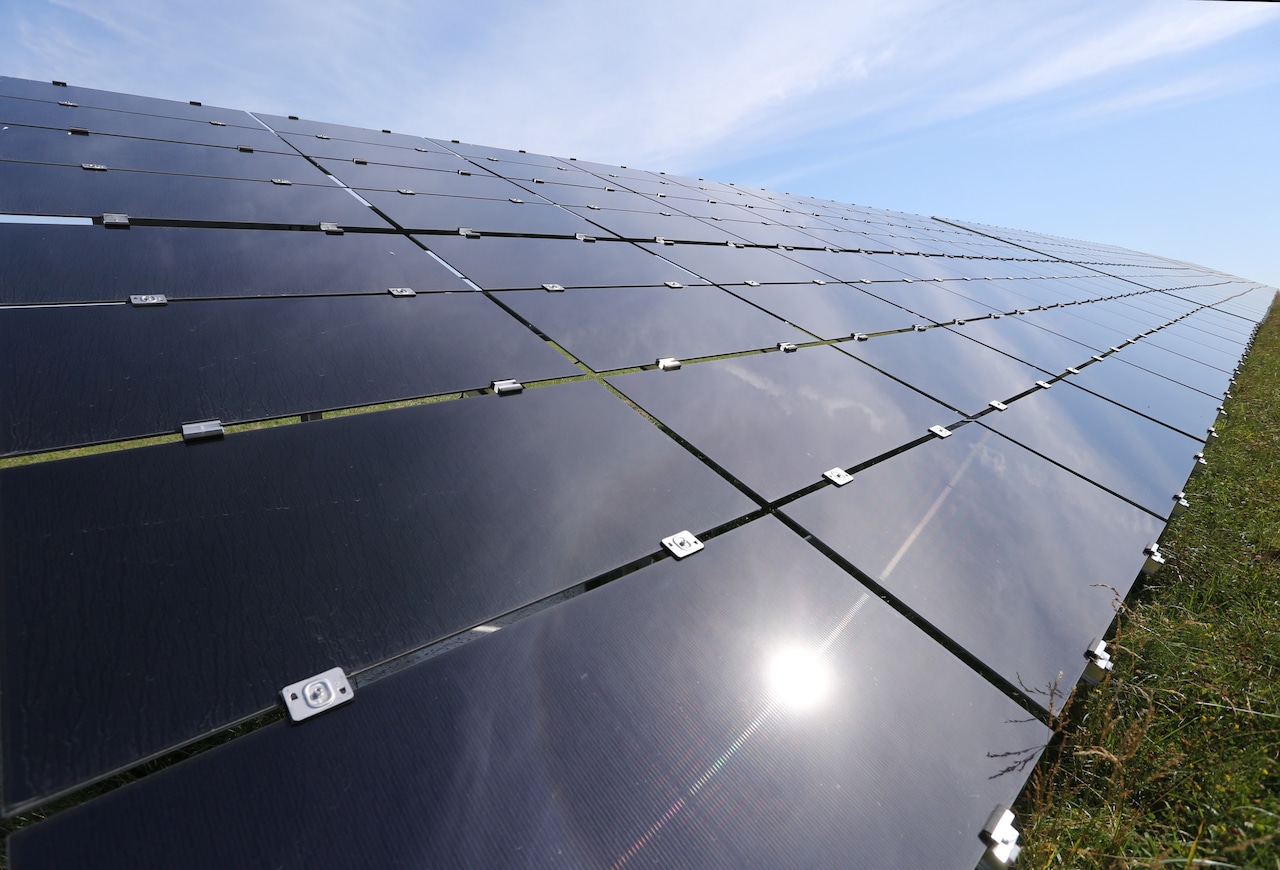
CLEVELAND, Ohio – Plans to expand the solar farm on the old Brooklyn landfill are on schedule, while a similar effort to resurrect a contaminated landfill in Cleveland has run into a roadblock.
Both projects are part of a broader $129 million U.S. Environmental Protection Agency grant awarded to Cuyahoga County, Cleveland and Painesville toward the end of the Biden administration.
Cuyahoga County Council recently approved both projects, although the one planned for the Harvard Road landfill, which straddles three cities including Cleveland, has been pared down and faces additional challenges.
The Brooklyn landfill project is expected to move forward without a hitch. The site already generates about four megawatts of solar-generated electricity. When it went on line in 2018, it was the first of its kind in Ohio.
The second phase of the Brooklyn landfill solar farm, which is being funded by the federal grant, would add more than 12,000 solar panels and produce another 6.5 megawatts of electricity.
First Solar, based in Perrysburg, Ohio, will make the panels domestically as it did for the first phase of the landfill project. CEP Renewables is the developer and YellowLite of Cleveland will be the installer.
Cuyahoga County will own the panels erected in the second phase and will sell the electricity generated to Cleveland Public Power at a reduced rate.
Cuyahoga Green Energy, a county-owned utility, expects to accrue $4 million in net revenue from the second phase of the project over 20 years, said Mike Foley, the utility’s administrator.
Sixty percent of the $14.5 million cost to construct the second phase will come from the federal grant. with the remainder covered by $5.8 million in tax credits dictated by the Inflation Reduction Act.
The future of the Harvard Road project is another story.
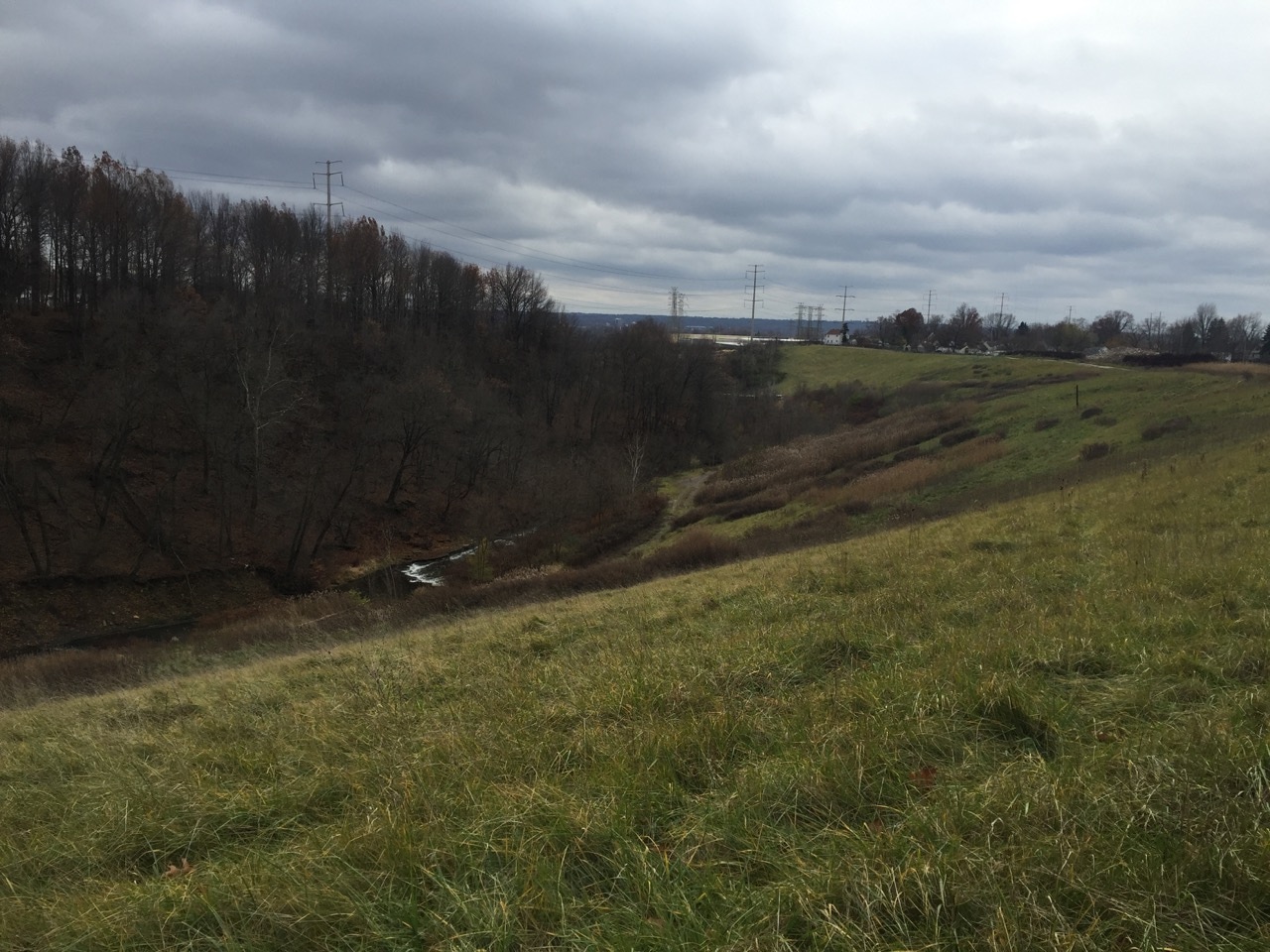 The Harvard Road landfiill, located in portions of Cleveland, Garfield Heights and Cuyahoga Heights, is the proposed site for a solar farm.Peter Krouse, cleveland.com
The plan had been to erect solar panels on the contaminated Harvard Road landfill — which sits primarily within Cleveland and Garfield Heights, but also a small portion of Cuyahoga Heights — and connect the project to Cleveland Public Power.
But those plans have gone awry, according to Valerie Katz, the utility’s deputy administrator, who took the issue before the County Council’s Education, Environment and Sustainability Committee prior to the Thanksgiving holiday.
“For reasons that we are not entirely aware, the city of Cleveland is no longer interested in interconnecting this project,” Katz told the committee. “So, for the past, oh, several weeks we’ve been looking for a plan B because we feel that this project is particularly important not only for the greenhouse gas reduction benefits but also because this has very significant community impacts.”
The county still hopes to generate at least two megawatts of solar power by developing the landfill’s southern portion, which rests largely in Garfield Heights.
Foley and Katz declined to discuss the Harvard Road project more specifically ahead of a meeting Thursday morning before the Utilities Committee of Cleveland City Council.
Outgoing Cleveland Councilwoman Rebecca Maurer will be there looking for answers. She doesn’t understand the reasons she has been given for Cleveland’s decision to bow out.
It appears one of the issues stems from a dispute over a sub-agreement between Cleveland and Cuyahoga County as to how the project would be hooked into Cleveland Public Power’s grid.
“I want to understand it as much as anybody,” said Maurer of the city’s decision. She is concerned that the city is missing out on a chance to use millions of federal dollars to put a contaminated property to good use.
The bulk of the $129 million grant is to construct a solar farm on former industrial property near Painesville and to use the energy to decommission a coal-fired municipal power plant.