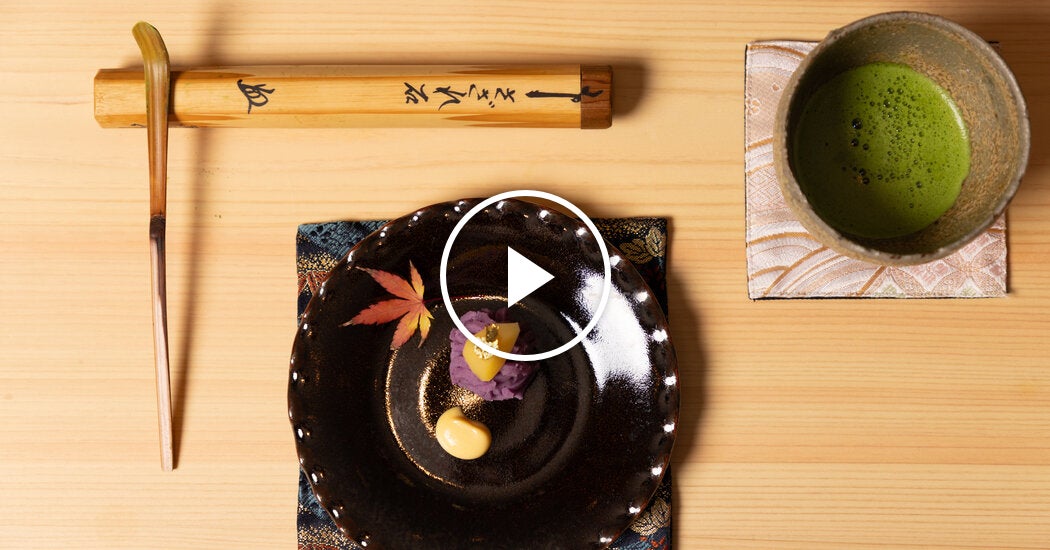
This week, I awarded four stars, which is the highest rating a restaurant can receive from the New York Times, to Yamada, a tiny kaiseki counter in Chinatown. Four stars is so rare — I had to be absolutely sure. I ate at kaiseki places all over town, old and new. I drew on my memories of eating traditional kaiseki in Kyoto and modern kaiseki in Tokyo. I read books about kaiseki. I went back to Yamada, over and over. Each time, it was as beautiful as the first. Kaiseki is considered the most rarefied form of Japanese cuisine. Traditionally, it’s a meal of many courses, each of which is devoted to the season. Once you’re inside, the world recedes, and even though you’re dining at a counter next to strangers, the staff make you feel like you’re the only one there. The chawanmushi marries the soul of soup and the indulgence of custard. The hassun course is meant to set the tone for the meal. It’s an array of delicacies, and it also gives the chef a chance to show his particular flair. The hassun on a November evening was anchored by a tiny whole crab, fried to a crisp. And then there was a monaka, which is a kind of wafer sandwich cookie stuffed with chunky tuna tartare and trout roe. A5 can sometimes almost be too rich. Here, it’s just that right amount of melt. Only at the end is there a communal dish. The last savory course, donabe, which is rice. His donabe is bountiful, and Chef Yamada-san makes matcha for each guest. To go with dessert, there might be soy sauce ice cream that just tastes so earthy and unexpected, and there’s always wagashi. The chef molds white bean paste into different shapes. There were only four, four-star restaurants in New York before today, and now there are five.