
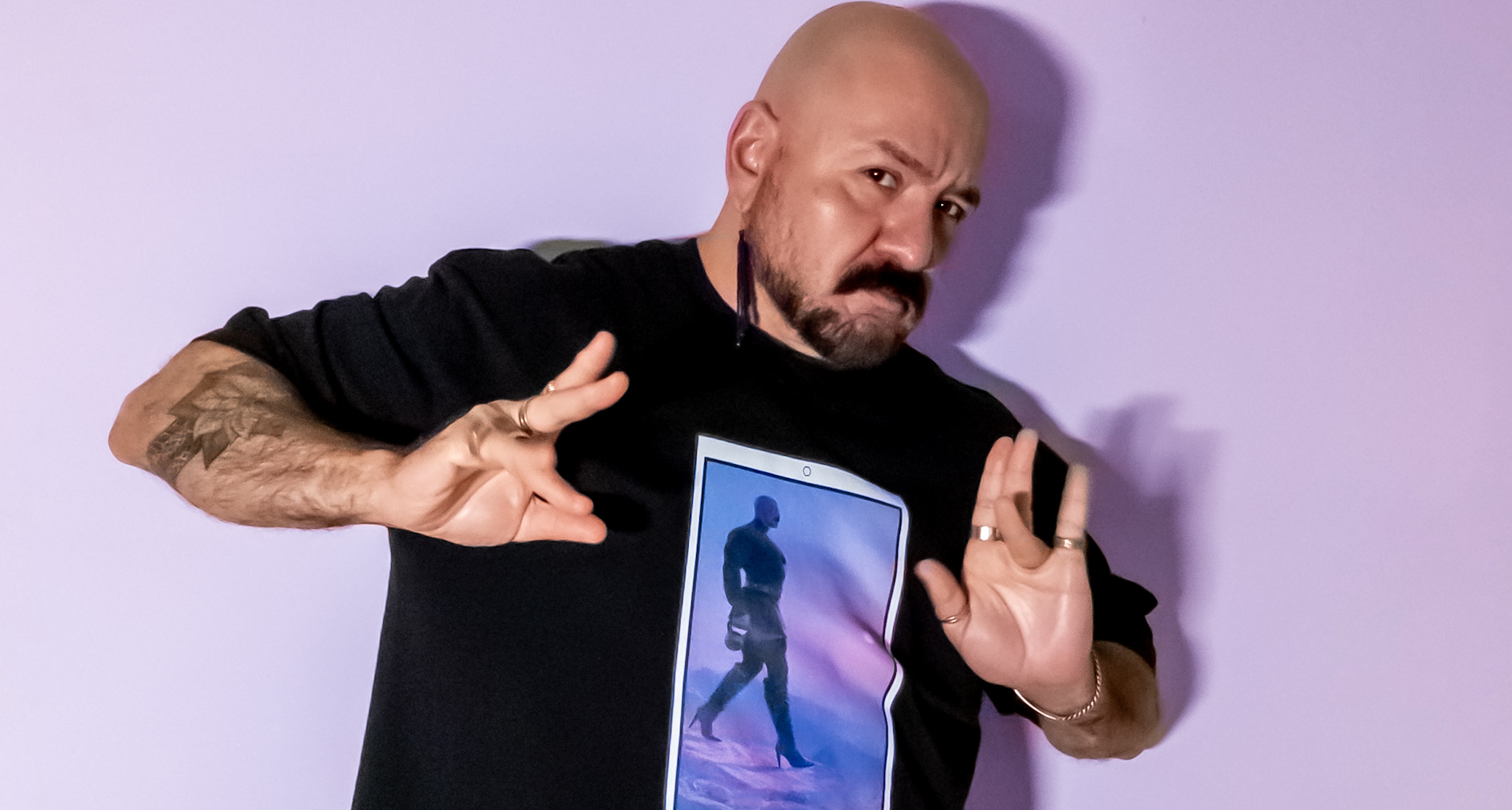
Chicagoan Cesar Torres (they/them) is a maverick who has made significant achievements—and who plans on conquering new frontiers that help underserved communities.
They are an executive product strategist with a track record covering financial services, digital transformation and startup growth, having co-founded Wirecutter, the product recommendation service from The New York Times, among other things. In addition, Torres is also the author of two sci-fi book series (The Coil and How to Kill a Superhero) fusing literary stylings, Aztec myth and sci-fi horror through a queer lens. Lastly, they are a fashion designer who spearheads LED Queens—a queer-centered company that very recently evolved from selling fitness apparel to offering consultation services.
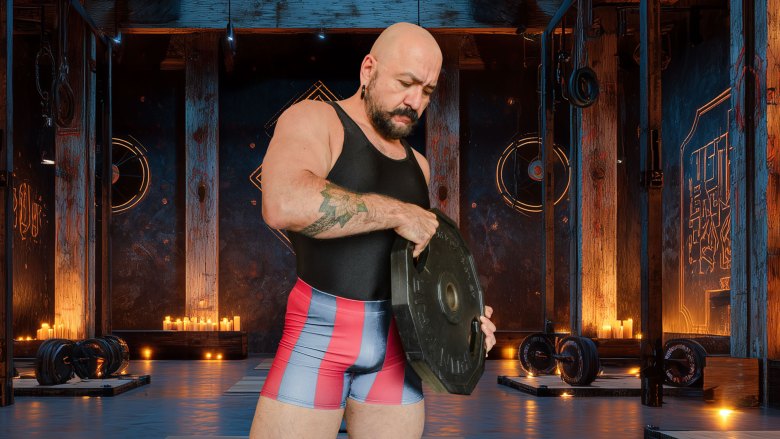 Cesar Torres. Photo courtesy of Torres
Recently, Torres talked with Windy City Times about their past, representation and the next chapter of their life.
Note: This conversation was edited for clarity and length.
Windy City Times: Please tell the readers about your background.
Cesar Torres: I think the best starting point—especially in the climate we’re in—is that I emigrated from Mexico to Chicago in the mid-’80s. I was just 12 when that happened, and it changed my life forever—for good and for bad. The United States was the first place I walked into where I really didn’t feel welcome or part of the status quo, which is a typical immigrant experience, as people make fun of your name, lack of language skills or appearance. I went through all that in Chicago Public Schools but I was fortunate enough to have some very great teachers; I was lucky enough to go to schools like Newberry Academy and Lane Tech. Lane Tech set me up later for life because it was pretty inclusive and diverse.
I went to Northwestern University and got my journalism degree. When I was about to graduate, I wanted to get the best possible job. Because I’m curious and I’m artistically driven, I was making a lot of web content; professors came to me. In 1997, I started at The Chicago Tribune—online; I’ve never worked for a print product. I covered breaking news for several years. Then, I worked at other places, like Encyclopedia Britannica, and then I taught English in Japan. During the year I was in Japan, 9/11 happened and I returned to the U.S.
I then went into healthcare publishing but I think the most interesting part of my story happened around 2010, when I felt I needed a bigger challenge so I worked for start-ups like Ars Technica (which Conde Nast had just acquired) and Wirecutter (where I was a co-founder, and The New York Times bought it). Then in 2016, I left Wirecutter, moved back to Chicago and—having published three or four science-fiction novels—decided to create a spinoff brand from the novel that sells gym clothes; however, it didn’t do well.
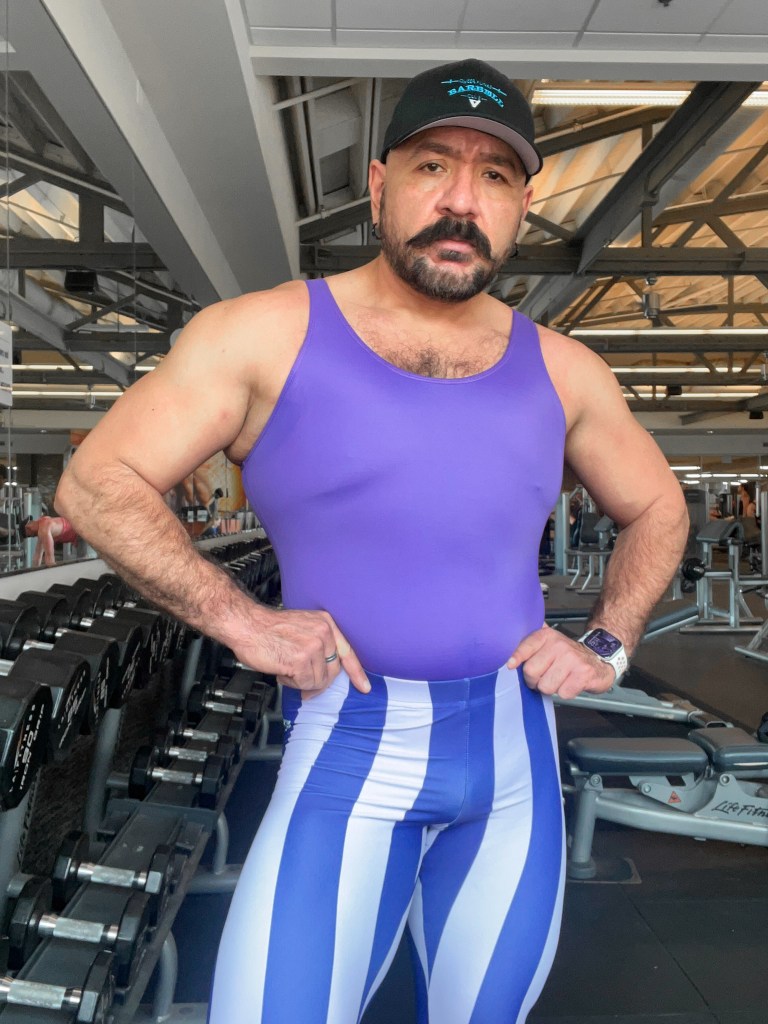
What I hadn’t understood was that my book readers wanted the spandex clothes to be for the gym. That ignited a change; the company became LED Queens, which I started in 2017, and was its own company. I also went through some deeper evolutions through COVID and I’ve started to change it even more. I want to be of service to the queer and BIPOC communities.
WCT: How did you come upon the name LED Queens?
 Cesar Torres. Photo courtesy of Torres
CT: We did a focus group. There are exercises done to create names for products. I spent a weekend with a queer colleague and we came up with different concepts related to who I am, what people saw in the brand and what I wanted people to understand, like the concept of light. The previous name was 13SC Fitness Apparel, which stood for 13 Secret Cities, the first novel I wrote—but it was too difficult for people to remember. So we came up with three names and texted them to friends, family and customers—and nine of 10 loved LED Queens; the runner-ups were Neon Alchemist and Electric Peach.
LED Queens—which referred to New York—was something I folded into part of my book series. They are three female artificial intelligences from the very far future who travel back in time to help humanity; the logo is a direct reference to the pink triangle from the Holocaust.
WCT: And I thought another name could be Photon Fairies.
CT: [Laughs] I like that!
From day one, the company had been focused on gym culture, which has been very homophobic and alpha male-dominated. The brand welcomed customers who were plus-sized and who were across the LGBTQ+ spectrum. Being safe inside a gym is a right, and people don’t always feel safe.
WCT: But the company LED Queens has undergone a big change. [A press release noted that “LED Queens has quietly grown into something bigger than apparel: a studio for product strategy, content strategy, marketing design and queer-centered life coaching.”]
CT: Yes—and there’s been a wave of grief transforming the business because you get really attached to what you’ve been doing for eight years, in my case.
WCT: When did you decide to move to this next chapter?
CT: As a business owner, I’m pretty much a solo operator; the term “queer-preneur” is great. Most queer-preneur start as solo operators of their brands. I made my decision—not rashly, but with certainty—[a few] weeks ago.
I had already fully closed the business two years ago; I was still employed as a consultant and there was a lot of demand. But I also felt like I was going to burn out, although I didn’t want to sell it. I had said that I was going to completely close the stores but customers asked me to not close it so I found a different way to keep it open.
Over the last year, my mom went through lymphoma and went through chemo; she survived but my dad passed away very suddenly. But during that time, I was still running LED Queens and I was still being a full-time consultant. And in April, I got laid off from Razorfish—and I jumped into the business [LED Queens]. I had designed new products and color palettes, and there was new content on the website and social-media channels. The feedback was good but the sales weren’t good for 2025.
 Cesar Torres. Photo courtesy of Torres
But sometimes you have to realize how emotionally attached you are to your business, and sometimes you need to separate your feelings from what needs to happen. I know a lot of queer brands—especially in the fitness space—are struggling, too. I thought I might go into debt next year trying to save the business, even with a Black Friday bump. Also, I didn’t want to take out a business loan. So it was time to sunset those products.
But that’s why I’ve decided to go into consulting for queer businesses. You have to know when to make firm decisions for the long term. My ego is not attached to how people remember LED Queens as a fashion piece but if people want to launch a product or business, they can contact me. But it’s been a bittersweet moment, artistically and as a business owner.
I have a book coming out next year, and I have new books out—Hall of Mirrors and Our Lord of the Flowers—that have their own websites. I also do queer/erotic/fetish photography that I’ve done for past books. I’ve chosen that path but there’s no guarantee of success. So I have a lot to share about how I’ve done this. My ability to pivot and be light on my feet is one of my strengths. On one hand, it’s a huge disappointment but there’s no shame in [ending this chapter]; I want to move my focus to something new.
WCT: So what will LED Queens offer now?
CT: We no longer offer products for the gym. What we offer now is my talent to help people not to just do something like LED Queens but to help queer and/or BIPOC people [with] their businesses. When I worked with Razorfish, one of my clients was Ford—so I’ve worked with companies of all sizes.
If it’s about diversity and inclusion, I’m the person to call. In the land of business, we don’t always have a lot of allies. There’s an emphasis on real values. You can quote me on this: I will turn you the fuck down if you don’t align with values that elevate communities that need elevating.
WCT: What does queer representation mean to you?
CT: My lens is really intersectionality, first and foremost. If it weren’t for intersectionality as a queer person, I don’t think that I’d be standing strong today.
To me, queer representation means that we’ve created a space for everybody, as opposed to a culture. Queer culture exists, too—like we have ballroom, punk and other cultures. But true queer representation is a space for people to be exactly who they need to be. For example, I’m non-binary and I don’t spend too much time thinking about how people perceive my look, voice or mannerisms—but when I go down the street, people say “he” or “him” and I don’t get offended. But I’ve been able to carve a space under the queer umbrella that makes me 100% comfortable with who I am, how I dress and how I speak. That’s a benefit of having people who support me.
But allies can be in the queer space, too. The queer space is porous—more people can come in and be part of it. It’s about bringing the people who have always been in the back of the room to the front.
To find out more about LED Queens, visit this link.
Related