
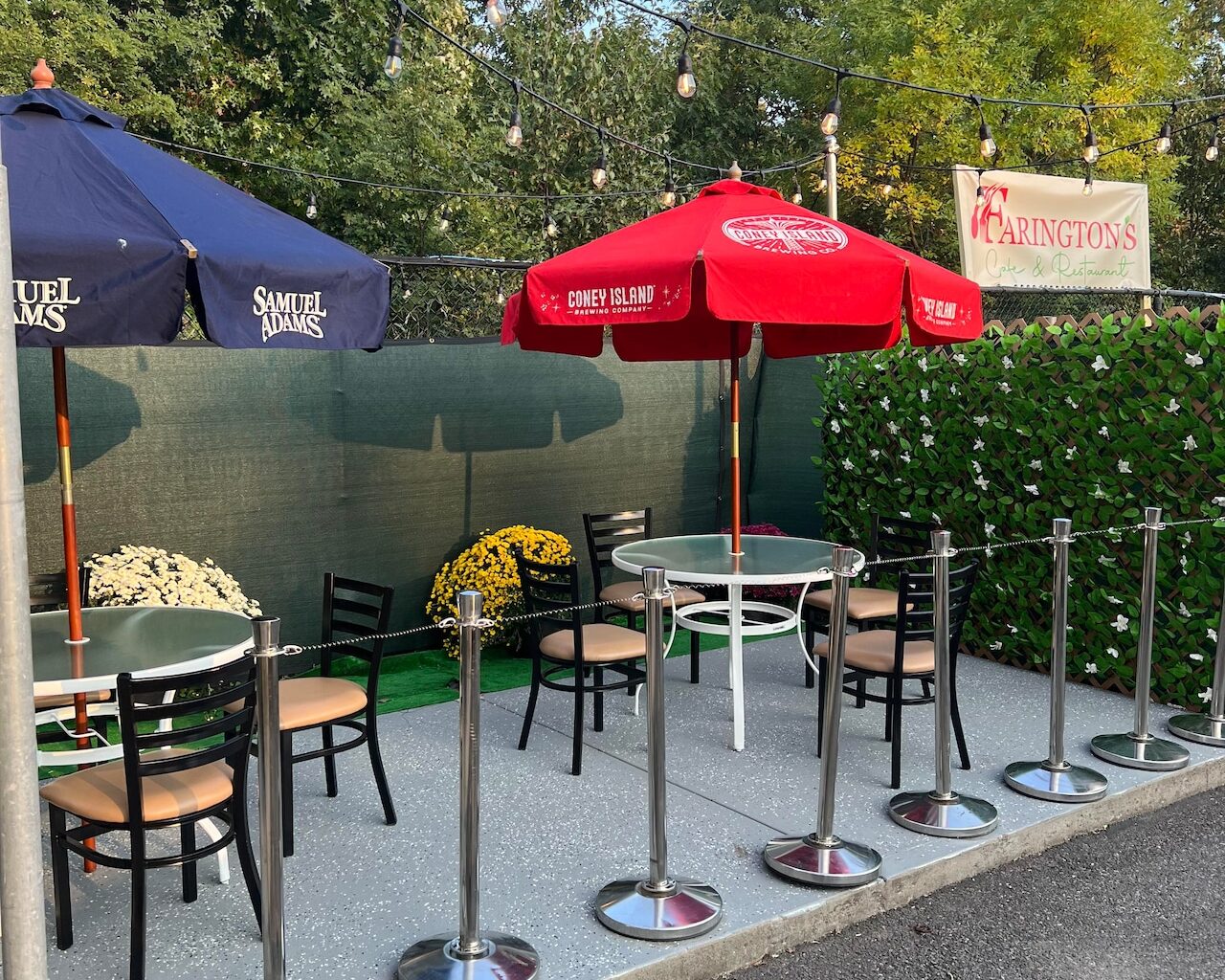
STATEN ISLAND, N.Y. — Year-round outdoor dining could return to New York City under legislation introduced late last month to overhaul a program critics say is too costly, complicated and disproportionately beneficial to some neighborhoods.
City Councilmember Lincoln Restler, of Brooklyn, introduced two bills to reform Dining Out NYC, which replaced the pandemic-era initiative. Restler represents Greenpoint, Williamsburg and Boerum Hill — neighborhoods where street dining became widespread during COVID-19. The City Council’s Committees on Transportation and Infrastructure and Consumer and Worker Protection held a joint hearing just before Thanksgiving to consider the proposed changes.
 Flashback to 2020: Jody Scaravella of Enoteca Maria reopened Enoteca Maria in St. George after an 18-month closure. He invested in a street structure that has since been removed but it was intended to be artistically pleasing. Pamela Silvestri
Open Plans, a nonprofit urban planning organization, testified in support of the legislation. Jackson Chabot of the group said seasonal restrictions have become a major obstacle for restaurants.
“The pandemic program ended, and the City Council passed legislation a couple of years ago, but Council Member Restler identified that a lack of year-round outdoor dining was a key inhibitor for restaurants,” Chabot told the Advance. “We’re advocating to bring back that option so restaurants can set up outside all year.”
1/7
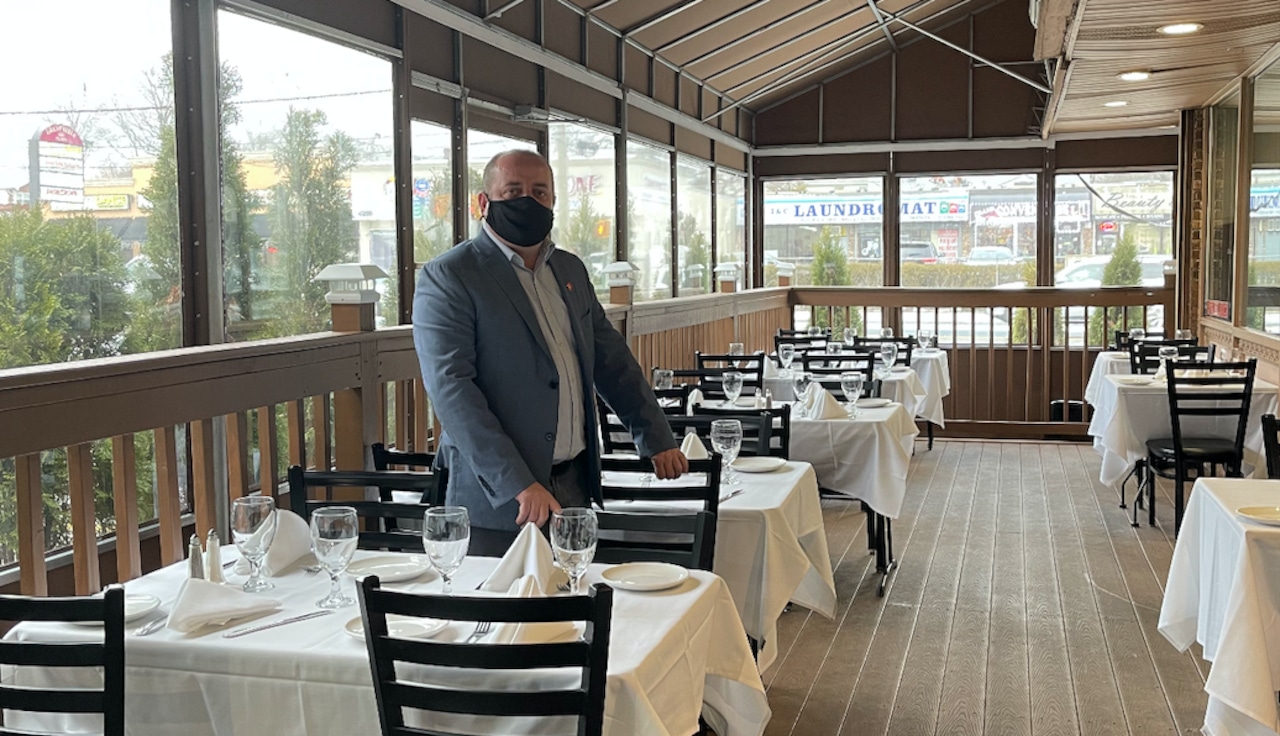
Owner of Trattoria Toscana in Great Kills is struggling to survive during COVID-19 pandemic
During the height of COVID, the temporary outdoor dining program supported an estimated 12,500 restaurants, creating nearly 12,000 jobs and generating more than $370 million in annual wages, according to Open Plans. Participation has since dropped sharply under the permanent program, which limits outdoor structures to about six months a year.
High costs have discouraged many restaurants from joining. Open Plans found that restaurants pay fees to the Department of Transportation and cover design costs for structures they can only use half the year. Many told the organization during a curbside Restaurant Week earlier this year that they lacked storage space and faced thousands of dollars in winter storage costs.
“Right now, restaurants pay significant fees to apply for the program and design their structures, but they can only use them for about six months,” Chabot said. “If the bill passes, they could keep those spaces year-round, which helps maximize value and support workers.”
Impact of the pandemic program
The permanent program has also created geographic disparities. As of June 30, only 2.2% of curbside seating was in neighborhoods with a median household income of $60,000 or less, and just 8.9% was in the Bronx, Queens and Staten Island combined. On Staten Island, Max’s Esca in Dongan Hills still uses its parking lot for outdoor dining, but the model hasn’t gained traction among other establishments across the borough.
On Staten Island during the COVID-19 pandemic, the temporary program worked during dining room shutdowns for The Kettle Black, Ho’Brah, Burrito Bar, Jody’s and the former Liberty Tavern, creating corrals along Forest Avenue in West Brighton that permitted dining in the street just past the curb. Some setups proved precarious, such as Ralph’s Sports Bar, which operated along a busy offshoot of Richmond Road, a shortcut through Four Corners Road.
Council Member Frank Morano said the shift from temporary to permanent rules hit Staten Island businesses particularly hard.
“The temporary program saved jobs and kept family-owned restaurants alive,” Morano said. “But when the city made it permanent, the process became far too bureaucratic, too seasonal and, frankly, too Manhattan-centric.”
Costs and barriers for restaurants
Morano called the legislation “a step in the right direction,” praising provisions that streamline applications, reduce seasonal burdens and allow smaller storefronts to expand with neighbor consent. He also highlighted benefits such as enabling grocery-based cafés, which serve as community hubs on Staten Island.
“If done right, this could especially benefit Staten Island restaurateurs,” Morano said, noting the borough’s space, demand and love for al fresco dining “when the red tape doesn’t suffocate it.”
He expressed support for the bills with the caveat that the Department of Transportation and the administration must implement them in a way that reflects the needs of all five boroughs, not just the densest ZIP codes.
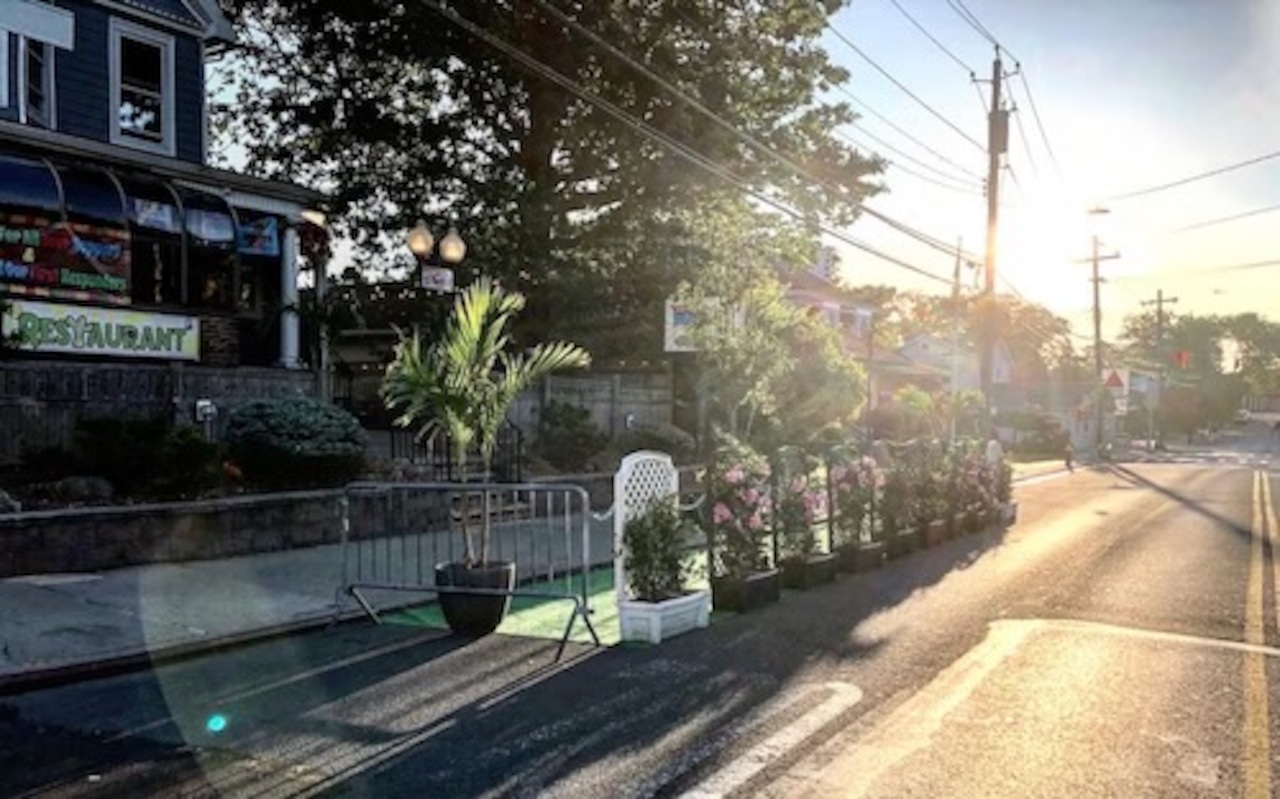
Burrito Bar invested heavily in its Forest Avenue outdoor dining setup during the summer of 2020. This photo shows the scene in early summer that year. The structures have since been removed.(Advance/SILive.com | Pamela Silvestri)
“Staten Islanders deserve a program that works for our small-business economy, our streetscapes and our residents,” he said. “Outdoor dining shouldn’t be a luxury reserved for restaurants that can navigate City Hall. It should be a tool that helps keep local workplaces strong and neighborhood businesses thriving. If this legislation gets us closer to that goal, then I’m all for it.”
If passed, the bills would allow restaurants to keep structures up year-round, use adjacent frontage and simplify the application process. Open Plans envisions updated, rat-proof open-air structures rather than fully enclosed, heated sheds.
“We don’t necessarily envision heating or air conditioning — more of an open-air shed model,” Chabot said. “Economic times are tough for restaurants. We want to give them as many options as possible without adding more regulation or fees.”