
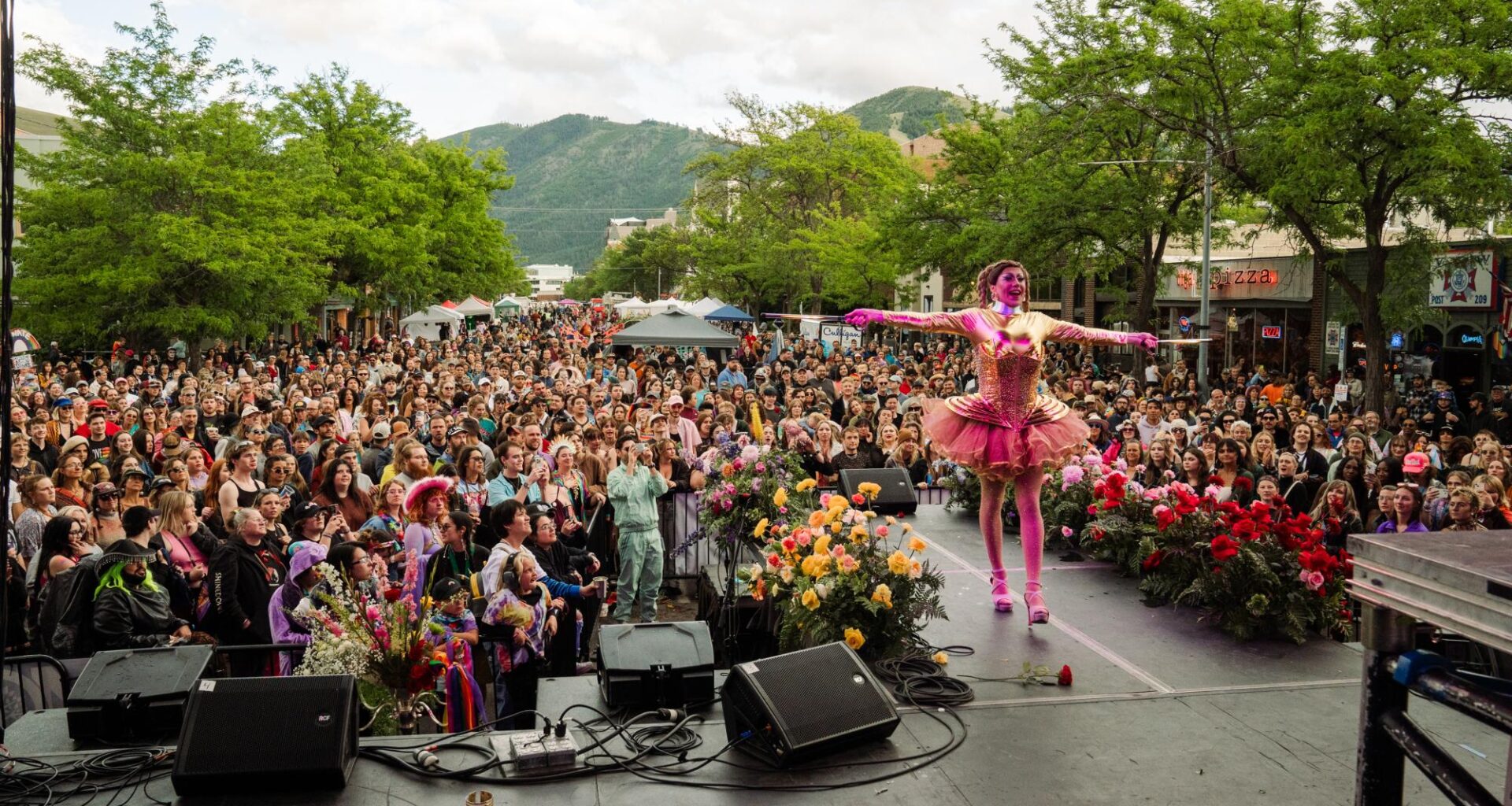
Home to the oldest continuously operating gay bar in America, New Orleans is a haven of inclusivity and pride. But nestled in conservative Louisiana, this culture of acceptance was hard-earned. Today, amid heightened hostility towards the queer community, some New Orleans activists are taking a flamboyant approach to community outreach: drag.
Drag is an integral part of the New Orleans artistic and activist culture, especially for communities of color. When local ordinances essentially outlawed cross-dressing in the 1800s, Mardi Gras was the one event where police turned a blind eye. Musicians like Little Richard, Ray Charles and Otis Redding performed at drag bars downtown as early as the 1930s. In recent years, drag queens have been active members in local protests against anti-LBGTQ+ laws, President Donald Trump’s administration and in support of the Black Lives Matter movement.
Tulane University student filmmaker Cameron Brown described drag as “a queer art form that just revels in combating oppression through positivity and boldness and pure loving audacity. Drag is flashy. Drag is in your face. It can be so excessive, but it’s excessive in queer autonomy.”
When he’s not hosting on stage, drag queen and social media star Joey Olsen — better known by his drag persona, Debbie with a D — is using his platform to share resources for sexually transmitted disease testing and HIV prevention. With over 15,000 followers on Instagram and a weekly show at the gay bar Oz, Olsen said providing healthcare resources to the queer community has become an act of resistance that brings hope to people.
“There is a lot of confusion, and confusion can cause despair, but I have a set of knowledge that I know to be true, and I know can help people, and when I can deliver something that is concrete, evidence-based, and directly impacts the people in my community, that brings me joy,” Olsen said.
After getting his masters in public health at Tulane in 2013, Olsen worked at a local public health clinic, which ran COVID-19 test clinics at bars and STI testing at a local bathhouse. When he began experimenting with drag, there was never a doubt in his mind that his art would intersect with this work. His public health education taught him that the most effective outreach strategies are community-based, from easily accessible leaders already trusted by the community.
“I realized, as I was starting drag, wait a second, I’m in these [community] spaces now,” Olsen said. “I have all the tools … and I know that this is what I want to do, what I’m passionate about. So why don’t I just start doing it?”
As Debbie with a D, Olsen has handed out Plan B morning after pills and COVID-19 home test kits at her shows and partnered with pre-exposure prophylaxis clinics to share information about the HIV prevention medicine. Even when he is not on stage, Olsen said people often message his drag Instagram to ask questions about specific resources and healthcare options.
When Olsen started working in public health, health disparities already affected people of color, the LGBTQ+ community and the deep South. Since then, the Trump administration has gutted funding for public health and spread confusion about vaccine efficacy and safety, which is why Olsen said it is important to stay vocal about the health resources that do exist.
While Debbie with a D is performing on stage, Quinn L. Bishop might be taking a group around the French Quarter on a tour with her company, Queer Underground Tours — formerly New Orleans Drag Tours — telling stories of queer joy, resistance and strength. She had been working as a drag queen under the name Quinn Laroux before founding the tour company, but found the storytelling she was doing on stage would lend itself best to guided tours. Since medically transitioning to female in 2020, Bishop doesn’t give tours in drag, but her passion for queer history has remained.
Queer history “is important because there is a strong effort to portray queer people, especially trans people, as being new,” Bishop said. “It’s this way to exert power to say, ‘Oh, this is this brand new kind of thing,’ to demonize what is ultimately a community of people that existed before we had the language used to describe us.”
Outside of her tours, much of Bishop’s fame comes from her social media, where she has amassed nearly 10,000 followers on Instagram. Dressed in a brightly colored outfit or a story-specific costume and walking down a New Orleans street, Bishop tells queer history stories directly to the camera on her Instagram.
Barbara Scott, one of the first openly lesbian politicians in the country, Charlene Schnieder, a former NASA scientist who protected her lesbian bar and the history of bathhouses in New Orleans, are a few of the subjects Bishop’s videos have touched on.
Bishop described her content as a collage of historical events made into a piece of art for today. Above everything — activist, historian, educator — Bishop sees herself as an artist. By telling queer stories from history, Bishop hopes queer people can see themselves in the future, too.
“If you are scared, I think that’s the point is to scare you,” Bishop said about anti-queer activism. “I think that so much of what they’re [anti-LGBTQ+ activists are] doing is just trying to erase a group of people that are never going to go anywhere. They’re trying to change policies. They’re trying to make our lives more miserable. But I think that ultimately they will fail as they always have failed.”
In Uptown, student filmmaker Brown chose to make a drag queen’s friendship with a young boy the subject of his final film project, “Batter Up Queen.” He said he wanted to feature a drag queen to directly oppose the narrative from right-wing activists that drag queens are predatory.
Brown said his film is a form of activism, but it is also “an image of love. It’s an image of joy. It’s an image of camaraderie… the deepest, darkest core of why I wanted to make this [film] is because of the fact that so many queer and trans youth are unsupported and take their own lives.”