
Voters in Hoboken chose their next mayor on Tuesday in a runoff election between two city council members.
Hoboken Mayor-elect Emily Jabbour received 53.57% of the vote and Michael Russo had 46.43%, according to unofficial results from the Hudson County’s clerk’s office with all districts reporting.
It was a closer outcome than the runoff election for mayor in neighboring Jersey City, where Mayor-elect James Solomon received 67.88%, defeating former New Jersey Gov. Jim McGreevey.
Jabbour will succeed Hoboken Mayor Ravi Bhalla, who opted not to seek a third term and won a seat in the state Assembly.
“I am incredibly humbled and honored by the trust that the people of Hoboken have placed in me,” Jabbour said in a Facebook post Tuesday night.
During her campaign, Jabbour emphasized affordability amid rising costs in a city where 60% of residents live in rental housing, an issue that also was central to Solomon’s run for mayor.
Jabbour said future developments should set aside at least 15% of units for affordable housing, matching New York City’s policy and an increase from Hoboken’s current requirement of 10%.
Hoboken and Jersey City hold runoffs between the top two vote-getters when the first-place general election finisher fails to get above 50% of the vote. Elections are nonpartisan, meaning that political parties play no official role.
Jabbour finished first among six candidates on Nov. 4 with 27%, while Russo was second with 24%. Jersey City had seven mayoral candidates on the ballot four weeks ago.
Three candidates for citywide council seats aligned with Jabbour — Caitlin Layson Namin, Steve Firestone and Joe Quintero — were also elected Tuesday, defeating three candidates on Russo’s slate.
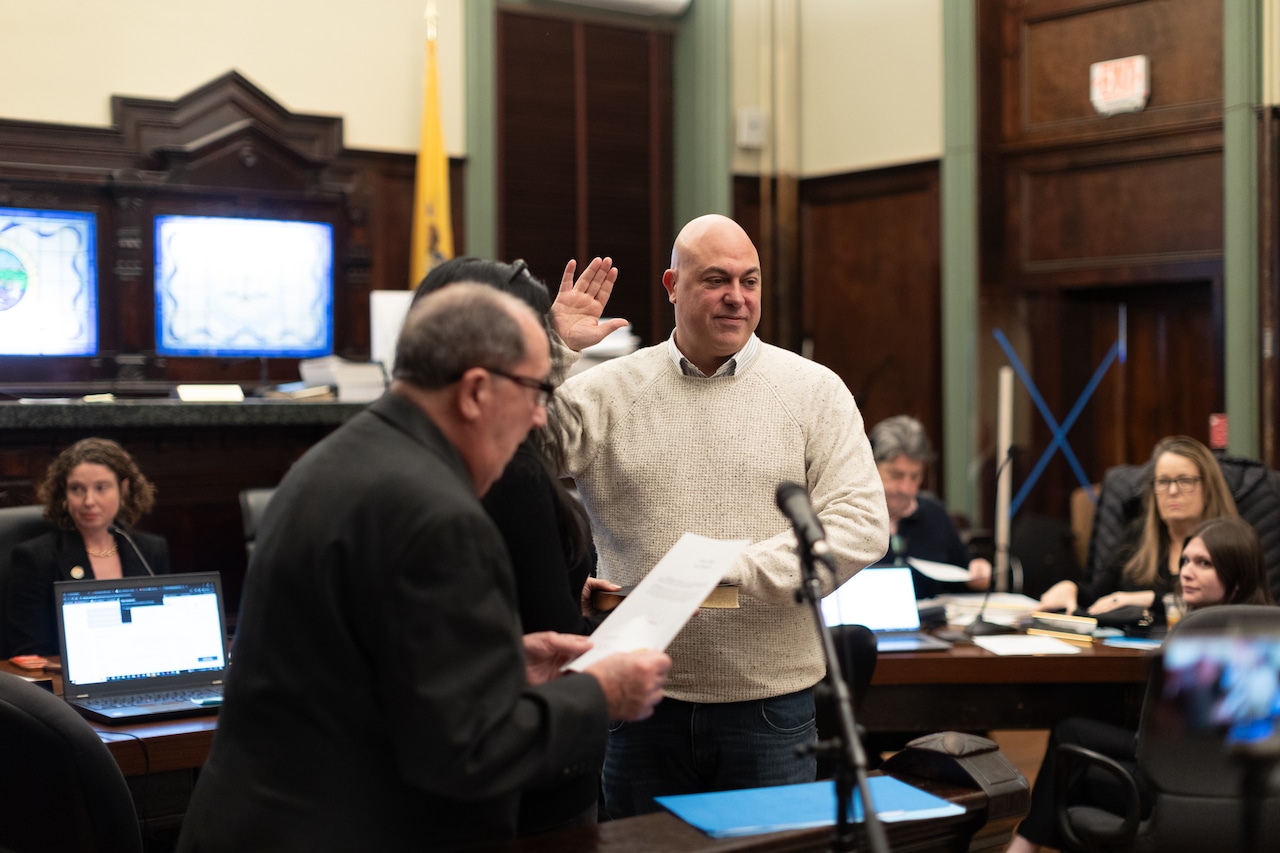 Hoboken council member Michael Russo is sworn in for his sixth term in January 2024.Michael Dempsey | The Jersey Journal
Russo was attempting to follow in the footsteps of his father, the late Anthony Russo, who was Hoboken’s mayor for eight years starting in 1994. Russo represents Ward 3, one of the city’s six wards, and was first elected in 2003.
“On behalf of Team Russo and our entire campaign, we would like to congratulate Team Emily,” read a statement posted to Russo’s Facebook page.
“Team Russo’s vision remains strong. Unite Hoboken. Care for our neighbors. Relentless positivity, always,” his campaign said.
Jabbour was elected to a second, four-year council term in 2021. She is one of three council-at-large members, who represent the entire city instead of a single ward.
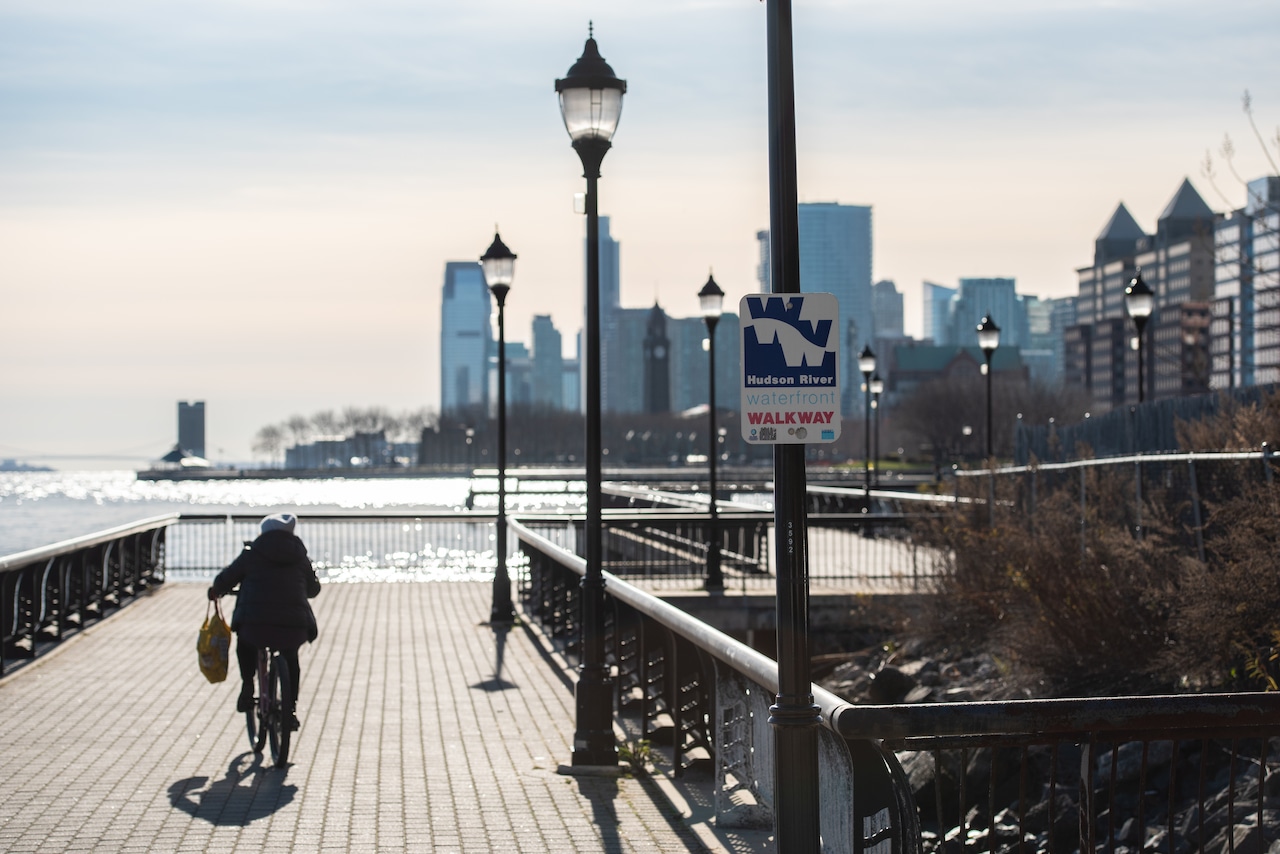
Her website features a photo of Jabbour with a bicycle — a popular way of getting around compact Hoboken, known as the “Mile Square City.”
During her campaign, Jabbour said that Hoboken’s rising population — from 50,000 residents a decade ago to more than 60,000 — merits an increase in community policing to deter traffic violations and public disturbances.
Jabbour is a Boston native who grew up in nearby Wellesley and received a master’s degree in social work from Columbia University in 2006, two years before moving to Hoboken, according to her campaign.
Jabbour founded the Hudson County chapter of Moms Demand Action, an organization focused on preventing gun violence, and is a volunteer with the Hoboken Food Pantry.
“We will continue building a Hoboken that is stronger, fairer and ready for the future,” Jabbour posted to Facebook after the votes were counted.
While many of New Jersey’s 600 municipalities are led by part-time mayors, Hoboken and Jersey City are among the prominent New Jersey cities with a full-time mayor making a six-figure salary.
Jabbour will receive a $130,000 salary upon becoming mayor in January, up from Bhalla’s $116,950 salary, under a 2021 city ordinance that authorized a $13,050 pay increase starting with his successor.