
A suspect has been arrested in connection with the planting of pipe bombs outside the Democratic and Republican National Committees on the eve of the Jan. 6, 2021, Capitol riot, The Post has confirmed.
The suspect, 30-year-old Brian Cole Jr. of Woodbridge, Va., was collared Thursday morning and was set to be arraigned in DC federal court at 1 p.m., according to a law enforcement source.
The arrest comes one month before the fifth anniversary of the melee that briefly delayed congressional confirmation of former Vice President Joe Biden’s 2020 election victory — and closes an embarrassing chapter for the FBI, which had been castigated by lawmakers for the lack of progress in identifying a perpetrator.
A suspect has been arrested in connection with the planting of pipe bombs outside the Democratic and Republican National Committees on the eve of the Jan. 6, 2021, Capitol riot. FBI
The arrest comes one month before the fifth anniversary of the melee that briefly delayed congressional confirmation of Joe Biden’s 2020 election victory. FBI
“Seeking Information” notice released by the FBI regarding the pipe bombs. AP
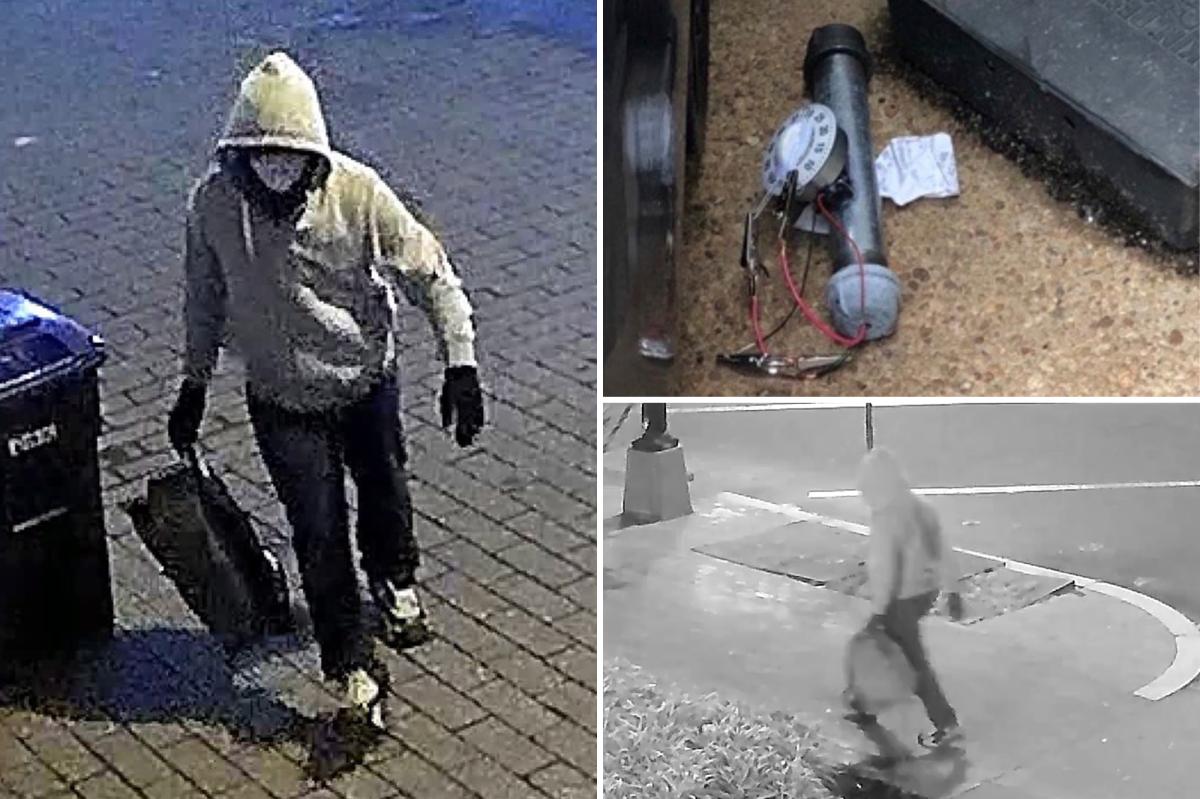
Surveillance footage showed a person carrying a backpack and wearing a gray hooded sweatshirt, mask, gloves, glasses, and a pair of Nike Air Max Speed Turf sneakers who planted what investigators called “viable explosive devices” at the headquarters of the two major parties on the night of Jan. 5, 2021.
The devices were discovered the following afternoon — approximately 17 hours later and at around the same time Congress convened to count the 2020 electoral votes, a session which was suspended for several hours after supporters of President Trump broke into the Capitol and stormed the House and Senate chambers.
Then-Vice President-elect Kamala Harris and former House Speaker Nancy Pelosi (D-Calif.) both came “within feet” of the devices as they traveled to and from the DNC headquarters on South Capitol Street on Jan. 6.
In Pelosi’s case, her motorcade drove past one of the bombs after it was discovered by law enforcement, according to a congressional report that blamed law enforcement for failing to adequately secure the perimeter.
The suspect can be seen planting one of the bombs. Federal Bureau of Investigation
An explosive device with a timer and wires, found near the Republican National Committee office on Jan. 6, 2021. AP
The report, released in January of this year by Reps. Barry Loudermilk (R-Ga.) and Thomas Massie (R-Ky.), assessed that “little meaningful progress” had been made in the pipe bomb investigation and charged that the feds had “refused to provide substantive updates to Congress.”
Despite “a promising array of data and … numerous persons of interest,” the lawmakers’ report said, “[b]y the end of February 2021, the FBI began diverting resources away from the pipe bomb investigation.”
The same day the report was issued, investigators released additional information about the suspect — including video of the person planting one of the bombs and an estimate that the perp stood 5 feet 7 inches tall.
Video shows the 2021 D.C. pipe bombing suspect. FBI
Investigators released additional information about the suspect, such as the perp’s height.
The FBI and Justice Department didn’t immediately respond to requests for comment by The Post.
The absence of a break in the case — or even clarification on whather the suspect was a man or woman — led to fervent speculation, mainly among conservatives and even some Republican lawmakers, that the failed bombing was the work of a far-left terrorist whose actions would cause embarrassment to a Biden administration whose Justice Department was pursuing charges against hundreds of Jan. 6 rioters.
FBI Deputy Director Dan Bongino suggested last year on his popular podcast that the act was an “inside job” and involved a “massive cover-up.”
After arriving at the bureau in March, Bongino made the case a top priority, writing on X last month: “We brought in new personnel to take a look at the case, we flew in police officers and detectives working as TFOs (task force officers) to review FBI work, we conducted multiple internal reviews, held countless in person and SVTC meetings with investigative team members, we dramatically increased investigative resources, and we increased the public award for information in the case to utilize crowd-sourcing lead.”