
When New York City announced plans to turn Kips Bay into a cutting-edge life science hub, local leaders didn’t celebrate — they worried. Manhattan’s Community Board 6 District Manager, Jesús Pérez says that while the two new developments promise jobs and research space, they’ve left one thing out: affordable housing.
Now, after more than a year of resolutions and letters to city agencies, board members complained that their campaign was ignored — and the projects that could reshape the East Side risk deepening the area’s housing shortage.
By 2031, Kips Bay residents can expect two major life science buildings, SPARC and Innovation East, to open between First Avenue and East 25th Street. The projects aim to turn the neighborhood into a center for science, education, and healthcare innovation. According to the New York City Economic Development Corporation (NYCEDC), the development group overseeing both projects, SPARC and Innovation East, are expected to generate more than $42 billion in economic growth and 16,000 jobs over the next three decades.
While city officials call the developments a major investment in New York’s future, members of Manhattan’s Community Board 6 say affordable housing was sidelined early on in the process. The board says its support for the projects came with one key condition: that the city also commit to adding affordable housing in the district.
Jesús Pérez, district manager for Community Board 6, said board members were flustered by the decision to exclude housing.
“We don’t have a great abundance of city-owned sites in this district, which is one of the reasons why we were a little bit disappointed that SPARC and Innovation East were completely off the table,” Perez said.
During early discussions with city agencies, Community Board 6 repeatedly urged officials to explore affordable housing options alongside the new developments. Over the course of a year, the board sent six resolution letters to city and state officials, five addressed directly to Economic Development Corporation President and CEO Andrew Kimball.
In the first letter sent in February 2024, Community Board 6 highlighted the “severe housing shortage” across the city and noted that affordable housing was a top priority. Board members also expressed concern that the new jobs the projects bring could place extra demand on the housing market.
It’s a concern echoed by Kips Bay resident Mirea Klee, who worries the new developments won’t benefit longtime residents.
“I don’t foresee these kinds of buildings employing people who have been living here forever,” Klee said. “That doesn’t tend to be how this process goes.”
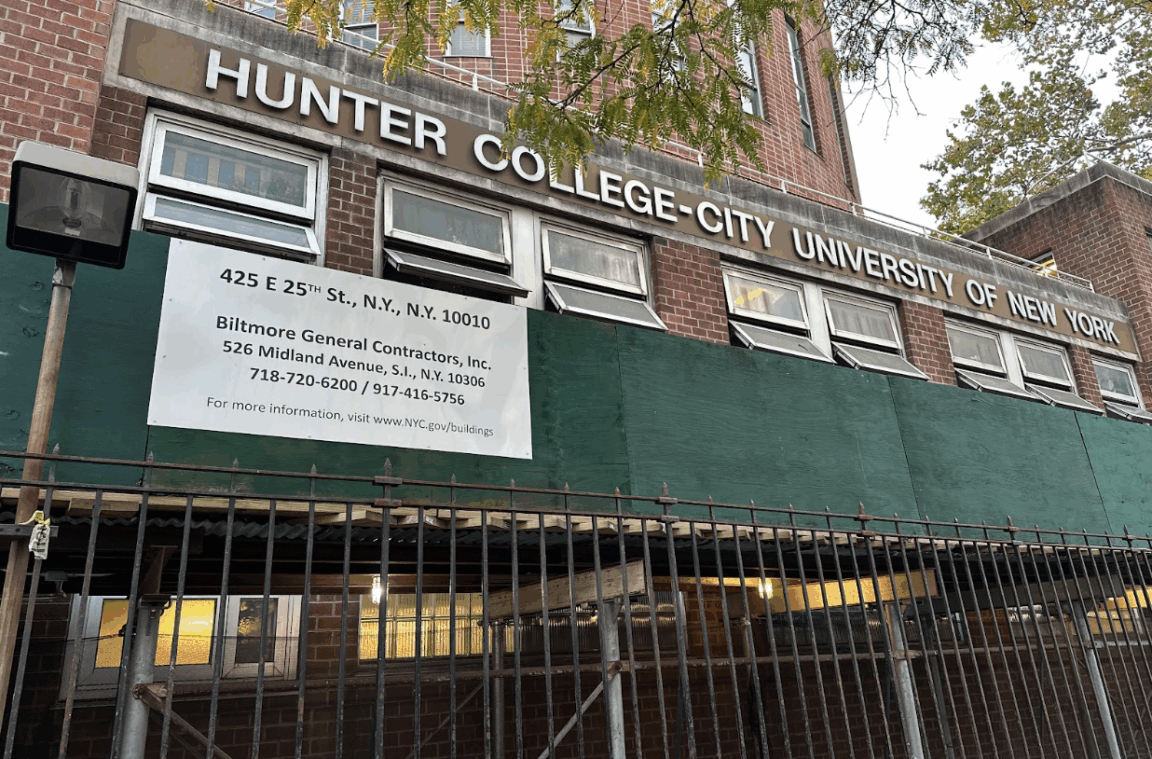
In May 2024, the board sent another letter to Gov. Kathy Hochul, CUNY Chancellor Félix Matos Rodríguez, and Kimball, the board urged the state and CUNY to replace the 650 dormitory units being eliminated at Hunter College’s Brookdale Campus, where SPARC will be built.
“The construction of 1.5 million square feet of academic and commercial space while eliminating 650 units of dormitory housing not only would fail to alleviate the housing crisis in our Community District, but would actually exacerbate it,” the board wrote.
Despite the board’s requests for affordable housing, Pérez said that they never seriously anticipated that housing would be a part of SPARC’s final plans.
“The Adams Administration never promised that housing would be a part of these things,” Pérez said. “When we saw that there was no housing, the board advocated robustly for there to be, but in the end the city said, ‘Look, the promise of high-tech jobs, life-science jobs, that outweighs the need for housing.”
After it became clear housing would not be included, the board shifted focus. In September 2024, the Board sent another letter outlining conditions for its continued support. One key condition was for the Department of City Planning to conduct a study identifying potential affordable housing sites in Community District 6 and to publish a clear timeline for those plans.
Pérez said the city initially agreed but later went back on the agreement, redirecting efforts to a broader initiative called the Manhattan Plan. He said the move undermined the board’s push for a localized study.
“They wanted to sort of kill two birds with a stone,” Pérez said. “We thought we were getting specialized attention and it looks like we’re just lumped into the mix with twelve other districts. We were promised a real actionable plan to deliver affordable housing to our district.”
Launched in June 2025, the Manhattan Plan is a joint initiative between the Adams administration and the Department of City Planning that aims to add 100,000 housing units across Manhattan in the next decade. The city says it will rely on community meetings and local input to shape the plan, which is expected to be released by the end of the year.
Pérez argues the effort is too rushed.
“The Manhattan Plan, as we understand it, is not really going to be a plan, that may be too strong a word,” he said. “It’s going to be more like a Manhattan brainstorming of ideas, because if they’re going to release this plan before the Adams Administration ends, two months is not enough time to come up with a plan.”
Community Board 6 continues to push for a dedicated study of East Manhattan. In the meantime, Pérez said the board’s housing committee has begun doing its own research.
“Our housing committee has been looking to better zero in on the specifics of what kind of housing we have, and what kind of housing we need,” Pérez said. “They’re trying to figure out a way to make our request a little bit more actionable and precise.”
He said the committee is examining what limited city-owned sites might exist in the district, while also working to get a clearer picture of the current housing stock.
Pérez added that the work isn’t easy for a board made up of volunteers.
“Our budgets are super, super small. And our members are, for the most part, just community members that may or may not be in professions that lend themselves to housing policy or development,” he said. “Until you know how much you have, and what kinds of housing you have, it’s not super effective to then ask for more. Because OK, more of what?”
He said the board hopes Mayor-elect Zohran Mamdani will make housing a top priority.
“We’d like to see the next mayor prioritize affordable housing, whether that means preserving it or creating it,” Pérez said. “We just want to see affordable housing prioritized in this district.”