
Real journalists wrote and edited this (not AI)—independent, community-driven journalism survives because you back it. Donate to sustain Prism’s mission and the humans behind it.
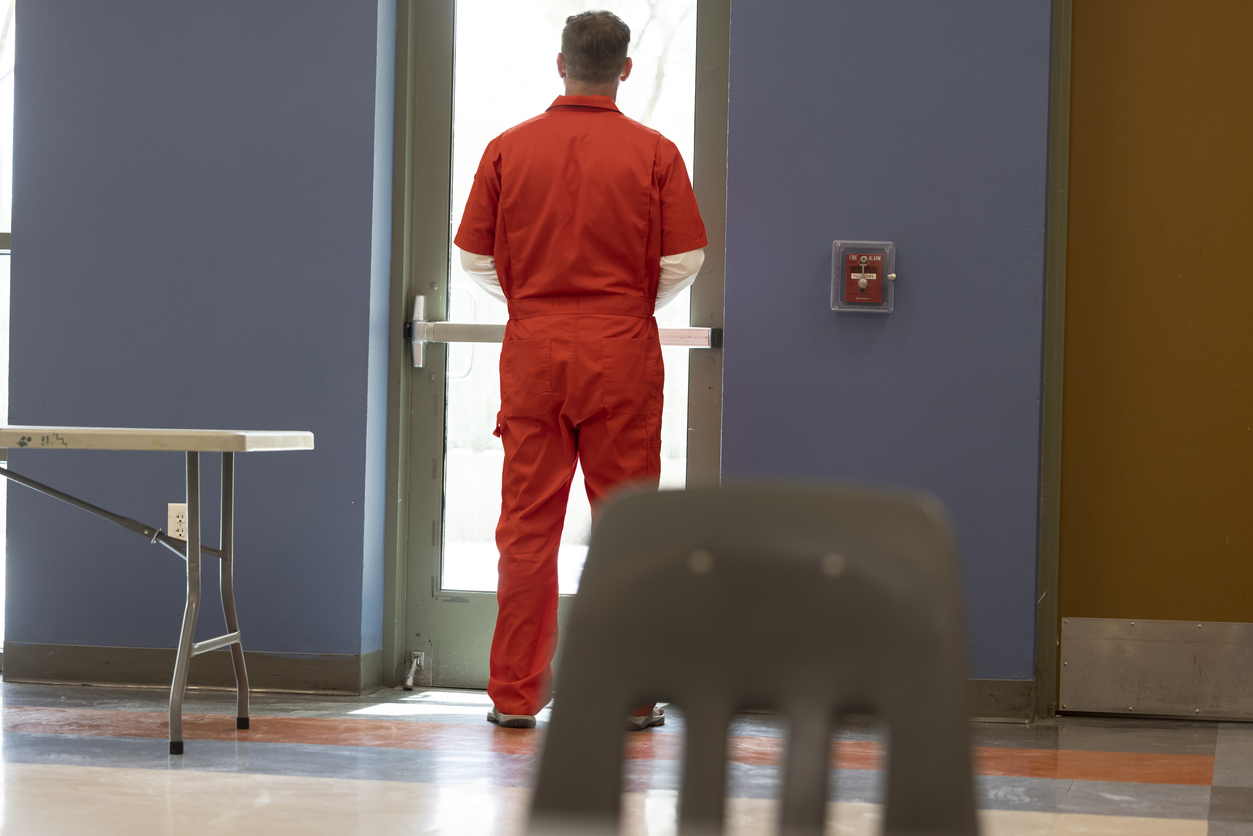
Most mornings inside New York’s Eastern Correctional Facility follow the same rhythm. Shortly after the 7:00 a.m. shift change, the gates unlock with a metallic rattle, signaling the start of the day. Officers escort people to the mess hall, a cafeteria where breakfast is served hot. But one morning in February, nothing happened. Hours passed before incarcerated people carrying trays lined with paper bags appeared, breaking the usual routine. Inside each bag was a peanut butter and jelly sandwich, a carton of milk, and little else.
The housing unit where I live—a dormitory-style room with rows of bunks, televisions, and desks where men study or play cards—felt unsettled. Normally, the space hums with noise: music from radios, arguments over sports, men bent over schoolwork or religious study. That day, there was only stillness. Some called their families, searching for answers. Others flipped through the news, hoping for clues. A few tried to act indifferent. It felt as if the institution itself had stopped breathing.
What none of us yet knew was that correctional officers across New York had staged a wildcat strike, an unauthorized walkout that lasted 22 days. The disruption that followed was immediate and severe. Recreation yards were locked. Visits were canceled. Commissary—the prison store where people purchase soap, snacks, and phone credits—was shuttered. Packages from families never arrived. Even more devastating, funeral visits were called off, medical trips to outside hospitals were suspended, and court appearances were halted. Our lives, health, and legal rights were all frozen in place. By the end of the strike, at least seven incarcerated individuals had died inside New York’s prisons. Their deaths were barely acknowledged, treated as background noise to a political dispute.
Though it’s been nearly 10 months since the strike ended, many of the state’s prisons have struggled to resume normal operations, and more than 2,700 National Guard members who were called in to help in February are still working there. Both the New York State Department of Corrections and Community Supervision (DOCCS) and the media have repeatedly cited officer shortages and overworked staff as the primary crisis behind the strike and its resulting chaos. In an attempt to mitigate this shortage, DOCCS launched an aggressive officer recruitment strategy, targeting prospective employees in urban centers and towns across the state border, offering sign-on and retention bonuses and lowering the age cap for prison guards from 21 to 18.
But simply recruiting more prison guards will not solve the problem. New York’s prison system didn’t collapse simply due to understaffing, but rather a longstanding culture of minimal accountability that has allowed officers to shirk their responsibilities. A 2023 report by the state Offices of the Inspector General demonstrated this, alleging that egregious workers’ compensation abuse among DOCCS staff led to one out of every six security staff members being “out” on workers’ compensation leave across eight facilities in a single day, creating widespread coverage gaps that needed to be filled by unscheduled colleagues. These absences contribute to the prison system’s costly overtime expenses, with the department spending $445 million on 7.4 million hours of overtime pay in 2024.
All the while, the hardest work in prisons continues to fall not on staff but on incarcerated people. We cook the meals, clean the facilities, repair plumbing, fix HVAC systems, and even rewire electrical units. According to the American Civil Liberties Union, of the 1.2 million people incarcerated in state and federal prisons, nearly 800,000 are forced prison laborers, and around 80% of those laborers are employed to keep the institutions that imprison them running—all for pennies-worth of wages. Without this labor, prisons would truly collapse.
Officers, by contrast, are tasked mainly with counts, unlocking doors, and sitting at posts. Taxpayers are told their dollars fund safety and rehabilitation when, in reality, they sustain a system that continues to pour millions into inflated staffing and overtime budgets, while unpaid incarcerated labor keeps facilities afloat without recognition or compensation.
When officers walked out in February, the consequences were devastating for so many of us inside. I am a student in the Bard Prison Initiative, finishing my bachelor’s degree. When classes were suspended, I lost nearly seven months of coursework, and the graduation I had been preparing for was canceled. On Feb. 19, just two days after the strike began, I was supposed to have my first Family Reunion Program visit, which would have allowed me to share meals and wake up alongside my loved one. This also never happened. These essential programs—from education to visitation to medical care to court access—should be protected so they cannot be suspended at the whim of a labor dispute. A system that canceled funerals, halted court hearings, left sick people untreated, and allowed incarcerated individuals to die is a system built on gross neglect, and until that neglect is faced, talk of reform will continue to remain hollow, and those of us behind bars will continue to be left paying the price.
The Right to Write (R2W) project is an editorial initiative where Prism works with incarcerated writers to share their reporting and perspectives across our verticals and coverage areas. Learn more about R2W and how to pitch here.
Editorial Team:
Rikki Li, Lead Editor
Carolyn Copeland, Top Editor
Rashmee Kumar, Copy Editor
Related