
Everyone in Poland, at some point, finds themselves making pierogies, says Krzysztof Poluchowicz, one of the two Pierogi Boys now making pierogies inside a renovated funeral home in Ridgewood, Queens, down the street from Rolo’s.
And here they are in New York, doing the same. But Krzysztof’s story — intertwined with that of his business and life partner, Andrzej Kinczyk — is an unusual one. In the mid-2000s, both were in college, and Kińczyk found himself throwing parties while running Björk’s official Polish fan club in the early days of the internet. Running Björk release parties in Poland was, as it turned out, an early experience in the artisanal food business.
“I even had a contact with the Icelandic embassy in Poland, and they supplied us with fish oil,” Kińczyk says. Now, they run a restaurant and stock their own artisanal grocery store, the Pierogi Boys Market, selling their favorite brands of mayonnaise, imported snacks, craft beer, and canned fish.

The mural at Pierogi Boys

The market is one aspect of the Pierogi Boys location in Ridgewood, 57-34 Catalpa, at Onderdonk, that is also a daytime cafe and nighttime restaurant. It’s relatively spacious, framed by windows, and an enormous mural painted by the illustrator Gosia Herba from Wrocław. Bright and stylish, it’s not like the cavernous wood-paneled Polish spots of the likes in Greenpoint of the last half-century.
Poluchowicz and Kinczyk are familiar to New York’s pierogi aficionados, who have visited them since 2017 at pop-ups and at Dekalb Market Hall. Poluchowicz calls their early takes on the food of their homeland “painfully classical.” At their downtown Brooklyn stand, the Pierogi Boys developed a following among celebrities like Jimmy Kimmel; Kińczyk even says he would spot the actor-turned-Polish citizen, Jesse Eisenberg, regularly stopping during the press run for his Poland set, A Real Pain.
With the Ridgewood restaurant, the pair has shifted to a more modern and stylish take on Polish food.


“It really does feel, for us, that we’re representing Polish food and culture to non-Polish people,” Poluchowicz tells Eater. “And what’s happening with Polish food right now, it’s just fascinating.”
The owners say the bold yet minimal menu claims inspiration from modern Polish chefs like Beata Śniechowska, whose Młoda Polska sits in Kińczyk’s hometown of Warsaw.
They’re also inspired by the pioneering Pittsburgh vegan spot Apteka.
“Not in terms of being vegan, but they just create these beautiful Polish flavors by smoking everything,” Kińczyk tells Eater.
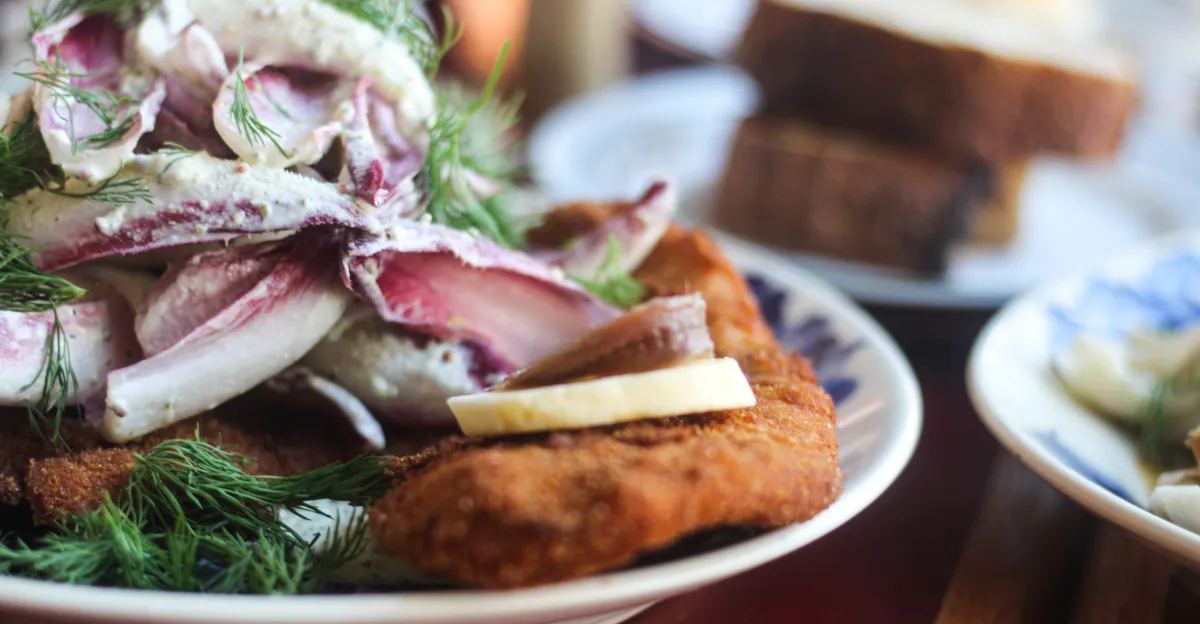
The Pierogi Boys menu includes seasonal plates like heirloom tomatoes in summer, and cold beet salads as fall turns to winter. Deviled eggs are a year-round option, bright yellow fountains crowned with trout caviar. Instead of serving it with a plate of potatoes, they’ll serve a pork schnitzel with an endive-and-anchovy salad.
“Some Polish people find this controversial, but it’s not gonna leave you in a food coma after you’ve had it,” says Poluchowicz.

Matt Oliver, who used to run the kitchen at the shuttered Fern’s in the East Village, is also there most afternoons, putting together a playful sandwich menu with items like a Polish banh mi that combines carrots and liver pate with traditional Polish ham in a creative fusion of lunch meats.
Consistently on the menu, of course, are the pierogis. Shaped like miniature puffy hats made of soft dough, they’re filled with potato and cheese, mushroom, or a blend of pork and beef.
The drinks menu includes the cocktail named szarlotka, named after a traditional Polish take on apple pie, as well as a pickle martini made with a literal pickle.
When they moved here, they had been skeptical of the kind of old-fashioned New York Polish spots. They wanted to build something more true to themselves that resonates with their upbringing in Poland.
“Sometimes we do get the question: Why do you guys not have a Polish flag?” Kińczyk chimes in. “It’s very old school, but you know it’s not necessary.”

The szarlotka