
“Something’s coming, something good.” So sings Tony in the musical West Side Story, which debuted on Broadway September 26, 1957. But something was also coming for the real-life community of San Juan Hill upon which the show was based… something not good at all.
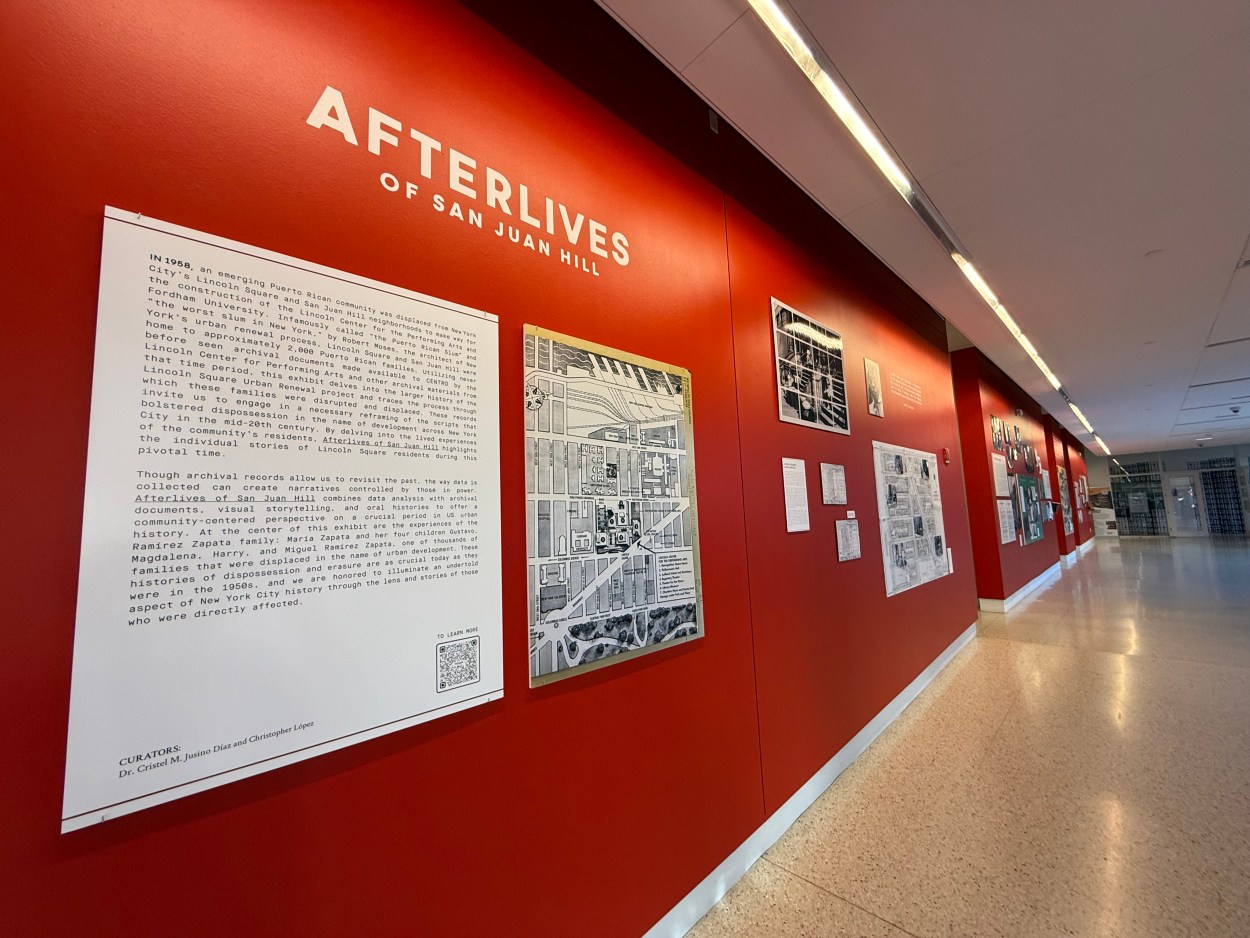 The Afterlives of San Juan Hill exhibition. Photo: Phil O’Brien
Targeted for so-called “urban renewal” by Robert Moses, this vital Puerto Rican community was forced to relocate, their neighborhood razed to make way for the Lincoln Center of the Arts. “In Lincoln Square, a Puerto Rican neighborhood is dying,” lamented El Diario New York on December 14, 1958.
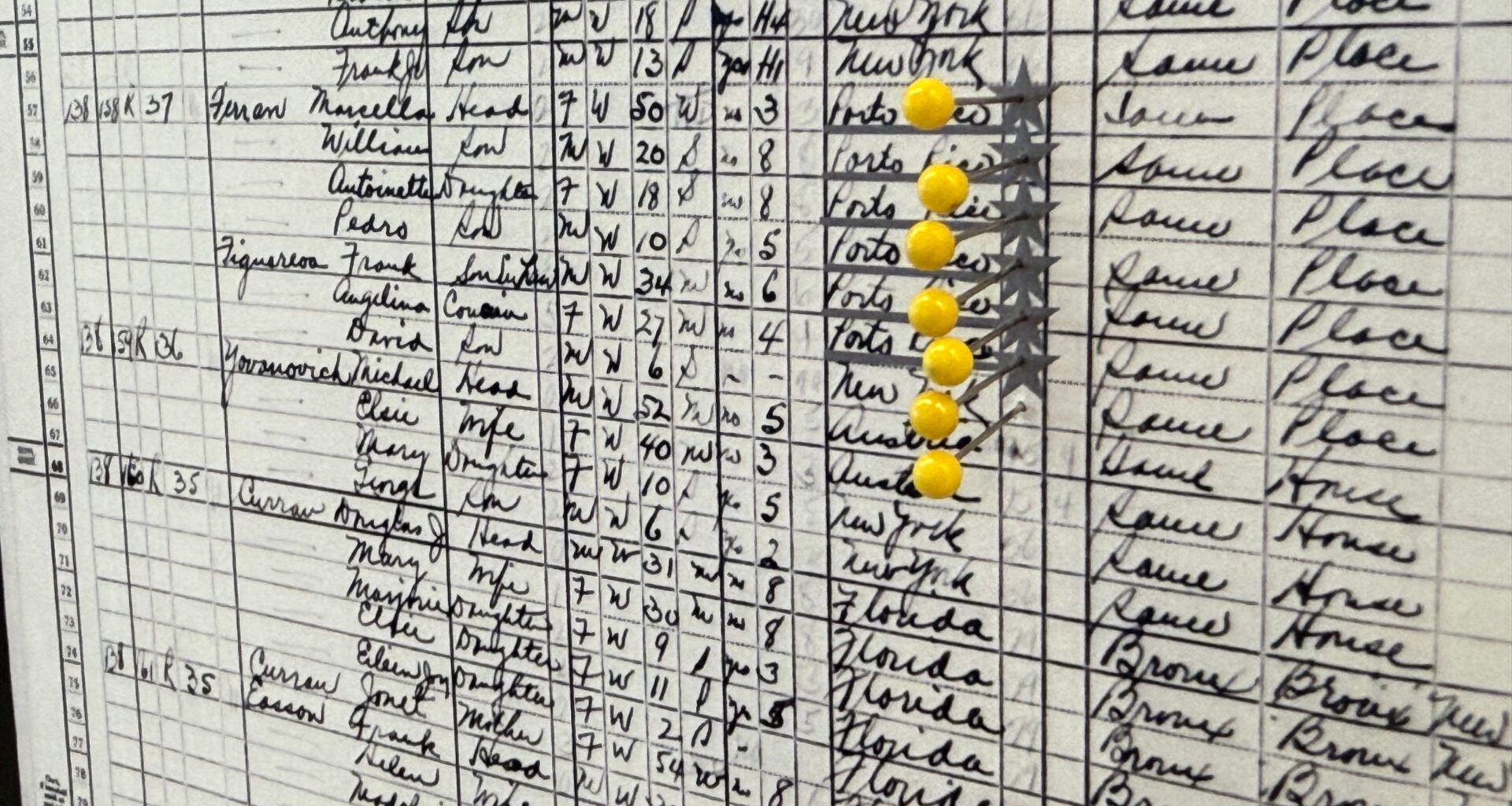
In 2021, in conjunction with the opening of Steven Spielberg’s new adaptation of West Side Story, Lincoln Center released 2,130 site occupation records compiled by Braislin, Porter and Wheelock (BPW), the firm responsible for the relocation of thousands of families in the neighborhood between 60th and 70th Streets from Columbus Avenue to West End Avenue. The Data Lab at Hunter College’s Center for Puerto Rican Studies (CENTRO) has been going through those records, trying to learn as much as they can about the residents and their displacement.
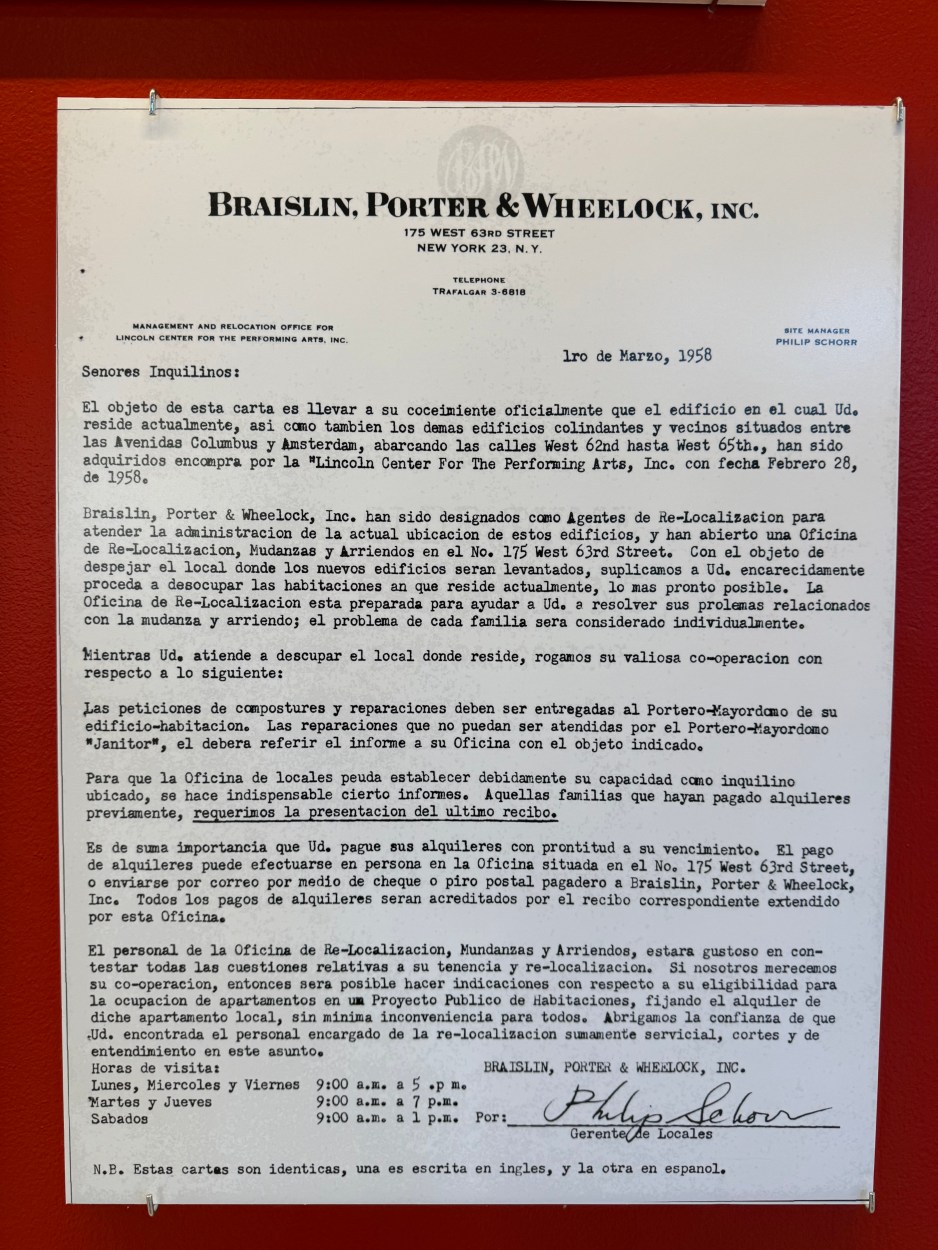
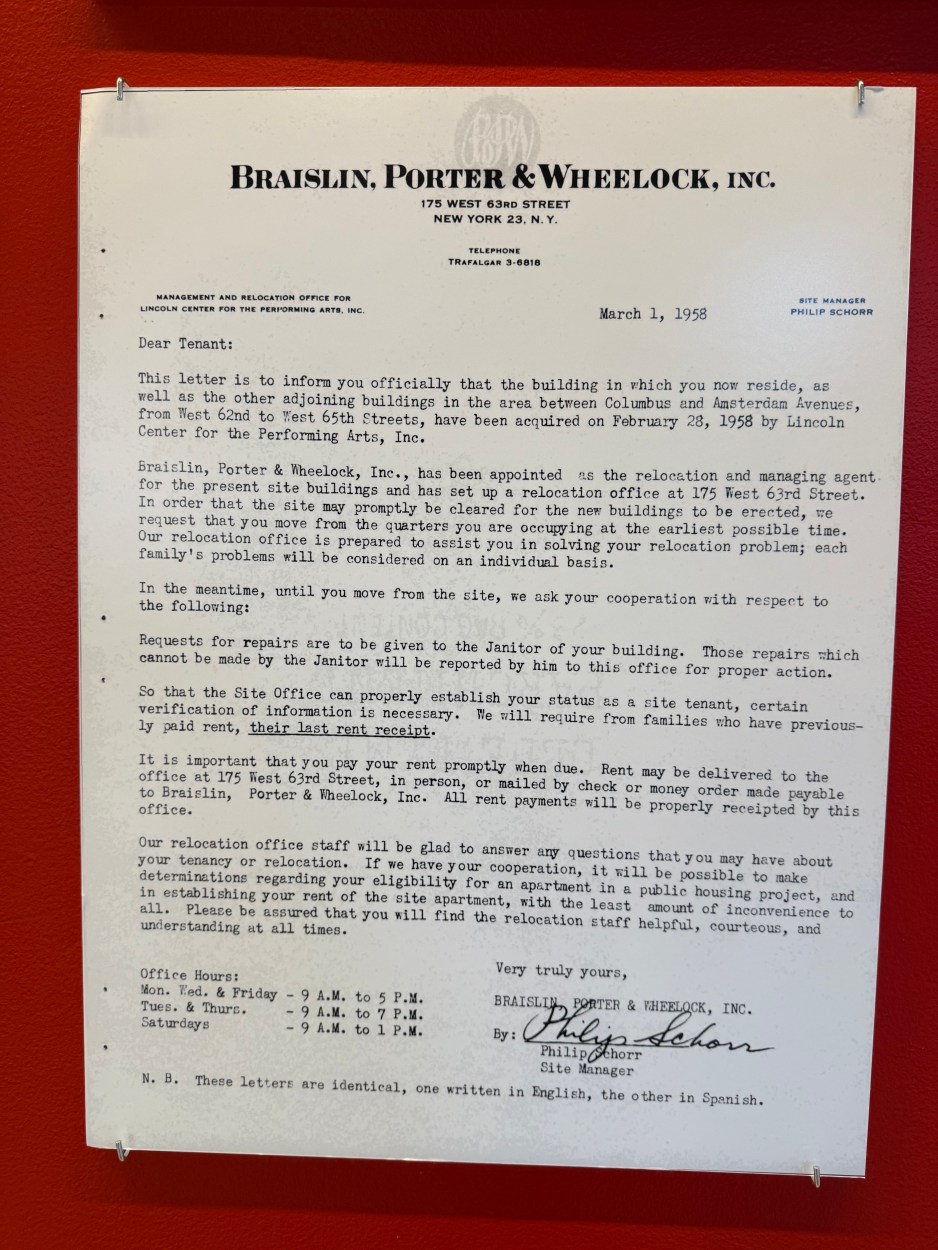
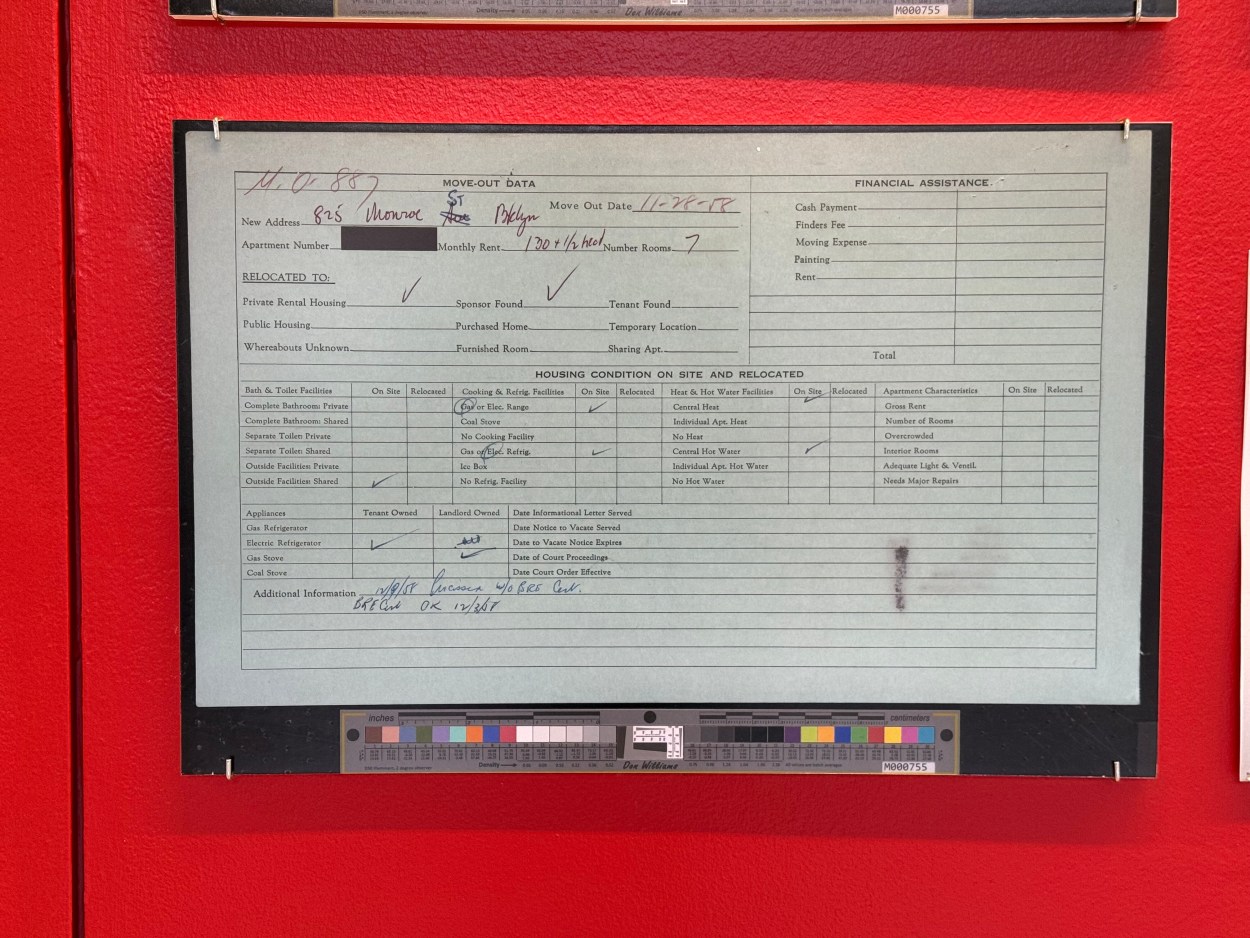
Lincoln Center released 2,130 site occupation records done by Braislin, Porter and Wheelock, the firm responsible for the relocation of thousands of families. Photos: Phil O’Brien
This week, Lab team Jorge Soldevila Irizarry, Dr Laura Colón Meléndez, Dr Cristel M Jusino Díaz, and Damayra Figueroa Lazú shared their initial findings. Foremost amongst them is evidence that the displacement of what was a booming Puerto Rican community was part of a larger cycle of race-based dislocation that continues to this day.
Between 1880 and 1910, the San Juan Hill area had the largest population of Black people in New York City. But development and discrimination together drove those families out. Poor white New Yorkers took their place, along with a growing population of Puerto Ricans. Between 1920 and 1940, the Puerto Rican population in New York City rose 900%. Between 1940 and 1950 it tripled.
When New York City officials took control of the buildings meant to be demolished to build Lincoln Center and a new Fordham University campus, they argued that it was for the “public good.” San Juan Hill, said Moses, “was “the worst slum in New York.” BPW was hired to help residents find housing of similar quality to what they were losing — a promise at odds with the negative characterizations of their homes.
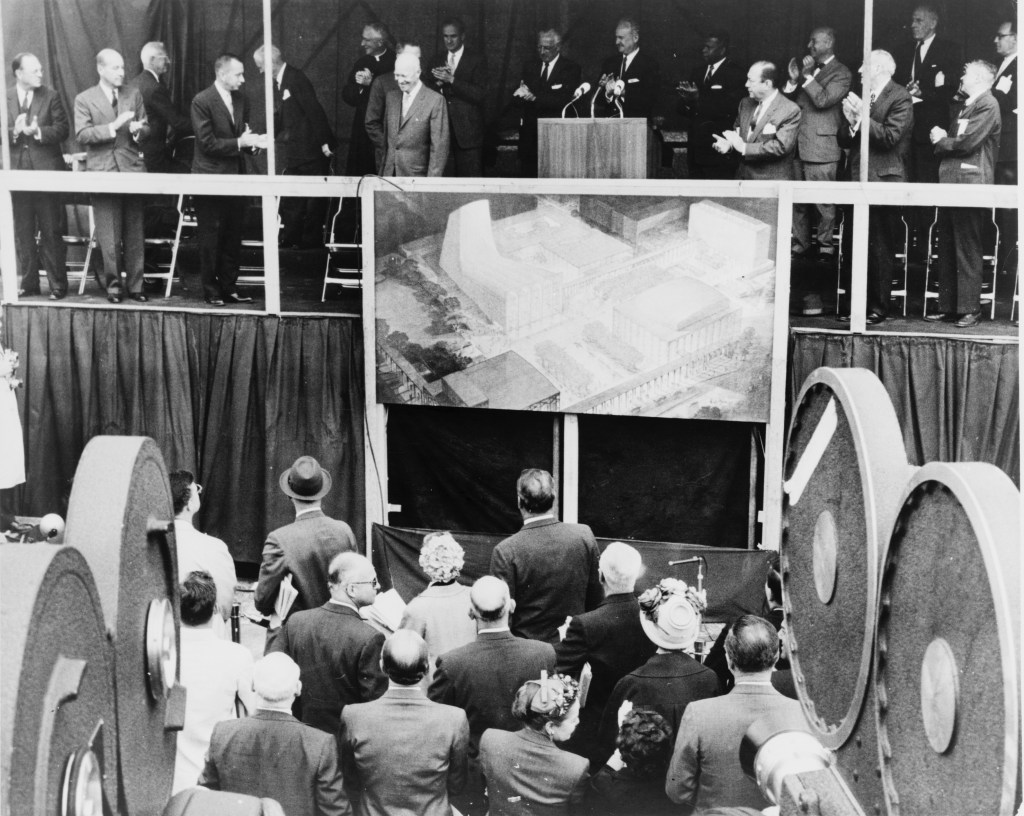 General view of ceremonies at Lincoln Square when President Eisenhower — with plans for the new Lincoln Center in front of the podium. Photo: Ed Ford/World Telegram & Sun/Library of Congress
But many ended up in public housing that was not only worse, but had been decreed as dangerous and unsuitable for living. These were the infamous redlined Black and low-income neighborhoods, where banks refused to provide mortgage insurance and home-ownership loans.
“The spaces where they were relocated to are not random,” explained researcher Soldevila. “Puerto Ricans were [gathered] into spaces where they could be contained, forgotten and excluded.”
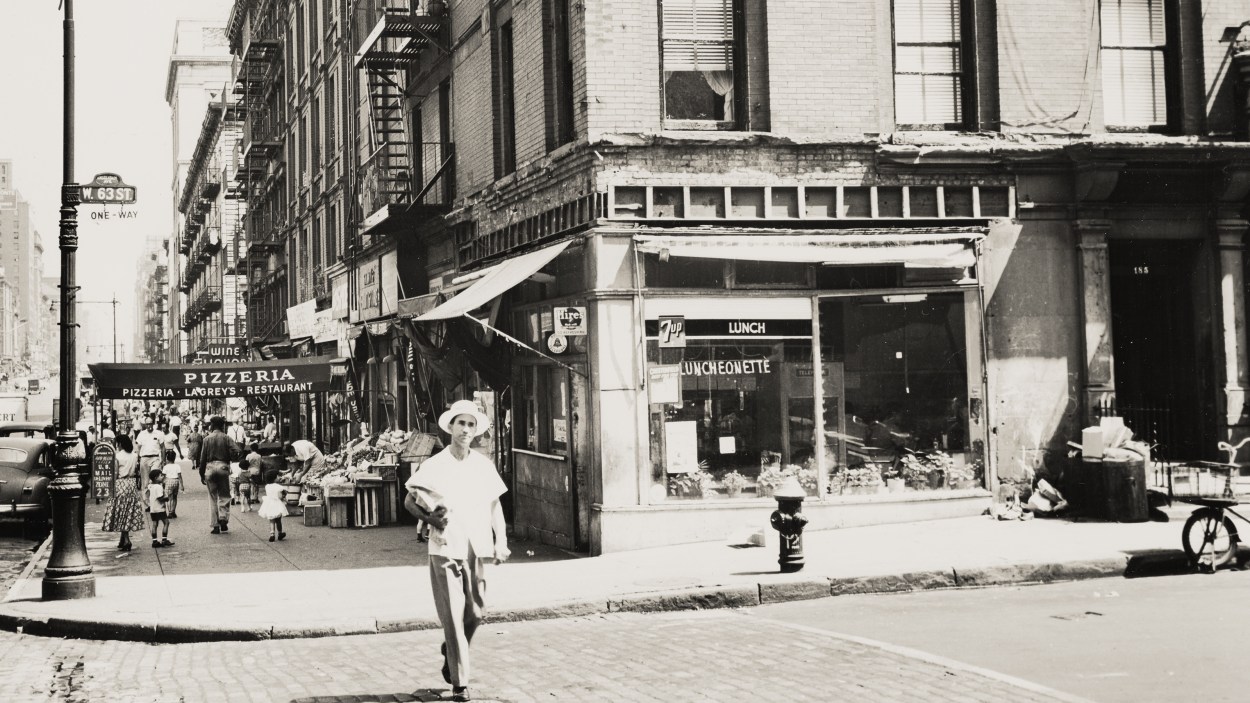 The corner of Amsterdam and W63rd Street in 1956 before the demolition. Photo: NYC Parks Photo Archive
Eventually their new homes were also claimed for urban renewal out of an interest in the public good. And so it continues for Puerto Ricans, Blacks and others: Soldevila notes the current plans to build a subway through East Harlem. “Supposedly this will make things easier for locals. But first buildings need to be bought so construction can happen, which displaces people.” Based on other areas that have gotten subway extensions, East Harlem residents can count on new developments and their rents increasing, leading to even more displacement.
While digging into the records, CENTRO researchers uncovered BPW’s almost total lack of interest in the residents’ futures. Meléndez explained that each survey was meant to include everything from current rent, employment and family size, to their destination and its comparability to their current location.Over half of those dislocated were children, and any home that included one Puerto Rican member was considered a Puerto Rican home, including boarding houses.
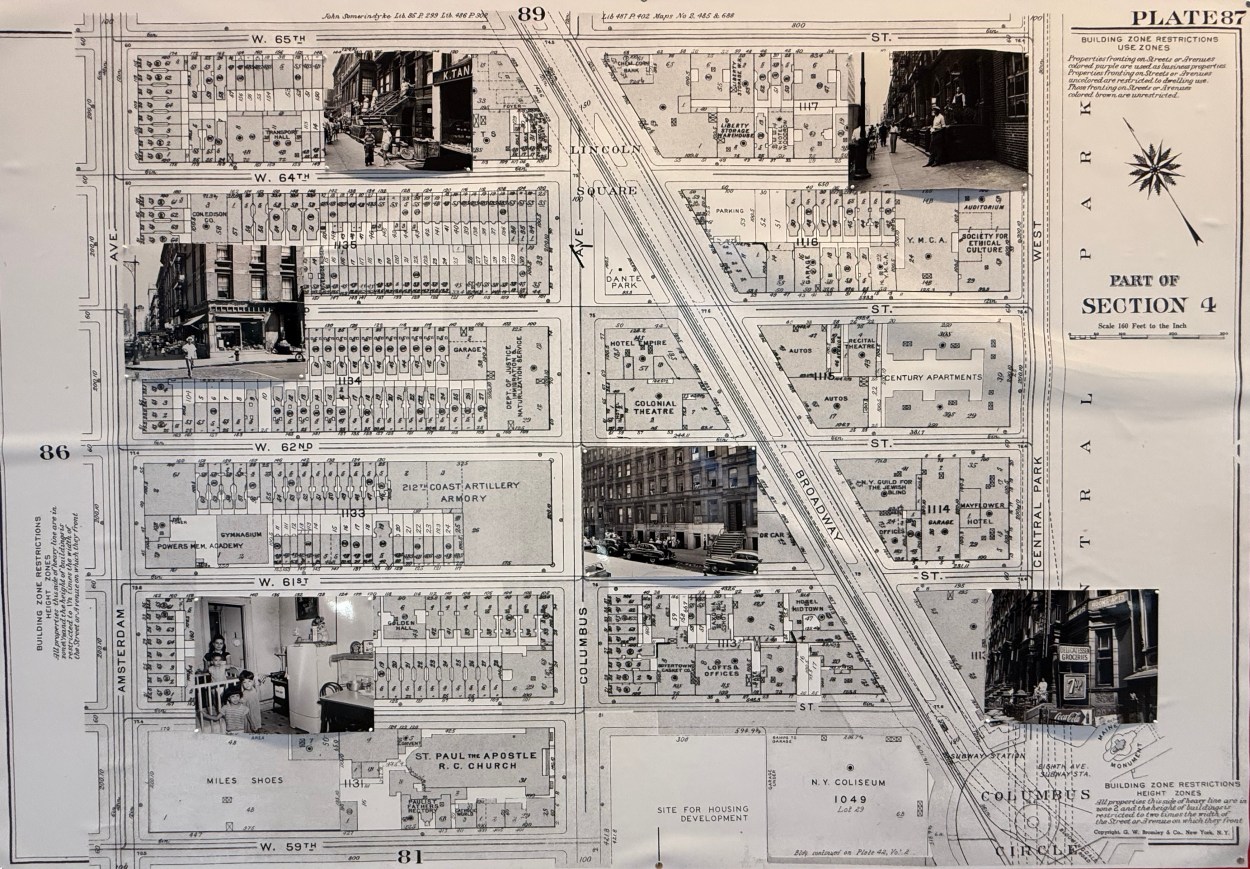 Researchers show the map of the area before San Juan Hill was demolished to create the Lincoln Center.
But few of the cards give information about the conditions people were living in, other than occasionally about their appliances, which in some cases were now owned by BPW. “It was almost as if the suitability of housing for these individuals was an afterthought,” said Meléndez,
CENTRO’s work on San Juan Hill features in the exhibit Afterlives of San Juan Hill at the Silberman School of Social Work in East Harlem, where the CENTRO is based. Pressed upon a city map of the area to be razed, black and white photos of the shops, apartment buildings and people on those streets put a human face on a neighborhood being slated for destruction.
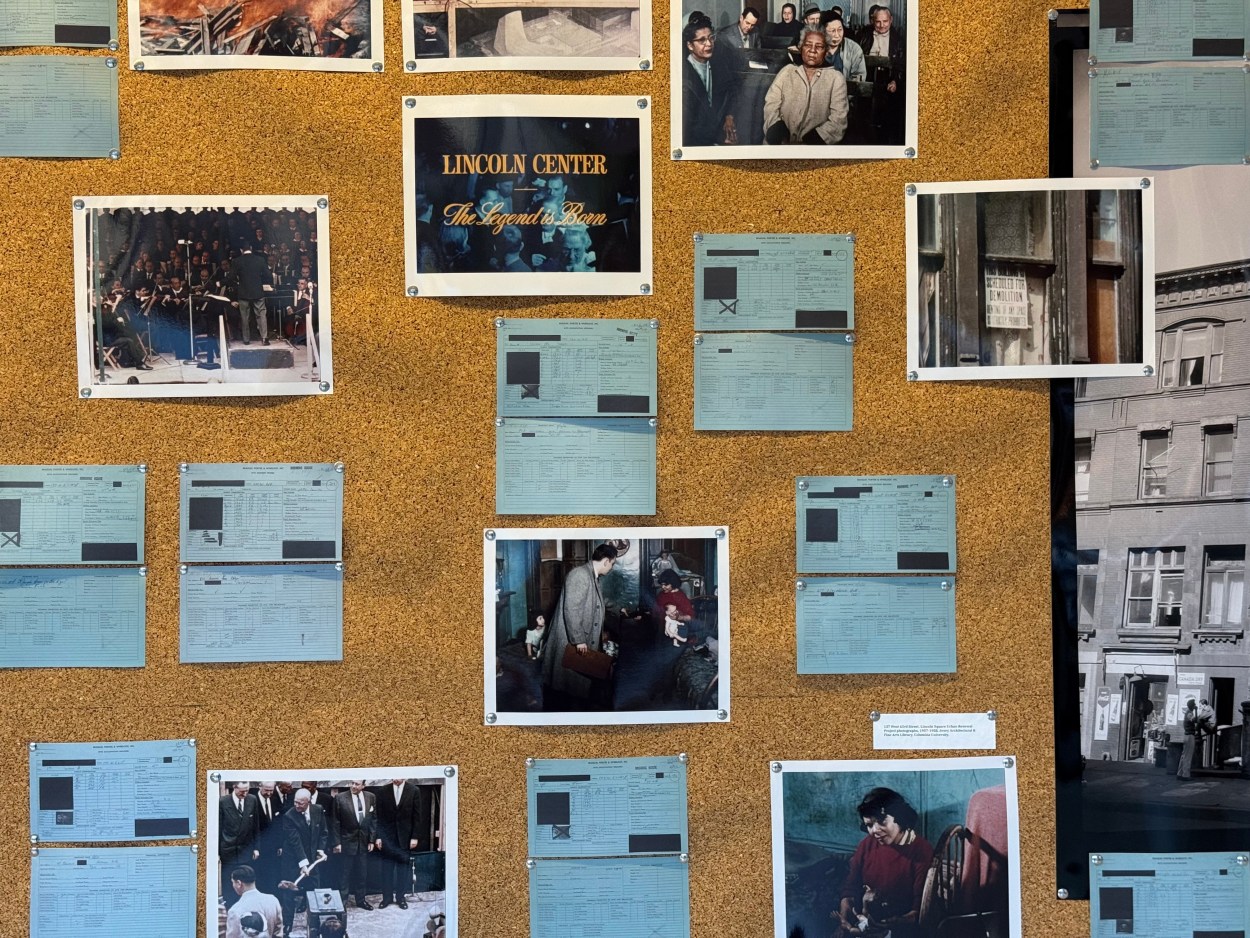 Photographs of the crowds at the groundbreaking listening to speeches are juxtaposed with the sky blue site cards. Photo: Phil O’Brien
Photographs of crowds at the groundbreaking listening to speeches, the New York Philharmonic and opera singer Leontyne Price are juxtaposed with sky blue site cards for the displaced families. “This is the first chapter of a great cultural adventure. Rising out of a New York slum, comes a world center of the arts,” trumpets a quote above the display, drawn from a 1959 marketing film for the new Lincoln Center for the Arts.
The exhibit also includes pages from the script of a short original musical performed during BPW company’s 1958 Christmas party. As thousands of families in the San Juan Hill community mourned, employees ridiculed them as foolish and picky. One “resident” sings “I’m not hard to please” before listing the problems with every possible relocation site. Another takes a taxi to his new home and immediately returns, complaining, “The cops have got it surrounded, and besides, I don’t like the name — Gracie Mansion.”
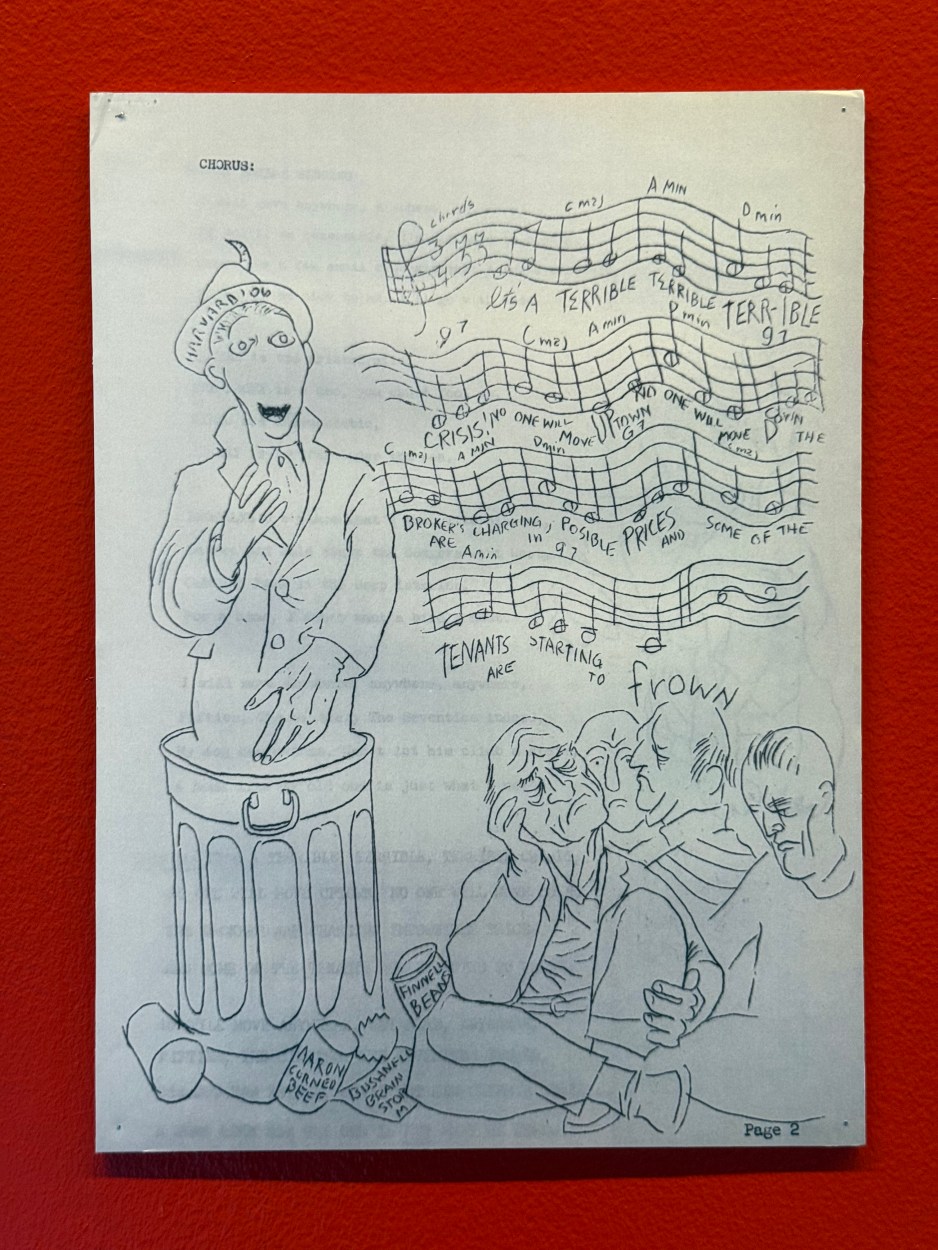
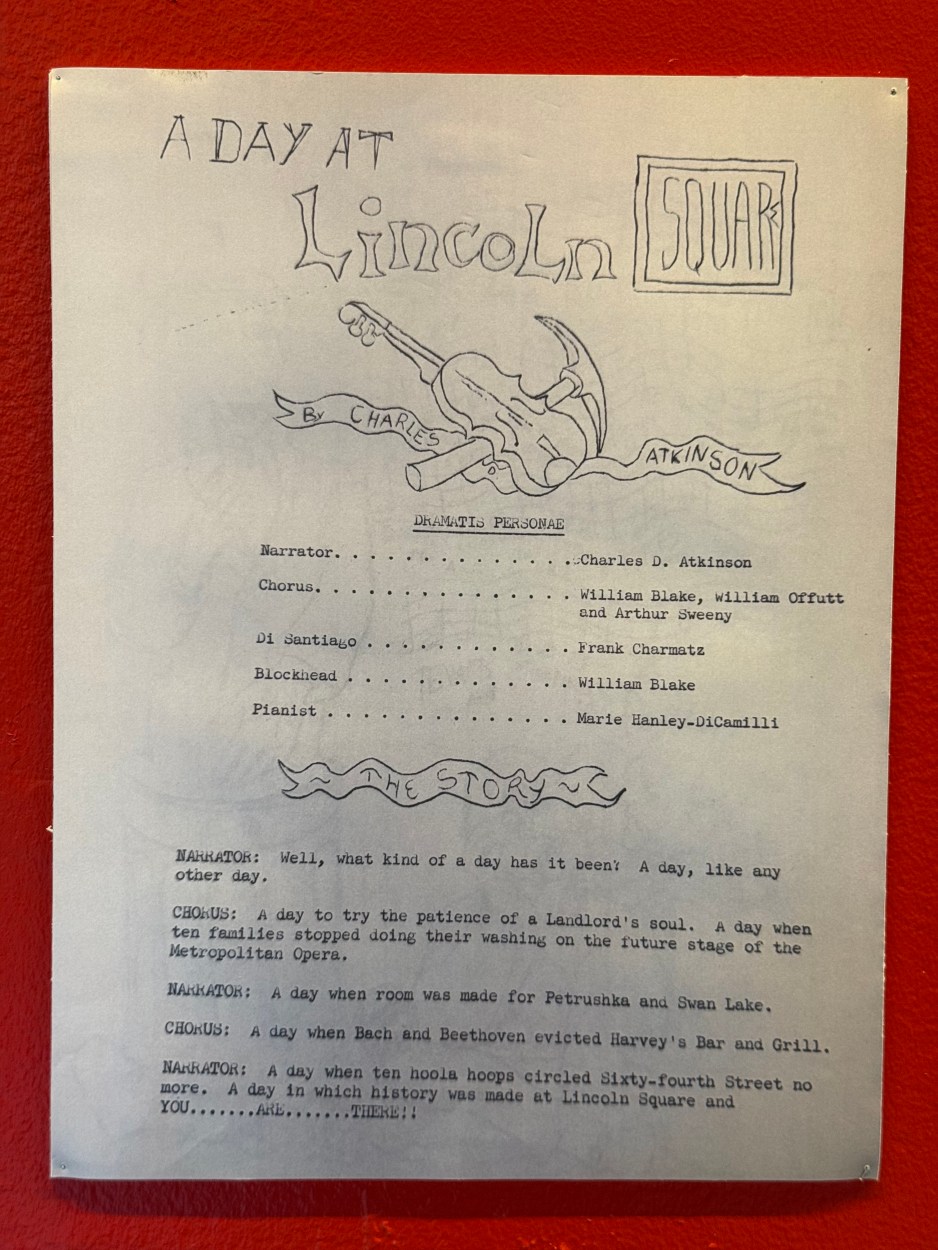
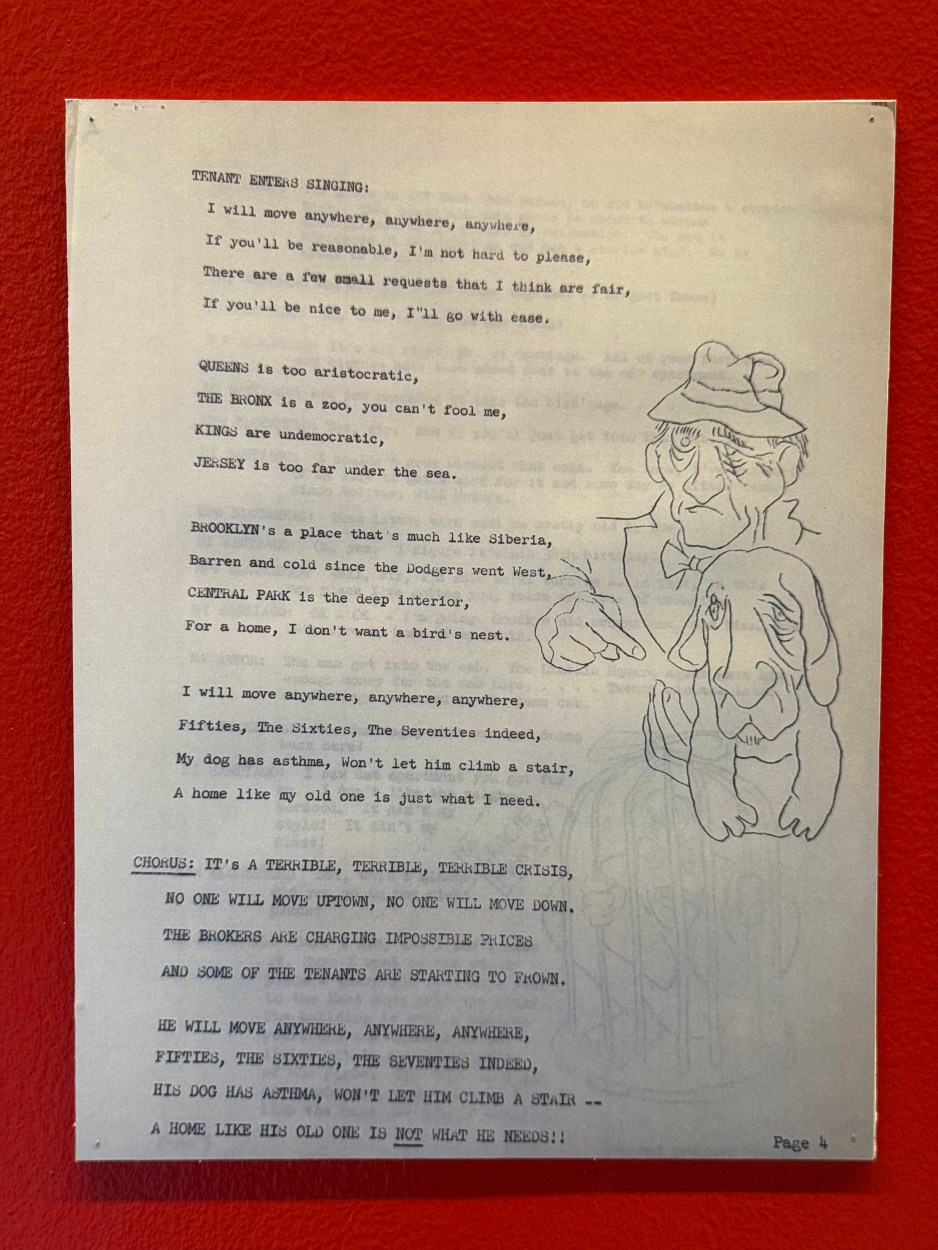
The script of a short original musical performed during BPW company’s 1958 Christmas party. Photos: Phil O’Brien
The final part of the exhibit is dedicated to the experiences of one displaced Puerto Rican family, the Ramírez Zapatas. Amid black and white photos of mother Maria and the oral recollections of her children sits a small wooden shelf containing a number of small framed photos of the children’s baby pictures, as though taken right from their San Juan Hill home. Large color photos also capture the children as they are now, 65 years later, sitting beside the fountain at Lincoln Center and clutching tokens from the world they lost.
In its 1959 promotional film, Lincoln Center said it would be “available not only for the city, but for all in the land,” echoing the city’s insistence on thinking about “the public good.” But the records tell a different story, says Meléndez. The residents of San Juan Hill “were not part of the ‘public’ that was [being] imagined.”
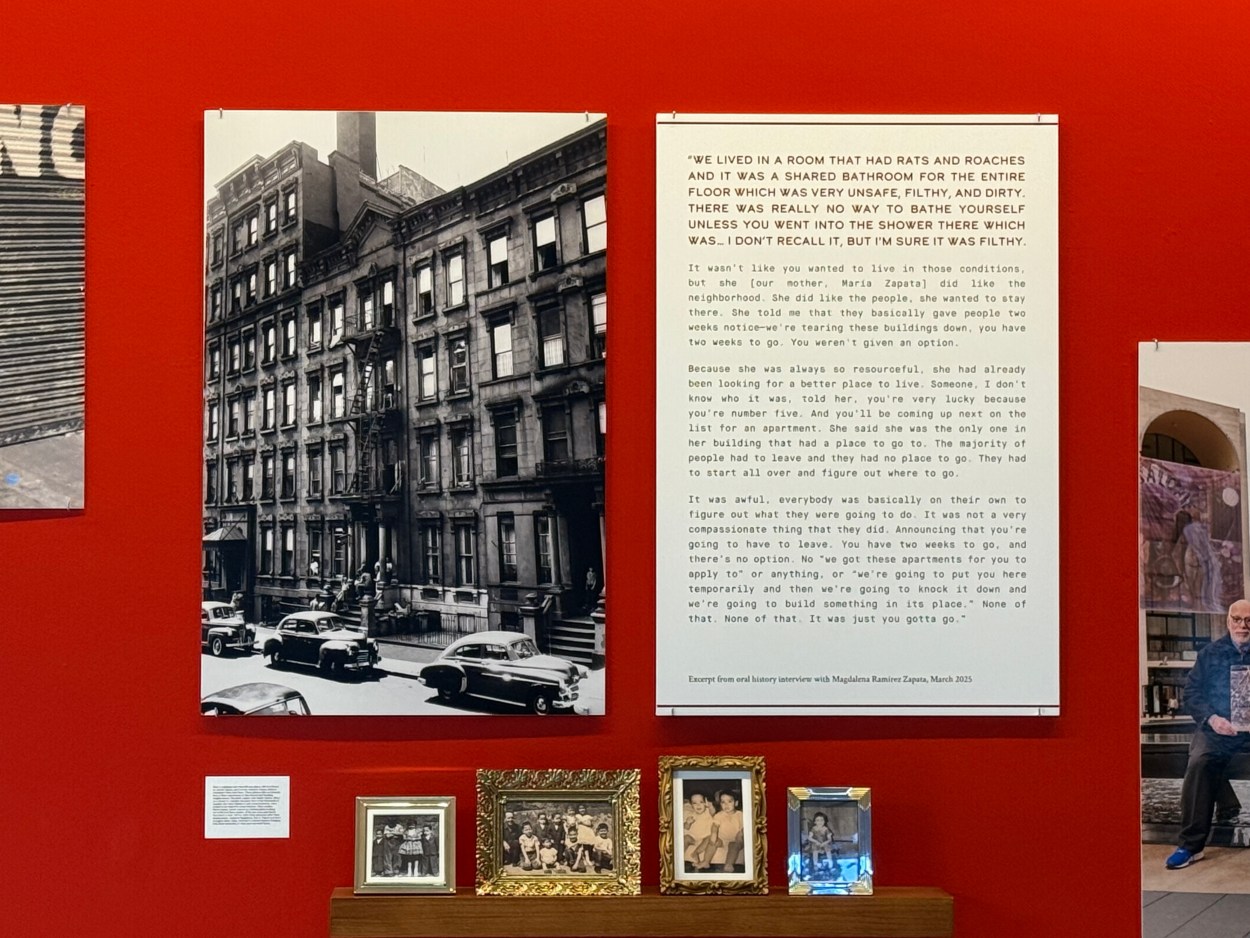 Part of the display shares the experience of one displaced Puerto Rican family, the Ramírez Zapatas. Photo: Phil O’Brien
Afterlives of San Juan Hill runs through October 15 at the Silberman School of Social Work at 2180 3rd Avenue.