
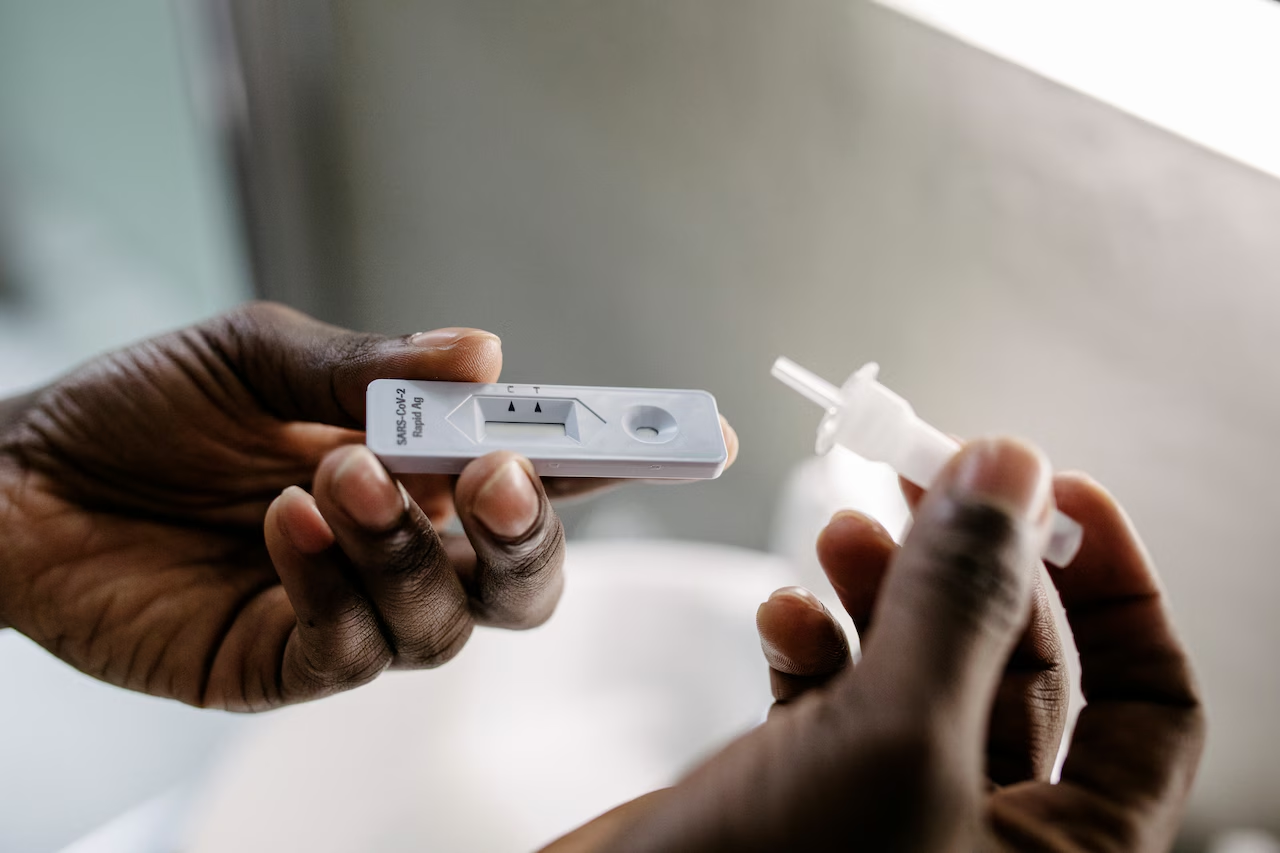
STATEN ISLAND, N.Y. — With the terrifying coronavirus (COVID-19) pandemic of 2020 behind us and the world now returned to normal, many people have moved away from vaccination or even testing for the virus if they have symptoms.
Symptoms of COVID-19 include fever, chills, fatigue, cough, runny nose, and headache. They mimic the flu or the common cold, but a causal attitude about testing can be costly for people around us, according to the Centers for Disease Control and Prevention.
The agency said it continues to push for testing, either at home or by a medical professional, for anyone experiencing COVID-like symptoms.
The reason is simple. If you pass it on to a vulnerable person, like a baby, a senior citizen or a person with reduced immunity, it could lead that person to serious respiratory distress, hospitalization, or even death.
“COVID-19 is still circulating, and testing can be a tool to help maintain individual and community health,’’ said Dr. Tucker Woods, associate chair of emergency medicine at Northwell Staten Island University Hospital. “COVID-19 testing remains helpful and recommended. Knowing your status empowers you to protect others and yourself.”
The CDC estimated there were 13.8 million to 20.3 million COVID-19 cases in the United States from October 2024 through September 2025, with up to 540,000 leading to hospitalization, and there were up to 63 million COVID-related deaths.
Which is why the CDC still recommends testing if you have symptoms, after exposure of if you plan to visit large groups or vulnerable populations, as infection cycles of COVID-19 are ongoing.
“It will help to prevent spreading,’’ Woods said. ”If you test positive, you can take personal measures to prevent you from unknowingly passing a contagious illness to family, friends, and especially vulnerable individuals in our community.”
COVID-19 test kits are readily available at most pharmacies, on Amazon.com and at big chain stores such as Target and Walmart. They quickly confirm whether you currently have the virus, so you can take steps to protect others, the CDC stated.
If you have older tests lying around the house, the Food and Drug Administration can help you know if they are still usable and accurate.
The agency also maintains a table, which is updated regularly and lists FDA-authorized at-home OTC COVID-19 diagnostic tests, who can use the test, links to home use instructions for each test, and other details that may help you decide what test is right for you.
Testing positive
If you’re positive, you can start anti-viral treatments, said Woods.
“An early diagnosis allows for timely access to effective treatment, which can significantly reduce the risk of severe illness and hospitalization, particularly for those at higher risk of developing severe disease‚’’ Woods said.
A positive result gives you the knowledge you need to then isolate and notify close contacts to limit transmission. Testing before gatherings, travel, or ending isolation helps keep vulnerable people safe.
According to the CDC, testing is advised if you have symptoms, even mild ones, including cough, runny nose, sore throat, headache or body aches.
You should also test if you were exposed to someone with COVID-19. But wait to test at least five days after exposure, the FDA advised.
People should also test before travel, when work or school requests it, or before attending large gatherings.
“It helps you make informed choices about your health, work, school, and social interactions, ensuring you manage your illness appropriately,’’ Woods said.
If you test positive, you are advised by the CDC to isolate until you have not had a fever for at least 24 hours and your symptoms are getting better.
Also, when you go back to your normal activities, take added precautions over the next five days, such as taking steps for cleaner air, practicing good hygiene, wearing a well-fitted mask, physical distancing, or testing.
Types of testing
Viral tests detect a current infection with SARS-CoV-2, the virus that causes COVID-19, by testing specimens from your nose or mouth.
There are two types of tests: Antigen and Nucleic Acid Amplification Tests.
Antigen tests
Antigen tests are rapid tests that usually produce results in 15 to 30 minutes. Positive results are accurate and reliable, according to the CDC, though they are less likely than NAAT tests to detect the virus, especially when symptoms are not present.
To be confident you do not have COVID-19, the FDA recommended two negative antigen tests for individuals with symptoms, or three negative antigen tests for those without symptoms, performed 48 hours apart. A single NAAT test can be used to confirm an antigen test result, according to the FDA.
NAAT tests
NAAT tests, including PCR tests, are more likely to detect the virus, and are considered the “gold standard” for COVID-19 tests. Samples are usually taken in a health-care setting and sent to a lab for testing, though some results are available more quickly.
If symptoms worsen or continue after taking an antigen test, the CDC recommended seeing a doctor for a NAAT test.
Test safety in cold temperatures
Since shipping conditions may vary, test developers perform stability testing to ensure that the test performance will remain stable when tests are stored at various temperatures, according to the FDA.
However, test performance may be impacted if the test is used while it is still cold or very hot. Therefore, you should bring the package inside your home and leave it unopened at room temperature for at least two hours before opening it and using it, the FDA advised.