
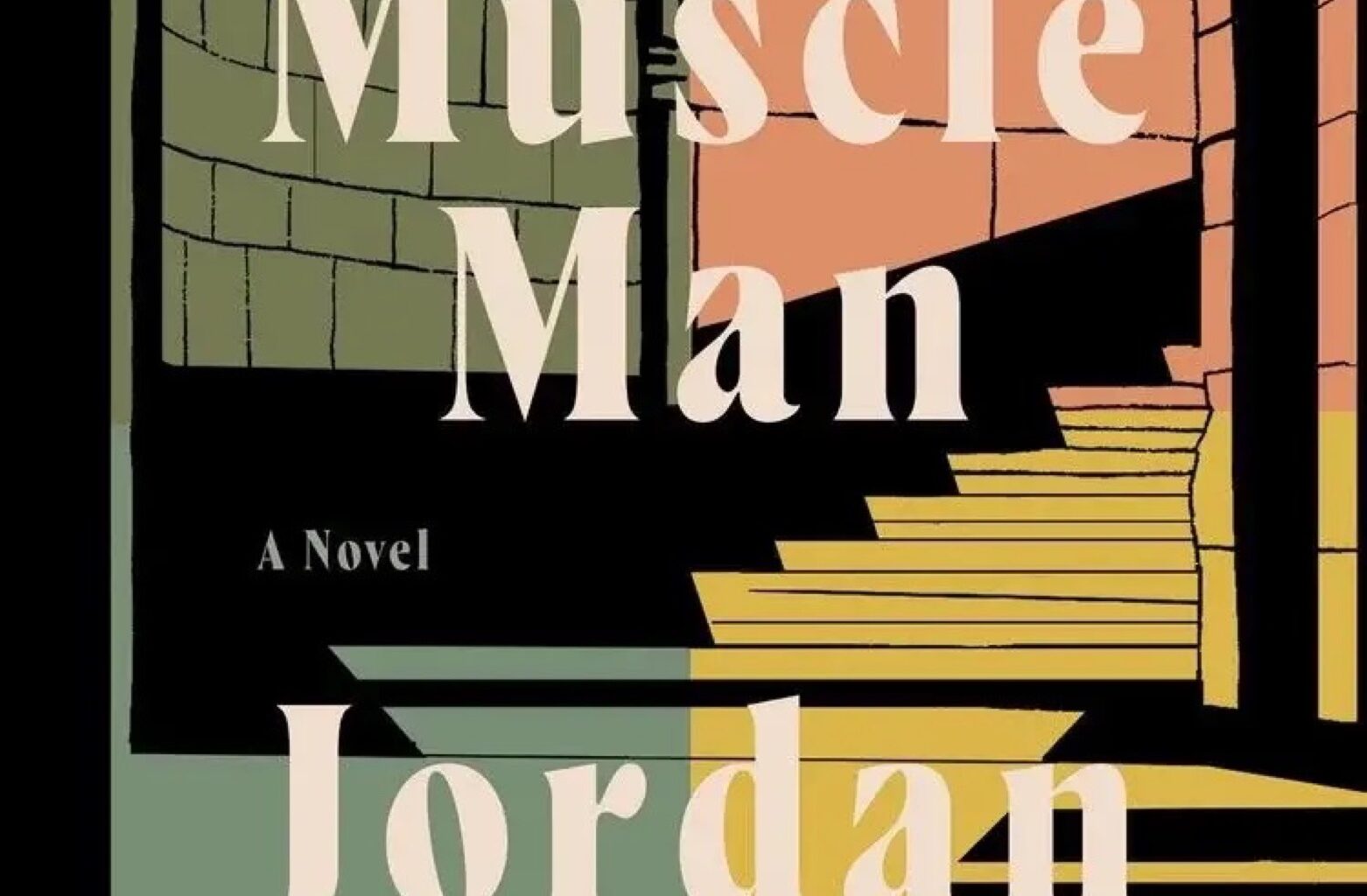
Rail: You’re saying there’s more nuance to it than people on either side are willing to admit and meaningfully discuss?
Castro: I’m so sick of the discourse.
Rail: In the frameworks that people talk about these things?
Castro: I feel like giving my thoughts could potentially ruin some of the subtleties or the more dynamic and interesting parts of the novel.
Rail: Totally. That’s what made it hard for me to come down on the politics of the book, not that that’s necessarily the most important part of reading a novel, but thinking about them was one of the most interesting parts of reading this novel.
There’s a few really good meta jokes in here. One of them is when David, a colleague of Harold’s who appears in Harold’s office while Harold is reading an anthology of underground writers, and who later describes this story of a man who longs to dig a hole so big that he can live underneath the ground—though he occasionally still feels he is both above and below everyone. Another phrase I loved comes from one of Harold’s imagined debates and that’s “earnest satire”—which by the end of the book was ringing in my mind for reasons I couldn’t quite pinpoint.
All this to say: there’s a lot going on here, and these moments complicated my reading of the book.
Castro: I hadn’t read the novel in a long time after finishing it, and I reread it the other day. In some ways, I feel like that passage where David is telling the story about the man who digs a hole is the key to the whole novel.
Because, on the one hand, it deals with all these political themes, but it really is more of an existential novel. I’m sort of a political atheist. That’s not really where I put my faith or my hope.
Novels are often “earnest satires”—Mikhail Bakhtin saw satire as the precursor to the novel, in its mix of lofty and low styles, ironic relationship with other genres, etc. The first novel, Don Quixote, is a kind of satire on the heroic. And—this is one aspect of the novel that others missed, and you seem to get—there is a self-undermining quality to Muscle Man, too.
Rail: I think I had a mostly unconscious ban for many years on any media or commentary that I saw as right-wing or conservative-leaning, essentially because I have mostly fairly left-wing politics. That being said, this past year or so I’ve found myself paying attention to more right-wing and conservative media, mostly as a way to get a better understanding on what’s happening in America, and how and why things have shifted so dramatically, particularly in these past few months. Some of the the things I hear come up again in that media landscape, beyond the obvious things like “woke,” are things like “left-wing conformism,” decrying leftists as zombies, decrying what they describe as a spiritual malaise in American society, which they like to link to the idea that there’s a lack of “vitality.” I think there’s a tendency to blame all of this on progressives and as a direct result of “woke” policies as opposed to, say, the much more plausible answer that billionaires and corporations have ruptured and hollowed out American society. These are ideas that I think might float around Harold’s mind a little, and I’m wondering how you think about all of this.
Castro: I went to a thing with Francis Fukuyama a couple months ago, and he gave this really short talk about an essay that Leo Strauss wrote in 1941, called “German Nihilism,” which is sort of about how when liberalism flattens things, it removes something for people to struggle toward. There’s a certain kind of person who will always want to struggle upwards. Liberalism can maybe satisfy your material needs, but there’s a certain kind of spiritual need for self-actualization and struggle, and paradoxically that satisfaction in the material realm eliminates this need for struggle in the spiritual realm. Fukuyama kept saying, we need to take this critique very seriously, because it’s happening again.
You have these people, like you were saying, talking about vitalism and rejecting all of this peace and prosperity, relatively speaking, in historical terms. We have access to medicine and so on, but the thing is people don’t care about that. I mean, they care about it, but it’s like, we are the most ungrateful…. I don’t know, do other species experience ingratitude? It always blows my mind… I sometimes think a human being can be defined as: he who is ungrateful.
So, we have all this peace and prosperity, but at the same time there’s been a flattening of values. This is a problem that I legitimately struggle with: if liberalism says that all desires are equal, that what you want is as good as what I want, it’s all just preference and so on. It eliminates a certain kind of value order that enables legitimately meaningful action. This flattening of values is totally intolerable to people’s spirits. It’s also incoherent. But to your point, it’s not purely left wing—the market is a leveller too.
The last thing I’ll say is that I’m a Christian, so, as a result, I think it’s way too easy to point at different political groups and say everything is their fault, and I’m not like them. I think that’s wrong. I think I have just as much capacity for evil in me as everyone else.