
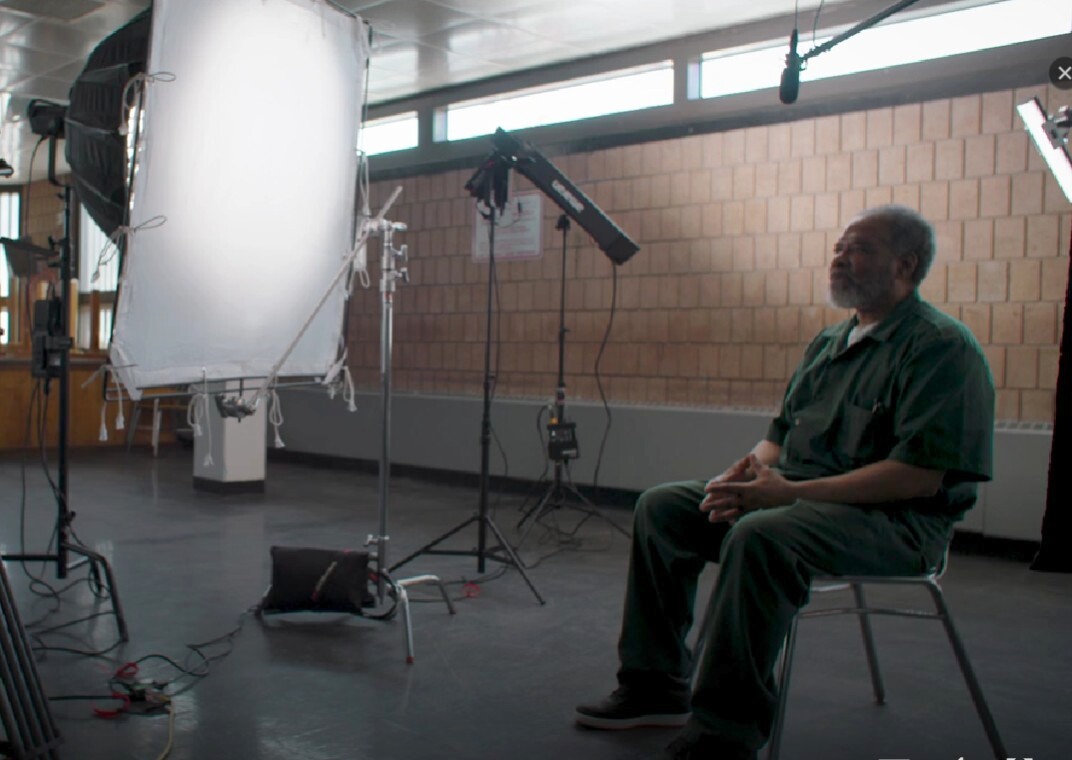
There are just a few ways that incarcerated people can get out of prison early. One is through parole, which is a complicated and challenging process. The other is through clemency, a power held solely by the governor, and is seen as a last resort.
The New York Times recently published an Opinion video highlighting the work of Matt Nadel, a documentary filmmaker and co-founder of the Advocacy Video Project, which produces films for incarcerated people to help make their clemency cases. Nadel spoke with Emily Russell about his work and why clemency is so difficult to achieve.
Emily RussellA filmmaker is helping incarcerated New Yorkers get clemency

MATT NADEL: Clemency has become much more difficult to achieve in recent decades. I did quite a bit of research in the state archives in New York to find evidence of this decline that had been rumored, but there had been limited empirical observation around it. There’s a precipitous decline of clemency partway through the 1980s, continuing into the 90s, and we’ve seen it really go from triple digits per year to single digits per year. I mean, governors were giving hundreds of grants of clemency per year in a system that had exponentially fewer people in it in the first place.
So, the rate of clemency relative to the prison population has dropped even more precipitously. And I think the clearest explanation for that is the tough-on-crime era that was ushered in in the 1980s and 90s. I think there is a real political fear here where there have been a couple of high-profile cases of people who got out of prison and re-offended and did really horrible things. There’s no part of me that wants to sweep those stories under the rug. But I don’t think that that needs to become the justification for shutting down an entire apparatus of mercy.

EMILY RUSSELL: How much do you know about how the clemency process actually works? Like, when you make a video for someone, where is it going? Who is actually watching it?
NADEL: The process is a bit of a black box. There are a few people who know all the details, but the governor has a clemency board that’s responsible for making recommendations to her about who should get clemency and it’s ultimately the governor’s responsibility to sign off on any grants of clemency that she wishes to give.
So the first stop for our videos is the clemency board. They’re the gatekeepers, the sort of bottleneck, and these are folks who spend all day reading files, and I can only imagine that it becomes hard to keep reading about the same situations of violence and trauma and remorse and not become desensitized to it in some way.
So the videos are an attempt to break through that and sort of shake a clemency board member and say, “Remember, this is a person’s life you have in your hands.”

RUSSELL: So you’ve made about three dozen of these films for incarcerated people. Two of them have been granted clemency. One of them is Skye Williamson. What was it like to get a call from his lawyer saying that he was being released?
NADEL: That was a pretty surreal moment, partially because that was the first video I had ever made. It was my first clemency video and I had done it essentially as a favor to Skye’s lawyer, who I knew from a previous project. I had no idea, at that point, that I was about to fall into a real life purpose. It was a surreal moment to understand that storytelling was not just something that could change cultural perceptions, but it was something that could literally help break somebody out of prison. And the thing standing between Skye and his freedom was actually just that people did not understand clearly enough what had been done to him as a child and who he had become. I feel incredibly grateful to have been part of the process of telling that story.
RUSSELL: You’ve been in prisons all around New York State for this work. You’ve talked to dozens of incarcerated people and friends and family. You’ve encountered prison staff. How has this experience changed your perspective about the incarceration system as a whole in New York State?
NADEL: Well, I think the system is not always set up for success. We have a system that’s really overburdened. And what that means is that there are correction officers and prison staff who really want to be making a positive impact on people’s lives, who really want to be facilitating the rehabilitation, but they do not have the time to sit with individual folks and really help them through that that journey, especially people who come into prison with a lot of baggage as a lot of people tend to.
I mean, that can be quite an intensive process, and prison can be a chaotic environment, and we can’t retain [staff]— there’s a staffing crisis regardless.
Prison is not an environment that is conducive to people with any kind of special needs, especially the special needs that come with aging. And that ends up taking a lot of time from prison staff to facilitate those very basic survival and health needs, so staff are not available to facilitate rehabilitation, which is what they’re supposed to be doing.
So, I think there’s a key element missing from the conversation about prison reform here, which is that staff doesn’t have enough time and we can’t hire enough more staff. We need to have an effective valve to let out people who no longer pose any risk to public safety and are languishing in prison. Right now, the only valve we have is clemency.