
Olivia Young
A controversial affordable housing bill — the Community Opportunity to Purchase Act, or COPA — is close to being passed by the City Council, and the Northwest Bronx Community Clergy and Coalition, or NWBCCC, is pushing for it to cross the finish line.
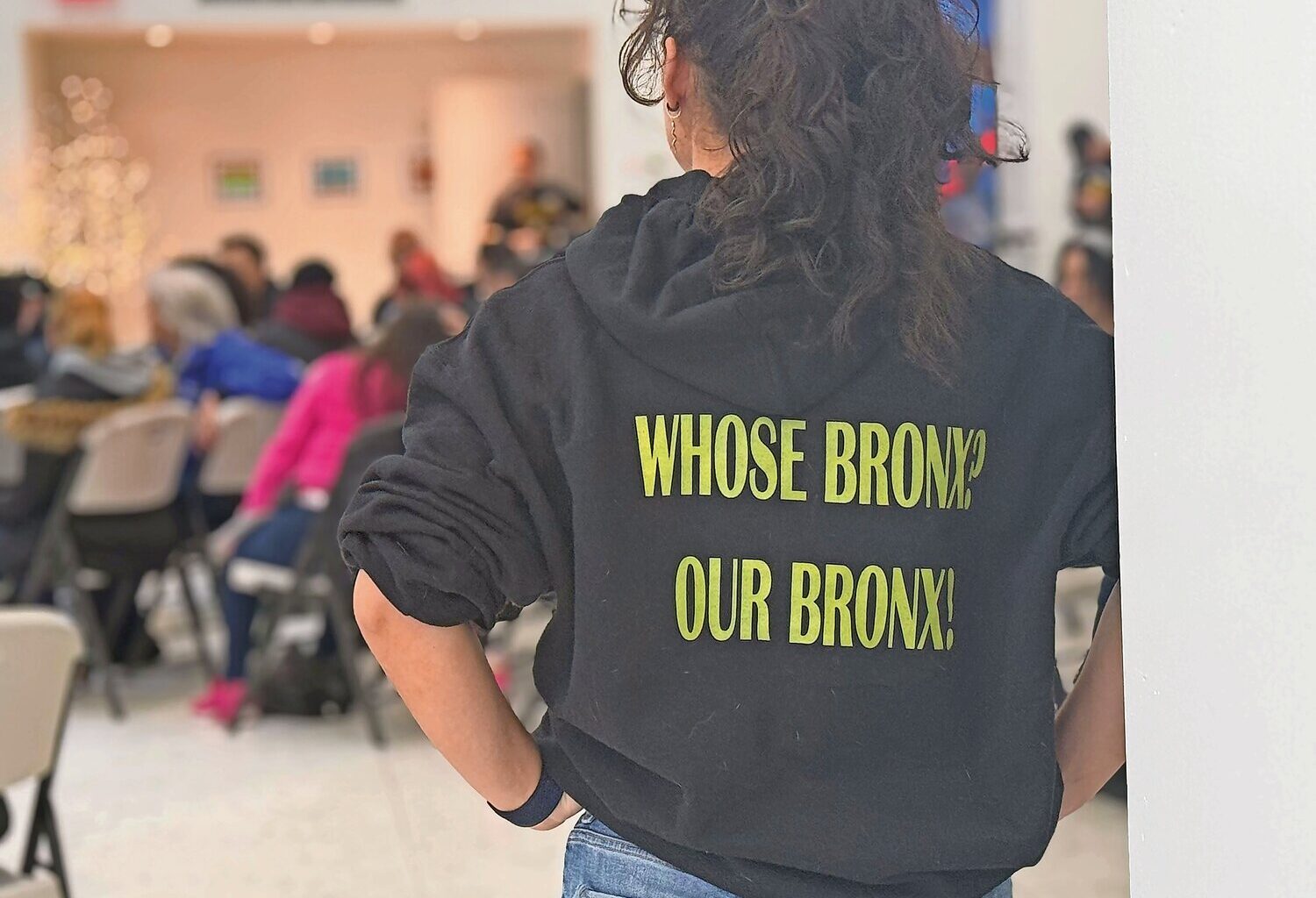
On Nov. 22, over 100 residents and staff gathered at Serviam Hall on Bainbridge Avenue for a rally hosted by NWBCCC. Spirits were high as the nonprofit urged audience members to support COPA and other bills aimed at lowering the cost of living.
The act is meant to keep housing affordable and prevent the displacement of low-income renters by giving community land trusts, or CLTs, and other nonprofits a leg up in the competition to buy a property when an owner is ready to sell.
A CLT itself is a type of nonprofit organization that creates permanently affordable housing by owning land and leasing it to residents. By separating land ownership from the buildings, it is intended to keep homes off the speculative market. The property is instead governed by a board made up of residents and other community leaders that reflect the needs of the community.
NWBCCC created the Bronx CLT in 2020, which currently has five board members, though it would expand if COPA passes.
Headquartered just a few blocks from the Jerome Park Reservoir, NWBCCC is one of the leading housing advocacy groups in the Bronx, a borough which faces the highest eviction rate across the city. From 2019 to 2024, the NYC Committee on Racial Equity reported 17,549 executed evictions.
Evictions are heavily concentrated in the south and central Bronx, where more than half of families earn 200 percent below the poverty level — about $44,000 for a single adult and $94,000 for a family of four — and 93 percent are either Latino or Black, according to a May report from City Comptroller Brad Lander.
COPA needs just two additional city council sponsors to make it veto-proof. While it secured 34 sponsors earlier this month, Council Member James Gennaro and Council Member Rafael Salamanca Jr. backed out. The two lawmakers did not respond to requests for comment.
Council Member Eric Dinowitz told The Press he was still reviewing the bill and has not yet come to a decision.
Details of the bill are in negotiation between the City Council, the Department of Housing Preservation and Development, and a coalition of advocacy organizations called the NYC Community Land Initiative, or NYCCLI. But, it is expected to be settled in time for the council meeting on Dec. 18 for a vote according to Todd Baker, NWBCCC community development project manager.
As the bill stands, nonprofits under HPD’s Qualified Preservation Buyers List have 60 days to tell the seller it plans to make an offer on a low-income building, and 120 days to submit that offer. The building is not up for sale on the public market during this time, giving the nonprofit the first opportunity to purchase.
“We want to decommodify housing so that its prices are driven by its actual costs, not by speculation and investors,” Baker told The Press.
Baker is involved in bill negotiations, and said there are a few major points in discussion.
One is the right of first refusal — which means if a third party bids on a building, the nonprofit would have the time and ability to match the bid. This extends the sale process, which would help nonprofits and tenants but create delays for owners and investors.
Another is deciding which buildings would be eligible. Currently, buildings with three or more units can consider a COPA deal, a provision NWBCCC is fighting to keep. There is also disagreement over what level of financial or physical distress the property must be burdened with.
Funding would be sourced by a mix of private donations and city or state programs. On the city level, things like the NYC Acquisition Fund, the NYC Neighborhood Pillars program and the NYC Affordable Neighborhood Cooperative Program already exist, and the nonprofit is pushing to expand them, Baker explained.
For NWBCCC, COPA is a pathway towards tenant governance. This would likely be a transition from CLT ownership to a cooperative housing ownership, where tenants become shareholders of the property.
Edward Garcia, organizing co-director and development director, as well as a founding member of Bronx CLT, said this was central when developing the land trust.
“We cannot just continue fighting for repairs and better conditions and closing loopholes that will keep landlords from engaging in these practices,” Garcia said. “We need to fight for ownership.”
Keywords
Community Opportunity to Purchase Act,
COPA,
Bronx affordable housing,
NWBCCC housing advocacy,
Bronx Community Land Trust,
NYC eviction crisis,
Bronx tenant displacement,
community land trusts,
CLTs,
City Council