
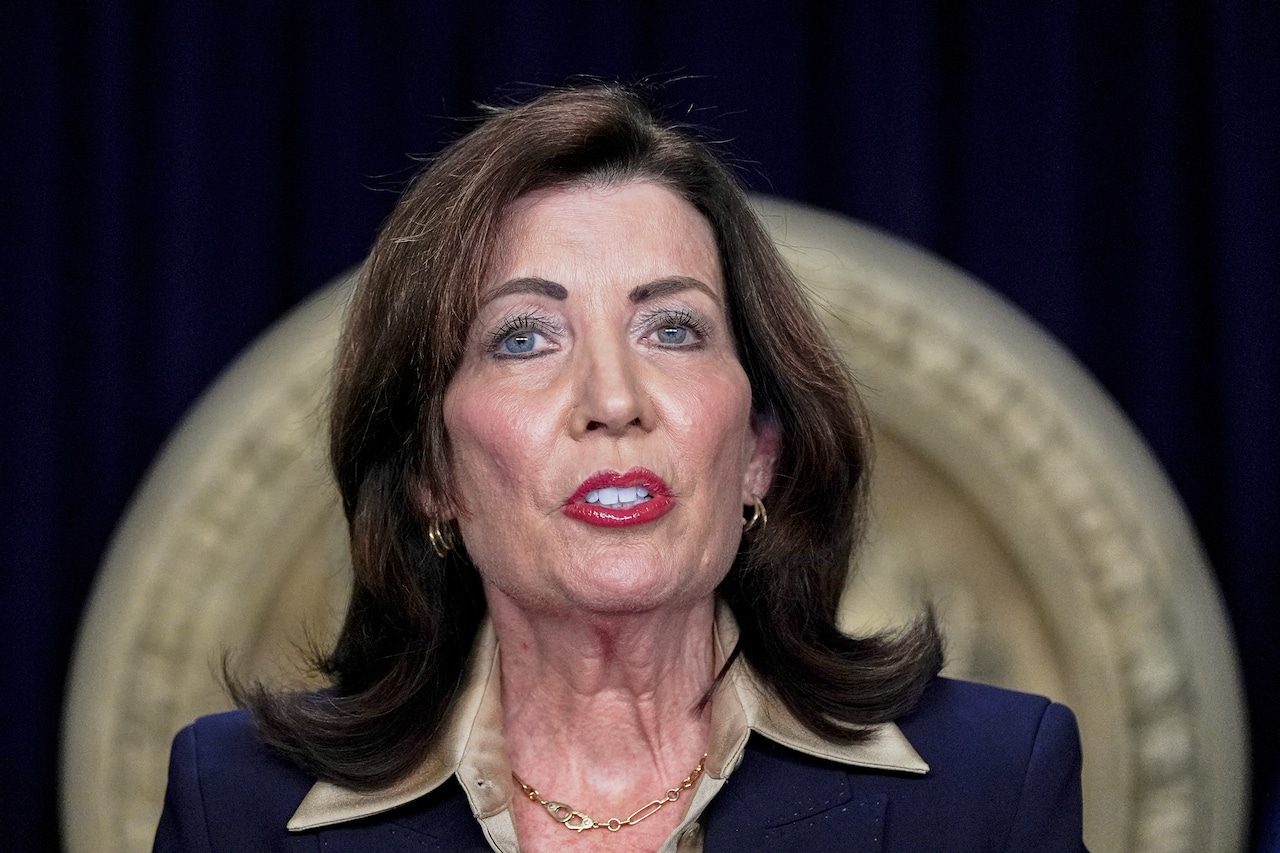
STATEN ISLAND, N.Y. — A bill that would give New York journalists access to police radio frequencies is officially sitting on Gov. Kathy Hochul’s desk after passing through the New York State Congress.
Radio traffic from Staten Island’s four police precincts have been offline since February 2024. The move came as a part of a long-term plan by the city to update outdated equipment while encrypting NYPD radio frequencies throughout the five boroughs.
According to media reports, the NYPD says the use of encryption is to keep officers and the public safe from radio interference and prevent listeners with ill intent from using such communications in a way that could harm or endanger them.
Sparking media outcry from across the state, outlets, including the Advance/SILive.com, lost a key source in reporting local crime to audiences.
The Keep Police Radio Public Act was introduced on Jan. 28, 2025, by six New York elected officials: Karines Reyes, Rodneyse Bichotte Hermelyn, Monique Chandler-Waterman, Brian Cunningham, Jessica Gonzalez-Rojas, and MaryJane Shimsky.
The act, according to the New York State Senate, “ensures that, except for sensitive information, all radio communications are accessible to emergency services organizations and professional journalists.”
It passed through the New York State Assembly in an 85-61 vote and the New York State Senate in a 38-22 vote on June 5.
The three Republican assemblymembers on Staten Island — Mid-Island’s Sam Pirozzolo, South Shore’s Michael Reilly, and East Shore’s Michael Tannousis — voted against the legislation in conjunction with borough State Sen. Andrew Lanza.
The two Democratic Staten Island representatives serving in the New York state legislative branch, State Sen. Jessica Scarcella-Spanton, who represents the North Shore and parts of Brooklyn, and Assemblymember Charles Fall, who represents the North Shore and parts of Brooklyn and Manhattan, voted in favor of the bill.
“As a former #NYPD lieutenant and current public official, I understand the importance of public access to accurate information — but I also understand how that access can be abused or misused, jeopardizing public safety and possibly even human life in the process,” Reilly wrote on X back in June. “I recently debated A3516, which would require law enforcement to allow some journalists to access those frequencies. It is law enforcement and other first responders whose monitoring of those frequencies must be treated as a priority. Though I voted NO on this bill, I urge @GovKathyHochul to amend it and include a 10 minute delay so that we can sustain public access while prioritizing public safety.”
Scarcella-Spanton said to the Advance/SILive.com in June, “I did have some concern with privacy and things like that, but I know how important it is specifically to the press — especially local papers like (The Advance/SILive.com)— and helping (journalists) do (their) jobs well and efficiently and informing the public. So, that is a big part of the reason why I voted in favor of it.”
Hochul has until New Year’s Eve to sign it into law or veto it.
The shift to encryption began in July 2023 with several Brooklyn’s precincts, and then slowly crept through the other boroughs.
The Advance/SILive.com reached out to Hochul’s office, but did not hear back by the time of publication.